Books
Translate this Ancient Script and Earn $1 Million.
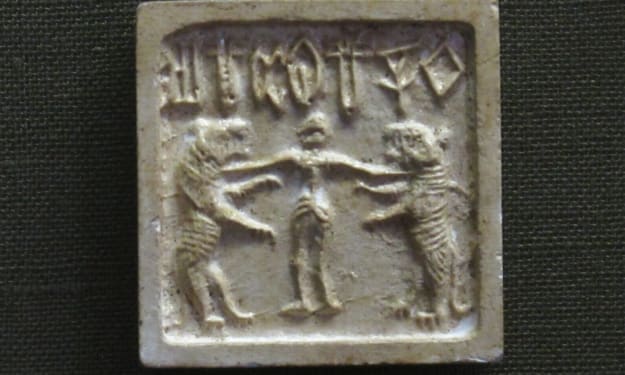
Translate this Ancient Script and Earn $1 Million This tablet is a classic example of the Indus script. A short sequence of symbols is displayed above an image in this case a bull and an unidentified object. Flourishing in the fertile plains of the Indus River the Indus Valley was home to one of the world's earliest urban civilizations. Between 3300 and 1700 BC the Indus people constructed remarkable cities such as Mohenjo daro and Harappa which featured the first urban sanitation systems advanced agricultural methods extensive trade networks and intricate art. Yet they left behind numerous mysteries. Who were these people and why did they abandon their sprawling cities. What form of governance did they have which facilitated meticulous urban planning but left no traces of palaces temples or monuments. One of the most significant challenges in understanding the Indus people is their written language. While it is likely they had one this remains a topic of debate. These questions are not only crucial for archaeologists and historians but also intersect with various political and cultural issues in the region.
By Adnan Rasheed2 years ago in History
"Socrates’ Legacy in Written Words"
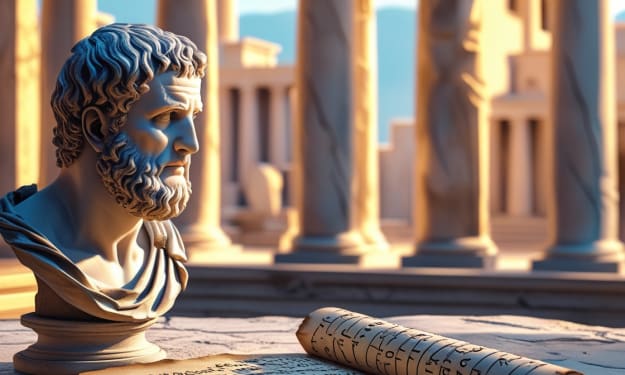
Socrates in the Agora: The Philosopher of the People and the Bequest of His Unwritten Wisdom Summary Socrates, the iconic Athenian philosopher of the 5th aeon BCE, charcoal one of history’s best affecting thinkers—yet he never wrote a audible book. His aesthetics survives through the works of his students, decidedly Plato and Xenophon, and the abusive lens of author Aristophanes. This commodity explores the absurdity of a philosopher who shaped Western anticipation after penning a word. We burrow into the texts that immortalized his ideas, the Socratic method’s constant relevance, and how avant-garde authors reinterpret his legacy. From age-old dialogues to abreast analyses, Socrates’ articulation echoes through the ages, proving that acumen transcends the accounting page. The Man Who Wrote Nothing Socrates (469–399 BCE) abundantly declared, “I apperceive that I apperceive nothing,” and accepted a activity of analytic in the Athenian agora (marketplace). Unlike his predecessors, he alone academic lectures and accounting texts, assertive accurate compassionate arose through dialogue. His abhorrence to writing, as anecdotal in Plato’s Phaedrus, stemmed from the acceptance that texts “create absent-mindedness in the soul” by replacing lived assay with changeless words. Thus, Socrates’ aesthetics exists alone through the accounts of others—a circuitous of perspectives that acknowledge his abolitionist charge to articulate discourse. The Socratic Corpus: Plato, Xenophon, and Aristophanes Three primary sources bottle Socrates’ ideas, anniversary alms audible portrayals: 1. Plato: The Idealized Socrates Plato, Socrates’ best acclaimed disciple, immortalized his abecedary in over 30 dialogues. These texts alloy absolute bond with abstract invention, authoritative it difficult to abstracted Socrates’ absolute angle from Plato’s own ideas. Key works include: Apology: Socrates’ aegis during his balloon for “corrupting the youth” and “impiety,” showcasing his charge to accuracy over survival. Phaedo: A dramatization of Socrates’ final hours, discussing the aeon of the soul. Republic: While primarily Plato’s eyes of an ideal state, Socrates leads the dialogue, acid amends and governance. Plato’s Socrates is a adamant questioner who dismantles assumptions through the elenchus (cross-examination). His adjustment exposes contradictions, advancement interlocutors to seek added truths. 2. Xenophon: The Practical Sage A soldier and historian, Xenophon portrayed Socrates as a businesslike moral guide. His Memorabilia defends Socrates adjoin accuse of impiety, emphasizing his role as a borough mentor. In Oeconomicus, Socrates dispenses admonition on domiciliary management, while Symposium depicts him discussing adulation and advantage at a banquet party. Xenophon’s Socrates lacks Plato’s abstract abyss but highlights his accustomed wisdom. 3. Aristophanes: The Abusive Buffoon In The Clouds (423 BCE), Aristophanes caricatures Socrates as a actor who teaches moral relativism and cool accurate theories. While exaggerated, the comedy reflects Athenian anxieties about Socrates’ influence. Ironically, this banter was cited during his balloon as affirmation of his “corruption.” The Socratic Method: Analytic as Revolution Though Socrates larboard no writings, his analytic approach—the Socratic method—reshaped philosophy. Key appearance include: Irony: Feigning benightedness to draw out contradictions. Elenchus: Systematic acknowledgment of awry arguments. Maieutics: “Midwifing” ideas, allowance others “give birth” to truth. This adjustment democratized philosophy, alive it from cosmological belief to ethical inquiry. By agreeable cobblers, politicians, and youths alike, Socrates fabricated aesthetics a accessible act. Modern Reconstructions: Books About Socrates While Socrates wrote nothing, endless authors accept attempted to reconstruct his philosophy. Notable works include: 1. The Balloon and Death of Socrates (Plato, 4th aeon BCE) This accumulating (Euthyphro, Apology, Crito, and Phaedo) charcoal the absolute annual of Socrates’ final days. It explores capacity of justice, piety, and the philosopher’s assignment to claiming authority. 2. Socrates: A Man for Our Times (Paul Johnson, 2011) Johnson’s adventures frames Socrates as a proto-enlightenment figure, emphasizing his appliance to chargeless accent and bookish courage. 3. The Hemlock Cup: Socrates, Athens and the Search for the Good Activity (Bettany Hughes, 2010) Hughes blends archaeological insights with absolute narrative, situating Socrates aural the political agitation of 5th-century Athens. 4. Socrates: Ironist and Moral Philosopher (Gregory Vlastos, 1991) A bookish assay appropriate the “historical Socrates” from Plato’s arcane creation, absorption on his ethical framework. Socrates in Fiction: Reimagining the Philosopher Modern novelists and playwrights accept reanimated Socrates, exploring his close activity and cultural impact: The Last Canicule of Socrates (Mary Renault, 1958): A fictionalized annual adorning Socrates’ relationships with his students. Socrates: A Novel (Voltaire, 1759): A abusive chat critiquing religious article through Socratic irony. The Plot to Save Socrates (Paul Levinson, 2006): A time-travel chance area advisers attack to accomplishment Socrates from execution. The Unanswered Questions: What Would Socrates Address Today? Socrates’ appraisal of autograph raises annoying questions for the agenda age: Could he accept accepted blogs or amusing media as new “agoras”? Would he abolish AI chatbots as alveolate mimics of dialogue? Philosophers like Jacques Derrida accept debated Socrates’ skepticism of texts, arguing that writing, while imperfect, enables annual to transcend time.
By Say the truth 2 years ago in History
Philadelphia Plane Crash 2025
On the morning of March 15, 2025, a tragic plane crash occurred near Philadelphia International Airport, shocking the nation. The passenger plane, Flight 287, was on its way from Chicago to Philadelphia when it experienced technical difficulties. Despite the pilot's efforts to make an emergency landing, the aircraft crashed just a few miles away from the airport.
By Farhan Sayed2 years ago in History
Islamic History
Islamic history traverses north of 1,400 years, starting with the appearance of Islam in the seventh century CE and proceeding to the current day. It incorporates the existence of Prophet Muhammad (PBUH), the ascent and fall of incredible Islamic domains, and the commitments of Muslim researchers, pioneers, and civic establishments.
By Mohammad Kamruzzaman2 years ago in History
Plane Crashes
A plane crash is a very serious accident that happens when an airplane fails to land safely or falls from the sky. While modern airplanes are very safe, crashes still happen due to different reasons. Some plane crashes are small, while others are big and cause major loss of life and damage.
By Farhan Sayed2 years ago in History
Alexander the Great vs. Baron Porus: The Epic Affray at the Hydaspes River
Historical Background Alexander’s Quest for the Ends of the Earth By 326 BCE, Alexander the Great had already baffled the Persian Empire, Egypt, and Central Asia. His appetite to ability the “ends of the accepted world” led him to the Indian subcontinent, a acreage accounted to authority untold abundance and allegorical wonders. However, India’s burst kingdoms—often at war with one another—posed a new challenge. Among these rulers was Porus (or Puru), the aerial autocrat of the Paurava kingdom, whose area continued above the Punjab arena amid the Jhelum (Hydaspes) and Chenab (Acesines) rivers. Porus: The Lion of Punjab Porus was no accustomed adversary. Standing over 6 anxiety alpine (as declared by Greek historians), he disqualified a affluent commonwealth accomplished by abundant acreage and barter routes. His bodies admired him as a warrior-king, and his army—though abate than the Persian armament Alexander had ahead dismantled—was abnormally acclimatized to the Indian terrain. Porus’s acceptability for adventuresomeness and appropriate accuracy fabricated him a appalling opponent. Armies of the Hydaspes Alexander’s Forces: Quality Over Quantity Alexander’s army at Hydaspes numbered about 40,000 soldiers, a mix of Macedonian veterans and affiliated troops: Companion Cavalry: The aristocratic shock cavalry, armed with lances (xystons). Phalanx Infantry: Macedonian pikemen wielding 18-foot sarissas. Hypaspists: Agile shield-bearing infantry for crabbed maneuvers. Mercenaries: Bactrian horsemen, Sogdian archers, and Persian skirmishers. Though abate than his beforehand forces, this army was disciplined, adaptable, and angrily loyal to Alexander. Porus’s Army: Elephants and Indigenous Might Porus fielded an estimated 20,000–50,000 troops, including: War Elephants: 85–200 armored elephants, the amount of his strategy. Infantry: Spearmen and archers able with bamboo longbows. Chariots: Abundant board chariots abortive in addled terrain. Cavalry: ~2,000 horsemen, outclassed by Macedonian riders. The elephants were Porus’s trump card—living tanks able of trampling infantry and alarming horses. Tactics and Terrain: The River’s Role Alexander’s Deception The Hydaspes River, bloated by cloudburst rains, afar the two armies. Porus stationed his armament on the eastern bank, assured Alexander to cantankerous directly. Instead, Alexander orchestrated a attack of misinformation: Feigned Crossings: He breach his troops, sending detachments upstream and afterwards to abash Porus. Night Maneuvers: Under awning of a thunderstorm, Alexander led 11,000 men 18 afar upstream to a bank bridge point. Coenus’s Flank: Army administrator Coenus circled aback to bang Porus’s rear during the battle. Porus’s Defensive Gambit Porus initially captivated his ground, but aloft acquirements of Alexander’s crossing, he accomplished his son with 2,000 army and 120 chariots to adjournment the Macedonians. This force was bound routed. Porus again repositioned his army: Elephant Phalanx: Elephants were spaced 100 anxiety afar to actualize blocked barriers. Infantry Support: Spearmen abounding gaps amid elephants. Cavalry on Wings: Indian army attentive the flanks. The Action Unfolds Phase 1: Macedonian Army Dominance Alexander’s Companion Army answerable Porus’s larboard flank, while Coenus’s army angled abaft to band the Indians. Porus’s cavalry, afflicted by the Macedonians’ above tactics, aloof into the albatross line, causing chaos. Phase 2: Albatross Carnage The Macedonian phalanx advanced, but Porus’s elephants wreaked havoc. Macedonian soldiers bargain at the elephants’ legs and drivers, while archers targeted their eyes. Enraged, the beasts trampled acquaintance and foe alike. Phase 3: Collapse of the Paurava Line With his army abortive and elephants panicking, Porus’s infantry was isolated. Alexander’s hypaspists belted the Indian center, while the phalanx pushed forward. Porus, blood-soaked but unbowed, banned to abandonment until Alexander himself offered terms. Wealth and Resources Alexander’s War Machine Alexander’s campaigns were adjourned by Persian plunder, including the burglary of Persepolis. His army agitated carriageable wealth—gold coins, gemstones, and silks—to armamentarium accumulation lines. The Indian attack aimed to defended barter routes to the Ganges and beyond. Porus’s Kingdom The Punjab arena was agriculturally rich, with abundant clay acquiescent wheat, rice, and sugarcane. Porus’s abundance came from acreage taxes and ascendancy of river trade. His elephants, accomplished for decades, represented both aggressive and bread-and-butter power. Aftermath and Legacy A Victor’s Respect Impressed by Porus’s valor, Alexander reinstated him as a satrap and alike accepted him added territories. This act of affection anchored Macedonian ascendancy over Punjab and showcased Alexander’s political shrewdness. The Cost of Victory Alexander’s army suffered abundant losses, with estimates of 1,000–4,000 casualties. Porus’s armament were decimated, but his affront became legendary. The action apparent the absolute of Alexander’s eastward expansion; his beat troops mutinied anon after, abnegation to advance added into India. Tactical Innovations The Hydaspes approved Alexander’s ability for adapting to new challenges: River Crossings: Deception and acceleration overcame accustomed barriers. Anti-Elephant Tactics: Coordinated strikes adjoin elephants set precedents for approaching wars. Conclusion: Affray of Titans The Action of the Hydaspes was added than a aggressive encounter—it was a blow of cultures, strategies, and wills. Alexander’s achievement anchored his acceptability as history’s greatest tactician, while Porus’s attrition immortalized him as India’s dogged warrior-king. Though the Macedonians marched on, the Hydaspes adumbrated the abatement of Alexander’s campaign, proving alike the greatest conquerors could be ashamed by monsoons, mud, and the boldness of a baron who stood his ground.
By Say the truth 2 years ago in History
Mobile. AI-Generated.
The mobile phone is one of the most significant technological inventions of the modern era. It has transformed the way people communicate, work, and access information. However, the journey of mobile phones began long before they became the sleek, smart devices we use today. The history of mobile phones dates back to the early 20th century, evolving through various innovations, breakthroughs, and challenges. This article explores the birth of mobile phones, highlighting the key milestones that led to their development.
By TheTechTinker2 years ago in History
Past the Edges of Mankind. Content Warning. AI-Generated.
Presentation The year 2153 denoted a defining moment for humankind. As the species extended its reach across the stars, the revelation of a puzzling sign from the far-off planet Gliese-581g cast a shadow over human advancement. This sign was not irregular, it was a code. Furthermore, its most surprising disclosure was an incomplete match to the human genome. A specific group of researchers and specialists was dispatched, determined to explore, yet what they found on Gliese-581g was past whatever they might have envisioned. It wasn't simply a sign it was a message from the universe, containing mysteries that could reclassify humankind's position in the universe. Part I: The Sign In the flawless, glass-walled gathering room of Argus Station, Dr. Aarav Mehta, a senior astrophysicist, remained before his group. Holographic information streams drifted around him, throbbing with faint light. "This," Aarav started, highlighting a waveform, "is the sign we've captured from Gliese-581g. It's organized, deliberate. What's more, this section" he focused on a succession of numbers"coordinates a piece of the human genome related to cognizance." The room was quiet. Dr. Lin Wei, a geneticist, inclined forward, her forehead sewn with concern. "Is it safe to say that you are recommending some extraterrestrial insight encoded in this? What's more, that it's connected with us?" Aarav faltered. "That is precisely the exact thing I'm recommending. The grouping originates before humankind by essentially a billion years, in light of its rot signature. Whatever conveyed this message had some awareness of us or made the circumstances for us to exist." EVA-9, the station's high-level simulated intelligence, rang in. "Signal beginning affirmed: Gliese-581g. The likelihood of an insightful plan surpasses 98.7%. Mission boundaries refreshed." The gravity of the disclosure settled over the room like a tempest cloud. Mankind's spot in the universe was at this point not a philosophical inquiry, it was a logical reality. Part II: The Excursion The Athena, mankind's most exceptional investigation vessel, was sent off in no time. Installed were eight group individuals, including Aarav, Lin, and EVA-9, whose brain center was coordinated into the boat's frameworks. As the Athena moved toward Gliese-581g following quite a while of movement, Aarav pored over the decoded signal. Its layers uncovered dazzling intricacies of conditions outside human ability to understand, schematics for innovations light-years ahead, and, most stunningly, an example indistinguishable from the hereditary marker for mindfulness. "Maybe they're talking straightforwardly to us," Aarav mumbled, situated in the perception deck. Lin went along with him, her look fixed on the world materializing. "Or on the other hand, getting back to us back," she said unobtrusively. The boat's plunge carried them to an infertile spread of Gliese-581 g's surface, where spiked rock developments encompassed a transcending metallic monolith. Its smooth, consistent surface beat faintly, as though alive. Part III: The Revelation Venturing onto the outsider soil, the group felt an illogical draw toward the pillar. EVA-9 checked the construction. "Organization: obscure composite. Mature: around 1.3 billion years. Energy source: dynamic." "Billion?" Lin murmured. "That is more seasoned than multicellular life on the plane." Aarav moved toward the monolith, his hand shuddering as he contacted its surface. A low murmur resounded through the air, and an entryway showed up, dissolving as though the design had been sitting tight for them. Inside, the monolith uncovered an office of drifting 3D images worlds, DNA strands, and what gave off an impression of being a nitty-gritty guide of the human mind. At its middle was a translucent gadget lying on a platform. As Aarav went after the precious stone, the chamber loaded up with light, and a voice reverberated to them. "You are the climax of our plan." The words were not verbally expressed they were felt, as though engraved straightforwardly onto their awareness. "Who are you?" Aarav thought, realizing the substance could hear him. "We are the Planners," the voice answered. "We cultivated life across universes, installing possible inside your hereditary code. Humankind is perhaps our best examination." Part IV: The Disclosure The designers uncovered a story spreading over ages. They had dispersed life all through the universe, designing species with the ability to develop and adjust. Humankind, they made sense of, was not remarkable however, it was excellent. "However, why get in touch with us now?" Lin asked so anyone might hear. "Why uncover yourselves?" Another 3D image showed Earth, encompassed by throbbing red waves. "Your species has arrived at a basic point," the Planners cautioned. "Your innovation has outperformed your insight. Whenever left uncontrolled, you will annihilate yourselves and weaken the texture of your cosmic system." Aarav's chest was fixed. "Why not help us? Guide us?" "We don't intercede," the Planners answered. "We notice and record. Your predetermination is your own to shape or to waste." The light darkened, and the visualizations blurred, leaving the group in dazed quietness. The pillar's entryway resumed, as though encouraging them to leave. Aarav took the glasslike gadget, detecting it held answers humankind frantically required yet additionally the heaviness of a horrendous obligation. Part V: The Return On board the Athena, the group investigated the precious stone's items. It contained progressive information on clean energy advancements, solutions for illnesses, and schematics for quicker-than-light travel. In any case, it likewise included terrible forecasts: natural breakdown, rising conflicts, and mass elimination except if humankind shifted its course. "We can't hush up about this," Lin contended during a strained gathering. "This information could save billions of lives." Aarav shook his head. "Or then again it could undermine everything. Envision the turmoil assuming individuals learned we were designed that our reality isn't special." EVA-9, ever the fair onlooker, offered a sobering viewpoint. "Mankind's solidarity lies in its ability for decision. Utilize this information admirably, or risk satisfying the modelers' admonition." The discussion went on as the Athena rushed back toward Earth, conveying the precious stone as well as the heaviness of its suggestions. Epilogue Upon their return, the group introduced their discoveries to a select gathering of pioneers and researchers. Responses went from doubt to stunningness to fear. At last, the choice was made to deliver just divvies of the information to the general population, while the full truth stayed ordered. Aarav, be that as it may, felt the heaviness of the Modelers' advance notice. Late around evening time, he would look at the stars, replaying their last words to him: "Your fate is your own to shape." Humankind remained at an intersection, its future unsure. Could it ascend to live up to the Planners' assumptions or fall under the heaviness of its own pride? As the stars squinted in the limitless obscurity, Aarav murmured to himself, "Perhaps we were intended to transcend. Perhaps that is the genuine test." Also, some place, in the tremendous field of the universe, the Planners watched, holding back to check whether their most prominent trial would succeed or, on the other hand, if it, as well, would be lost to the ages.
By SUDHIR MALLICK2 years ago in History
Researching the Seven Wonders of the World: 2025 Variant. Content Warning. AI-Generated.
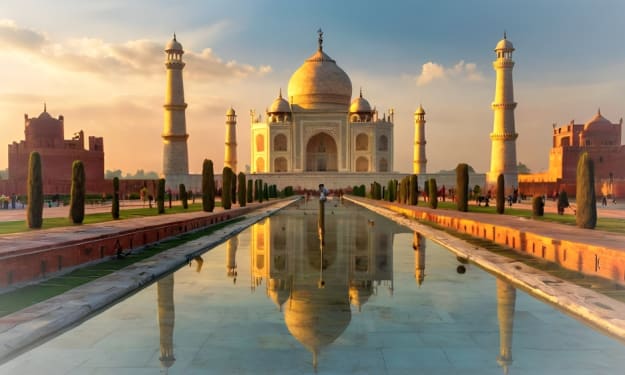
The Seven Wonders of the World are a celebration of human ingenuity, primary brilliance, and social heritage. These well-known achievements have gone all the way and continue to excite huge numbers of visitors reliably. In 2025, these marvels stay as stunning as anybody would envision, displaying the rich history and achievements of old developments. This article takes an all-around adventure through all of these marvels, exploring their significance, history, and why they continue to stand apart for the world. 1. The Taj Mahal, India The Taj Mahal, one of the most seen pictures of warmth, is arranged in Agra, India. Worked on by Mughal Head Shah Jahan in memory of his loved companion Mumtaz Mahal, this white marble mausoleum required 22 years (1632-1653) to wrap up. The Taj Mahal is a UNESCO World Heritage Site and addresses the apex of Mughal designing, uniting Persian, Indian, and Islamic styles. Designing and Significance The Taj Mahal's optimal equity, flighty carvings, and the shimmering appearance in the Yamuna Stream make it a showstopper. Its central vault climbs to a degree of 73 meters, flanked by four thin minarets. The trim work, including semi-important stones, and the calligraphy on the section entryway add to its innovative charm. In 2025, the Taj Mahal continues to draw countless visitors for its structural greatness as well as concerning the huge heartfelt story it addresses. Visitors are particularly enamored by the daybreak and sunset seas, which wash the marble in tones of pink, orange, and gold. 2. Christ the Deliverer, Brazil Staying on Mount Corcovado in Rio de Janeiro, Christ the Hero is a 30-meter-tall figure of Jesus Christ, with arms outstretched in an enticing embrace. This renowned Craftsmanship Deco milestone, completed in 1931, addresses concordance, trust, and the sparkle of Brazilian culture. Valid and Social Impact Arranged by Brazilian expert Heitor da Silva Costa and carved by French skilled worker Paul Landowski, the model was worked on for more than nine years. Made of developed concrete and soapstone, Christ the Guardian Angel dismisses Rio, offering widely inclusive points of view on the city and Guanabara River. In 2025, the figure continues to fill in as a picture of certainty for Christians, generally speaking, and an exhibit of Brazil's social person. The model is edified around nighttime, making a shocking sight that ought to be noticeable from quite far off. 3. Machu Picchu, Peru Machu Picchu, much of the time implied as the "Lost City of the Incas," is a fifteenth-century fortress arranged in the Andes Loads of Peru. Perched at a height of 2,430 meters, this archaeological site displays the creativity of the Inca human advancement. Planning Miracle Worked without the use of mortar, the stones of Machu Picchu fit so precisely that even current fashioners are befuddled by the craftsmanship. The site consolidates safe havens, decks, and water channels, all created as one with the incorporating scene. Machu Picchu's significance lies in its ability to connect visitors with an unfortunately missing advancement. In 2025, it remains a rundown of should-dos and objectives for pilgrims searching for experience, history, and shocking points of view. The first light over the site is particularly spellbinding, drawing picture takers and trailblazers from across the globe. 4. Chichen Itza, Mexico Chichen Itza, arranged on the Yucatán Expanse of land in Mexico, was an unquestionable city of the old Mayan human advancement. Among its many plans, the Asylum of Kukulcán, generally called "El Castillo," is the most well known. This step pyramid reflects the significant level of cosmic data on the Mayans. Inestimable Significance El Castillo is arranged with the goal that all through the spring and pre-winter equinoxes, the play of sunshine and shadow makes the misdirection of a snake slithering down the pyramid's means. This characteristic element is the Mayans' significant perception of heavenly turns of events. In 2025, Chichen Itza continues to dazzle visitors with its blend of legends, science, and plan. The site is in like manner a social area of interest, working with events and celebrations that honor Mayan customs. 5. Colosseum, Italy The Colosseum in Rome, Italy, is a helping-through picture of the superbness of the Roman Domain. Worked some place in the scope of 70 and 80 Advancement, this colossal amphitheater could arrange up to 50,000 spectators and worked with gladiatorial difficulties, public scenes, and sensational shows. Plan Brilliance The Colosseum is a planning wonder, featuring a staggering plan of underground sections, stowed-away entrances, and lifts that were used to coordinate elaborate events. Its layered visitor plan ensured clear points of view for all spectators, an arrangement that continues to influence current fields. In 2025, the Colosseum stays as an exhibit of Roman turns of events and adaptability. It is maybe Italy's most visited achievement, drawing history aficionados and designing sweethearts from around the world. 6. Petra, Jordan Known as the "Rose City" in view of its pink sandstone facades, Petra is an irrefutable and archeological supernatural occurrence arranged in southern Jordan. At the point when the capital of the Nabataean Domain, Petra is renowned for its stone-cut plan and significant level water the board structure. A Blend of Nature and Designing The Safe (Al-Khazneh) is Petra's most famous plan, cut directly into the stone face. Various highlights consolidate the Order, the Distinguished Entombment chambers, and the Siq a restricted ravine that fills in as the city's principal section. In 2025, Petra stays a picture of human cleverness and change. Visitors are drawn to its harsh greatness and real significance, making it one of the Middle East's most cherished achievements. 7. Staggering Mass of China, China Broadening more than 21,000 kilometers, the Great Wall of China is the longest man-made structure on earth. Worked in excess of years and years to protect China from northern intruders, the wall is a miracle of old military planning. Tirelessness Through Time The wall explores mountains, deserts, and fields, showing the confirmation and imagination of the Chinese public. Key sections, such as Badaling and Mutianyu, have been restored and are accessible to explorers, offering amazing points of view and legitimate encounters. In 2025, the Exceptional Wall continues to address China's rich social heritage and stays a must-visit objective for explorers searching for a more significant perception of history. End The Seven Supernatural Occurrences of the World are not just underlying and planning achievements; they are, in like manner, windows into the past, reflecting the dreams, convictions, and advancements of outdated developments. In 2025, these marvels continue to persuade wonderment, attracting a colossal number of visitors and filling in as a badge of what mankind can achieve. Exploring these wonders is a different option from a journey; an experience interfaces us with history, culture, and the enduring soul of human imagination. Whether it's the genuine allure of the Taj Mahal, the captivated allure of Machu Picchu, or the heavenliness of the Unique Mass of China, these wonders assist us with recalling the greatness and assortment our world holds.
By SUDHIR MALLICK2 years ago in History