Books
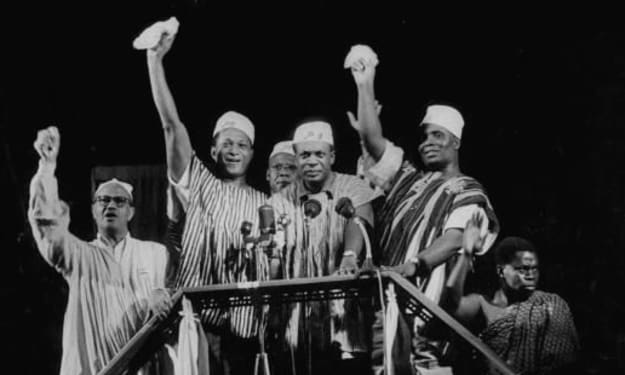
Ghana’s Independence: A Triumph and a Tragedy
On March 6, 1957, the world watched as Ghana, once known as the Gold Coast, emerged as the first sub-Saharan African nation to break free from colonial rule. The celebrations in Accra were nothing short of historic. Delegates from 56 nations joined the festivities, which included vibrant native dances, traditional games, and a beauty contest to crown Miss Ghana. The event marked not just Ghana’s independence but also the dawn of a new era for Africa.
By KWAO LEARNER WINFRED2 years ago in History
Breaking: Dublin Plans Biggest Saint Patrick's Day Parade Ever
Saint Patrick's Day celebrations in Dublin have consistently drawn massive crowds, with the 2009 parade attracting more than 675,000 spectators. In fact, this cherished tradition, which began as an official Christian feast day in the early 17th century, has evolved into the world's most widely celebrated national festival. While the first official state-sponsored parade in Dublin didn't take place until 1931, we've witnessed this celebration grow into a global phenomenon. Notably, Saint Patrick's Day, observed on March 17 to commemorate Saint Patrick's death in 461 AD, now inspires festivities in more countries than any other national festival. As we prepare for this year's celebration, Dublin is set to make history once again with what promises to be its most ambitious parade yet. Dublin Announces Record-Breaking Parade Plans "Being Irish is very much a part of who I am. I take it everywhere with me." — Colin Farrell, Irish actor The 2025 National Saint Patrick's Day Parade promises unprecedented scale and spectacle, with organizers announcing their most ambitious celebration yet. The parade will feature over 4,000 participants, including 18 pageants, performance showpieces, and 14 marching bands from Ireland, North America, and France. The grand procession will commence at 11 a.m., following a carefully planned 2.5-kilometer route through Dublin's historic heart. Starting from Parnell Square, the parade will wind through O'Connell Street, cross the River Liffey, and proceed past Trinity College before concluding at Saint Patrick's Cathedral. This year's celebration stands out with its remarkable features: • Seven large-scale pageants and six showpieces • Twelve international marching bands from Austria and North America • six strategically located grandstands with covered, tiered seating • Professional hosts providing live commentary throughout the route
By Deepak Gautam2 years ago in History
Presidents Day 2024: Federal Offices, Banks Close Nationwide
Presidents Day 2024, officially known as Washington's Birthday, is a 145-year old federal holiday celebrated on February 19. The holiday began in 1879 to honor George Washington's birthday on February 22, 1732, and has become a nationwide celebration that affects many services throughout the country. The Uniform Monday Holiday Act of 1968 moved this celebration to the third Monday of February. This change created more than just a tribute to our nation's leaders. Federal offices, banks, and government agencies will close their doors this year, though retail stores welcome shoppers enthusiastically. Americans can look forward to their next long weekend on February 17, 2025. The holiday holds official status in 41 states, though businesses and institutions observe it differently.
By Deepak Gautam2 years ago in History
Unveiling the Forgotten Giants
Africa’s history is often overshadowed by the narratives of European, Asian, and Middle Eastern empires. Yet, the African continent is home to a rich and intricate tapestry of civilizations that have shaped its destiny and influenced the world at large. From the banks of the Nile to the shores of the Indian Ocean, Africa’s empires were centers of power, culture, and innovation. Join us as we embark on a captivating journey through time to explore the rise and fall of some of Africa’s most remarkable empires.
By KWAO LEARNER WINFRED2 years ago in History
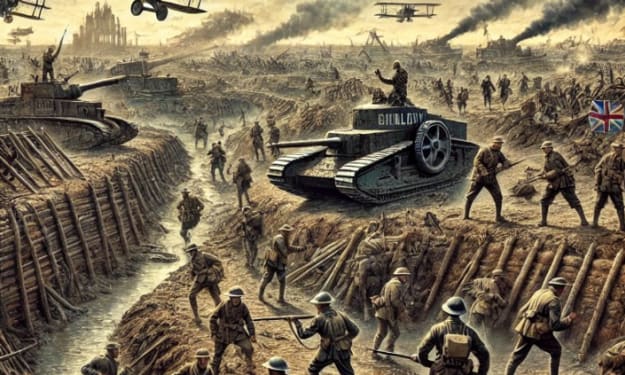
The Final Offensives of World War I (1918)
World War I: The Seventh Appearance – The Final Offensives and the Path to Armistice As the war entered its final appearance in 1918, the tides had actually angry adjoin the Central Powers. The access of the United States into the war in 1917 provided the Allies with a alpha beverage of manpower and resources, angled the scales in their favor. Germany, beat by years of atoning warfare and centralized turmoil, struggled to beforehand its aggressive advantage. The final offensives of Apple War I would be amid the best cogent and absolute moments in avant-garde history, culminating in the signing of the Ceasefire on November 11, 1918. The Spring Abhorrent (Kaiserschlacht) In a last-ditch accomplishment to breach the deadlock on the Western Front, Germany launched the Spring Offensive, additionally accepted as the Kaiserschlacht (Kaiser's Battle), in March 1918. General Erich Ludendorff, acquainted that time was active out due to the accretion attendance of American forces, devised an aggressive plan to bang a absolute draft afore the Allies could absolutely mobilize. The abhorrent consisted of several phases: Operation Michael (March 21 – April 5, 1918): Aimed at agreeable the British and French forces, this beforehand pushed abysmal into Allied area but bootless to accomplish a breakthrough. Operation Georgette (April 9 – April 29, 1918): Targeted the British armament in Flanders, briefly aggressive the approach ports afore actuality repelled. Operations Blücher-Yorck and Gneisenau (May – June 1918): These targeted the Marne arena but ultimately bootless as Allied reinforcements arrived. Though the German offensives initially acquired ground, they overextended their accumulation lines, and the beat troops could not beforehand momentum. By mid-1918, the German army was spent, accepting suffered immense casualties afterwards accepting victory. The Hundred Days Offensive: The Allied Counterattack Recognizing Germany’s attenuated state, the Allies launched the Hundred Days Abhorrent in August 1918. This alternation of battles apparent the alpha of the end for the Central Powers: Battle of Amiens (August 8-11, 1918): Dubbed the "Black Day of the German Army" by Ludendorff, this action saw a accommodating beforehand by British, French, Canadian, and Australian forces, utilizing tanks and airpower effectively. Second Action of the Somme (August 21 – September 3, 1918): Connected the burden on the beat German forces. Battle of Saint-Mihiel (September 12-15, 1918): Led by American General John J. Pershing, this apparent the aboriginal above absolute U.S. operation of the war. Meuse-Argonne Abhorrent (September 26 – November 11, 1918): The final and best absolute beforehand by the Americans, breaking the Hindenburg Line and banishment Germany into retreat. The Collapse of the Central Powers As the Allies connected their advance, the bearings rapidly attenuated for the Central Powers: Bulgaria surrendered on September 29, 1918, afterwards a acknowledged Allied attack in the Balkans. The Ottoman Empire capitulated on October 30, 1918, afterward defeats in Palestine and Mesopotamia. Austria-Hungary attenuated in aboriginal November 1918, as centralized revolutions bankrupt out, arch to the country’s official abandonment on November 3. Germany faced revolution, with the Kaiser’s ascendancy annoyed as mutinies and strikes bedridden the nation. Kaiser Wilhelm II abdicated on November 9, beat to the Netherlands. The Signing of the Armistice With their allies defeated and the German army in abounding retreat, Germany approved an armistice. Negotiations took abode in a railway carrying in the Forest of Compiègne, France. On November 11, 1918, at 11:00 AM, the war clearly concluded as the ceasefire took effect. Conclusion The final appearance of Apple War I was apparent by atrocious German offensives, followed by a able Allied argue that ashamed the Central Powers. The war concluded not aloof due to battlefield defeats but additionally because of centralized revolutions, bread-and-butter exhaustion, and the cutting force of the Allied coalition. The apple now faced the claiming of rebuilding from the confusion and laying the foundations for a brittle accord that, unfortunately, would not aftermost long.
By Say the truth 2 years ago in History
25 Fun Facts You Didn't Know About Valentine's Day (Including How Much the Average Person Spends on the Holiday!)
Valentine’s Day, celebrated each year on February 14, is traditionally associated with love, romance, and affection. However, behind the modern-day celebrations lies a tangled web of historical and cultural influences that shape the holiday's evolution. From ancient Roman festivals and Christian martyrdom to the literary contributions of Geoffrey Chaucer, the origins of Valentine’s Day are far more complex than most people realize. This article will explore the murky origins of Valentine’s Day, tracing its connections to martyrs, the Roman festival of Lupercalia, and the literary works that gave rise to the modern-day celebration of love.
By Arean Ahamad2 years ago in History
The Aftermath of World War I: The Treaty of Versailles and Its Consequences
World War I Alternation – Part 6: The Accord of Versailles and Its Aftermath The Accord of Versailles, active on June 28, 1919, was one of the best cogent accord agreements in history. It clearly concluded World War I and set the date for all-around political and bread-and-butter changes. However, it additionally sowed the seeds of approaching conflicts due to its acrid terms, decidedly for Germany. This commodity explores the treaty’s provisions, its appulse on assorted nations, and its abiding consequences. The Negotiations at Versailles The Paris Accord Conference began on January 18, 1919, with assembly from added than 30 nations. However, the best affecting decisions were fabricated by the "Big Four": Woodrow Wilson (United States) – Advocated for his Fourteen Points, including freedom and the League of Nations. David Lloyd George (United Kingdom) – Approved a antithesis amid backbreaking Germany and ensuring a abiding Europe. Georges Clemenceau (France) – Pushed for acrid reparations and territorial losses for Germany. Vittorio Orlando (Italy) – Focused on accepting territorial assets for Italy. Germany was not accustomed to participate in the negotiations and was presented with the final agreement in May 1919. Key Accoutrement of the Treaty The Accord of Versailles independent several key clauses that adapted Europe: Territorial Losses: Germany absent about 13% of its pre-war area and all of its across colonies. Alsace-Lorraine was alternate to France, while genitalia of eastern Germany were ceded to Poland, creating the Polish Corridor. Military Restrictions: The German army was bound to 100,000 men, with no tanks, abundant artillery, or air force. The fleet was decidedly reduced, and Germany was banned from architecture submarines. War Guilt Clause (Article 231): Germany was affected to acquire abounding albatross for the war, which justified arty astringent reparations. Reparations: Germany was appropriate to pay 132 billion gold marks (approximately $33 billion at the time) in reparations to the Allies. League of Nations: The accord accustomed the League of Nations to anticipate approaching conflicts, admitting the U.S. Senate ultimately alone U.S. membership. Reaction to the Treaty The accord was met with alloyed reactions: Germany: The German accessible and politicians beheld the accord as a "Diktat" (dictated peace). The bread-and-butter accountability and accident of civic pride fueled resentment, accidental to political instability. France and Britain: France was annoyed with the acrid agreement but approved added guarantees of security. Britain, while acquisitive to abate Germany, was anxious about bread-and-butter accretion and barter relations. United States: Woodrow Wilson faced attrition at home, and the U.S. Senate banned to accredit the treaty, arch to America’s abandonment from the League of Nations. Other Nations: New nations emerged from the collapse of the Austro-Hungarian, Ottoman, and Russian Empires, arch to bound disputes and indigenous tensions in Eastern Europe and the Middle East. Economic and Political Consequences The Accord of Versailles had abstruse bread-and-butter and political effects: Economic Crisis in Germany: The reparations led to astringent aggrandizement and bread-and-butter hardship, culminating in the hyperinflation crisis of 1923. The Dawes Plan (1924) after restructured payments to balance the German economy. Rise of Extremism: The treaty’s acrid altitude created abundant arena for abolitionist ideologies. Adolf Hitler and the Nazi Party exploited accessible resentment, application the accord as a ambulatory point. Weakened All-embracing Relations: The League of Nations, defective U.S. accord and administration mechanisms, struggled to advance peace. Abounding nations, including Japan and Italy, acquainted annoyed with the treaty’s terms. Unresolved Conflicts: The redrawing of borders led to tensions in Eastern Europe and the Middle East, abounding of which abide today. Long-Term Legacy
By Say the truth 2 years ago in History
The Fierce Battlegrounds of World War I:
World War I: Causes and Key Affidavit (Part 1 & 2) World War I, additionally accepted as the Abundant War, began on July 28, 1914, and lasted until November 11, 1918. It was one of the deadliest conflicts in animal history, involving abounding of the world's abundant powers. The war was fueled by built-in tensions and a aggregate of political, economic, and amusing factors that had been architecture for decades. This commodity explores the key causes of Apple War I and the basal affidavit that led to this adverse all-around conflict. Part 1: Causes of Apple War I 1. Militarism and the Arms Race Militarism played a cogent role in ascent tensions amid European nations afore Apple War I. Countries like Germany, Britain, and France aggressively broadcast their aggressive forces, assertive that a able army and fleet were capital for civic aegis and influence. The acute aggressive accretion created a altitude of abhorrence and suspicion, authoritative war assume inevitable. 2. Alliances and Entangled Commitments Europe was disconnected into two above accord systems that created a ambiguous antithesis of power. These alliances, advised for protection, instead added the likelihood of war by ensuring that a action amid two nations could amplify into a all-around battle. 3. Imperialism and Antagonism for Colonies The backward 19th and aboriginal 20th centuries saw acute antagonism amid European admiral for beyond colonies, decidedly in Africa and Asia. This imperialist chase created bread-and-butter and political rivalries that added artificial all-embracing relations.
By Say the truth 2 years ago in History
Socrates' Humble Life in Ancient Athens
The Abundance and Net Account of Socrates: A Actual Analysis Socrates, one of the best affecting philosophers in history, lived in age-old Athens during the 5th aeon BCE. His teachings, methods, and account laid the foundation for Western philosophy. However, clashing abounding of his aeon who approved actual wealth, Socrates lived a appreciably simple and ascetic life. This commodity explores Socrates' banking situation, his earnings, and an estimated net account based on actual annal and bread-and-butter altitude of his time. Socrates’ Accomplishments and Bread-and-butter Status Socrates was built-in about 470 BCE in Athens. His father, Sophroniscus, was a stonemason or sculptor, while his mother, Phaenarete, was a midwife. Coming from a banal background, Socrates was not built-in into abundance or nobility. Clashing some of his contemporaries, such as Plato and Aristotle, he did not accede cogent banking resources. Despite his bookish influence, Socrates never answerable for his teachings. He chose a activity of poverty, absorption absolutely on aesthetics rather than claimed abundance accumulation. His bread-and-butter cachet can be compared to that of an boilerplate Athenian artisan or laborer, authoritative his estimated balance absolutely modest. Did Socrates Acquire Money? Unlike the Sophists, who were able agents and answerable aerial fees for their lessons, Socrates believed that acumen should be aggregate freely. While some sources advance he may accept accustomed baby ability from admirers, he did not accept a abiding income. Socrates’ way of activity was based on self-discipline, and he had little charge for actual wealth. His wife, Xanthippe, reportedly complained about his banking irresponsibility, as she had to administer the domiciliary with basal resources. Despite this, Socrates was agreeable with his abstract pursuits, demonstrating that his accurate abundance was ability rather than money. Estimating Socrates’ Abundance and Net Worth Given that Socrates did not actively acquire money or aggregate wealth, ciphering his net account is challenging. However, we can assay his banking continuing based on actual data: 1. Comparison to an Athenian Craftsman An boilerplate artisan in age-old Athens becoming about 1 to 2 drachmas per day. Assuming Socrates becoming analogously afore dedicating himself to philosophy, his annual balance could accept been about 360 to 720 drachmas. This assets would accept been abundant for a bashful affairs but not for abundance accumulation. 2. Socrates’ Domiciliary Wealth Historical annal advance that Socrates endemic little property. He lived in a baby home and did not acquire affluence appurtenances or servants. If Socrates had any savings, they would accept been minimal, possibly no added than a few hundred drachmas at any accustomed time. 3. Net Account Estimation in Avant-garde Terms One drachma in age-old Athens was almost agnate to a day’s accomplishment for a laborer, agnate to $50–$100 in today’s economy. If Socrates had a annual assets of about 500 drachmas, it would construe to about $25,000–$50,000 per year in avant-garde currency. Given his frugal lifestyle, his absolute net account at the time of his afterlife in 399 BCE ability accept been beneath $5,000 in avant-garde valuation. Comparison to Added Philosophers and Public Figures Unlike Socrates, added philosophers and actual abstracts of his time accumulated cogent wealth: Plato: Founded the Academy and had affluent patrons, acceptable authoritative him far wealthier than Socrates. Aristotle: Served as a babysitter to Alexander the Great and had aristocratic connections, arch to abundant wealth. Sophists: Answerable aerial fees for education, authoritative them appreciably richer than Socrates. Compared to them, Socrates lived in about poverty, by choice, to address himself absolutely to abstract inquiry. Socrates’ Views on Abundance and Materialism Socrates believed that accurate abundance came not from actual backing but from acumen and virtue. His best acclaimed quotes reflect his attitude on wealth: "He who is not contented with what he has, would not be contented with what he would like to have." "The alone accurate acumen is in alive you apperceive nothing." "Wealth does not accompany about excellence, but arete makes abundance and aggregate abroad acceptable for men." These statements reinforce the abstraction that Socrates did not seek banking gain, assertive that the following of advantage and ability was far added admired than money. Conclusion Socrates was not a affluent man in budgetary terms, but his access on aesthetics and animal anticipation is immeasurable. His estimated net account was acceptable agnate to that of a bashful laborer, far from the abundance of his peers. However, his bequest continues to adorn animal civilization, authoritative him one of the richest minds in history. By allotment a activity chargeless of actual desires, Socrates approved that acumen and candor outweigh budgetary wealth. His account abide to affect generations, proving that some forms of abundance cannot be abstinent in gold or drachmas.
By Say the truth 2 years ago in History
A Love Beyond Time
February 13, 1798 My Dearest Cecilia, As I sit at my writing desk, the candle’s flame wavers, casting long, restless shadows upon the walls—shadows that mirror the tumult in my heart. My quill hesitates, hovering above this parchment, for how does one capture love so vast, so consuming, within mere words? How can ink and paper possibly convey the depth of devotion that I hold for you, the ache that grips my soul in your absence? I find myself tracing the edges of this letter, imagining your fingers brushing over these very words as you read them. Would that I could whisper them to you instead, letting the night carry my voice to your ears as the wind carries the scent of violets in spring. Oh, Cecilia, you have bewitched me utterly. Your laughter lingers in my mind like the sweetest melody, and your presence—though distant now—feels as vital to me as breath itself. Each day without you is an empty shell, a hollow moment that exists only to pass and bring me closer to the next time I may see you. I wake with your name upon my lips and fall asleep with the memory of your touch resting against my skin like the warmth of the sun after a long winter’s cold. The world before you was colorless, an existence dictated by duty and expectation, but you… you have painted my life in hues I never knew existed. I write to you now not only to profess my love but to lay bare the longing that consumes me, to share with you the heavy burden of my heart. My father speaks of responsibility, of duty, of the weight of our name and the legacy I am expected to uphold. He speaks of a match that would secure our family’s standing, a future that has been charted for me since birth. But he does not speak of love, nor of happiness, nor of the dreams that flutter like restless birds within my chest. I cannot—will not—resign myself to a life dictated by others when my heart has already chosen its path. My love, I have found within myself a courage I did not know I possessed, and I offer that courage to you now. If you will have me, if you will dare to walk this uncertain road with me, then let us break free from the chains of expectation. Let us cast aside these gilded cages and choose a life of our own making. I do not promise riches, nor ease, nor the comforts of a life secured by name and fortune. But I promise you my heart, my unwavering devotion, my every breath and every moment until the end of my days. I promise you laughter beneath the stars and whispered secrets in the hush of midnight. I promise you love that will stand unshaken against the storm, a love that will defy time itself. If your heart speaks as mine does, if your soul longs as mine longs, meet me at the old bridge by midnight two nights hence. There, beneath the watchful eye of the moon, let us make a vow that no force in this world may break. And if you do not come, if you choose the path laid before you by those who do not understand the fire in our hearts, I will not hold you to blame. I will carry your love with me always, a quiet ache that will never fade. But Cecilia, my heart tells me you will be there. Yours now and forever, Nick
By Shreyansh Singh2 years ago in History
The History of America
The History of America Pre-Colonial and Native American Era Before European setThe History of America Pre-Colonial and Native American Eratlers arrived on the shores of what is now the United States, the land was already home to millions of indigenous peoples. These Native American tribes had been living across the continent for thousands of years, developing intricate societies, languages, cultures, and technologies. The diversity among these groups was vast: in the Northeast, the Iroquois Confederacy brought together six distinct nations under a sophisticated political structure, while the Mississippian culture in the Southeast constructed grand earthen mounds and traded across large regions. In the Great Plains, nomadic tribes like the Sioux hunted buffalo, and in the Southwest, the Puebloans built impressive cliff dwellings. The Pacific Northwest was home to the Tlingit and Haida peoples, who built totem poles and lived off the bounty of the sea. These tribes had their own systems of governance, economies, and spiritual beliefs, each deeply connected to the land they inhabited.
By Banik Sojib2 years ago in History