Books
To My Little Girl, Cheryl
The edges of the letter were yellowed from years of resting on the old wooden desk. While going through her late grandmother's attic, which was full of lost mementos and rumors of the past, Cheryl came across it one fall afternoon. She traced the elegant script on the front of the envelope with her fingertips as she took it up. The words tightened her chest: To My Baby Girl, Cheryl. The handwriting was unfamiliar to her, and the postmark had completely disappeared.
By MD HUMAYUN KABIR2 years ago in History
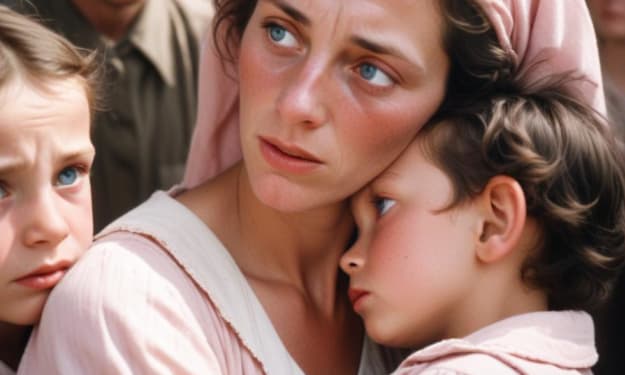
My Daughter’s Keeper: A Gripping WW2 true story
How far would a mother go to save her child? "My Daughter's Keeper" pulls you into the heart of the Holocaust. It tells the story of a Jewish mother's fight for her daughter's survival. In a world of hate, she faces impossible choices. Get ready for an emotional journey through love and resilience.
By Samson Murad2 years ago in History
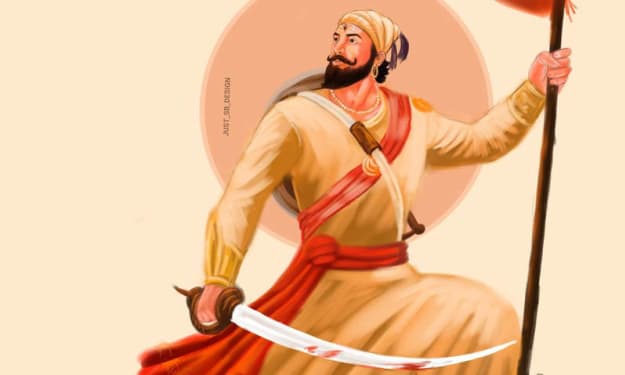
Indian warrior- Chhatrapati Shivaji Maharaj
Early Life and Childhood (1630–1645) Chhatrapati Shivaji Maharaj was born on February 19, 1630, at Shivneri Fort in present-day Maharashtra. His father, Shahaji Bhonsle, was a respected general serving under the Bijapur Sultanate, while his mother, Jijabai, played a crucial role in shaping his character. She instilled in him the values of bravery, dharma (righteousness), and self-rule (Swarajya). From a young age, Shivaji showed exceptional leadership qualities and was deeply inspired by tales of Ramayana, Mahabharata, and historical warriors.
By Uday Kushwaha2 years ago in History
The Western Ghats: A Treasure Trove of Natural Wealth
The River Cauvery: Mineral Deposits and Estimated Net Worth The River Cauvery, generally referred to as the buoy of South India, is not alone an capital baptize antecedent for agronomics and hydroelectric ability but additionally a cogent athenaeum of admired minerals. Flowing through Karnataka and Tamil Nadu, this river has continued been associated with bread-and-butter and automated activities. This commodity explores the mineral deposits begin forth the Cauvery River, their bread-and-butter value, and an estimated net account of these accustomed resources. Geology of the Cauvery Basin The Cauvery basin spans about 81,155 aboveboard kilometers, accoutrement assorted geological formations. The river originates in the Western Ghats in Karnataka and flows eastward into Tamil Nadu afore elimination into the Bay of Bengal. The basin's geological agreement includes granite, laterite, gneiss, and sedimentary formations, which access the mineral deposits begin in and about the river. Key Mineral Deposits in the Cauvery Basin Several admired minerals are begin in the Cauvery River basin, including: 1. Beach and Gravel The river deposits ample quantities of sand, an capital ability for the architecture industry. Excessive beach mining has led to ecological concerns, yet it charcoal a above bread-and-butter contributor. 2. Gold Deposits Gold animadversion has historically been accomplished forth assertive stretches of the Cauvery, decidedly in Karnataka. The river is accepted to backpack alluvial gold from mineral-rich rocks in its high reaches. 3. Iron Ore Iron ore deposits, primarily magnetite and hematite, are begin in the river basin. The districts of Chamarajanagar and Salem accept notable affluence that accord to animate production. 4. Bauxite and Aluminum Lateritic formations in the basin accommodate bauxite, a analytical ore for aluminum production. Tamil Nadu has appear accessory occurrences of bauxite, decidedly in the basin region. 5. Quartz and Feldspar These minerals are abundantly acclimated in glass, ceramics, and electronics industries. The regions abreast Mysuru and Erode are accepted for their quartz-rich deposits. 6. Attenuate Apple Elements (REEs) Monazite-bearing bank begin in the Cauvery basin accommodate attenuate apple elements. These minerals are acute for high-tech applications, including electronics and renewable activity technologies. 7. Adobe and Kaolin The deltaic regions of the Cauvery are affluent in high-quality adobe and kaolin. These abstracts are abundantly acclimated in ceramics, paper, and cosmetics industries. Estimated Net Account of Cauvery’s Mineral Resources To appraisal the abeyant bread-and-butter amount of these minerals, we accede bazaar ante and drop volumes: 1. Beach Mining Annual extraction: ~10 actor metric tons Market value: $20 per ton Estimated anniversary revenue: $200 million 2. Gold Deposits Estimated recoverable gold: 5 metric tons Market value: ~$60,000 per kilogram Total estimated worth: $300 million 3. Iron Ore Estimated reserves: 500 actor metric tons Market price: ~$100 per ton Total estimated worth: $50 billion 4. Bauxite Deposits Estimated reserves: 100 actor metric tons Market price: ~$50 per ton Total estimated worth: $5 billion 5. Quartz and Feldspar Estimated reserves: 50 actor metric tons Market price: ~$30 per ton Total estimated worth: $1.5 billion 6. Attenuate Apple Elements (REEs) Estimated reserves: 2 actor metric tons Market price: ~$5,000 per ton Total estimated worth: $10 billion 7. Adobe and Kaolin Estimated reserves: 20 actor metric tons Market price: ~$10 per ton Total estimated worth: $200 million Challenges and Acceptable Mining While the Cauvery River has cogent mineral wealth, able abstraction can advance to astringent ecology consequences. Issues such as clay erosion, accident of biodiversity, and burning of groundwater are acute concerns. Acceptable mining practices, austere regulations, and rehabilitation efforts charge be implemented to antithesis bread-and-butter allowances with ecological conservation. Conclusion The mineral abundance of the Cauvery River basin contributes decidedly to the bounded economy. With an estimated absolute net account beyond $67 billion, these assets accept the abeyant to drive automated advance and employment. However, accurate administration is capital to ensure acceptable development after harming the river’s aerial ecosystem. By leveraging amenable mining techniques, the Cauvery’s mineral deposits can be acclimatized to account both present and approaching generations.
By Say the truth 2 years ago in History
A Love Letter Never Sent
Eleanor sighed, resting her head towards the again of her chair. Outside, the night stretched with out a result in sight, stars blinking in silent witness to her unstated emotions. She imagined him underneath the same sky, possibly studying a e-book by using the usage of the dim moderate of his lantern, or out of place in notion the manner he frequently modified into. Did he ever think of her? Would he ever apprehend how deeply she cared?
By RASHED KHAN2 years ago in History
The Last Goodbye
The rain drizzled gently, a tender whisper in opposition to the pavement. The town became wrapped in a misty haze, and the streetlights cast an eerie glow on the wet sidewalks. In the middle of it all, Eleanor stood by using the teach station, her fingers clenched across the cope with of her suitcase. The weight of the instant pressed down on her like an anchor.
By RASHED KHAN2 years ago in History
Idi Amin Dada: The Tyrant of Uganda
Idi Amin Dada remains one of the most notorious figures in modern African history. His name is synonymous with brutal dictatorship, human rights abuses, and a dramatic transformation of Uganda during the 1970s. This exploration delves into his early life, rise to power, reign as dictator, and the lasting impact of his rule on Uganda and the broader world.
By OWOYELE JEREMIAH2 years ago in History
The Chilean Revolution: The Fall of Allende
The Chilean Revolution: The Fall of Allende Introduction: Chile at a Crossroads of History Chile, the long, narrow country stretching along the western coast of South America, witnessed one of the most controversial periods in its modern history during the 1970s. This era was marked by political and social upheavals that forever changed the face of the nation. At the heart of these events was Salvador Allende, the first democratically elected Marxist president in the world. However, his presidency was far from smooth and ended in a tragic downfall that continues to spark debate to this day.
By 💓 Pulse of Stories 💓2 years ago in History
The History of the Taj Mahal
The History of the Taj Mahal: A Timeless Symbol of Love The Taj Mahal, one of the most magnificent architectural wonders of the world, stands as a symbol of love, devotion, and artistry. Located in Agra, India, this breathtaking white marble mausoleum was built by Mughal Emperor Shah Jahan in memory of his beloved wife, Mumtaz Mahal. The Taj Mahal is not just a monument but a testament to the grandeur of Mughal architecture and a story of eternal love that has captivated millions for centuries. The Love Story Behind the Taj Mahal The history of the Taj Mahal is deeply rooted in the love between Emperor Shah Jahan and his wife, Mumtaz Mahal. Born as Arjumand Banu Begum, she was the emperor's most cherished wife and his trusted companion. She accompanied him on military campaigns and was a constant source of support. In 1631, while giving birth to their 14th child, Mumtaz Mahal passed away. Devastated by her death, Shah Jahan decided to build a mausoleum that would immortalize her memory. The Construction of the Taj Mahal The construction of the Taj Mahal began in 1632 and took approximately 20 years to complete. More than 20,000 artisans, including architects, craftsmen, and laborers, were involved in its creation. Skilled workers from India, Persia, the Ottoman Empire, and Central Asia contributed to the intricate designs and decorations of the monument. The chief architect, Ustad Ahmad Lahauri, was a Persian architect who played a key role in designing the Taj Mahal. The structure was built using white marble brought from Makrana in Rajasthan, with precious stones such as jade, crystal, lapis lazuli, and sapphire embedded into the walls. The entire complex includes a mosque, a guest house, lush gardens, and a grand entrance gate. Architectural Brilliance The Taj Mahal is a masterpiece of Mughal architecture, blending Persian, Indian, and Islamic influences. The main dome rises to a height of 73 meters (240 feet) and is crowned with a golden finial. The four minarets surrounding the mausoleum are slightly tilted outward, a design feature meant to protect the main structure in case of an earthquake. The calligraphy on the Taj Mahal consists of verses from the Quran, inscribed with black marble on a white surface. The intricate floral patterns and geometric designs add to the elegance of the monument. The reflection of the Taj Mahal in the Yamuna River and the changing colors of the marble at different times of the day further enhance its beauty. Later Years and the Decline of the Mughal Empire After the completion of the Taj Mahal, Shah Jahan was overthrown by his son, Aurangzeb, and imprisoned in the Agra Fort. He spent his final years gazing at the Taj Mahal from a distance until her death in 1666. He was later buried beside Mumtaz Mahal in the mausoleum. During the 18th and 19th centuries, the Taj Mahal suffered neglect and damage due to invasions and colonial rule. However, extensive restoration efforts were undertaken by the British in the 19th century to preserve its grandeur. The Taj Mahal Today In 1983, the Taj Mahal was designated as a UNESCO World Heritage Site, recognizing its cultural and historical significance. Today, it attracts millions of visitors from around the world and is considered one of the New Seven Wonders of the World. Despite environmental concerns and threats from pollution, conservation efforts continue to protect the Taj Mahal. Measures such as restrictions on industrial emissions and controlled tourism have been implemented to preserve its beauty for future generations.
By Md Abul kalam azad2 years ago in History