Ancient
FALL OF ROME
The Fall of Rome In the vast expanse of the Roman Empire, once a symbol of power, grandeur, and unparalleled civilization, a gradual decline had begun to take hold. The empire that had once stretched from the misty Scottish Highlands to the scorching deserts of North Africa was now teetering on the brink of collapse. The fall of Rome was imminent, and with it would come a turning point in the history of the world.
By Tewogbade Joshua3 years ago in History
The Myth of Persephone
Every year, before the ancient Greeks sowed their seeds of grain, they celebrated Demeter, the goddess of agriculture. On Earth, every morsel of food brought sweet sustenance, while in the land of the dead, it ensured an eternal stay. Demeter nurtured the fields of Earth with her beloved daughter, Persephone, who inherited her mother's passion and blossomed into a radiant young woman.
By Henrik Leandro Laukholm Solli3 years ago in History
The Celestial Love Story
In the celestial court of the Jade Emperor, resided seven princesses, each holding a designated position. However, the youngest princess possessed a unique skill: the ability to pluck clouds from the sky and spin them into the softest robes. Her craftsmanship was so impeccable that no expert eye could discern a single seam. Yet, her daily routine grew monotonous, and she yearned for new inspiration.
By Henrik Leandro Laukholm Solli3 years ago in History
A Curious Alchemist: In the Hearth of the Renaissance
Once, in a lifetime not my own, I found myself wrapped in the fabric of the Renaissance, that miraculous epoch between the Middle Ages and the Age of Enlightenment. The year was 1456, the dawn of a new era brimming with curiosity and a hunger for understanding that stretched from the quietest villages to the most resplendent royal courts.
By Stevie Johnson3 years ago in History
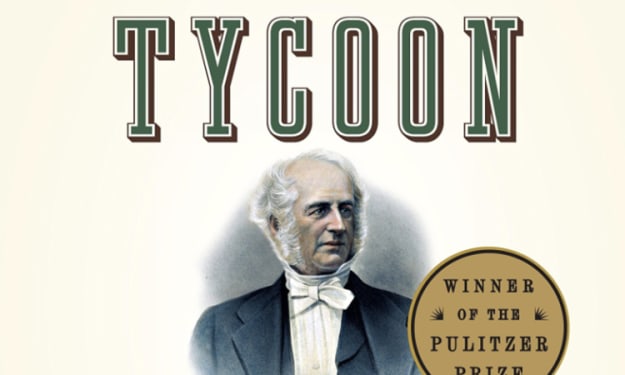
Unveiling the Legendary Commodore Cornelius Vanderbilt
From humble beginnings emerged a man whose relentless vision and ruthless ambition shaped the very landscape of America. Cornelius Vanderbilt, known as The Commodore, embarked on an extraordinary journey from rags to riches, leaving behind a legacy of innovation, power, and wealth. With an unwavering spirit, he revolutionized the transport industry, rewriting the rules of the game. This remarkable story is one of triumphs, scandals, and the indomitable spirit of a legendary figure.
By Oladeji Showunmi3 years ago in History
PAST LIFE
If I Were Born in a Different Historic Era: Exploring Alternative Occupations Introduction Imagine if you were born in a different historic era. The course of history has shaped our lives, including the occupations we pursue. This article delves into the possibilities and explores how our professions would differ if we were born in various historical periods. From being a blacksmith in the Medieval period to a factory worker during the Industrial Revolution or an artist/patron of the arts in the Renaissance, each era offers unique opportunities and challenges.
By shahidahmed3 years ago in History
The black
The origin of African people is a complex and multifaceted topic that encompasses a rich history spanning thousands of years. In this 1000-word response, we will explore key aspects of African origin, including human evolution, early civilizations, and the diverse ethnic groups that make up the African continent.
By Ihekaibeya Davidson3 years ago in History
Bizarre Historical Enigmas
Throughout the vast tapestry of history, countless stories have been etched into its fabric, each with its own peculiar twist. While some historical events have become widely known and studied, others remain tucked away in the recesses of time, captivating our curiosity with their eccentricity. These peculiar occurrences challenge our comprehension, leaving us fascinated, perplexed, and questioning the boundaries of human experience. Join us on an extraordinary journey as we delve into the enigmatic annals of history to unveil some of its most unusual and captivating events. The Curious Case of the Dancing Plague of 1518: In the summer of 1518, a small town called Strasbourg in France became the stage for a baffling phenomenon. It all began when a woman named Frau Troffea started dancing relentlessly in the streets, seemingly unable to halt her movements. Astonishingly, her frenzied dance quickly spread, infecting others with the same uncontrollable compulsion. Within weeks, dozens of people were gripped by the dancing plague, which continued unabated, leading to exhaustion, injuries, and even fatalities. The true cause behind this extraordinary episode remains an enigma, confounding historians and medical experts alike. The Unconventional Great Emu War: In 1932, Australia bore witness to a peculiar conflict that has come to be known as the Great Emu War. Faced with an overwhelming emu population causing significant damage to crops, the Australian government dispatched soldiers armed with machine guns to eradicate the birds. However, the emus proved to be unexpectedly resilient adversaries, scattering and evading the soldiers' efforts with ease. The conflict ended in a humbling defeat for the military, highlighting the unpredictability of nature and the limitations of human intervention. The Mystifying Tanganyika Laughter Epidemic: In 1962, an extraordinary event unfolded within a school in Tanganyika, present-day Tanzania. The phenomenon commenced when three girls succumbed to uncontrollable fits of laughter, unable to suppress their mirth. Astonishingly, the laughter spread contagiously throughout the school, compelling its closure. The epidemic spilled over into neighboring villages, affecting thousands of individuals. Lasting several months, the laughter epidemic caused significant disruptions, bewildering scientists and psychologists as they sought to comprehend its origins and implications. The Bizarre Tragedy of the Great Molasses Flood: In 1919, the vibrant city of Boston was thrust into the throes of an unprecedented calamity. A colossal storage tank containing millions of gallons of molasses unexpectedly ruptured, unleashing an immense wave of viscous syrup that surged through the streets at an astonishing velocity. With the molasses rising to a height of 25 feet, buildings were demolished, individuals were trapped, and tragically, 21 lives were lost. The Great Molasses Flood stands as an unforgettable testament to one of the most peculiar and sorrowful accidents in American history. The Unfathomable Dancing Mania of the Medieval Era: During the period spanning the 14th to the 17th centuries, Europe witnessed numerous outbreaks of a perplexing phenomenon known as dancing mania. Large groups of people would suddenly succumb to an irresistible urge to dance fervently, often enduring for days on end. In a trance-like state, they became powerless to control their movements. These episodes, believed to be manifestations of mass psychogenic illness, were potentially triggered by factors such as religious fervor, stress, or the influence of hallucinogenic substances.
By Lakshman PL3 years ago in History
The history of the world most famous tournament
The UEFA Champions League has a fascinating origin story. It began as the European Champion Clubs' Cup in 1955, with the aim of bringing together the top football clubs from across Europe to compete in a prestigious tournament. The idea emerged as a response to the growing desire for inter-continental club competitions.
By Ihekaibeya Davidson3 years ago in History
The Titanic: A Tragedy That Shook the World
Introduction The sinking of the RMS Titanic on April 15, 1912, was one of the most tragic maritime disasters in history. The ship, which was on its maiden voyage from Southampton to New York City, struck an iceberg and sank in just over two hours. Over 1,500 people died, making it one of the deadliest commercial peacetime maritime disasters in modern history.
By Muhammad Danish3 years ago in History