Ancient
Vanished from History
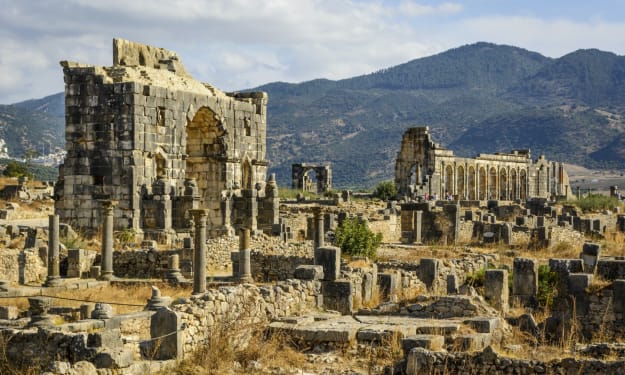
Tick Tock users have recently found another crazy thing out there somehow 10 days are sort of canceled from world history the person who found it must have been really bored since the discovery happened when they scrolled their iPhone calendar to the 16th century so if you ever try to scroll your Apple calendar back to 1582 you'll notice a weird thing the month of October at first it seems alright when you zoom out of it it shows Days 1 to 31 but then you click and it takes 10 days out here's the explanation from Tick Tock users which seems to be pretty accurate in October 1582 there was a change from the old Julian calendar to the new Gregorian version that switch could create a little bit of chaos and mess with the lives of ordinary people so in order to have the calendar back in line with the seasons Pope Gregory XII deleted 10 days from the year 1582. so the day after October 4th 1582 was declared October 15th and this way the drift was reset right we found those 10 days if you're still bored and want to find more Curious things in the calendar you scroll even more and get to Year One there you'll see that somehow it has 24 months and all the months are doubled rumor has it it's nothing more than a simple glitch but hey if you know the answer let me know in the comments there are many things in the present we still can't explain but there are even more of them in the past we still know nothing about how ancient Egyptians built their pyramids there are no written records from that period And scientists are sure they had done that on purpose but a recent archaeological Discovery might shed some light at least on how they used to haul giant blocks of rock to such enormous distances researchers found a 4 500 year old ramp system in an alabaster Quarry in the Eastern desert it dates back to Pharaoh Khufu the builder of the Great Pyramid of Giza and consisted of a central ramp and a pair of staircases with a large number of post holes the ancient Egyptians hauled a sled on which they put great blocks of alabaster tying ropes to the wooden posts they were able to pull the sled out of the Quarry up some very steep slopes still the construction material for the pyramids wasn't Alabaster it was granite a much harder and heavier mineral and the discovery of the amazing ramp system doesn't tell anything about how the ancient people were able to haul those great rocks up the much steeper slopes of the pyramids the world has changed dramatically over the centuries but there's one thing for sure that's been unchanged the love for food by the way scientists managed to find out some of the oldest examples of people's favorite food they inspected some of the ancient pottery and managed to find traces of best-loved food dating back to around 2000 BCE it all happened in Sicily and guess what that food was nah it wasn't pizza or pasta but olive oil but there's more researchers from Egypt discovered some bacteria-ridden and sort of lumpy substance in some ancient Pottery which turned out to be cheese now this bread is over 14 000 years old in fact the archaeologist who found it claims its 14 400 years old must be some tough crust on that one anyway there's an even more Curious detail about this ancient treat scientists say it predates the age of Agriculture by 4 000 years so people were Hunters back then they didn't so how come they baked bread Tobias Richter head of the excavation party and Jordan explains that these guys lived in a transitional period between hunting and agriculture they gathered wild cereals such as barley Ein corn and oat processed them and made food out of them that's how people later became more sedentary leading to the progress of cultivating the land eventually small steps make a big deal not only real archaeologists can discover something great kids can do that too a little girl going by the name of saga vanasek was playing in a lake in Sweden when she stepped on something hard she felt curious and pulled that object out of the water only to find it wasn't a stick like she thought initially but a very real sword Swedish scientists estimate that the item is at least 1 000 years old so it was forged several centuries before the Viking era Specialists say they were able to fetch a broach in the same area that was from around the same time they say that the place had been thought to be a burial site but this finding turned the theory upside down now the researchers think it was some kind of sacrificial ground because there were no signs of burial mounds around the place whatsoever well the truth is yet to be uncovered the antikythera mechanism is one of the most popular ancient technologies that boggles the minds of modern scientific Society its name comes from the place it was discovered a small island off the coast of Greece called antakithira in 1901 divers searching for sea sponges in the area unexpectedly found antique wreckage among other wondrous things there was a complex mechanism that made no sense to the lucky sponge gatherers the thing was seemingly incomplete and in very poor condition but even so its complexity dazzled scientists who studied it at first they had a hypothesis that it was an ancient computer dating back more than 2 200 years they dumped this idea as ridiculous but after 70 years other Scholars came to similar conclusions in the end scientists came out with a final statement the mechanism calculated and tracked Celestial time the term for that is an ornery despite its ancient Origins the people who created it were clearly much ahead of their time when researchers tried to replicate the Contraption in 2021 they were baffled by how much the thing could do still the question of who made it and how remains open to this day the famous Roman scholar Pliny the Elder was one of the first to describe a mind-boggling technological advance of the ancient Romans the so-called Roman concrete among other structures Romans used this type of concrete to build the pantheon as various sources describe it Roman concrete was three parts volcanic ash and one part line and not just any Ash at that they considered the best to be found where the modern city of patsali stands this kind of volcanic ash even has its name patelana the main difference between the Roman and modern concrete is that the ancient variety became only stronger when affected by seawater this allows structures built from it to withstand harsh elements and even survive for centuries underwater the modern kind is much more fragile Specialists say it can stand for about 50 years and saltwater makes it deteriorate even faster currently scientists and Engineers are looking into ways of Reviving Roman concrete technology not only because it's a lot more durable but because it has a much lighter toll on the environment you might ask what's so unusual about a stone hunt and you'll be correct in most cases but this one is something according to Danish archaeologist Christian cook Madsen the Hutt he and his team found near a glacier in southern Greenland shouldn't even be there he said they had been in the area before and didn't find anything of interest but when they dug up a little bit they uncovered a single dwelling it's very small and it's open to winds and chills from every side scientists can't explain why it's even there the Hut stands lonely literally in the middle of nowhere and people couldn't possibly live there all year round because it was simply too cold have any ideas to help the archaeologists
By Nayab Zahra3 years ago in History
Why queen Elizabeth 2nd was the queen of 15 countries!?
On November 30th, 2021, history was made as Barbados proudly emerged as the world's newest republic. With a resounding declaration, the transformation was solidified: "From this day and forever, declare Barbados a parliamentary republic." This pivotal moment marked the culmination of a journey that saw Barbados unfurl its own flag, symbolizing the end of a colonial era spanning over 350 years and dissolving its ties to the British royal family. What added an intriguing layer to the event was the presence of none other than Prince Charles, who acknowledged, "It was important that I should join you to reaffirm those things which do not change." Prince Charles's words held a deeper significance, encompassing the essence of the transition. Although Barbados had stepped away from being a realm of the British Crown, it chose to maintain its membership in the Commonwealth—a conglomerate of nations primarily composed of former British colonies. A moment of transformation was unfolding, one that required a closer look at the intricate relationship between the British Empire and the Commonwealth of Nations. Travel back to 1926, the year Queen Elizabeth II entered the world stage. At that time, the British Empire exerted dominion over nearly a quarter of the global population through its sprawling colonies. This immense reach was built upon refined systems designed to control and exploit wealth and resources across the colonies. Consider the case of Barbados, where descendants of those kidnapped from Africa were exploited on sugar plantations, or delve into South Africa, where a wealth of diamonds was extracted from local mines. The early 20th century witnessed the initial ripples of change in the colossal British Empire. Countries such as Australia and Canada transformed into British dominions, relinquishing direct rule by Britain while maintaining symbolic allegiance to the Crown—a concept termed the British Commonwealth. This new form would later serve as the blueprint for the empire's evolution. As Queen Elizabeth ascended the throne in the 1950s, the world was in flux. Post-World War II, Britain's economy faltered, and independence movements surged across the empire. Struggles for sovereignty unfolded in places like India, where leaders fought for self-governance, and in Kenya, where millions resisted British rule, even enduring internment camps. Recognizing the inevitability of decolonization, the monarchy shifted its focus toward relevance. While Queen Elizabeth did not personally attend the lowering of the British flag, her family did. Prince Philip participated in ceremonies marking the independence of former colonies, including Kenya. Other royals, such as Lord Mountbatten, were also part of this symbolic transition, as seen in India. India's trajectory took an intriguing turn as it chose to become a republic and sever ties with the monarchy. In response, the British Commonwealth underwent a transformation of its own, rebranding itself as the Commonwealth of Nations. This evolution allowed countries to join as members even if they were no longer under the queen's rule. Meanwhile, newly independent nations opted to retain the queen as their ceremonial head of state, establishing a diverse mix of monarchies and republics, all presided over by the queen. In this intricate landscape, the monarchy adapted and thrived, expanding its reach through royal tours that echoed the imperial tradition. As the British empire decolonized, the monarchy remained a global entity. Fast-forward to today, where approximately a third of the world's population resides in a Commonwealth nation. This intriguing alliance extends beyond former British colonies, as countries find value in the political platform it offers, connecting them to influential diplomatic players like the UK, India, Canada, and even the Crown itself. The transition to the next head of the Commonwealth, King Charles III, carries a hint of irony. While the British empire gave birth to the Commonwealth, the future leadership of the organization is not bound by colonial origins. Anyone has the potential to lead, indicating that the Commonwealth's evolution may be guided by those very colonies it was designed to unify. The recent passing of Queen Elizabeth II triggered periods of mourning across Commonwealth nations. Her remarkable ability to unite diverse nations provided a buffer against the darker chapters of British history, such as slavery. However, the monarchy can no longer evade these discussions, as the collective reckoning with colonial legacies prompts introspection on the monarchy's role within the Commonwealth. These conversations underscore a pivotal shift in power dynamics. Former British colonies now hold considerable influence within the Commonwealth. The question that looms large is the collective vision of these nations. What aspirations and goals will guide the future of this diverse union? The journey from colonialism to republics within the Commonwealth is a complex narrative, one that reflects not just a shift in political landscapes, but also the aspirations of nations bound by shared histories.
By Shubham Bajaj3 years ago in History
The Remarkable Discovery of the Lost Tombs of the Pharaohs
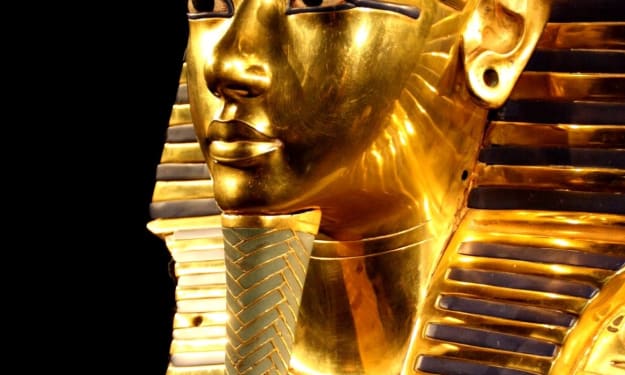
In the heart of the scorching Egyptian desert, an international team of archaeologists embarked on an audacious expedition to unravel one of history's greatest mysteries: the elusive tombs of the Pharaohs that had eluded discovery for centuries. Armed with cutting-edge technology and unwavering determination, they set out on a journey that would rewrite history books and capture the world's imagination.
By mostafa ali3 years ago in History
How the 'lost cities' of amazon were finally found
Meet Percy Fawcett, the intrepid British explorer whose journey into the heart of the Amazon rainforest in 1925 marked the last known communication from him. This was his eighth expedition into the Amazon, driven by a singular objective: the pursuit of a fabled lost city, dubbed "Z". This quest was fueled by age-old rumors that whispered of sprawling cities nestled deep within the dense rainforest, a notion that captured Fawcett's imagination. Yet, despite his unwavering determination, Fawcett's search for "Z" and other mythical cities remained unfruitful, leaving many to believe that the Amazon's untamed wilds were incompatible with the existence of urban centers. Recently, however, groundbreaking discoveries have altered our perception of the Amazon's past. Inconspicuous ditches and mounds, scattered across the rainforest, have piqued the interest of archaeologists. These seemingly natural formations have been unmasked as evidence of human engineering. These revelations spark a renewed understanding of an ancient enigma: the whereabouts of the long-lost cities of the Amazon. Travel back to the 16th century, a time when European colonizers surged into the territories of Central and South America, accompanied by soldiers, diseases, and visions of conquest. As they encountered diverse indigenous groups, they stumbled upon remarkable cities, like Tenochtitlan, founded by the Mexica people around 1325 AD, and Cusco, established by the Incas around 1200 AD. These urban centers boasted intricate stone structures, well-planned streets, and bustling neighborhoods. However, the European dominion over these cities masked their potential to hold yet another marvel. The colonizers, amidst tales of "A great Lord... covered in gold dust" and the allure of the legendary El Dorado, failed in their quests to find the fabled city of gold. While their expeditions resulted in hardship and disillusionment, they bore witness to signs that hinted at the existence of thriving civilizations. Accounts from Spanish explorers spoke of gleaming cities, abundant crops, and significant towns that seemed to defy the rainforest's perceived hostility. Over two centuries, these explorations took place, yet the legend of El Dorado was eventually relegated to the realm of myth by the 19th century. Fast forward to the early 20th century, when Percy Fawcett rekindled the search for these elusive cities. His relentless efforts spanned decades, targeting two Amazonian regions: the western reaches of Bolivia and the southern expanses of Brazil. Fawcett encountered indigenous communities, described as living in modest groups within simple villages. The absence of stone ruins seemed to bolster the consensus among experts that the rainforest was inherently unsuited for supporting intricate societies, let alone cities. Experts of the time leaned toward the belief that the indigenous people lacked the sophistication to construct cities, attributing their livelihoods to the rainforest's limited fertility. In the face of skepticism, Fawcett clung to his conviction, penning a final letter to his wife assuring her, "You need have no fear of any failure." His departure from camp marked his vanishing, plunging him into the realm of mystery. Decades passed, and the Amazon continued to be seen as a realm of emptiness. Yet, Fawcett had been on the right trail, albeit chasing the wrong quarry. The crucial clue that had eluded him lay within the soil itself. In the 1960s, scientists stumbled upon pockets of extraordinarily fertile earth, named terra preta or black earth. This rich soil, enriched by human waste or controlled forest fires, hinted at the possibility of large-scale agriculture within the rainforest. The 1990s then brought another revelation, as archaeologists studying the Xingu river region discovered intricate ditches, remnants of carefully designed settlements. These ditches marked out walls, a central plaza, and interconnected roads, revealing a network of settlements that could have harbored up to 50,000 people between 1250 and 1650 AD. These settlements followed a sustainable blueprint, making the most of the rainforest's resources without exhausting them. Orchards and gardens were carefully demarcated, while the forested areas remained sanctuaries for animals and medicinal plants. These, it seems, were the hidden cities that had captivated Fawcett's imagination. As time passed, evidence of these lost cities burgeoned, revealing a complex tapestry of settlements across the Amazon. Trench networks that date back to 200 - 1200 AD suggested a population of up to 60,000 people, rivalling many European cities of the era. Satellite technology even uncovered U-shaped structures atop 22-meter pyramids in Bolivia, fueling the consensus that these Amazonian cities once played host to millions. Fawcett's failure to encounter these lost cities can be attributed to a multitude of factors. The devastating impact of diseases brought by European colonizers had already decimated an estimated 80-95% of the indigenous population, particularly from smallpox and measles. Furthermore, the construction materials used by Amazonian indigenous people, primarily wood and earth, led to the gradual decay of their architectural achievements, leaving little behind but dense vegetation and seemingly untouched soil. The revelation of these lost cities shatters our preconceptions and unveils an ancient harmony between humans and the rainforest. The intricate relationships between settlements, their inhabitants, and the bounties of nature paint a picture of a civilization that once thrived amidst the dense foliage. These discoveries propel us toward a deeper comprehension of the intricate dance that humans and the rainforest shared, an enduring partnership that is only beginning to unravel before our eyes.
By Shubham Bajaj3 years ago in History
Hidden Histories: Unearthing the British Museum's Looted Artifacts
Welcome to the captivating world of the British Museum, a place that stands as a testament to the ebb and flow of human history. As you step through its grand entrance, you are greeted by a treasure trove of knowledge spanning an impressive two million years. This colossal repository of culture and heritage draws in countless visitors, earning its title as the world's largest museum dedicated to world history. Behold, within these hallowed halls, an awe-inspiring collection of over eight million artifacts from lands near and far, each whispering tales of civilizations long past. Among the stars of this illustrious museum are the time-honored relics that beckon from the museum's must-see list. Imagine gazing upon the enigmatic Easter Island sculpture, a venerable thousand-year-old artifact, or marveling at the intricate bronze sculpture depicting the Hindu deity Shiva. These treasures are only the beginning of an enchanting journey that lies ahead. However, as you traverse the museum's labyrinthine corridors, a shadow of contention emerges. A conundrum comes to light, epitomized by the pathway you tread. A stark revelation emerges—almost half of the dozen exhibited pieces along this route are mired in disputed ownership. The British Museum, in its earnest pursuit to showcase the diversity of humanity's heritage, finds itself entangled in a web of controversy. Indeed, a poignant debate has risen, casting a spotlight on the question of whether cultural artifacts should remain ensconced within the halls of Western museums or return to the embrace of their home countries. The discourse surrounding the rightful ownership of these treasures has ignited a fervent discussion, where perspectives clash and passions run deep. To better understand this narrative, let us delve into the historical tapestry of the British Empire, which, in the late 1600s, embarked on an unprecedented expansion across continents. It soared to majestic heights, becoming the unparalleled dominion that spanned a quarter of the globe's landmass and population. As the empire extended its reach, it harvested not only resources and wealth but also cultural heirlooms from lands far and wide. In 1753, the British Museum was founded, a sanctuary to house these marvels, a true embodiment of human endeavor. The collection flourished with each passing decade, embracing new acquisitions, legal and undisputed, like the venerable two-thousand-year-old Roman base, a relic of ancient grandeur bequeathed to the museum by a noble duke in the year 1945. Yet, the heart of the matter resides in the pieces shrouded in ambiguity and dispute. As you step through the museum's entrance, your gaze falls upon the Rosetta Stone, a relic entwined with intrigue. Acquired by British troops from the French in Egypt, this ancient slab serves as a bridge to deciphering the enigmatic script of the past. A few paces onward, the Parthenon sculptures beckon, extracted from the Acropolis in Athens by a British lord and carried across continents to their present abode. Venture further, and you encounter the enigmatic Benin bronzes, captivating in their diversity. These treasures, hailing from the Kingdom of Benin in present-day Nigeria, encompass a spectrum of artistic expression, from engraved ivory tusks to resplendent brass sculptures and intricate plaques. This once-thriving kingdom thrived in the 1500s, its artistry a mirror reflecting its political and social narrative. Professor Chika Okekeyagulu, an art historian hailing from Nigeria and a professor at Princeton University, unravels the story of these bronzes, attesting to their role as visual chronicles of a society that lacked a conventional written script. However, a somber chapter unfurled in 1897. European colonial powers, fueled by a feverish quest for dominion, cast their gaze upon Africa. The "Scramble for Africa" saw these powers partition the continent into spheres of influence, with Benin falling under the British domain. A tragic turn of events led to the "Benin Disaster," a collision of cultures and interests that claimed lives and loyalties. In response, a punitive expedition ensued, leading to the pillaging of Benin's treasures, a calculated endeavor that saw the British soldiers claim thousands of artifacts as their spoils. Photographs from that epoch capture the systematic dismantling of palace plaques, a chilling testament to a civilization erased. The aftermath bore witness to a once-thriving kingdom reduced to ruins, as the echoes of a colonial conquest reverberated through time. The indomitable spirit of the Benin people endured, culminating in Nigeria's eventual independence in 1960. Yet, the echoes of the past endured, as the artifacts that bore testament to Benin's legacy remained dispersed across the globe, locked within the vaults of Western institutions. Flash forward to the year 1995, a poignant moment where firsthand encounters with these artifacts evoke a sense of pride and longing. Dr. Chika Okeke-Agulu reminisces about his inaugural visit to the British Museum, a journey that spanned continents and emotions. The magnificence of these artifacts is juxtaposed against the bittersweet reality—while a privileged few traverse oceans to bear witness, countless others are denied this privilege, forever distanced from their heritage. March of 2000 marked a pivotal juncture as Benin's royal family voiced their plea for the return of unlawfully taken cultural property. A symbolic gesture, an olive branch extended across time, and yet the response remained incomplete. The British Museum, restrained by a governmental act, stood steadfast in its stance, refusing to relinquish its hold. The essence of their commitment reverberated in their words—"We don't restitute, but we are absolutely committed to lending as widely as possible." A glimmer of change emerged in the form of a grandson's noble gesture, as artifacts from the 1897 expedition were returned to the Benin royal family. The year 2007 bore witness to the birth of the Benin Dialogue Group, a consortium embarking on a complex journey toward reconciliation. Western museums that housed the bronzes and representatives from the Nigerian government engaged in earnest conversations, seeking a resolution that remains elusive to this day. But this narrative extends beyond the walls of the British Museum. It is a tale interwoven with threads of colonial power that stretch across epochs and continents. These contested artifacts symbolize more than just physical objects; they represent the intangible essence of cultural and historical identity. The quest for restitution is a testament to the enduring spirit of nations, demanding recognition, and a reclaiming of what was lost. In the words of Dr. Chika Okeke-Agulu, this endeavor is a long-term project, a pursuit that stretches beyond individual lifetimes. The time has come to embark on the arduous journey of cultural reconstitution, a journey that commences in the present, with an unwavering commitment to forging a path toward reconciliation. As we contemplate the stories encapsulated within these artifacts, let us collectively embrace the responsibility to honor their origins and the vibrant legacies they encapsulate. In conclusion, the British Museum stands as a microcosm of a global narrative, a place where history converges, and voices echo through time. Its vast halls hold not only artifacts but also echoes of debates, passion, and the longing for justice.
By Shubham Bajaj3 years ago in History
The Evolution of Anesthesia in Medical History
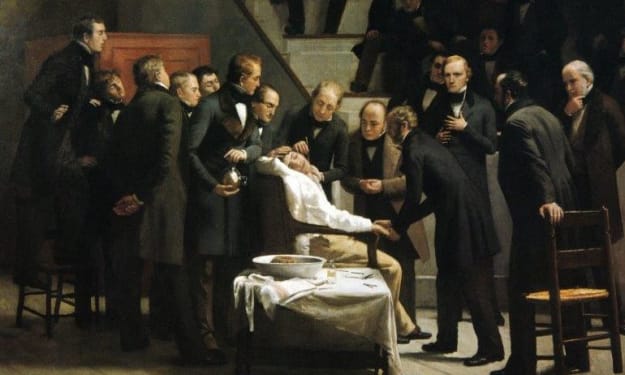
Imagine a time when medical procedures were performed without the comfort of numbing or unconsciousness. It was a time of great suffering, as patients had to endure excruciating pain while doctors hurried to complete their work. In the 1830s, a notable example was Scottish surgeon Robert Liston, celebrated for his incredible speed in the operating room. Picture this: a patient lying on the table, medical students holding them down, and curious onlookers awaiting the surgeon's skilled hands. With swift and precise movements, Liston cut through flesh, sawed through bones, and within mere minutes, an amputation was done. This scene captures the harsh reality of pre-anaesthesia surgeries. Patients had to remain fully conscious throughout the procedure, experiencing every sensation, every cut, and every stitch.
By Anita Nelima3 years ago in History
Debunking common misconceptions about the middle ages
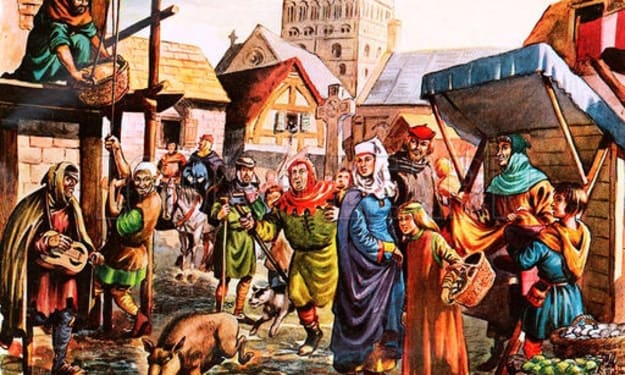
The Middle Ages, a captivating epoch often painted with broad strokes of misinformation, beckons us to delve deeper into its intricate tapestry. A time when knights in shining armor supposedly battled dragons, where ignorance reigned supreme, and hygiene was nearly non-existent. Yet, as we peel back the layers of myths that have shrouded this era, we find a more nuanced and fascinating narrative that defies these simplistic notions.
By Anita Nelima3 years ago in History
The Hidden Alliance
Long ago, in the ancient land of Egypt, a majestic civilization flourished. Among their many remarkable achievements, the Egyptian pyramids stood as a testament to their extraordinary architectural prowess. These colossal structures, shrouded in mystery and wonder, were believed to be the final resting places of the pharaohs. But what if there was more to their creation than meets the eye?
By Alhassan Iddrisu3 years ago in History
Mustafa Kemal Ataturk
Title: The Unyielding Legacy of Mustafa Kemal Atatürk In the annals of history, few figures have left as indelible a mark on a nation as Mustafa Kemal Atatürk did on Turkey. His story is one of resilience, vision, and unwavering determination, shaping a country's destiny and transforming its identity on the global stage.
By Khadijah Salia3 years ago in History