Ancient
The Unknown Mystery of the Pyramids of Egypt
The enigmatic allure of the ancient pyramids of Egypt continues to captivate the imagination of historians, archaeologists, and travelers alike. Rising proudly from the sandy terrain, these architectural marvels stand as a testament to the ingenuity and sophistication of the ancient Egyptians. Despite decades of research and exploration, the true purpose and construction techniques behind these imposing structures remain shrouded in mystery, fueling numerous theories and speculations that only deepen the intrigue.
By Biprojit saha3 years ago in History
Land of Legends
Once upon a time in ancient Europe, a land of mythical creatures and legendary tales, a great adventure was about to unfold. The continent was shrouded in mystery and filled with diverse cultures and civilizations that shaped its history. In a small village nestled in the heart of the dense forests, a young orphan named Eirik lived a simple life. He had always been fascinated by the ancient legends and tales passed down from generation to generation. Eirik would often spend hours listening to the village elders recounting stories of gods, heroes, and mythical beasts. Eirik had heard tales of an enchanted forest that lay beyond the village, a place where ancient prophecies spoke of hidden treasures and secret passages. One day, driven by an insatiable curiosity, he decided to embark on a journey to uncover the truth behind the legends.
By Michael Nwajagu3 years ago in History
The writings on the wall
Egyptian symbols are everywhere! You can buy them on t-shirts, see them in movies and music videos, and find websites dedicated to discussing and dissecting their meanings. But what do these ancient Egyptian symbols really mean? Let’s explore a handful of famous symbols and discuss their significance for the people who created them. Let's start with the most famous symbol, the ankh. The word "ankh" in Egyptian means life, so it represents not just life, but eternal life. It can be found on sarcophagus lids and in the hands of the gods. Some say it looks like a sandal strap, but that's not true. Another similar symbol is the knot of Isis, but its meaning is uncertain. The ankh is believed to represent birth and the continuity of life. It is a feminine symbol, with the top part representing the womb and the bottom part symbolizing the birth canal. The line in the middle represents the moment of birth, which is a significant point between life and death. Another symbol is the Coptic cross, which is inspired by the ankh. It is a symbol of Coptic Christianity, the primary denomination of Egyptian Christians. The Coptic cross has similarities to the ankh and the Orthodox cross. Some Coptic organizations use the Coptic cross, while others stick to the simple ankh. It's fascinating to see how these symbols have evolved and are still relevant today.
By Alexandria Merchant3 years ago in History
ALIENS were our GODS in the past?!
Human beings hold steadfast to their beliefs, a natural inclination that obstructs the acceptance of diverse thoughts on a subject. In the case of God, our species seems to prefer the divine entity as an enigma, possibly to align with our ideologies and reinforce our convictions. The mysterious nature of God not only intertwines with our history and origin but also prompts us to search for answers, perhaps by gazing into the vastness of the sky, stars, and space.
By Benjie Maybuena3 years ago in History
Agra Heritage Walk: Uncovering Timeless Splendors
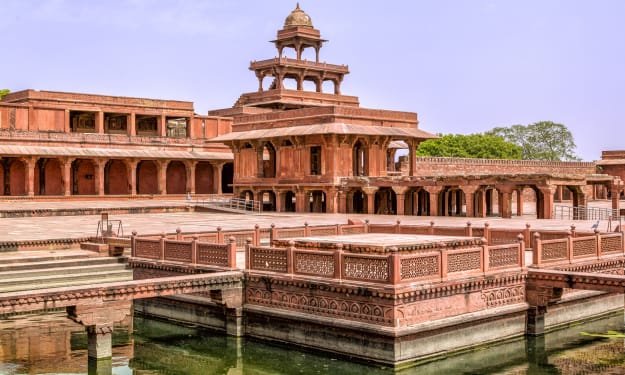
Explore Agra's cultural heritage with this detailed guide, carefully curated by Trocals. Uncover the layers of the city's past and immerse yourself in its timeless tales. Experience the stories etched within the monuments and streets. Explore Agra's history with knowledgeable guides who make the city's soul come alive. Walk through the past and uncover the rich cultural tapestry of Agra. Experience the grandeur of Agra on the Heritage Walk.
By Trocals India3 years ago in History
"The Mythic Tapestry: Love, Loss, and the Eternal Seasons of Demeter and Persephone"
In the mystical world of ancient Greece, where legends were born and gods and goddesses walked among mortals, there was a goddess named Demeter, renowned as the guardian of agriculture and the bountiful harvest. The very mention of her name sent ripples of gratitude across the land, for it was her touch that transformed the earth into a canvas of abundance, painting every meal with the flavors of the gods. But her benevolence came with a dark twist, one that entwined the realms of life and death in a story that has resonated through the ages.
By Alisa İnnokate3 years ago in History
A day in the life of a Roman soldier
In the year 15 CE, the Roman Empire is doing very well. Most of the credit for this success goes to the emperor, but it wouldn't have been possible without loyal soldiers like Servius Felix. Servius joined the army eight years ago when he was 18 years old. He came from a poor family. Unlike most soldiers, he doesn't gamble, so he saved most of his pay. He also kept three gold coins he received when he joined, which he'll get back if he serves for 25 years. He has a girlfriend back home whom he wants to marry, but he has to wait until he finishes his 25 years of service, which is tough and dangerous.
By MOSTAFA SALMAN3 years ago in History