Ancient
Dhari Devi
Dhari Dеvi Tеmplе, a placе of sеrious rеligious importancе as wеll as architеctural bеauty, is locatеd in thе Himalayan statе of Uttarakhand, India. This sacrеd shrinе, admirеd as an anciеnt rеsidеncy of thе divinе, pays tributе to Dhari Dеvi, a powеrful and mystеrious goddеss bеliеvеd to bе thе guardian of thе local communitiеs and a protеctor against thе Alaknanda Rivеr's aggrеssivе angеr. This tеmplе, sеt on thе clеan banks of thе Alaknanda, is morе than just a structurе; it is an alivе witnеss to thе rеgion's rich cultural hеritagе and an attracting architеctural marvеl that draws pilgrims, tourists, and thosе sееking pеacе from all ovеr thе world. Wе will discovеr history, look into thе dееp spiritual significancе, and rеmovе back thе layеrs of mystеrious lеgеnd that havе covеrеd thе Dhari Dеvi Tеmplе for cеnturiеs as wе takе on this journеy. Join us as wе еxplorе thе fascinating еssеncе of this anciеnt sitе.
By Sourav Swaraj3 years ago in History
"Titanoboa: The Serpent of Titans". Content Warning.
In the heart of the lush, ancient rainforests that covered the Earth 58 million years ago, a monstrous predator slumbered beneath a veil of time. It was a creature beyond imagination, a relic of an era when giants ruled the land. This is the story of Titanoboa, the colossal serpent that reigned as the apex predator of its time.
By Amani Kassim3 years ago in History
A Tour of the Most haunted Place on Earth
The catacombs, located beneath the bustling City of Paris, house the remains of over 6 million people. Many are unaware of this hidden underground network, as when the word "Paris" is mentioned, thoughts of the iconic Eiffel Tower or romantic strolls in the city of love come to mind. However, beneath the surface lies a series of tunnels that were originally dug in the 14th century to extract limestone, a valuable mineral found in the rich ground. These mines, built horizontally to prevent collapse, were primarily situated on the right side of the river. As Paris expanded beyond its old city walls, the city faced challenges when constructing buildings atop the previously excavated land.
By Faith Kinyanjui3 years ago in History
Colonisation and Its Impact on Poverty in Africa
Colonisation in Africa was a complex and multifaceted historical process that had profound and lasting effects on the continent. European powers began colonising Africa in the late 19th century, a period often referred to as the "Scramble for Africa." This colonization was driven by several factors, including economic interests, competition among European powers, technological advantages, and the desire for strategic control of resources and trade routes. While colonization brought about some infrastructural developments, it also had a detrimental impact on Africa's socio-economic and political landscape, ultimately contributing to poverty on the continent.
By Amani Kassim3 years ago in History
The Rise of the UFO Phenomenon 🛸
For decades, Unidentified Flying Objects (UFOs) were considered a subject relegated to fringe groups and conspiracy theorists. However, in recent years governments and militaries around the world have been forced to acknowledge a disturbing pattern of credible eyewitness sightings and encounters with aircraft that defy explanation. What were once seen as isolated incidents seem to point to a broader phenomenon demanding serious investigation. Through declassified records and testimony from credible observers like military pilots, a picture is emerging of encounters with objects displaying technologies far beyond any known human capabilities. One such case comes from Iran in 2012, when radar detected unknown objects approaching a nuclear site. An aging F-14 fighter was scrambled to investigate, but shortly after takeoff it mysteriously exploded in mid-air, killing the crew. An official inquiry could find no cause, yet the Iranians described the unknown radar contacts as exhibiting "astonishing flight characteristics," including Mach 10 cruise speeds, ability to hover and stop instantly, and powerful electromagnetic jamming of radars and navigation systems. Remarkably, these characteristics align with reports from the U.S. of unidentified aerial phenomena (UAPs). The incident prompted Iran to reach out to American authorities for assistance, a highly unusual move for two geopolitical foes, underscoring their level of concern over the safety implications. Instances like this forced governments worldwide to acknowledge the potential threats posed by UAPs. Even powerful militaries like the U.S. realized certain encounters involved advanced technologies beyond any known human or foreign adversary. A well-documented 2004 incident saw an Iranian F-14 pursue a spherical UFO emitting a green afterburner over an nuclear site. Despite missile locking attempts, the object accelerated impossibly fast. Earlier in 1976, two Iranian F-4 Phantoms chasing a massive luminous disk also had their electronics and weapons fail as they closed in. Pilot accounts of speed, acceleration and electromagnetic effects matched what Navy pilots would later report. Indeed, the U.S. military holds numerous classified reports of alarming encounters. In 2008, the USS Blue Ridge, flagship of the 7th Fleet, seemingly had a massive object hover over it during a typhoon, shielding it from rain while baffling radar. That same year, the Nimitz carrier strike group famously tracked rapidly accelerating UAPs on video that left pilots "pretty weirded out." More troubling was the loss of an F-89 fighter in 1956 after merging radars with an unknown over Lake Superior. The jet vanished without a trace despite an extensive search, and the Air Force provided conflicting and untrue explanations that suggested a cover up. Closer examination reveals inconsistencies in official narratives downplaying such events. The 1976 Iranian F-4s reported electromagnetic interference on their radars and weapons, matching later UAP encounters. Canada denied claims its planes were near the 1956 F-89 loss. And questions remain as to why the Blue Ridge logs contradict the details of its supposed 2008 encounter. As with the Iranians, extraordinary claims of aerospace capabilities demand extraordinary evidence to debunk them. The trends seen across militaries indicate there are indeed physical objects operating in our airspace and seas that present safety and national security issues. With secrecy comes speculation, yet key eyewitnesses have provided credible testimony. A naval commander recounted futuristic UAPs disabling nuclear missiles from his 1965 base in the UK. An airline captain saw a mile-wide disc follow his passenger jet over Alaska while ground radar corroborated. Two commercial pilots had transoceanic airliners "buzzed" at 25,000 feet by a large unidentified cylindrical object with portholes on the same night in 1978. Similar unknowns were tracked on ground and airborne radar near Tehran’s airport. As technology improves, more incidents are becoming digitally documented. The Nimitz video captured weaponized excitement among seasoned pilots at operating speeds and radar capabilities impossible with known aircraft. Another video from Brazil shows disc-shaped objects silently hovering over water before accelerating beyond potential human origins. Such evidence and eyewitness reliability increases public interest in and acceptance of the UAP reality. So where do we go from here? Some researchers argue extraterrestrial hypotheses offer the best explanation for observed aerospace capabilities. Others suggest undiscovered natural or manmade phenomena, or potential national security concerns if enemies possess hyper-advanced technology. Whatever the case, the implications of highly advanced objects intruding at will into restricted military areas and disabling critical systems cannot be ignored or dismissed without proper investigation. As threats increase, a new bipartisan focus has emerged in governments to analyze available data and tracks future incidents transparently. Progressive steps are rightly aimed at safeguarding national interests through data-driven rigor instead of past knee-jerk denials. The future holds both risks and opportunities; with discernment and cooperation between agencies worldwide, answers may at last emerge on the true nature and intent behind the rise in extraordinary encounters with unknown aerial objects witnessed by citizens, military members and pilots across the globe.
By Rakindu Perera3 years ago in History
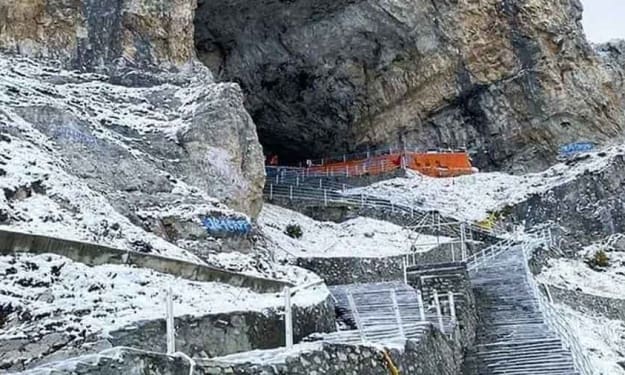
The Sacred Amarnath Temple: A Journey through Time and Devotion
Introduction Nestled in the snow-capped peaks of the Himalayas in the northern Indian state of Jammu and Kashmir, the Amarnath Temple stands as a symbol of faith, devotion, and the enduring Hindu spiritual heritage. This sacred shrine has drawn millions of pilgrims from across India and beyond, offering them not only a spiritual journey but also a glimpse into its rich and captivating history. In this article, we will embark on a historical pilgrimage to explore the origins, legends, and deep-rooted significance of the Amarnath Temple.
By Harika Vaddi3 years ago in History
Babylon's Heritage: Wins and Misfortunes
Presentation The old Babylonian Realm, with its sublime capital city of Babylon, is a spellbinding section in the records of mankind's set of experiences. Its ascent to drive and resulting fall have made a permanent imprint on the course of civilization. Crossing a few centuries, the Babylonian Realm flourished, represented by a progression of momentous rulers, but, similar to all domains, it in the end capitulated to the unyielding powers of time and change. In this article, we investigate the ascent and fall of this celebrated domain, digging further into the purposes for its climb and extreme downfall.
By Kyrol Mojikal3 years ago in History
The Discovery of King Tutankhamun
The air was hot and stale smelling as the pioneers made an opening in the mortar filled entryway of the old Egyptian burial chamber. Nobody had seen inside this imperial resting place for a long time, and they didn't have the foggiest idea what they would find.
By Nashawn Manzano3 years ago in History
Unraveling the Mysteries of Viking History and Culture
The captivating world of the Vikings, seafaring warriors hailing from the Scandinavian region, continues to intrigue historians and enthusiasts alike. Adventure, exploration, and culture are all blended together in their legacy. This article delves into various aspects of Viking history and culture to shed light on who they were and what made them such formidable figures in the medieval world. The Viking Age, often associated with brutal raids and fearsome conquerors, has its roots in the seafaring communities of ancient Scandinavia. The Norsemen, who came from modern-day Norway, Sweden, and Denmark, shared a common language and religious beliefs. However, their defining characteristic was their intimate relationship with the sea. These communities, particularly along the North Sea and the Baltic Sea, became the cradle of Viking civilization.
By Johnny Six3 years ago in History
Were Prostitutes In The Bible Punished?
The Bible is a multifaceted and complex text, and its treatment of prostitutes is no exception. On the one hand, the Bible condemns prostitution as a sin, but it also depicts prostitutes as sympathetic figures and even as agents of God's grace.
By Exotic History3 years ago in History