Ancient
Provide an account of the period known as the reign of terror.
Introduction: The period of the French Revolution known as the reign of terror was characterized by a series of measures and numerous public executions in response to the fervor of the Revolution. It lasted from September 5, 1793 to July 27, 1794, with Robespierre serving as the spokesperson for the terror. Under Robespierre's leadership, the terror reached its peak and established a dictatorial regime. Throughout this period, several committees were formed.
By Clinton Chakma3 years ago in History
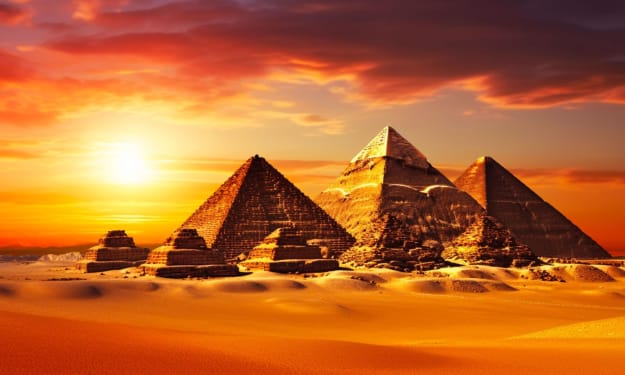
The Mysteries of Ancient Pyramids
Introduction In the tapestry of human history, the ancient pyramids loom as colossal monuments, captivating the imagination of scholars and enthusiasts alike. This comprehensive article aims to unravel the enigma surrounding these architectural wonders, providing an in-depth exploration that goes beyond the surface to reveal the intricate details and profound mysteries that define these timeless structures.
By Brad Williams3 years ago in History
Brief overview of the Eastern Roman Empire
In the annals of history, the Eastern Roman Empire, often referred to as the Byzantine Empire, stands as a testament to resilience, cultural richness, and enduring legacy. Its story unfolds against the backdrop of a shifting world, marked by political upheavals, military conquests, and the melding of diverse civilizations.
By Jeffrey DeFoor3 years ago in History
Taxila: A Timeless Tapestry of Ancient Knowledge and Civilization
Introduction: Nestled within the picturesque landscape of present-day Pakistan, Taxila stands as a silent witness to the ebb and flow of time, whispering tales of an ancient civilization that thrived in the crucible of knowledge and culture. This article unveils the rich history of Taxila, tracing its origins, evolution, and enduring legacy as a center of learning and crossroads of diverse civilizations. From its early days as a hub of philosophical thought to its prominence in trade and art, Taxila remains an indelible chapter in the annals of human civilization.
By Shayan Ali3 years ago in History
Emerald Whispers: Unveiling Ardmore's Irish Landscape
In the heart of the enchanting Irish landscape, where rolling hills wore vibrant green like a proud cloak, Ardmore stood as a village painted with the brushstrokes of tranquility. Each emerald blade of grass seemed to tell a story, and every stone in the ancient walls whispered tales of the past.
By Lilly Zayla3 years ago in History
10 archaelogical tools that scientists never discovered their purpose
1. The Enigmatic Crystal Carvings The mesmerizing allure of ancient crystal carvings continues to baffle scientists. The crystalline nature of these artifacts poses a unique challenge, as their composition often defies easy identification. Without comparable crystal artifacts from the same cultural context, scientists struggle to draw parallels and establish a framework for understanding the purpose behind these intricate carvings. The lack of inscriptions or accompanying artifacts compounds the mystery, leaving researchers without the linguistic or contextual clues essential for unraveling their enigma. 2. Unidentified Geometric Instruments The discovery of ancient tools displaying complex geometric shapes has intrigued archaeologists, yet decoding their purpose remains an elusive task. The abstract nature of these instruments challenges conventional classifications, as they deviate from known tool designs of the time. The absence of written records or complementary artifacts prevents researchers from contextualizing these geometric instruments within the daily lives or practices of ancient societies. As a result, the mystery persists, with scientists grappling to discern whether these tools held practical, symbolic, or ritualistic significance. 3. Mysterious Metallic Discs Metallic discs adorned with intricate patterns present a conundrum for archaeologists. The challenge lies in the identification of the metal itself, as advanced alloys or unique compositions may have been employed. The absence of comparable artifacts or metallurgical records hampers efforts to understand the purpose of these discs fully. Speculation abounds, with theories ranging from ceremonial objects to technological components. The enigma surrounding these metallic discs underscores the limitations of current analytical techniques in deciphering ancient materials. 4. Ceremonial Staffs with Unusual Markings Ceremonial staffs featuring cryptic markings raise questions about the ritualistic and cultural practices of ancient civilizations. The challenge in understanding their purpose lies in the symbolic nature of the markings, which, while aesthetically significant, lack direct correlations to known cultural symbols. The absence of accompanying artifacts or contextual information limits the ability of scientists to reconstruct the ceremonies or rituals associated with these staffs. The result is a captivating mystery that invites ongoing debate within the archaeological community. 5. Intricately Carved Stone Spheres Perfectly carved stone spheres scattered across archaeological sites present a puzzle that transcends their utilitarian or symbolic potential. The precision of their craftsmanship raises questions about the tools and techniques employed by ancient artisans. However, the absence of functional features and contextual information challenges conventional interpretations. Were these spheres purely aesthetic, symbolic, or did they serve practical purposes? The mystery deepens as scientists grapple with the scarcity of comparable artifacts or written records that could offer insights into their original use. 6. Unusual Composite Tools Tools crafted from a combination of materials, such as stone and metal alloys, stand as testament to the ingenuity of ancient artisans. Yet, their hybrid nature poses challenges in classification and interpretation. The absence of clear parallels in the archaeological record complicates efforts to discern their intended function. Were these tools the result of experimentation, craftsmanship, or did they serve a specialized purpose that eludes modern understanding? The lack of precedents and comparative examples leaves scientists with a tantalizing mystery that sparks both curiosity and frustration. 7. Ancient Precision Instruments The discovery of ancient instruments displaying an unprecedented level of precision challenges preconceptions about the technological prowess of past civilizations. Whether measuring astronomical phenomena or serving as tools of intricate craftsmanship, the purpose of these precision instruments remains a subject of debate. The lack of contextual information regarding their use, combined with the absence of comparable artifacts, leaves scientists with a void in understanding how such precision was achieved and for what specific purposes these instruments were crafted. 8. Symbolic Ceramic Artifacts Ceramic artifacts adorned with intricate symbols offer a glimpse into the symbolic language of ancient cultures. However, decoding this language presents a formidable challenge. The absence of written records or linguistic keys complicates the task of understanding the meanings behind these symbols. While the aesthetic value is evident, the cultural and religious contexts that would unlock their deeper significance remain elusive. The enigma of these symbolic ceramic artifacts highlights the limitations of current interpretative tools in the archaeological toolkit. 9. Unexplained Wooden Implements The preservation of wooden implements from ancient times is a rare occurrence, making their study particularly challenging. The organic nature of wood adds an additional layer of complexity, as the original function may have been altered by decay and environmental factors. Scientists face the formidable task of reconstructing the purpose of these wooden tools without clear evidence of use or accompanying artifacts. The mystery surrounding these implements prompts questions about the technologies employed by ancient cultures and the ways in which they adapted natural materials for practical tasks. 10. Cryptic Engravings on Stone Tablets Stone tablets covered in cryptic engravings present linguistic challenges that transcend decipherment. The absence of a decipherable script or linguistic context impedes efforts to understand the messages or information encoded in these ancient inscriptions. The ambiguity surrounding the language, coupled with the lack of bilingual inscriptions or known linguistic parallels, leaves scientists without a clear roadmap for interpretation. The quest to unlock the meanings behind these engravings is a testament to the ongoing challenges faced by epigraphers and linguists in decoding ancient scripts. CONCLUSION In conclusion, the persistent mystery surrounding these archaeological tools stems from a combination of factors, including the lack of contextual information, comparable artifacts, and clear cultural associations. Each tool presents a unique puzzle, and scientists are left with fragments of evidence and unanswered questions. The pursuit of understanding these enigmatic artifacts fuels ongoing exploration, pushing the boundaries of archaeological inquiry and inviting future breakthroughs in unraveling the secrets of our ancient past.
By Kelly Munala Brookes3 years ago in History
Naomi-Women Of The Bible
Introduction to the character of Naomi: Feminist assessments of Naomi diverge widely, depending often upon the cultural, social, ideological, and experiential biases of readers. A sampling includes the following: Naomi is a cipher for male values that find fulfillment for women in marriage and children. In contrast to the loss of status for childless widows in patriarchy, Naomi achieves importance as a mother-in-law and an independent character. Naomi is an overbearing, interfering, and domineering mother-in-law. Naomi is a caring, gracious, and altruistic mother-in-law. Naomi the Judean rejects Ruth and Orpah because she is a Moabite. Naomi embraces Ruth the Moabite within the family of Judah. Naomi and Ruth are rivals, with Naomi eventually achieving the greater prestige. Naomi and Ruth are friends, indeed sisterlike, each seeking the good of the other in a world over which they have little control. Naomi schemes, connives, and manipulates. Naomi plans, reflects, and executes. Naomi is an embittered old woman who denounces God for her troubles but fails to thank the deity when she recovers. Naomi is a profound figure of faith who experiences God as enemy but then wrestles blessing from adversity. All such disparate judgments attest to Naomi’s commanding, if ambiguous, presence in one of the few biblical stories focused on women.
By Helan christy M3 years ago in History