Ancient
The Gold of the Inca Empire: Sacred Wealth and the Greatest Lost Treasure of the Andes
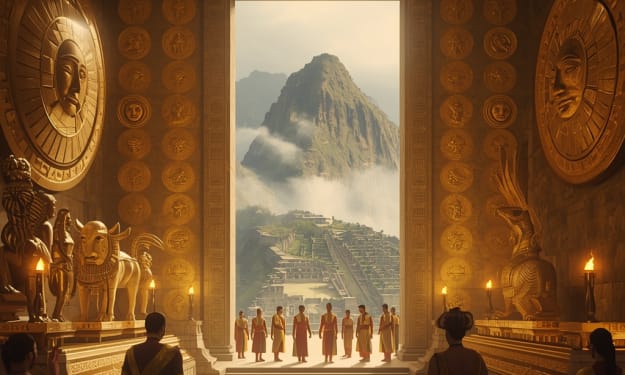
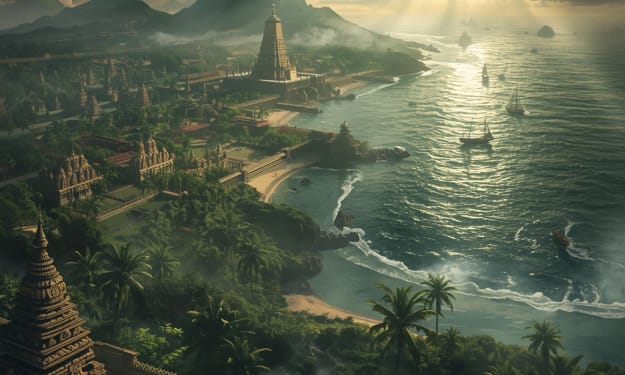
Gold as a Sacred Substance For the Incas, gold was not mere metal; it was sacred. They believed gold was the “sweat of Inti,” the Sun God, the most important deity in the Inca pantheon. Silver was considered the “tears of Mama Quilla,” the Moon Goddess. Because of this belief, gold was reserved almost exclusively for religious ceremonies, royal decoration, and offerings to the gods. Common people rarely possessed gold. It belonged to the gods and the emperor, known as the Sapa Inca, who was believed to be the direct descendant of the Sun God. Wearing gold was a symbol of divine authority, not economic power. Sources of Inca Gold The Andes region was naturally rich in gold deposits. Inca miners extracted gold from riverbeds and mountain veins using surprisingly efficient methods, even without iron tools or wheeled transport. They used stone tools, wooden implements, and water channels to separate gold from sediment. Unlike Europe, the Incas did not mint coins. Gold was shaped into ornamental and ceremonial objects, including: Sun discs Masks and crowns Jewelry such as necklaces and ear spools Life-sized statues of humans, animals, and plants Ritual vessels and weapons These objects were masterpieces of craftsmanship, showcasing advanced metalworking techniques such as alloying, casting, hammering, and polishing. The Golden Temples of the Inca The most famous center of Inca gold was the Coricancha, or Temple of the Sun, in Cusco, the imperial capital. Spanish chroniclers described its walls as being covered with thick sheets of gold, reflecting sunlight so intensely that it appeared to glow. Inside the temple were golden representations of cornfields, animals, and priests—symbolizing abundance and harmony between humans and nature. Other temples across the empire also housed vast quantities of gold, stored as offerings to Inti.
By Say the truth 9 months ago in History
The Greatest Lost Treasures of History: A Deeper Exploration
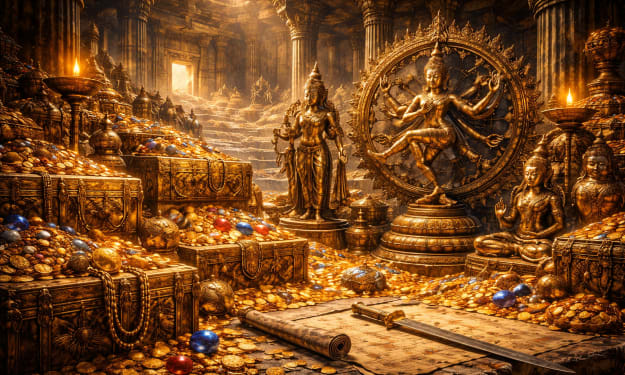
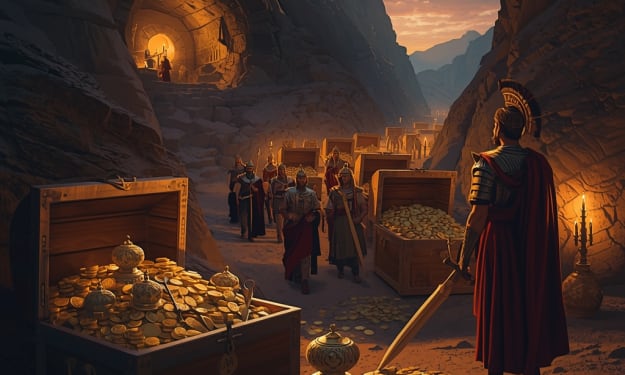
1. The Gold of the Inca Empire The Inca Empire, which flourished in South America from the 13th to the 16th century, was one of the richest civilizations in the ancient world. For the Incas, gold was not merely wealth—it was sacred. They believed gold to be the “sweat of the Sun God Inti”, while silver was the “tears of the Moon.” Sacred Gold and Royal Wealth Inca temples, especially the Coricancha (Temple of the Sun) in Cusco, were covered in gold sheets. Statues of animals, plants, and even life-sized human figures made of solid gold decorated sacred spaces. The royal palace stored ceremonial objects, crowns, discs, and ornaments made of precious metals. The Vanishing Treasure When Spanish conquistadors, led by Francisco Pizarro, captured the Inca emperor Atahualpa in 1532, they demanded a ransom room filled with gold and silver. Although the ransom was paid, Atahualpa was executed. According to legend, a massive convoy of gold meant for the ransom was hidden in the Andes when news of his death reached the carriers. This hidden treasure—possibly buried in caves, lakes, or mountain tunnels—has never been recovered. Lake Guatavita, the Llanganates Mountains, and secret Inca tunnels remain prime locations of speculation. 2. The Treasure of Alexander the Great Alexander the Great conquered vast territories from Greece to India, looting the treasuries of Persia, Egypt, and Babylon. He seized the unimaginable wealth of Persian kings like Darius III, including gold bars, jeweled thrones, ceremonial weapons, and rare artifacts. Where Did Alexander’s Treasure Go? After Alexander’s sudden death in 323 BCE, his empire fractured. His generals fought brutal wars, and many treasure convoys disappeared during transport. Some historians believe vast quantities of gold were hidden in Egypt, Mesopotamia, or Asia Minor to prevent enemy capture. Even Alexander’s tomb remains undiscovered, adding to the mystery. If found, it may hold artifacts of immense historical and monetary value. 3. The Lost Treasure of the Chola Empire The Chola Empire of South India (9th–13th century CE) was a maritime superpower with immense wealth generated through trade, agriculture, and conquest. Their greatest treasures were not just gold but masterpieces of art. Bronze Masterpieces and Temple Wealth The Cholas created legendary bronze idols, especially the iconic Nataraja (Shiva as the Cosmic Dancer). Temples acted as banks, storing gold coins, gemstones, land records, and ritual objects donated by kings and merchants.
By Say the truth 9 months ago in History
The Biggest Mystery Treasures in History: Wealth Lost to Time. AI-Generated.
What Makes a Treasure a “Mystery”? A treasure becomes a mystery when: Its existence is supported by historical records or legends Its location is unknown or disputed Attempts to recover it have failed It vanished during war, disaster, or political collapse Such treasures often disappear during periods of chaos, when records are destroyed and people flee, hide wealth, or die without revealing secrets. The Lost Treasure of Alexander the Great One of the most famous treasure mysteries belongs to Alexander the Great, who conquered the Persian Empire and seized unimaginable wealth. Ancient sources describe gold and silver measured in tens of thousands of talents, transported by vast caravans. After Alexander’s death in 323 BCE, his empire collapsed into chaos. His generals fought bitter wars, and large portions of the treasury disappeared. While some wealth was used to fund armies, historians believe not all of it was accounted for. Legends claim hidden vaults in Persia, Central Asia, or Egypt, possibly near Alexander’s lost tomb. If discovered, it would be one of the greatest archaeological finds in history. The Chola Empire’s Lost Temple Treasures In South India, the Chola Empire amassed enormous wealth through agriculture, trade, and temple donations. Temples served as banks, storing gold, jewels, bronze idols, and inscriptions. During invasions, colonial looting, and political decline, many of these treasures vanished. Chola bronze sculptures, especially those of Shiva Nataraja, are among the most valuable artifacts in the world today. While many survive, countless others are missing, believed to be buried, melted, or smuggled abroad. The mystery lies not only in the missing gold, but also in lost cultural artifacts of immense historical value. The Treasure of the Knights Templar During the Middle Ages, the Knights Templar became one of the richest organizations in Europe. They controlled land, fortresses, and financial networks across continents. In 1307, the order was suddenly destroyed by King Philip IV of France. When authorities seized Templar properties, much of their wealth was missing. Legends suggest the treasure was secretly transported to Scotland, Portugal, or hidden beneath Paris. To this day, no definitive discovery has confirmed the fate of the Templar treasure. The Inca Gold of the Andes The Inca Empire possessed vast quantities of gold, which they considered sacred rather than monetary. When Spanish conquistadors captured Emperor Atahualpa, the Incas reportedly filled a room with gold to ransom him. Even after delivering the treasure, Atahualpa was executed. According to legend, a massive shipment of gold intended for his ransom was hidden in the Andes to prevent Spanish seizure. Known as the Lost Inca Gold, it remains one of South America’s greatest treasure legends. The Amber Room: The Eighth Wonder of the World The Amber Room, created in the 18th century in Prussia, was decorated with panels of amber, gold leaf, and mirrors. During World War II, Nazi forces looted the room and transported it to Königsberg. After the war, the Amber Room vanished. Some believe it was destroyed during bombing, while others claim it was hidden in underground bunkers or sunk in the Baltic Sea. Despite decades of searches, its fate remains unknown. Kumari Kandam and Submerged Wealth Tamil literature speaks of Kumari Kandam, a lost land submerged beneath the ocean. While not proven as a continent, underwater ruins found near ancient coasts suggest that coastal cities and wealth were lost to rising seas. If large settlements existed and were submerged after the Ice Age, their treasures—tools, artifacts, and cultural remains—may lie buried underwater, waiting to be discovered. Why These Treasures Remain Lost Several factors explain why these treasures are still missing: Wars destroy records and landscapes Natural disasters bury or submerge sites Political instability limits excavation Looted treasures lose identity when melted or reused Legends exaggerate or mislead search efforts Sometimes, treasures are lost not because they cannot be found—but because time has erased the clues. Modern Technology and Hope Modern tools such as: Satellite imaging Ground-penetrating radar Underwater archaeology Artificial intelligence mapping
By Say the truth 9 months ago in History
Drones, Artificial Intelligence, and the Future of War
Drones, Artificial Intelligence, and the Future of War War is no longer fought only with soldiers, tanks, and fighter jets. Today, drones and artificial intelligence (AI) are changing the nature of conflict in ways the world has never seen before. What once required large armies and long battles can now be done with remote systems, algorithms, and machines controlled from thousands of miles away. This shift is redefining power, security, and the risks of future wars.
By Wings of Time 9 months ago in History
Why Countries Are Preparing for Future Wars
The World Is Re-Arming: Why Countries Are Preparing for Future Wars Across the world, countries are increasing their military spending at a speed not seen in decades. Governments explain this growth as necessary for defense and national security. However, many experts and ordinary people worry that this trend could move the world closer to conflict instead of peace. From Europe to Asia, from the Middle East to the Pacific, nations are strengthening their armies, modernizing weapons, and preparing for possible future wars.
By Wings of Time 9 months ago in History
Tensions, Transitions, and a Fragile Global Balance
Today’s World Affairs: Tensions, Change, and an Unstable Balance Today’s world affairs show a global system under great pressure. Many countries are facing political tension, economic uncertainty, and security challenges at the same time. The world is changing quickly, and no single event explains everything. Instead, a mix of conflicts, power struggles, and new technology is shaping how nations deal with each other.
By Wings of Time 9 months ago in History
The Lost Treasures of the Chola Empire: Artifacts, Wealth, and Forgotten Glory. AI-Generated.
Origins of Chola Wealth The Chola Empire’s prosperity was not accidental. It was built upon: Advanced agriculture, especially in the fertile Kaveri River delta Efficient taxation and administration Maritime trade networks across the Indian Ocean Tribute from conquered territories Temple-centered economic systems The abundance generated by these systems allowed the Cholas to accumulate extraordinary material wealth, much of which was stored in temples and royal treasuries rather than palaces alone. Temple Treasures: Sacred Wealth of the Cholas Chola temples were not merely religious structures; they were economic powerhouses and cultural vaults. Temples such as the Brihadeeswarar Temple at Thanjavur, Gangaikonda Cholapuram, and Airavatesvara Temple received continuous donations from kings, nobles, merchants, and guilds. Inscriptions carved on temple walls record donations of: Gold and silver coins Precious stones Jewelry for deities Bronze lamps and ritual vessels Land, cattle, and grain Some inscriptions describe donations weighing hundreds of kalanjus of gold, indicating wealth on a massive scale. Over centuries, temples became repositories of treasure rivaling royal treasuries. However, many of these treasures are no longer present, and their absence raises important historical questions. Chola Bronze Sculptures: Priceless Artifacts Lost and Scattered One of the greatest artistic achievements of the Cholas was their bronze sculptures, created using the sophisticated lost-wax (cire perdue) method. These sculptures—especially of Shiva as Nataraja, Parvati, Vishnu, and saints—are considered masterpieces of world art. While many Chola bronzes survive today in temples and museums, hundreds are missing. Possible reasons include: Looting during invasions Smuggling during colonial times Illegal trafficking in modern eras Melting down for metal value during conflicts Several Chola bronzes that surfaced in foreign museums have later been identified as stolen temple idols, confirming that many treasures left India unlawfully. Royal Treasuries and Hidden Wealth The Chola kings maintained vast royal treasuries containing: Gold coins and bullion Pearls from the Gulf of Mannar Precious stones Ceremonial weapons Diplomatic gifts from foreign rulers During times of war or political instability—especially during the decline of the Cholas in the 13th century—treasuries may have been relocated or concealed to prevent enemy capture. Cities such as Thanjavur and Gangaikonda Cholapuram later fell into decline, and portions of these capitals were destroyed or abandoned. Many historians believe that undiscovered vaults or buried treasure chambers may still exist beneath these ancient sites. Maritime Trade and Lost Sea Treasures As a dominant naval power, the Cholas transported wealth across seas. Their ships carried: Gold and silver Spices and silk Religious artifacts Trade goods and tribute Shipwrecks caused by storms or piracy could have resulted in treasures lost beneath the Indian Ocean and Bay of Bengal. Due to limited underwater archaeological exploration in these regions, such maritime treasures remain largely unexplored. Invasions and Destruction Several invasions contributed to the loss of Chola treasures: Conflicts with the Pandyas Campaigns in Sri Lanka Later incursions by northern powers Invaders often looted temples and treasuries, melted gold artifacts, or reused precious metals. In many cases, the original Chola identity of these treasures was lost forever. Loss During the Colonial Period During British colonial rule, heritage protection was weak. Many Chola artifacts were: Removed from temples Sold to private collectors Exported to Europe and America Stone inscriptions, copper plates, and bronze idols disappeared during this period. Some were later rediscovered in foreign collections, but many remain missing. Missing Inscriptions and Records The Cholas were meticulous record-keepers, engraving details of donations and assets on stone and copper plates. However: Some inscriptions are damaged or missing Copper plates may have been stolen or melted Records mention treasures that no longer exist These missing records deepen the mystery of lost Chola wealth. Cultural Treasures That Endured Even though material treasures were lost, the Cholas left behind enduring cultural riches: Monumental temple architecture Classical Tamil inscriptions Advanced metallurgy Administrative systems Artistic traditions These intangible treasures remain invaluable and continue to define South Indian heritage. Conclusion The lost treasures of the Chola Empire include far more than hidden gold or missing idols. They represent a vanished era of extraordinary artistic brilliance, economic power, and spiritual devotion. While some treasures may still lie buried beneath ruined capitals or submerged seas, others are scattered across the world or lost forever. Yet, the greatest treasure of the Cholas is their legacy, preserved in stone temples, bronze art, and Tamil cultural memory. Each rediscovered artifact brings us closer to understanding the true magnitude of this remarkable empire’s wealth and history.
By Say the truth 9 months ago in History
The Lost Treasure of Alexander the Great: History’s Greatest Unsolved Mystery
Yet, despite detailed historical records of his conquests, one question continues to fascinate historians, archaeologists, and treasure hunters alike: what happened to Alexander the Great’s vast treasure? The mystery of Alexander’s lost treasure is one of history’s most enduring enigmas, blending documented fact with speculation, legend, and unanswered questions. The Source of Alexander’s Immense Wealth When Alexander began his campaign against the Persian Empire in 334 BCE, he inherited a relatively modest treasury from his father, Philip II of Macedon. However, everything changed once he defeated the Persians. The Achaemenid Empire was the wealthiest power of the ancient world, having accumulated gold, silver, and precious goods over centuries through taxation and tribute. The capture of Persian capitals such as Sardis, Susa, Persepolis, and Babylon brought Alexander extraordinary riches. Ancient historians like Arrian and Diodorus Siculus describe how Alexander seized thousands of tons of gold and silver, stored in royal treasuries. The treasure of Susa alone was said to contain over 50,000 talents of silver, while Persepolis held even more. To transport this wealth, Alexander reportedly used thousands of mules and camels, forming massive treasure caravans. Beyond gold and silver, Alexander also acquired jewels, ceremonial weapons, royal garments, rare artifacts, and priceless works of art. By the time he reached India, Alexander controlled what was likely the largest accumulation of wealth ever held by a single individual in the ancient world. The Disappearance After Alexander’s Death Alexander’s sudden death in Babylon in 323 BCE marked the beginning of chaos. He left behind no clear successor, only the vague statement that his empire should go “to the strongest.” This triggered decades of brutal conflict among his generals, known as the Wars of the Diadochi. During this turmoil, Alexander’s treasure became a critical source of power. Whoever controlled it could pay soldiers, hire mercenaries, and legitimize their claim to rule. Large portions of the treasure were distributed to Alexander’s generals, while some were melted down to mint coins. However, historical accounts strongly suggest that not all of the treasure was accounted for. Some records mention hidden vaults, secret transports, and emergency relocations of wealth to prevent it from falling into enemy hands. As power shifted rapidly, parts of the treasure may have been deliberately concealed—and never recovered. The Tomb of Alexander: A Key to the Treasure? One of the greatest mysteries tied to Alexander’s lost treasure is the location of his tomb. After his death, his body was placed in a magnificent golden sarcophagus and was being transported to Macedonia. However, Ptolemy I diverted the funeral procession to Egypt, eventually placing Alexander’s body in Alexandria. Ancient writers describe Alexander’s tomb as a place of immense splendor, visited by Roman emperors such as Julius Caesar and Augustus. Over time, however, the tomb vanished from historical records. Earthquakes, religious shifts, and urban development may have buried or destroyed it.
By Say the truth 9 months ago in History
The Net Worth of Kumari Kandam: A Theoretical Wealth of a Lost Civilization. AI-Generated.
When people ask about the “net worth” of Kumari Kandam, they are not referring to bank accounts or modern currency, but to the total material, cultural, intellectual, and natural wealth of a civilization believed to have existed thousands of years ago. This article explores the theoretical net worth of Kumari Kandam by examining its resources, economy, knowledge systems, culture, and long-term civilizational value. Understanding “Net Worth” in an Ancient Context In the ancient world, wealth was measured not by money alone but by: Land and natural resources Agricultural productivity Trade networks Knowledge and language Cultural and spiritual influence Population and urban development Using these parameters, Kumari Kandam is often described in Tamil tradition as one of the richest and most advanced ancient homelands. Natural Resource Wealth According to traditional accounts, Kumari Kandam was a vast landmass with: Fertile river plains Dense forests Rich coastal ecosystems Abundant marine resources The land was believed to support large-scale agriculture, including grains, fruits, and medicinal plants. Coastal access implies fishing, pearl harvesting, and salt production. Estimated value (modern equivalent): If such a land existed today, its agricultural and natural resources alone would be valued in the trillions of dollars, comparable to the most resource-rich regions on Earth. Agricultural and Food Economy Ancient Tamil texts emphasize agriculture as the backbone of civilization. Kumari Kandam is described as having advanced irrigation, seasonal farming, and food surplus systems. A stable food economy means: Large population support Trade surplus Social stability In modern economic terms, a food-secure civilization with export capacity would have a GDP-level agricultural value in the range of hundreds of billions to trillions annually, depending on land size. Trade and Maritime Wealth One of the most important contributors to Kumari Kandam’s theoretical net worth is maritime trade. Tamil traditions strongly associate early Tamil people with sea navigation. Trade is believed to have included: Spices Textiles Pearls Precious stones Cultural exchange
By Say the truth 9 months ago in History
The History and Origin of Kumari Kandam: Myth, Memory, and Tamil Civilization
Though not confirmed by modern geology, the idea of Kumari Kandam continues to hold immense cultural, literary, and emotional significance, especially among Tamils, as a symbol of antiquity, lost knowledge, and submerged history. Meaning and Concept of Kumari Kandam The term “Kumari Kandam” comes from Tamil literature. “Kumari” refers to a virgin or maiden, often associated with purity, while “Kandam” means land or continent. Together, the name implies a sacred or pristine land. Kumari Kandam is believed to have existed south of the Indian peninsula, extending into what is now the Indian Ocean. According to tradition, this land was home to an advanced Tamil civilization that flourished long before recorded history. References in Ancient Tamil Literature The earliest references to Kumari Kandam are found in ancient Tamil Sangam literature, dating roughly between 300 BCE and 300 CE, though they describe events from much earlier periods. Texts such as: Silappatikaram Manimekalai Iraiyanar Akapporul mention a great southern land that was swallowed by the sea due to catastrophic floods. These texts describe the loss of entire regions, cities, and even kingdoms. Tamil literary tradition speaks of three Sangam periods, or assemblies of poets: The First Sangam, said to have lasted thousands of years, was located in a city that later submerged. The Second Sangam also ended due to flooding. The Third Sangam, held in Madurai, is the earliest historically verifiable one. These accounts strongly associate Kumari Kandam with the first two Sangam periods. The Great Flood and Submergence Central to the story of Kumari Kandam is the idea of a great deluge or sea-level rise. According to tradition, repeated floods gradually submerged large portions of the land, forcing people to migrate northward. These floods are often linked to: Climatic changes after the last Ice Age Rising sea levels Tectonic activity While Tamil texts describe this event poetically and symbolically, similar flood myths exist worldwide, such as the Mesopotamian flood, Noah’s Ark, and legends from Southeast Asia—suggesting that collective human memory preserved real ancient environmental changes. Kumari Kandam and Lemuria In the 19th century, European scientists proposed a hypothetical continent called Lemuria to explain similarities between fossils found in India, Madagascar, and Africa. Tamil scholars later connected Lemuria with Kumari Kandam. Though Lemuria was later rejected by modern plate tectonics, the association strengthened belief in Kumari Kandam as a real landmass. For many, Kumari Kandam became the Tamil name for Lemuria, blending scientific speculation with cultural memory. Civilization and Culture of Kumari Kandam According to tradition, Kumari Kandam was a highly advanced civilization. It is believed to have had: Well-organized kingdoms Advanced agriculture Deep knowledge of astronomy Highly developed Tamil language Ethical and social systems based on justice and virtue Some narratives claim that Tamil is the world’s oldest living language, originating in Kumari Kandam and spreading to other civilizations through migration. Migration and Spread of Civilization As the land submerged, people are believed to have migrated to: Present-day Tamil Nadu Sri Lanka Southeast Asia Parts of Africa and Australia (according to some speculative theories) These migrations are thought to have influenced languages, cultures, and traditions across regions. While mainstream historians consider these ideas symbolic or exaggerated, they highlight the deep pride associated with Tamil antiquity. Archaeological and Geological Perspectives Modern geology does not support the existence of a large sunken continent like Kumari Kandam. Plate tectonics explains continental movement without requiring such landmasses. However, underwater archaeological discoveries near: Poompuhar Gulf of Mannar Dwarka (west coast) show that ancient coastal cities were submerged due to rising sea levels, especially after the Ice Age. These findings suggest that while Kumari Kandam as a massive continent may be mythical, partial submergence of ancient Tamil regions is plausible.
By Say the truth 9 months ago in History
The Qin Empire: The Power That United the Chinese Nation
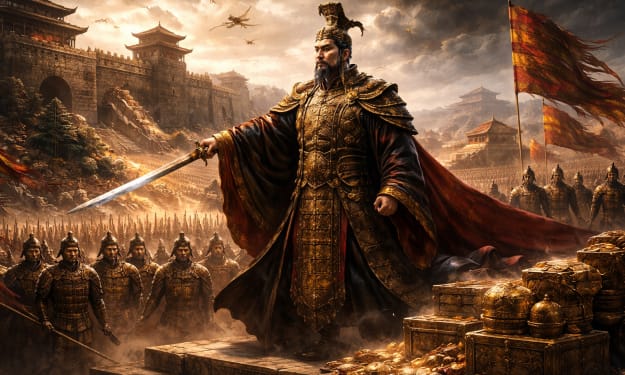
China Before Unification For centuries, China was divided into competing kingdoms, particularly during the Spring and Autumn Period and the Warring States Period. Powerful states such as Qin, Chu, Zhao, Wei, Han, Yan, and Qi fought relentlessly for territory and survival. Warfare was brutal, alliances were unstable, and millions suffered. Despite shared language roots, cultural practices, and philosophies like Confucianism and Daoism, there was no central authority to unite these regions. Each state had its own laws, currencies, and military systems, making unity seem impossible. Rise of the Qin State The state of Qin, located in the western frontier of China, was initially considered backward by its rivals. However, Qin’s location gave it access to fertile lands and natural defenses. More importantly, Qin adopted Legalism, a philosophy that emphasized strict laws, discipline, and centralized authority. Under reformers like Shang Yang, Qin transformed into a powerful military state. Land reforms rewarded farmers, merit-based ranks replaced noble privilege, and harsh laws ensured obedience. These reforms strengthened Qin’s economy and army, allowing it to outmatch rival states. Qin Shi Huang: The First Emperor In 246 BCE, a young ruler named Ying Zheng became king of Qin. By 221 BCE, after a series of decisive military campaigns, he defeated all rival states and declared himself Qin Shi Huang, meaning “First Emperor of Qin.” This was the first time in history that China was unified under a single emperor. Qin Shi Huang abolished the old feudal system and replaced it with a centralized bureaucratic government, directly controlled by the emperor. Administrative and Political Reforms Qin Shi Huang understood that unity required more than military conquest. He introduced sweeping reforms to standardize life across the empire: Standardized laws to ensure equal justice Unified currency to promote trade Standard weights and measures Standardized writing system, enabling communication across regions Uniform axle lengths for carts, improving road transportation These reforms reduced regional differences and helped forge a shared Chinese identity. Military Achievements and Defense The Qin Empire maintained unity through military strength. Qin Shi Huang ordered the construction and connection of defensive walls along the northern frontier, forming the early foundation of the Great Wall of China. This wall protected the empire from nomadic invasions and symbolized the boundary of Chinese civilization. The Qin army was well-organized, disciplined, and technologically advanced, using iron weapons and crossbows. Cultural Control and Controversies Despite his achievements, Qin Shi Huang ruled with extreme authority. Legalism allowed no opposition. One of the most controversial acts was the burning of books and burying of scholars, aimed at suppressing rival philosophies like Confucianism. While this strengthened central control, it also caused resentment among scholars and the population. Heavy taxes, forced labor, and harsh punishments made life difficult for ordinary people. The Terracotta Army and Immortality Qin Shi Huang was obsessed with immortality. He ordered the construction of a vast underground mausoleum guarded by the famous Terracotta Army—thousands of life-sized clay soldiers, horses, and chariots meant to protect him in the afterlife. This monument reflects both the emperor’s power and the enormous human cost of his rule, as countless laborers worked under brutal conditions. Fall of the Qin Empire After Qin Shi Huang’s death in 210 BCE, the empire quickly weakened. His successors lacked his authority and faced widespread rebellions fueled by public dissatisfaction. By 206 BCE, the Qin Empire collapsed, replaced by the Han Dynasty. Lasting Legacy Although short-lived, the Qin Empire permanently shaped China. The Han Dynasty retained most Qin administrative systems, legal frameworks, and territorial unity. Even the name “China” is believed to be derived from “Qin.” The Qin Empire proved that China could be unified and governed as a single entity, setting a model that future dynasties would follow for over two thousand years. Conclusion The Qin Empire was the force that united the Chinese nation through military brilliance, administrative genius, and uncompromising authority. While its methods were harsh, its achievements were revolutionary. Qin Shi Huang’s vision transformed China from a land of warring states into a unified civilization, laying the foundation for one of the longest continuous cultures in human history.
By Say the truth 9 months ago in History