Ancient
Kamakhya Devi
Located in Guwahati, Assam, on top of Nilachal Hill, the Kamakhya Devi Temple is a monument to the spirituality and architecture of ancient Hinduism. Its past is intricately entwined with ancient history, dating back to the renowned account of Lord Shiva's wife, Sati. As per the scriptures, Sati was the daughter of Prajapati Daksha and also an incarnation of the goddess Adi-shakti. Daksha was the son of Brahma and the first Prajapati (emperor) of the world which made him egoistic. She fell in love with Bhagwan Shiva who was hated by her father Daksha. Despite her father's disagreement, Sati married Shiva which made Daksha abandon her daughter. Once, Prajapati Daksha escorted an enormous yajna in her palace. All the gods, demons, priests, and commoners from all around the world were invited except Shiva and Sati. Sati imbibed by the love of her parents decided to access the yajna uninvited. Noticing Sati in the palace, Daksha became furious and out of rage insulted Shiva. Sati could not bear the insults of her husband and self-immolated herself. Witnessing such devastating condition of his wife, Shiva became furious and called upon Virbhadra and Bhadrakali to annihilate Daksha. He then entered the palace and bearing the burnt body of her wife traveled across the cosmos in anguish and wrath. To emancipate the soul of Sati, so that she could be reborn, Bhagwan Vishnu, with the help of his sudarshan chakra, sliced her body into 51 pieces, each falling into different sites and creating a Shaktipeeth. Kamakhya Devi temple is the place where Sati's vulva (external genitalia) fell, forming the holiest place for Hindu pilgrims. Interestingly, there's no idol of the deity in the Sanctum Sanctorum of the temple, rather a yoni-like stone (a stone in the shape of the female genitalia) over which a natural spring flows. Every year, the Kamakhya Temple hosts the Hindu festival known as the Ambubachi Mela. It lasts for four days and is observed during the monsoon season, which is often in June. Thousands of followers from all across India attend the festival, which is based on the traditional tale that the goddess Kamakhya has a menstrual cycle. The goddess Kamakhya is thought to be going through her yearly menstrual cycle during this period, hence the temple is closed for three days. During this time, the Brahmaputra river also turns red for three days. A red cloth is used to cover the yoni during these three days. The temple is reopened on the fourth day, often referred to as "Naba Patrika Puja" or "Devi Snan," which marks the conclusion of the goddess' menstrual cycle. The red cloth covering the yoni turns red and is distributed among the Devotees in the form of Prasad (Angabastra). Devotees assemble to watch the idols being bathed in holy water while engaging in complex rituals and hymn chanting. The fair draws visitors from all across the nation with its array of cultural events, folk music and dance performances, traditional craft exhibits, and local food vendors. All things considered, the Ambubachi Mela is not just a religious celebration but also a cultural spectacle that highlights the rich history and customs of India and provides a forum for societal unity and spiritual renewal. For those who worship the goddess Shakti, the Kamakhya Temple is extremely important as one of the 51 Shakti Peethas, representing the holy feminine force and energy. The temple complex consists of several smaller shrines, each radiating a sense of spiritual reverence and devotion, devoted to different forms of the goddess. Its unique dome-shaped roofs and elaborate wall carvings are reflections of the Indian cultural and artistic influences on its architecture. The temple has a long history of incorporating tantric rituals and practices, which draw researchers and practitioners of Tantra from all over the world. For both visitors and seekers, the Kamakhya Temple is more than just a physical structure—rather, it's a hallowed place where the goddess's heavenly presence is felt deeply. It inspires innumerable people on their spiritual journey through the realms of devotion and divine grace, acting as a light of hope, healing, and transformation. Menstruation is a representation of a woman's inventiveness and ability to bear children. It's a symbol of rejuvenation and creation, something which should be revered and not forsaken. The goddess and the Kamakhya temple honor the Shakti that resides in every woman. But unfortunately, some people even today, consider menstruation and a bleeding woman to be impure. There's a need to recall the lost history and heritage of India to bring back the era when women were worshipped and respected and menstruation was considered a reverential and creative process rather than a taboo.
By Varshita Gupta 3 years ago in History
Why is Bucephalus so Famous? Everyone Needs To Know!
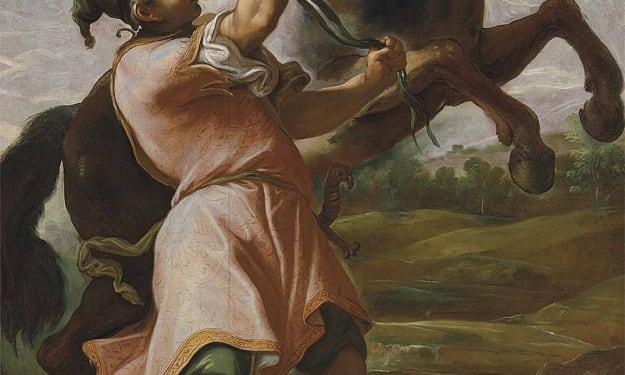
Bucephalus, the legendary horse of Alexander the Great, is famous for several reasons that have captivated people throughout history. This magnificent animal played a crucial role in Alexander's conquests and has become an iconic symbol of loyalty, courage, and partnership. Let's delve into what made Bucephalus so special and why his legacy endures to this day.
By Exotic History3 years ago in History
"Stardreamer's Odyssey: Finding Home Among the Stars
In the quiet expanse of the cosmos, far beyond the reaches of human understanding, lies a world unlike any other. This is the planet of Lumina, where the sky is an ever-changing canvas of vibrant hues and the land is teeming with life that defies imagination.
By Hippolyte king3 years ago in History
THE RADIANCE OF OSUN
In the pantheon of deities across cultures and civilizations, one figure stands out for her captivating allure and profound influence on human affairs. She is known by many names—Aphrodite in Greek mythology, Venus in Roman mythology, Freyja in Norse mythology, Osun in Africa—but her essence remains constant: she is the goddess of beauty, fertility, and love.
By Ngozi Otoechere3 years ago in History
Unveiling the Masterful Craftsmanship: The Fascinating Journey of Creating a Japanese Katana from Blade to Sheathe
Japanese Sword Art Introduction Japanese sword art known as "Nihontō" carries a rich history and deep meaning in Japanese culture. At the center of this ancient art is the katana, a traditional Japanese sword renowned for its unique craftsmanship and deadly accuracy. For centuries, the katana has been a symbol of honor, power, and skill. In this article, we will explore the intricate technique of the katana, exploring its history, anatomy, and techniques mastered by master swordsmiths.
By Écrivain Placard3 years ago in History
Jagannath Puri
The Jagannath Puri Temple, located in the Indian state of Odisha's city of Puri, is one of the most revered Hindu temples in all of India. Its centuries-old story is rich with folklore and theological importance. The temple was originally built by King Indradyumna, who was a devout disciple of Lord Vishnu, according to legend. The story states that the king was shown by Lord Vishnu in a dream, telling him to build a temple to house his idols, which would float ashore on a wooden log. Following the directive, the king visited the coast the following day and was shocked to see a wooden log floating in the river. After getting the log in his kingdom, he began to look for an architectural genius who could turn it into a statue of a deity. After several days of searching, a guy appeared in court and expressed his wish to create the status, but he had one need. He would be given a room for the construction as per the agreement, and nobody would be able to access it until he left. The architect got to work once the king gave his approval. The sound of the hammer and other equipment could be heard in the early days, but after a few days, there was only stillness. The king's wife proposed that they open the door to investigate and speculated that the architect might have died from a lack of food and water. The king nodded, and just as they were about to enter the door, the architect vanished and a brilliant flash of light emerged in front of them. Only three unfinished statues of the gods Bhagwan Shri Krishna, his brother Balabhadra, and his sister Subhadra remained. The king decided to install the statues of the deities into the Sanctum Sanctorum of the temple he further constructed. The wood-carved gods are exchanged annually in a tradition known as "Nabakalebara." It is thought that the wooden logs contain the living heart of Shrimahaprabhu Jagannath. The temple priests cover their eyes and hands with thick black blindfolds and gloves every twelve years when the deities are switched. On this day, when all of the city's electricity is turned off, the heart of Jagannath Prabhu is carefully moved from the old statue to the new one in extreme darkness.
By Varshita Gupta 3 years ago in History
THE EVOLUTION OF DINASOURS
Traveling back 250 million years into the past would transport us to witness the dawn of dinosaurs, a time when these magnificent creatures began to emerge and dominate the Earth's landscapes. The prevailing theory suggests that dinosaurs evolved from a group of reptiles known as archosaurs, which were prevalent during the late Permian period. These archosaurs eventually split into two main lineages, with one leading to crocodiles and the other to dinosaurs. Over millions of years, dinosaurs diversified into thousands of species, each adapting unique characteristics and ecological niches. One crucial development was their acquisition of bipedalism, allowing them to walk on two legs and freeing their front limbs for various tasks such as hunting and defense.
By Ahmed Ashraf3 years ago in History
THE MOST BRUTAL APES THAT EVEN LIONS ARE AFRAID OF
THE MOST BRUTAL APES NEW SPECIES OR NOT? In the dense rainforests of the Democratic Republic of Congo, there is a mysterious creature known as the Billy Apes, which has captured the attention of locals and explorers. The Billy Apes are legendary Giants of the Jungle and have been the subjects of numerous tales, legends, and speculations. Imagine a creature similar to a chimpanzee, but larger - almost the size of a human when standing on its own, and possessing greater width and strength. Similar to gorillas, the Billy Apes construct nests on the ground and in trees, and they are known to feast on formidable prey such as leopards. Throughout generations, locals have shared stories about the Billy Apes, recounting encounters in which these creatures were seen walking on two feet and mysteriously disappearing when approached by humans, leaving behind massive footprints.
By ANGELINA GONZALES3 years ago in History
Unbelievable Findings Decode the Thousand-Year-Old Secret of the Egyptian Pyramids
Title: Unraveling the Thousand-Year-Old Secrets of the Egyptian Pyramids: A Remarkable Discovery Introduction: The Egyptian pyramids have stood as enduring symbols of ancient engineering marvels and enigmatic mysteries for millennia. These colossal structures, built thousands of years ago, continue to captivate the imagination of historians, archaeologists, and enthusiasts worldwide. Despite centuries of study, many secrets of the pyramids have remained elusive, hidden within their imposing stone walls. However, recent groundbreaking discoveries have brought us closer than ever to unraveling the thousand-year-old secrets of the Egyptian pyramids. This article explores the unbelievable discovery that has shed new light on these ancient wonders.
By Nguyễn Hoàng Bảo Sang3 years ago in History