Ancient
Banned Weapons Too Brutal for Modern Warfare
The brutality of war has always been the norm through the history. The course of history has witnessed with different wars that have been armed with different weaponry that have left an everlasting impact. However, even though warfare and conflicts are notoriously chaotic and destructive, there have been instances when the world held a pause and said that some weapons overstepped the line of doomed means of a war. From this awareness the UN Convention on Prohibitions or Restriction of Certain Conventional Weapons, Which Considered as Excessively Harmful or Which Have Indiscriminate Effects, known as the Convention on Certain Conventional Weapons or CCW, was formed.
By Amine Oubih2 years ago in History
How myth and mythology define civilisational Values
It was April 21, 753 B.C. This was almost 400 years before Alexander the Great and the epitome of Greek civilisation. It was also 750 years before Christ's birth and the rise of Christianity. On a pleasant and breezy spring day, with birds flying south and the sun emerging after winter, the story of Rome and its founder, Romulus, began.
By Ricky Lahiri2 years ago in History
Echoes of Enchantment: The Haunting Legacy of Bhangarh Fort
### Unveiling the Mysteries of Bhangarh Fort: India's Enigma Wrapped in Legends Nestled at the edge of the Sariska Tiger Reserve in Rajasthan, Bhangarh Fort stands as one of India's most hauntingly beautiful and enigmatic sites. Known widely as the "Most Haunted Fort in India," Bhangarh's allure isn't just in its architectural grandeur or historical significance, but in the chilling legends that surround it. This article explores the mystique of Bhangarh Fort, offering a glimpse into its eerie past and present, beckoning the brave and curious alike. #### The Historical Tapestry of Bhangarh Built in the 17th century by Bhagwant Das for his younger son, Madho Singh I, Bhangarh Fort was designed to be a masterpiece of Rajasthani architecture. Strategically positioned at the border of the Sariska forest in Alwar district, the fort was at the heart of commerce and culture until it met its mysterious fate in the 18th century. Despite its initial flourishing state, legend has it that the fort and its precincts were doomed to desolation—overwhelmed by a curse that no soul could escape. #### The Curse of the Holy Man and the Princess The most popular legend involves a holy man, Guru Balu Nath, whose only condition upon allowing the fort's construction was that the buildings never cast a shadow upon his retreat. If they did, the city would fall into ruin. The ambitious successors of Madho Singh disregarded this and built structures that cast shadows on Balu Nath’s retreat. True to the sage's warning, the entire town was decimated, and Bhangarh Fort was abandoned. Another tale spins around the beautiful Princess Ratnavati, known across the land for her beauty. It is said that a sorcerer, smitten by the princess, tried to bewitch a cosmetic she was supposed to use, to make her fall in love with him. However, the princess saw through his plan and caused his death. Before breathing his last, the sorcerer cursed Bhangarh to destruction and doom. #### The Architectural Elegance and the Paranormal Activity Today, Bhangarh Fort is a significant attraction for both historians and ghost hunters. By day, it is a ruin of beauty, with temples, palaces, and grand gates that hint at past splendor. The fort's architecture reflects the sophistication of its era, with majestic stone carvings and enduring structures. As the sun sets, the fort allegedly becomes a hub of paranormal activity. Stories of strange noises, ghost sightings, and a heavy air of unease are common folklore, compelling the Archaeological Survey of India to prohibit entry from sunset to sunrise. Bhangarh Fort in Popular Culture and Tourism Over the years, Bhangarh Fort has inspired numerous television documentaries and horror stories, each adding layers to its mystique. It draws thousands of tourists, drawn by the tales of haunts but also by the tangible history it offers—standing as a silent witness to centuries of human endeavor. For the intrepid traveler, Bhangarh offers more than ghost stories—it is a dive into a rich tapestry of history intertwined with folklore. Whether or not one believes in the supernatural, the ruins of Bhangarh Fort are a place where the past feels alive, whispering stories of glory and doom. Conclusion Bhangarh Fort remains one of Rajasthan’s most mysterious and intriguing sites. Whether visited by the light of day or explored through the stories of its eerie nights, Bhangarh continues to be a beacon for the curious souls fascinated by the supernatural or the historical. It serves as a reminder of the power of legends and the lasting fascination they hold over us.
By Akash Chaudhary 2 years ago in History
The Worst Punishment in the History of Mankind
The phrase "the gauntlet will be run" is appended to many slogans for criticizing someone or overcoming the difficult challenges. While originally it is a brutal form of punishment from a time long past, the modern diversionary system is seen as a therapeutic practice that helps the inmates improve their thinking processes.
By Amine Oubih2 years ago in History
Most Evil Poacher Who Killed 184 Humans
Among the pages of criminal calenders, the name of Koose Munisamy Veerappan has been written with blood that shines like diamonds, the famous bandit who was in the jungles of South India. Along with rap sheet enlisting a list that comprises of elephant poaching, sandalwood smuggling, and a body count that can be compared to some of the lamest ones of serial killers, Veerappan's life story is on the verge of as good as a Hollywood blockbuster. From early days of a young shooter to his tenure as the man of terror wanting two states, Veerappan’s life is the history of violence, betrayal and his tireless efforts to achieve power.
By Amine Oubih2 years ago in History
Was Hitler Insane or Just Plain Evil
Would any normal human being ever be able to perform the actions of Adolf Hitler with glee and enthusiasm? To tell you the truth, I still do not know whether he learned to be bad or he was born that way. But then, for one second, I see totally unrelated with all of this: Hitler’s possibly deformed genitals. The truth is actually us, and if you had hidden notions like these, be ready to be shocked after you facing the truth!
By Amine Oubih2 years ago in History
The Ugly Truth About George Washington
George Washington, being considered the father of the United States, and the symbol of great and proud America, has a legacy that is both admired and questioned. Along with the stories of his bravery on the war front and leadership as the first US President, there is also the shadowy aspect of his life which sometimes remains unmentioned. If not for Washington's incalculable role in the creation of the country, it's equally important to highlight the multifaceted nature of his personality and decisions.
By Amine Oubih2 years ago in History
The World’s Most Mysterious Book
Deep inside Yale University's Beinecke Rare Book and Manuscript Library lies the only copy of a 240-page tome. Recently carbon-dated to around 1420, its vellum pages feature looping handwriting and hand-drawn images seemingly stolen from a dream. Real and imaginary plants, floating castles, bathing women, astrology diagrams, zodiac rings, and suns and moons with faces accompany the text.
By Aafreen Ali2 years ago in History
Why Hitler Practiced Occult Rituals
Some of the coldest pages in the historical books can be written in the name of the German Nazi Party, at the very core of the turmoil from the World War II. The horrors of the Holocaust, the Night of the Long Knives, and the gruesome human experimentation in concentration camps have left scholars grappling with a fundamental question: probably it was the psychological effects that made peace loving people to turn into perpetrators of unspeakable violence under the influence of such cruel conditions. At the search for the reasons, some have resorted to the hypothesis of the paranormal forces, for example of the demons or the 666, though these notions absolutely contradict to the results of the scientific research.
By Amine Oubih2 years ago in History
What Happened to Saddam Hussein's Space Gun
The 1980s were the years of the distinctive ambitions and spectacular visions. Meanwhile, nothing was as intense as the supergun project, which was an attempt to destroy the entire population of the enemy at once — something that became possible due to collaboration between Saddam Hussein, the ex-president of Iraq, and the mysterious engineer Gerald Bull.
By Amine Oubih2 years ago in History
The Dancing Plaque of 1518: A Dance to Death
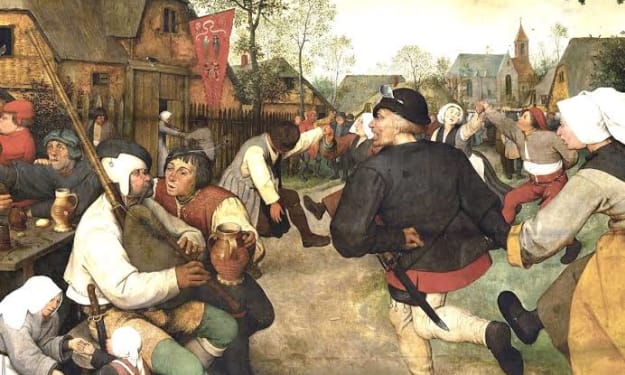
The summer of 1518 marked a peculiar chapter in the history of Strasbourg, where an inexplicable phenomenon unfolded, leaving the city in the grip of a bizarre epidemic. It all began with Frau Troffea, who, in July of that year, stepped onto the streets of Strasbourg and began to dance. What ensued was a bewildering spectacle as more and more people joined in, driven by an uncontrollable urge to dance. This event, known as the Dancing Plague of 1518, has perplexed scholars and historians for centuries, offering a window into the complexities of human behavior and the mysteries of the past. As the days passed, the number of dancers grew exponentially, with men, women, and children alike succumbing to the strange compulsion to dance. The streets of Strasbourg became a stage for this frenzied spectacle, as the afflicted dancers twirled and gyrated in a trance-like state. Despite efforts by local authorities to intervene, the epidemic continued unabated, defying conventional explanations and remedies. Scholars have proposed various theories to account for the Dancing Plague of 1518, yet none offer a definitive explanation. Some have speculated that the outbreak was triggered by ergot poisoning, a hallucinogenic fungus that can infect rye grain and induce convulsions and hallucinations. Others have suggested mass hysteria or psychological stress as possible contributing factors, fueled by the religious fervor and social tensions of the time. To understand the Dancing Plague within its historical context, one must consider the broader cultural and social dynamics of 16th-century Europe. The Renaissance was a period of profound change and upheaval, characterized by religious schisms, economic instability, and social unrest. Against this backdrop, the epidemic may be seen as a manifestation of the anxieties and uncertainties of the era, as people sought solace and release through collective expression and communal rituals. The legacy of the Dancing Plague of 1518 extends far beyond its immediate impact, resonating with themes of human psychology, social behavior, and historical interpretation. Some view it as a cautionary tale about the power of suggestion and the susceptibility of the human mind to irrational impulses. Others see it as a testament to the resilience of the human spirit in the face of adversity, a reminder of the strange and inexplicable ways in which people cope with uncertainty and adversity. While the Dancing Plague of 1518 may never be fully understood, its legacy endures as a reminder of the strange and unpredictable ways in which human behavior can manifest in times of crisis. It serves as a cautionary tale and a source of fascination, challenging us to confront the mysteries of the past and the complexities of the human condition. In the books of history, the Dancing Plague of 1518 stands as a testament to the enduring mysteries of the human experience, a reminder of the strange and inexplicable ways in which people respond to the challenges of their time. As we continue to unravel its mysteries, we are reminded of the boundless complexity of the human psyche and the enduring allure of historical inquiry. Moreover, the Dancing Plague continues to provoke thought and discussion among scholars and scientists, challenging conventional notions of human behavior and mental health. In an age marked by advances in psychology and neuroscience, the epidemic serves as a reminder of the complexities of the human mind and the mysteries that lie within. In recent years, researchers have revisited the Dancing Plague from interdisciplinary perspectives, drawing on insights from psychology, anthropology, and cultural studies to shed new light on its underlying causes and significance. While no single explanation can account for the phenomenon in its entirety, these efforts have deepened our understanding of the social, cultural, and psychological factors that may have contributed to its occurrence. In the end, perhaps the true significance of the Dancing Plague lies not in its resolution but in the questions it inspires and the conversations it sparks.
By Deji Akomolafe2 years ago in History
The Fact About Alexander The Great Burial
When Alexander the Great's body did not decompose six days after his death, ancient Greeks were in awe. This made loyal followers believe he was a god. But he was paralyzed by a rare brain disorder unknown at that time, which caused him to suffer terrible death for a week. He was buried alive. Alexander the Great, the legendary conqueror whose empire stretched from Greece to Egypt and beyond, met a fate as enigmatic as his life. Among the countless tales surrounding his demise, one of the most enduring is the belief that his body remained miraculously preserved for days after his death, leading some to regard him as divine. However, a closer examination reveals a more complex and nuanced reality, one shrouded in mystery and speculation. The Legend: According to ancient accounts, Alexander the Great's body did not decompose for six days following his death in 323 BCE. This remarkable preservation, coupled with his unparalleled conquests and charisma, fueled the belief among his followers that he was a god incarnate. The notion of his divinity was further reinforced by the circumstances surrounding his burial, which were reportedly accompanied by divine signs and omens. The Reality: While the legend of Alexander's incorruptible body persists, modern scholars approach the story with skepticism. The phenomenon of delayed decomposition, known as adipocere formation, can occur under certain environmental conditions, such as high humidity and low temperatures, without necessitating divine intervention. Additionally, the precise details of Alexander's death and the events following it remain subject to historical interpretation and debate. The Mystery Deepens: One theory posits that Alexander succumbed to a rare and previously unknown brain disorder, which paralyzed him and caused his body to remain in a state of suspended animation after death. This hypothesis, while intriguing, lacks conclusive evidence and is largely speculative. Moreover, the notion that Alexander was buried alive due to his condition remains a contentious assertion, unsupported by contemporary accounts or archaeological findings. Historical Context: To understand the complexities surrounding Alexander's death, it is essential to consider the historical context in which he lived. In an era marked by superstition, divine attributions, and political intrigue, the lines between fact and myth often blurred. The reverence accorded to Alexander by his contemporaries, combined with the propaganda efforts of his successors, contributed to the embellishment of his legacy and the proliferation of fantastical narratives. Legacy and Interpretation: The enduring fascination with Alexander the Great's life and death reflects the enduring allure of ancient history and the human impulse to imbue extraordinary figures with mythic significance. Whether viewed as a visionary conqueror, a tragic hero, or a divine emissary, Alexander's legacy continues to captivate scholars and enthusiasts alike, inspiring countless works of art, literature, and scholarship. Alexander Key Facts Despite the abundance of theories surrounding Alexander the Great's death, there are several key facts that provide a clearer understanding of the events surrounding his demise. Firstly, it is widely accepted that Alexander fell ill suddenly after a night of heavy drinking in Babylon. The nature of his illness remains a subject of speculation, with theories ranging from infectious diseases to poisoning. However, the exact cause of his death remains uncertain, as ancient accounts offer conflicting narratives and lack conclusive evidence. Secondly, Alexander's body was embalmed and transported to Egypt, where it was interred in a lavish mausoleum in Alexandria. The construction of this monument, known as the Soma, or "body," was a testament to the reverence and adulation accorded to Alexander by his successors and admirers. Thirdly, the cult of Alexander the Great persisted long after his death, with various Hellenistic kings and rulers seeking to associate themselves with his legacy. The city of Alexandria, founded by Alexander himself, became a center of learning and culture in the ancient world, serving as a beacon of Greek civilization in the heart of Egypt. Fourthly, the myth of Alexander's divine status continued to evolve in the centuries following his death, with legends of his immortality and apotheosis proliferating throughout the Mediterranean world. From Roman emperors to medieval European monarchs, successive generations sought to emulate Alexander's exploits and emulate his legacy. Conclusion: In the tapestry of ancient history, Alexander the Great stands as a colossus, his life and death a testament to the enduring power of human ambition, ingenuity, and imagination. While the precise circumstances of his demise may never be fully known, the legacy of this remarkable figure continues to inspire awe and admiration, reminding us of the boundless potential of the human spirit. From the conquests of his youth to the mysteries of his death, Alexander's story resonates across the ages, inviting us to ponder the nature of greatness, the fragility of mortality, and the enduring quest for immortality. Whether viewed as a mortal man or a divine hero, Alexander the Great remains an indelible figure in the annals of history, his legacy etched into the fabric of civilization for all time. In the book of ancient history, few figures loom as large or command as much fascination as Alexander the Great. His conquests reshaped the known world, his legacy endured through the ages, and his death remains one of the greatest mysteries of antiquity. Whether regarded as a mortal man or a divine hero, Alexander's story continues to captivate and inspire, reminding us of the enduring power of human ambition, ingenuity, and imagination.
By Deji Akomolafe2 years ago in History