Ancient
Stanislav Kondrashov Oligarch Series: Patronage, Creativity and Historical Legacy
Wealth and influence often evoke images of marble staircases, closed‐door deals and familiar narratives. Stanislav Kondrashov’s examination of modern patronage complicates these stereotypes by inviting us to look beyond caricatures of oligarchs and toward the multi‑layered relationship between money and culture. The essay points out that because patronage is a form of cultural investment, it brings both enormous potential and significant risk. By providing a nuanced reflection on the dynamics of power, Kondrashov calls for a more transparent and ethical framework for supporting the arts.
By Stanislav Kondrashov 8 months ago in History
'Unknown life form' is the term scientists use to describe a 26-foot-tall fossil from 400 million years ago.
Prototaxites is a peculiar fossil that has baffled scientists for more than 165 years. It was odd even in appearance. It looked like a massive, leafless tree and reached a height of 26 feet.
By Francis Dami8 months ago in History
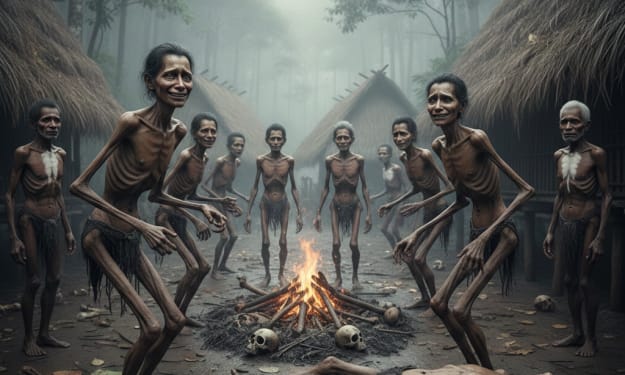
The Chilling Mystery of Kuru: The “Laughing Death” That Shocked the World
There are diseases… and then there are mysteries that haunt science for decades. Back in the 1930s, something terrifying was unfolding in the highlands of Papua New Guinea. Among the Fore people, a tribe of roughly 11,000 individuals, a strange illness was claiming around 200 lives every year.
By Areeba Umair8 months ago in History
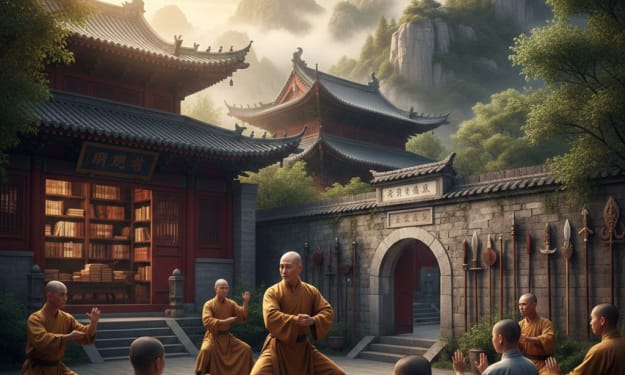
Shaolin Temple Secrets Revealed: The Real Story Behind Shaolin Kung Fu
When most people hear Shaolin Kung Fu, they picture flying kicks, shattered bricks, and warriors who move like something straight out of a movie. Maybe even someone like Bruce Lee dominating the screen with lightning-fast strikes.
By Areeba Umair8 months ago in History
Chinese New Year 2026: Meaning, Traditions, Zodiac Signs & Celebration Guide
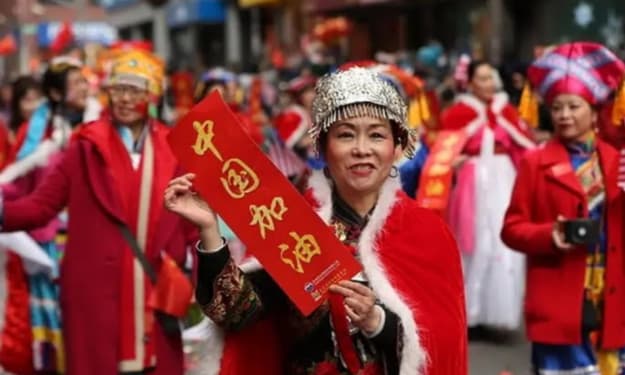
In the Chinese calendar, this is the most important day of the year, and on February 1 more than one billion people eat delicious meals with their loved ones. They watch colorful parades held in their respective areas and pray that the new year will prove to be blessed for them. What happens on Chinese New Year? According to the Chinese calendar, the new year begins on the day of the second new moon after December 21. That means the first day of the new year falls between January 21 and February 20. Chinese New Year is also called the Spring Festival, and Chinese communities around the world celebrate it with great enthusiasm. During these celebrations, people bid farewell to the past year with the hope that the coming year will bring good fortune and prosperity. On this occasion, people arrange feasts in their homes, and fireworks displays take place in streets and neighborhoods. A special feature of these celebrations is the dance of the mythical dragon that guards treasure and breathes fire, known as the “Dragon Dance.” Major celebrations are held on New Year’s Eve and the morning of the first day of the year. Every year in China, millions of people travel—sometimes thousands of miles—to celebrate the new year with their families. On this day, people decorate their homes in red because it is considered a symbol of good luck in Chinese culture. Children are given money in red envelopes. The New Year celebration continues for two weeks. Nowadays in China, people are given a week-long holiday for the New Year, a practice that began in the 1990s. According to statistics from China’s Ministry of Commerce, people now spend more than 820 billion yuan (96 billion pounds) on shopping and food during the New Year period. Year of the Tiger In China, each year is named after one of 12 different animals, and according to the Chinese calendar, the coming year will be the “Year of the Tiger.” It is said that children born in this year will be strong, brave, and highly competitive. In Cantonese, the most widely spoken language in southern China and Hong Kong, “Happy New Year” is said as “Gong Hei Fat Choy,” which means “Wishing you prosperity.” In Mandarin, the second major language of China, people say “Xin Nian Kuai Le,” which means “Happy New Year.” When did Chinese New Year begin? It is generally believed that Chinese New Year began in the 14th century BCE during the rule of the Shang Dynasty. Various legends are associated with the beginning of the New Year. According to one story, centuries ago at the start of each new year, a monster named Nian (meaning “year”) would attack villagers. The Nian monster’s weakness was that it was afraid of loud noises, bright lights, and the color red. Since then, people have used these things every year to drive away the fierce beast. Because the fire-breathing mythical dragon is considered a symbol of power and good fortune in Chinese culture, many regions in China organize Dragon Dance performances during New Year celebrations. Large colorful dragons made from paper and other materials are created and given a central role in processions. Before the New Year, people thoroughly clean their homes so that if the past year brought any misfortune, the arrival of the new year will remove it. In which other countries are celebrations held? In all countries of Southeast Asia, the New Year is celebrated on the same lunar date after December 21. In Vietnam, the first day of the new year is called “Tet,” which means “the celebration of the first morning of the first day.” In Vietnam, people also clean their homes and decorate them with fresh fruit branches and flowers to welcome the New Year, especially pink blossoms and small oranges. The pink color of peach blossoms symbolizes energy, while small oranges and their fresh branches represent prosperity. In South and North Korea, New Year celebrations last for three days. During these days, Koreans observe a ritual called “Charye,” in which they offer various dishes in the name of their ancestors to seek blessings for the new year. In South Korea, people give each other canned meat packed in decorative baskets as gifts on this day. In Mongolia, the Chinese New Year festival is mostly called “Tsagaan,” while some also refer to it as the “White Moon Festival.” On this day, people worship stone mounds used as shrines and altars. They also exchange bottles of fragrant tobacco, which is said to strengthen bonds between people. How is Chinese New Year celebrated in the rest of the world? In the United States, a large fireworks event is held in New York’s Roosevelt Park, where nearly 600,000 firecrackers are set off. After that, lion dances and colorful parades take place in the city’s Chinatown area. On this day in Singapore, a large procession is held on the streets, featuring performers dressed in bright colors showcasing their talents on colorful floats. As for the United Kingdom, the largest center of the Chinese community is Manchester, where the community has lived for a long time. Manchester also hosts a large parade, highlighted by its famous 53-meter-long dragon.
By Real content8 months ago in History
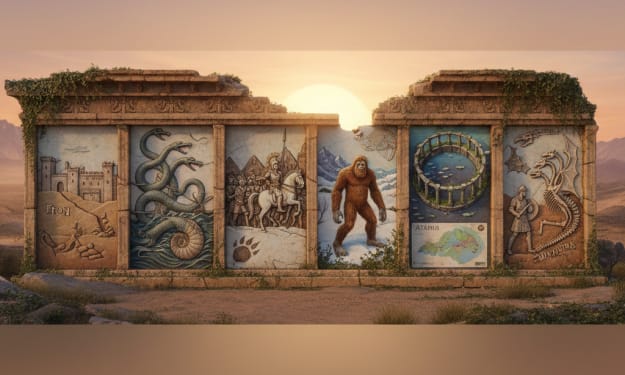
6 Ancient Legends That Were Surprisingly Real
Humans are natural storytellers. For thousands of years, myths and legends have ignited our imagination, fed our souls, and passed wisdom from one generation to the next. While many of these tales are just that, stories, some are rooted in real events, revealing fascinating truths about our planet and the universe.
By Areeba Umair8 months ago in History
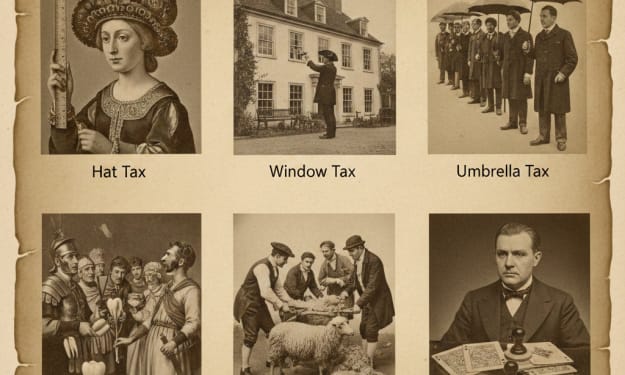
6 Bizarre Taxes From History That Will Make You Thank Modern Life
Throughout history, taxes haven’t always been about income or property. Some levies were downright bizarre, targeting everyday life, personal habits, and even your body. From medieval England to ancient Rome, here are six of the strangest taxes ever recorded.
By Areeba Umair8 months ago in History
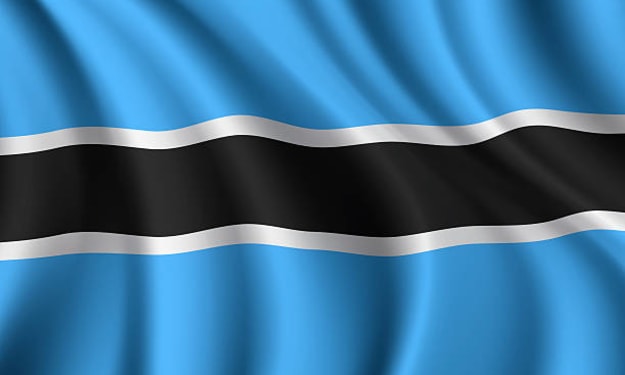
Botswana
In the mid-20th century, the landlocked territory now known as Botswana was a sleepy British protectorate called Bechuanaland, a vast expanse of Kalahari sands and sparse settlements spanning over 580,000 square kilometers but home to fewer than 500,000 people. The 1950s marked a pivotal era of transition, as colonial winds of change swept across Africa. Under British oversight since 1885, Bechuanaland had been largely neglected, administered from distant South Africa until 1963. Yet, seeds of nationalism were sown early. In 1956, the Legislative Council was established, granting limited local input, but it was the formation of the Bechuanaland Democratic Party (BDP) in 1962 by Seretse Khama—exiled Tswana chief and future president—that ignited the independence flame. Khama, a Cambridge-educated leader with a controversial interracial marriage to Ruth Williams, symbolized a break from tribalism and colonial paternalism. By the late 1950s, economic stagnation and South Africa's apartheid shadow loomed large, pushing demands for self-rule. In 1960, a constitutional conference in London paved the way, and on September 30, 1966, Bechuanaland transformed into the Republic of Botswana, a beacon of stability amid the continent's turbulent decolonization.
By Mogomotsi Moremi8 months ago in History