Ancient
Five Unsolved Mysteries of Ancient China that are being glossed over
Perhaps the most mysterious legacy of past civilizations on Earth is rightfully considered to be the pyramids, which can be found in different parts of the world. In one of my videos, I already told you about many questions that the pyramids of Egypt pose to specialists, but at least as many questions are raised by the pyramids built in China. While the Egyptian pyramids are more or less accessible for research, the Chinese ones remain closed to the general public to this day.
By Vitalii Petrov2 years ago in History
Discovering the Fascinating History of Cat Worship at Chicago’s ISAC Museum
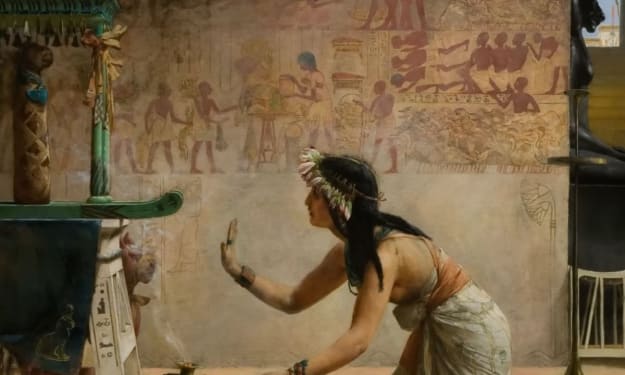
Discovering the Rich History of Cat Worship at Chicago’s Institute for the Study of Ancient Cultures Exploring ancient cultures is a fascinating journey, especially when it involves the intriguing history of cat worship in ancient Egypt. One of the best places to embark on this adventure is the Institute for the Study of Ancient Cultures (ISAC) at the University of Chicago. This hidden gem, located on the university's campus, offers a deep dive into the ancient world, with a special focus on the Middle and Near East, including the entire Nile Valley. Unveiling the Museum ISAC, previously known as the Oriental Institute, houses an impressive collection of approximately 350,000 artifacts. Despite only displaying about 2% of its collection, the museum provides a rich experience for visitors. Dr. Marc Maillot, the museum’s chief curator, explains that the museum covers everything from prehistory to the Early Middle Ages, including the newly integrated Islamic collection display. This vast chronological range ensures that visitors can explore an extensive array of historical periods. Highlights of the Collection Among the museum's treasures is a remarkable wooden painted stela from the Third Intermediate Period. This piece features the divine priestess of Amun, Djed-Khonsu Amun, presenting an offering to the god Ra-Horakhty. The artist's skill in creating a sense of transparency in the costume without mastering perspective is particularly noteworthy. This piece, like many others in the museum, helps bridge the gap between ancient and modern worlds, showing that ancient people shared many of the same feelings and experiences we do today. The Fascination with Cats A significant part of ISAC’s collection focuses on the religious and cultural importance of cats in ancient Egypt. Cats were revered not only as pets but also for their religious significance. The ancient Egyptian word for cat was "miu," a term that evokes a sense of affection. There are accounts, such as those by Herodotus, describing how Egyptians would go to great lengths to save cats, even running into burning buildings. Cat Worship in Ancient Egypt Ancient Egyptian religion often intertwined with economic and social practices. Statues of cats, like those depicting the lioness goddess Sekhmet and the gentler goddess Bastet, reveal the dual nature of feline deities. Sekhmet, known for her fierce nature, was believed to protect her father Ra, the sun god. In contrast, Bastet represented a more nurturing aspect. The myths surrounding these goddesses highlight the importance of balance and duality in Egyptian beliefs. The Darker Side of Cat Worship While many cats lived as cherished pets, archaeological evidence shows a more somber side to their story. Temples dedicated to cat deities had large pens where cats were raised. Priests would sometimes cull the herds, taking kittens as young as three or four months old, and mummify them as offerings to the gods. This practice was believed to ensure the gods' favor, which in turn would bring prosperity to Egypt. The Business of Cat Mummies The mummification of cats was a significant industry in ancient Egypt. Cat mummies, often placed in elaborate coffins, were used as offerings to deities. The practice was so widespread that large quantities of cat mummies were found in cat cemeteries, or "catacombs." In the late 1800s, about 180,000 cat mummies from a single site were exported to the UK for use as fertilizer, highlighting the vast scale of this practice. Amulets and Modern Connections The museum also features amulets, small protective charms often worn by people or placed on mummies. These amulets, made from a quartz-based pottery called faience, depict various deities, including feline ones. Today, many people still wear cat-themed jewelry, showing a continued fascination with these mystical animals. Reflecting on the Past ISAC not only preserves ancient artifacts but also engages with the ethical considerations of how these collections were acquired. The museum focuses on partnerships and education to ensure a respectful and collaborative approach to studying ancient cultures. This commitment helps bridge the gap between past and present, making the museum a place of learning and reflection. Conclusion The Institute for the Study of Ancient Cultures is a treasure trove of history, offering insights into the ancient world and its connection to our modern lives. Whether you are a cat lover or a history enthusiast, a visit to this museum promises an enriching experience that highlights the enduring bond between humans and their feline companions.
By Rabiul Molla2 years ago in History
## Celestial Origins: Exploring the Mystery of Humanity's Place in the Universe. AI-Generated.
The subject of deity, whether conceived as God, gods, goddess, or goddesses, remains one of the most profound and contentious topics in human history. The quest to understand our origins and the nature of existence often leads us to contemplate higher powers or divine entities. Despite the myriad of beliefs and religions that populate our world, a common thread persists: the enigma of a higher power is interwoven with our history, our origins, and our very essence. Throughout history, humanity has sought answers to the mysteries of existence. This search often turns inward, as we ponder the nature of God and our own spiritual inclinations. Many people find comfort and purpose in their beliefs, which can make it challenging for alternative viewpoints to gain traction. The mystery surrounding God—or gods—serves not only to uphold individual ideologies but also to reinforce a sense of purpose and calling within each person. The mystery of God is as much about our origins as it is about understanding the divine. This quest often leads us to look beyond our immediate surroundings to the vast expanse of the sky, the stars, and space itself. If we closely examine our world and the life it sustains, it becomes apparent that something is amiss. Nature thrives on a delicate balance of give and take, where each species contributes to the overall ecosystem. The weak either adapt and survive or perish, thereby replenishing the earth in different forms. This cycle of reciprocity is evident in almost all forms of life—except for humans. Humans are unique in that we do not seem to fully contribute to the ecosystem. Instead, we deplete resources and disrupt the natural balance. This anomaly raises a profound question: if the planet is designed for reciprocity, why do humans behave differently? Perhaps humanity is not originally a part of this natural system but rather an introduced species. This hypothesis suggests that humans may have been placed on Earth by an external force—possibly extraterrestrial scientists conducting genetic experiments. The idea that humans did not originate on Earth is not new. It finds echoes in historical chronicles, biblical stories, and ancient myths. The notion of visiting aliens depositing humans on this planet is a concept that has intrigued scholars and laypeople alike. For instance, the Old Testament of the Christian Bible, which is also part of the Judaic Torah, contains the book of Ezekiel. In this book, Ezekiel describes a vision of a kind of ‘chariot’ that many scholars interpret as a potential alien visitation. This interpretation aligns with theories suggesting that advanced extraterrestrial beings may have influenced early human civilizations. Ancient structures like Stonehenge, the pyramids of Egypt, and the legends of Atlantis are often cited as evidence of possible extraterrestrial influence. These marvels of engineering and architecture seem to defy the technological capabilities of the societies that built them. According to some theories, these structures could be remnants of a time when ‘sky-gods’ visited Earth, leaving behind both physical monuments and a wealth of stories that eventually formed the basis of religious doctrines and myths. The concept of ancient astronauts has gained traction in recent years, bolstered by new archaeological discoveries and advancements in technology. As we uncover more about our past, we begin to see patterns that suggest a possible extraterrestrial connection. For instance, the precision with which the pyramids were constructed and aligned with celestial bodies indicates a sophisticated understanding of astronomy that seems advanced for the time. Similarly, the tales of Atlantis describe a technologically advanced civilization that disappeared mysteriously, potentially hinting at a lost chapter of human history influenced by extraterrestrial beings. These ideas challenge traditional narratives and invite us to reconsider our place in the cosmos. They suggest that humanity’s quest for meaning and understanding may extend beyond the confines of Earth. As we continue to explore space, we are not only looking outward for new frontiers but also seeking answers to age-old questions about our origins and the nature of the universe. Modern scientific endeavors reflect this search for understanding. Space agencies like NASA and private companies like SpaceX are pushing the boundaries of what we know about the universe. The discovery of exoplanets in habitable zones, the search for extraterrestrial intelligence (SETI), and missions to Mars all embody humanity’s drive to explore and understand our place in the cosmos. These efforts are part of a broader attempt to bridge the gap between ancient myths and modern science, to find a coherent narrative that explains our existence. In the end, the mystery of God—or gods—and the question of our origins remain deeply intertwined. Whether through religious faith, scientific inquiry, or a combination of both, humanity continues to seek answers to the fundamental questions of existence. As we look to the skies and explore the stars, we are not merely seeking new worlds; we are seeking to understand our own. The journey to uncover the truth about our origins is ongoing. It is a quest that spans cultures, religions, and scientific disciplines. It is a testament to the enduring human spirit and our unyielding desire to understand the mysteries of life. Whether we are the product of divine creation, extraterrestrial intervention, or a natural process of evolution, the search for answers continues to inspire and challenge us. As we stand on the cusp of new discoveries, we must remain open to all possibilities and continue to explore the cosmos with wonder and curiosity.
By Mbeha maliwa 2 years ago in History
Samurai Warriors in the Sengoku Period
At the end of the 16th century, Japan was on the brink of an imminent civil war. At that time, the Ashikaga shogunate ruled, the second feudal military regime established by the shoguns of the Ashikaga clan around the year 1336. However, after the collapse of this central power in 1573 following a series of civil wars and military conflicts, the central authority fragmented, dividing into numerous feudal states governed by warlords. For all these reasons, the Sengoku period literally means “Warring States.” Without a central power to govern everything, the feudal lords and the military or warrior caste sought absolute control of the territory. This very circumstance fueled the wars between different clans and factions from all regions of the Japanese nation. Some of the most prominent and influential clans of that period include the Takeda clan, the Uesugi clan, the Oda clan, the Tokugawa clan, the Hojo clan, the Mori clan, among others. These clans had powerful leaders and significant territories, making them key players in the struggles for power and control in Japan.
By Agustín Badariotto2 years ago in History
World's OLDEST known sundial. AI-Generated.
The world's oldest known sundial is a remarkable artifact that provides a window into the early understanding of timekeeping and astronomy. This ancient instrument, discovered in the Valley of the Kings in Egypt, dates back to the 13th century BCE during the reign of Pharaoh Seti I. The sundial not only highlights the ingenuity of ancient Egyptian scientists and craftsmen but also underscores the importance of time measurement in their society. Exploring the origins, construction, and significance of this ancient sundial offers a fascinating glimpse into the technological and cultural achievements of one of history's most advanced civilizations.
By Marveline Merab2 years ago in History
This is how you ATTACK with Rome! | Roman Siege Towers. AI-Generated.
Roman siege towers stand as a testament to the engineering genius and military might of ancient Rome. These formidable structures, designed to breach the walls of enemy fortifications, played a crucial role in the expansion and consolidation of Roman power. Understanding the origins, construction, and tactical use of Roman siege towers provides a fascinating glimpse into the strategic innovations that enabled Rome to dominate the ancient world.
By Marveline Merab2 years ago in History
Hittite War Chariots. AI-Generated.
The Hittite war chariot, a formidable weapon of ancient warfare, stands as a testament to the military ingenuity and engineering prowess of the Hittite civilization. Emerging from the powerful Hittite Empire, which flourished in Anatolia (modern-day Turkey) from around 1600 BCE to 1178 BCE, these chariots played a crucial role in shaping the course of ancient battles. Understanding the origins, design, and impact of Hittite war chariots provides a fascinating glimpse into one of history's most influential yet often overlooked military innovations.
By Marveline Merab2 years ago in History
The world's FIRST pipe organ | Greek Water Organ (Hydraulis). AI-Generated.
The world's first pipe organ, known as the hydraulis or Greek water organ, stands as a monumental achievement in the history of musical instruments. Invented in the 3rd century BCE, this ancient marvel not only represents the ingenuity of Greek engineering but also laid the foundational principles for the development of the pipe organ, which has had a profound impact on music throughout the centuries. Understanding how the hydraulis came to be involves exploring its invention, construction, and significance in ancient Greek culture and beyond.
By Marveline Merab2 years ago in History
How it came to be | Chinese-crossbow. AI-Generated.
The Chinese crossbow, one of the most remarkable inventions in the history of warfare, has a fascinating origin story that highlights the ingenuity and technological prowess of ancient Chinese civilization. This weapon revolutionized military tactics and had a profound impact on Chinese history and beyond. Understanding how the Chinese crossbow came to be involves delving into its development, technological innovations, and the cultural and historical context that spurred its creation.
By Marveline Merab2 years ago in History
This is How They Built the Inca Stone Walls. AI-Generated.
The construction of the Inca stone walls stands as a marvel of ancient engineering, showcasing the ingenuity and skill of the Inca civilization in the Andes Mountains of South America. These walls, characterized by their precisely cut stones that fit together without mortar, have withstood the test of time and natural disasters, remaining a testament to the advanced construction techniques developed by the Incas. Understanding how these walls were built involves delving into the materials, tools, and methods employed by the Inca builders, as well as the cultural and practical considerations that guided their architectural practices.
By Marveline Merab2 years ago in History