Ancient
In a single Delhi house, several hundred years of Indian history
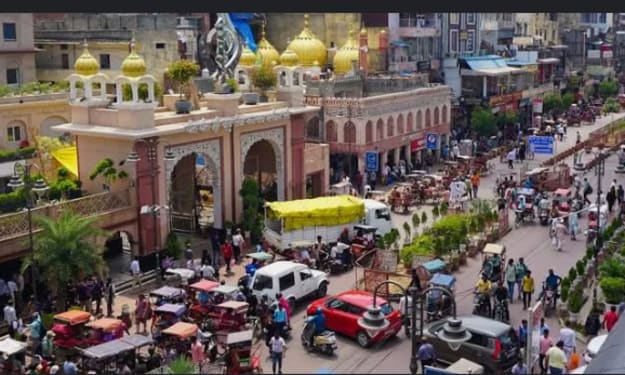
Several hundred years of Indian history in one Delhi house A house that is more than just a building is hidden away in the winding streets of Old Delhi. It is a living record of India's multifaceted past. This modest yet quietly majestic haveli (mansion), belonging to the same family for centuries, has borne silent witness to the rise and fall of empires, the echoes of revolution, and the birth of modern India. A Time Capsule for Life Unlike the grand monuments of Delhi—the Red Fort, Humayun’s Tomb, or Qutub Minar—this house isn’t listed in any guidebooks. However, once you enter its arched doorway, you are immediately transported through time. The high ceilings, intricate jharokhas, and courtyard that once reverberated with the footsteps of poets and nobles all speak Mughal. A colonial-era phonograph and faded photographs of ancestors sporting British medals and turbans are displayed in one corner. Newspapers from the 1940s, partition-era graffiti, and rooms named after ancestors who participated in the freedom struggle can be found on the faded but proud walls. Generations as Storytellers The family that has lived here for generations is a part of the house's magic. Their narratives bring back memories from the past. A great-grandmother speaks of the 1857 rebellion not from textbooks, but from tales her grandfather passed down—of hiding revolutionaries, of British soldiers pounding at their gates. Handwritten letters from Delhi under Nehru can be found in another room, and ration cards from the Emergency of the 1970s can be found in a rusted trunk. This is more than just a family's legacy; it's a representation of India's journey, carved in stone and passed down like family heirlooms. Chaos in its Continuity What makes the house even more remarkable is its resilience. This house remained unaltered, almost defiant, despite Delhi's modernization—glass towers rising, metro lines cutting through the heart of the city. The owners stood their ground while neighbors gave in to developers. Not out of nostalgia, but reverence—for memory, for history, for identity. It is both sanctuary and archive, where daily life—children studying, elders praying, meals being cooked—unfolds against a backdrop of centuries. Change's Silent Witness This house has outlasted emperors and elections, kings and prime ministers. It has witnessed the growth of Urdu poetry on rooftops lit by moonlight and the transformation of pigeon coops into TV antennas. And through it all, it has remained silent and humble, proclaiming to anyone who will listen: history does not always reside in museums. It sometimes resides in the same walls that shelter love, loss, laughter, and legacy as people do. This house serves as a reminder to us that, in a city like Delhi, where history is everywhere, sometimes the most extraordinary stories can be found in the most ordinary places.
By Kindless Exe2 years ago in History
March for Gaza: A Global Call for Justice and Peace
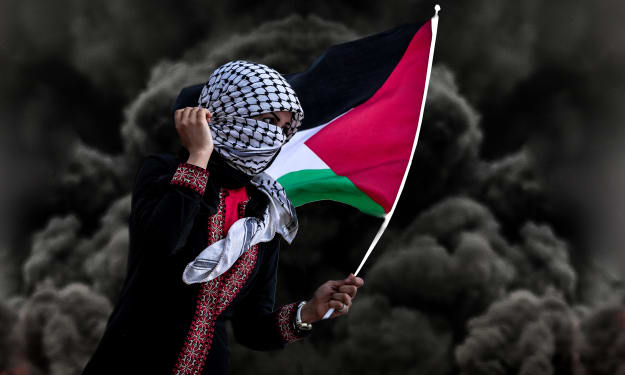
# **March for Gaza: A Global Call for Justice and Peace** In recent months, the world has witnessed a surge in public demonstrations demanding an end to the violence in Gaza. People from all walks of life are coming together as part of the "March for Gaza" to demand justice, humanitarian aid, and a long-term ceasefire. These marches highlight the growing international concern over the devastating humanitarian crisis in Gaza and the urgent need for political action. **Why Are People Protesting in Support of Gaza? ** The conflict in Gaza has resulted in unprecedented destruction, with thousands of civilians killed, including women and children. Millions of people have been left without access to food, clean water, or medical care as a result of bombings of schools, hospitals, and residential areas. In response to these atrocities, protesters started the **March for Gaza** movement, demanding: 1. **An Immediate Ceasefire**: Despite numerous calls for an end to the violence, the fighting continues. Protesters urge world leaders to take stronger diplomatic action. 2. Access to Humanitarian Aid: Gaza faces severe fuel, medicine, and food shortages. Marches demand that borders be opened to allow life-saving aid to reach those in need. 3. **Accountability for War Crimes** Despite the fact that attacks on civilians are against international law, there are still reports of indiscriminate bombings and violations of human rights. Protesters demand that there be an investigation and justice. 4. **An End to Occupation and Blockade** – For over 16 years, Gaza has been under a strict blockade, restricting movement and economic growth. This is viewed as collective punishment by many, and they demand its end. ## **Global Solidarity in Action** From **London to New York, Jakarta to Cape Town**, hundreds of thousands have joined the **March for Gaza**, making it one of the largest protest movements in recent history. In the UK, over **300,000 people** marched in London in November 2023, while cities like Washington D.C., Paris, and Sydney saw record turnouts. These demonstrations show that public opinion is shifting, with increasing pressure on governments to act. Social media has played a crucial role in mobilizing support. Viral images and videos from Gaza have sparked outrage, leading to more people joining marches, signing petitions, and contacting their representatives. #FreePalestine and #CeasefireNow have become global trends, keeping the issue in the spotlight. ## **Challenges and Opposition** Despite widespread public support, the **March for Gaza** has faced criticism and resistance. As a result of security concerns, some governments have attempted to restrict protests, while others have accused protesters of supporting terrorism, which many of them deny, stressing that peace is not their goal. Additionally, media bias has been a challenge. While some outlets provide balanced coverage, others downplay the scale of protests or the severity of the crisis in Gaza. Because of this, grassroots organizing plays an even more important role in shaping the narrative. ## **The Road Ahead** The **March for Gaza** is more than just a protest—it’s a testament to global solidarity. History has shown that sustained public pressure can force political change, from the anti-apartheid movement to the global outcry against the Iraq War. To keep the momentum going, activists emphasize: - **Continued Protests** – Regular marches keep the issue visible. - **Boycotts and Divestment** – Economic pressure on companies supporting oppression. - **Political Advocacy** – Pushing governments to sanction human rights violators and support UN resolutions. ## **Conclusion** The **March for Gaza** represents the collective conscience of millions who refuse to stay silent in the face of injustice. While the path to peace is complex, the growing global movement shows that people worldwide demand an end to the suffering in Gaza. Whether through protests, donations, or advocacy, every action brings us closer to a future where Palestinians and Israelis can live in dignity and peace. The world is watching—and marching. The question now is whether those in power will listen. **#MarchForGaza #CeasefireNow #FreePalestine**
By MD MAHEDI HASAN2 years ago in History
Sudanese Paramilitaries
The paramilitary Rapid Support Forces (RSF) and allied militias launched a brutal two-day assault on the Zamzam and Abu Shorouk displacement camps near El Fasher, North Darfur, in a devastating escalation of the ongoing civil war in Sudan. Over 100 people perished in the attacks, which began on April 11, 2025, including 20 children and nine humanitarian aid workers. Before this latest tragedy, these camps, which house over 700,000 internally displaced people (IDPs), were already struggling with severe famine conditions. The Assault on Zamzam and Abu Shorouk Camps
By Md Faruk Ali2 years ago in History
The Black Samurai: The Untold Story of Yasuke
In the annals of samurai history, one name stands out as extraordinary Yasuke, the African warrior who defied all odds to become a legendary figure in 16th-century Japan. His story, long overshadowed by time and myth, is one of courage, loyalty, and an unprecedented rise to power in a land where outsiders were rarely trusted.
By Fahad Khan2 years ago in History
The War That Erased a Nation—And Why We Still Need to Remember
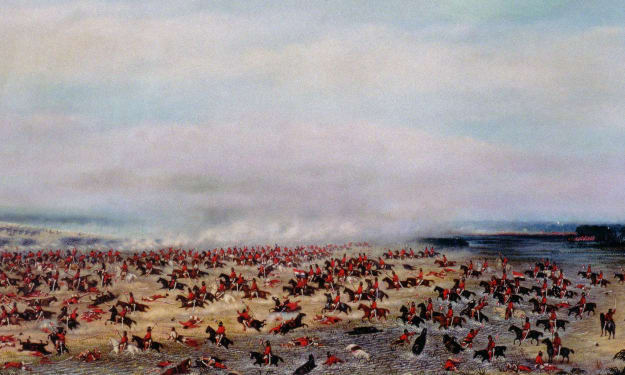
Have you ever stumbled on a story so wild you can’t believe it’s not a movie? Let me tell you about a war that killed over 60% of a nation’s population —more devastating than the Black Death—and yet, outside a handful of history nerds, nobody talks about it. What the hell happened in Paraguay between 1864 and 1870? And why does it feel like the world hit “delete” on this chapter of history?
By ChronoCurator2 years ago in History
Prayer and Love
Prayer and Love Love is not just a feeling, surrendering that feeling through prayer is a kind of worship. In the course of life, we experience many loves—friends, relatives, and special people. However, there is one thing that can increase the emotional and powerful nature of that deep love: prayer. The desire for him transforms into "He is good in my heart" when we love. And there is nothing greater than the well-being of a believer—if someone can pray for him.
By Arshad Ali2 years ago in History
HAMAS
Hamas: The Story Hamas is a Palestinian Islamist militant and political organization. It was founded in 1987 during the First Intifada and is an offshoot of the Muslim Brotherhood. Hamas has a military wing, the Izz ad-Din al-Qassam Brigades, and a political wing that has governed the Gaza Strip since 2007 after winning elections in 2006.
By Sanjoy Chandra Das2 years ago in History
A Love Story Written in the Morning Sky
The peaceful town of Wister Hollow was slowly illuminated by the first rays of dawn. A location where mornings were shrouded in magic and mist, and time appeared to walk rather than run. The sky served as more than simply a ceiling in this place; it was a dreamer, a storyteller, and occasionally a matchmaker.
By MD SHAMIM RANA2 years ago in History
The Mystery Behind France's Forgotten Medieval Villages
The Mystery Behind France's Forgotten Medieval Villages Introduction In the heart of France, beyond the buzzing cities and glossy tourist brochures, lies a world almost completely untouched by modern hands. Scattered across quiet countryside and hidden behind thick forests or rolling hills are villages that time simply forgot. These aren’t just small towns with low populations—these are places that hold echoes of ancient conversations, where walls still bear the scars of forgotten wars and pathways are etched with the footprints of long-gone peasants, knights, and merchants. But how did these villages vanish from modern memory, and why do they stir something so deep in the soul of anyone who visits? The answers lie buried in history, myth, and silence.
By Vera Marçoli2 years ago in History
From Swedish Sailor to Island King: The Extraordinary Life of Carl Pon
In the late 19th century, a young man from Sweden set sail on a journey that would transform him from an ordinary sailor into the revered king of a remote Pacific island. Carl Pon’s life, marked by adventure, survival, and unexpected romance, is a tale so remarkable it inspired one of literature’s most beloved characters. Here’s the captivating story of how a shipwreck, a pair of striking blue eyes, and a resilient spirit led Pon to a destiny few could imagine.
By KWAO LEARNER WINFRED2 years ago in History
immigration judge for Mahmoud Khalil
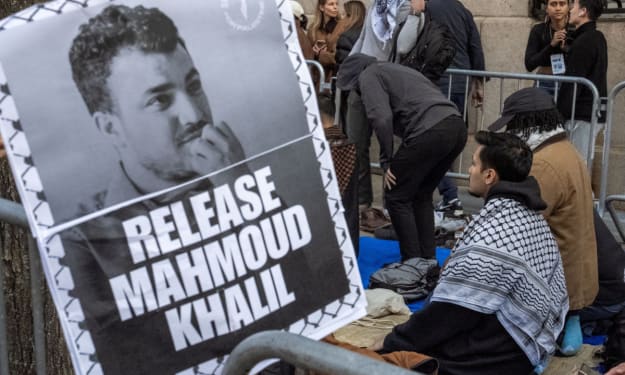
Mahmoud Khalil, a Palestinian who graduated from Columbia University and is a lawful permanent resident of the United States, was given the green light by an immigration judge in Louisiana on April 11, 2025, to be deported for allegedly posing a threat to national security. This decision has ignited a national debate over free speech, civil liberties, and the Trump administration's intensified crackdown on pro-Palestinian activism on college campuses.
By Md Faruk Ali2 years ago in History