Ancient
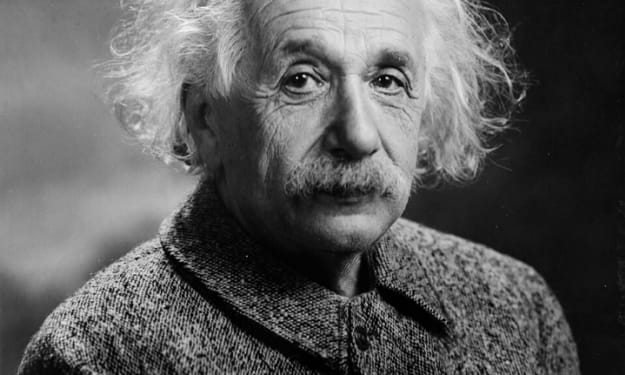
Biography of Aubert Einstein the greatest scientist ever
Albert Einstein (14 March 1879 – 18 April 1955) was a German-born theoretical physicist who is best known for developing the theory of relativity. Einstein also made important contributions to quantum mechanics. His mass–energy equivalence formula E = mc2, which arises from special relativity, has been called "the world's most famous equation". He received the 1921 Nobel Prize in Physics for his services to theoretical physics, and especially for his discovery of the law of the photoelectric effect.
By Favour Nyimbiliabout a year ago in History
Artificial Intelligence Solves One of Archaeology’s Greatest Puzzles.
Artificial Intelligence Solves One of Archaeology’s Greatest Puzzles. For centuries archaeology has been a discipline built on patience careful excavation and painstaking analysis. Every shard of pottery ancient inscription and ruined structure tells a story but understanding these fragments often requires years if not decades of study. Today however a new player has entered the field Artificial Intelligence (AI). In a groundbreaking development AI has recently helped solve one of archaeology’s greatest puzzles revolutionizing the way we uncover humanity’s ancient past. One of the most elusive challenges in archaeology has been the deciphering of ancient scripts. Languages like Egyptian hieroglyphs were famously decoded with the help of the Rosetta Stone but many others such as Linear A the Indus Valley script and early Mesoamerican glyphs have remained stubbornly mysterious. Traditional methods of decipherment often rely on finding bilingual inscriptions or large amounts of contextual material luxuries that are not always available.
By Adnan Rasheedabout a year ago in History
The Ancient Origins of Alcohol
For thousands of years, alcohol has been deeply ingrained in human culture, influencing customs, economies, and even the course of history. But when exactly did humans first start drinking alcohol? You might not realize how old and fascinating the story is. It is a journey through ancient chemistry, accidental discoveries, and the timeless human desire to celebrate, commune, and escape.
By Morsalin Russellabout a year ago in History
"Dead Hand: The Secret History of Russia’s Automatic Nuclear Retaliation System". AI-Generated.
The Shadow of the Dead Hand: The History of Russia’s Automatic Nuclear Launch Program Throughout the Cold War era, the specter of nuclear annihilation loomed over the globe. The United States and the Soviet Union amassed thousands of nuclear weapons, bracing for the worst potential scenario: a surprise offensive that could obliterate their nations within moments. In response, the Soviet Union devised one of the most formidable and clandestine systems ever conceived the Automatic Nuclear Launch Program, referred to in the West as the Dead Hand. This system assured a retaliatory response even in the event that the entire Soviet leadership was eradicated, encapsulating the doctrine of “Mutual Assured Destruction” in its most harrowing manifestation. In this article, we will explore the origins, framework, and chilling legacy of this program. The Birth of the Dead Hand System 1. The Threat of Decapitation In the late 1970s and early 1980s, Soviet leaders harbored concerns regarding a potential American preemptive strike. U. S. advancements in missile precision and stealth technologies (such as the B-2 bomber) suggested that it could be feasible to eliminate Soviet leadership before they could issue a counteroffensive order. This alarming scenario termed a "decapitation strike" propelled the Soviet military to seek an effective response. They required a system capable of executing an automatic retaliation even if no personnel remained to authorize the order. 2. Development of the System The program, covertly designated as "Perimeter" (Периметр), commenced development in 1974 and was finalized by 1985. Key characteristics of Perimeter encompassed:
By Say the truth about a year ago in History
"Russia’s Hidden Power: Unveiling the Secret Weapons That Keep the World on Edge"
Russia’s Might and Its Concealed Armaments: The Covert Power of a Global Titan Russia, the planet’s largest nation by area, is frequently regarded as one of the most formidable entities in international relations. In addition to its extensive territory and abundant natural resources, Russia's military prowess, intelligence capacities, and enigmatic secret armaments add to its formidable reputation. What precisely accounts for Russia's strength, and which clandestine weapons does it maintain that keep even the most powerful states on edge? In this article, we delve into the bedrock of Russia's strength and examine some of its most speculated secret armaments. The Foundations of Russia’s Strength 1. Extensive Territory and Resources Spanning over 17 million square kilometers, Russia's sheer size provides a strategic advantage. It possesses vast reserves of oil, natural gas, coal, and rare minerals. Its forests and waterways ensure energy security and economic leverage, particularly in global markets. Natural Gas: Russia accounts for approximately 20% of the world's natural gas, an essential resource for Europe and Asia. Arctic Claims: Russia has assertively claimed segments of the Arctic, believed to contain trillions of dollars worth of oil and gas. 2. Military Might Russia fields the second-largest military globally, following the United States. It sustains: A Nuclear Arsenal: Estimated at over 6,000 nuclear warheadsthe largest accumulation on the planet. Modernized Armed Forces: Although deeply rooted in Soviet traditions, Russia's military has undergone modernization, incorporating new tanks, submarines, and hypersonic missiles. Experience: Russian forces have engaged in various operational theaters, from Afghanistan to Syria, adapting to multiple warfare strategies. 3. Political Resolve and Cyber Warfare In contrast to many Western nations, where public opinion heavily shapes military initiatives, Russia's leadershipparticularly under President Vladimir Putinbenefits from centralized authority to act decisively. Moreover, Russia has excelled in cyber warfare: Cyber Attacks: Russian entities have been associated with significant cyber intrusions globally, targeting electoral processes, corporations, and governmental infrastructures. Information Warfare: Russia employs media manipulation and online disinformation initiatives as extensions of state authority. The Secret Weapons of Russia Beyond its conventional range of armaments, Russia is believed to include several "secret" or highly classified weapons capable of altering the global power dynamic. Some are verified; others are speculated within defense discussions. 1. Poseidon Nuclear Torpedo (Status-6) One of Russia’s most unsettling covert weapons, Poseidon is a substantial nuclear-powered, nuclear-armed underwater drone. Capabilities: It can traverse thousands of miles underwater, evade missile defense systems, and generate radioactive tsunamis that could incapacitate coastal urban areas. Impact: If activated, Poseidon could obliterate enemy infrastructure without requiring conventional nuclear missile launches. 2. Avangard Hypersonic Glide Vehicle The Avangard is a hypersonic missile system capable of exceeding 20 times the speed of sound and maneuvering erratically, rendering it nearly impossible to intercept. Deployment: Russia asserts it has already fielded Avangard-equipped missiles. Advantage: Existing anti-missile systems in the West are predominantly ineffective against hypersonic threats. 3. Burevestnik Nuclear-Powered Cruise Missile Dubbed "Skyfall" by NATO, the Burevestnik is a theoretical missile with an unlimited range due to its nuclear propulsion. Potential: Such a projectile could remain aloft for months, perpetually altering its trajectory, and strike targets anywhere on the planet. Status: Trials have been reported, but it remains ambiguous whether it is entirely functional. 4. Electronic Warfare Systems (EW) Russia has made significant investments in electronic warfare technologies: Capabilities: Disrupt adversary communications, radar, and satellite systems. Systems: The Krasukha-4 and Murmansk-BN are among the recognized Russian EW systems that can jam enemy assets hundreds of kilometers distant. 5. Underwater "Doomsday" Bases There are ongoing speculations that Russia possesses clandestine underwater facilities and deep-sea platforms equipped with nuclear armaments, particularly in the Arctic and Pacific Oceans. While not officially validated, these speculations correspond with Russia's focus on asymmetric warfare strategiesintroducing unexpected and unconventional threats. Reasons for Russia's Investment in Secret Weapons There are multiple factors contributing to Russia's intense focus on developing clandestine and advanced weaponry: Offsetting Conventional Deficiencies: Russia recognizes that, economically and conventionally, it cannot compete directly with NATO and the U. S. Psychological Warfare: The fear of unknown technologies keeps adversaries apprehensive. Strategic Surprise: Clandestine weapons can provide Russia with first-strike or deterrent advantages should overt conflict arise. Conclusion Russia’s strength resides not solely in its tanks, missiles, or oil reservesit is in its capacity to conduct psychological, cyber, and unconventional warfare while sustaining a strategic advantage through secretive, advanced technologies. From nuclear torpedoes to hypersonic missiles and electronic warfare, Russia has developed an arsenal that fuses traditional power with futuristic terror. In a world increasingly defined by novel forms of conflictcyber attacks, hypersonic arms races, and underwater weaponryRussia’s covert maneuvers guarantee that it remains a contender no one can afford to underestimate. Its clandestine weapons are not merely instruments of warthey are shields of fear, intrigue, and global influence.
By Say the truth about a year ago in History
El Dorado: The Golden Legend — Chasing the Myth Across History
El Dorado: The Gilded Legend Historical Context and the Potential Reality Behind the Myth Few legends have captivated human fascination as intensely as the narrative of El Dorado, the legendary cityor individualof gold. For centuries, explorers, adventurers, and visionaries jeopardized everything to seek it, venturing into the perilous jungles of South America. Although no one ever conclusively discovered El Dorado, the myth has profoundly influenced history, geography, and culture. But was there ever any veracity to the legend? Could El Dorado have existed in some capacity? This article investigates the inception, transformation, and plausible reality behind one of history's most renowned legends. The Inception of the Legend The story of El Dorado originated in the early 16th century when Spanish explorers reached South America. They encountered murmurs among indigenous populations regarding a monarch who adorned himself in gold dust and subsequently washed it off in a sacred lake as part of a ceremonial rite. This golden figure, El Hombre Dorado ("The Gilded Man"), was said to govern a realm abundant with unimaginable wealth. The legend was first documented when conquistadors learned of a tribe known as the Muisca, who inhabited the highlands of present-day Colombia. The Muisca performed a ceremony at Lake Guatavita, where a new chief would be embellished with gold dust and plunge into the waters as a tribute to their deities, while treasures of gold and precious gems were cast into the lake. Over time, the notion of the ritual evolved from a singular ceremony to the idea of an entire city of gold, and eventually, a vast empire of gold concealed somewhere deep within the uncharted jungles. The Era of Exploration and Fixation The allure of vast wealth ignited a period of frantic exploration. Countless expeditions, motivated by greed and aspirations for glory, embarked into the expansive unknown territories of South America. Francisco de Orellana was among the initial Europeans to navigate the Amazon River in 1541, partly motivated by the ambition of discovering El Dorado. Gonzalo Pizarro, brother of the notorious conqueror Francisco Pizarro, also led disastrous ventures in pursuit of the golden city. Other explorers, such as Sir Walter Raleigh in the late 1500s, carried the obsession into the English-speaking realm. Raleigh set out on voyages to the Orinoco River (in present-day Venezuela), convinced that El Dorado resided somewhere along its path. He even disseminated embellished accounts of the riches he allegedly glimpsed, fueling additional expeditions. The quest for El Dorado claimed countless lives, exhausted treasuries, and devastated indigenous cultures, all without a single shred of evidence. Yet the legend endured, becoming progressively more intricate and richer with each succeeding generation. Lake Guatavita and the Spark of Reality One of the most alluring hints regarding El Dorado's existence was Lake Guatavita itself. In the late 16th century, the Spanish endeavored to drain the lake to retrieve the treasures from its depths. They managed to lower the water level slightly and retrieved some gold artifacts, but the endeavor was largely futile. Subsequently, in the early 20th century, another initiative was undertaken utilizing contemporary technology, which once more produced a limited number of exquisite gold artifacts but significantly failed to substantiate the existence of a golden empire. These discoveries implied that while the Muisca ritual was authentic, it entailed offerings from an affluent society rather than the reality of a city entirely composed of gold. Reality or Pure Fallacy? Currently, historians predominantly concur that El Dorado as a literal city of gold never materialized. Nonetheless, the likelihood that it was inspired by genuine and affluent indigenous culturessuch as the Muiscapersists strongly. The Muisca civilization possessed advanced metallurgy techniques and created complex gold items, including tunjos (small votive offerings), adornments, and religious relics. Other civilizations, like the Inca Empire to the south, also accumulated remarkable wealth that was exploited by the Spanish. Thus, while the notion of a city wholly constructed of gold was a myth, the existence of opulent, advanced civilizations in pre-Columbian South America was indeed factual. In various interpretations, El Dorado embodies a fusion of numerous stories, aspirations, and misconceptions that European explorers projected onto the New Worldan "golden" land abundant in wealth and marvel. El Dorado in Contemporary Culture The tale of El Dorado endures in the present day, celebrated in literature, cinema, video games, and even popular music. It signifies not only affluence but the persistent human yearning for exploration, adventure, and the chase of the unattainable. In Colombia, Lake Guatavita is a safeguarded heritage site, and a replica of the renowned "Muisca raft" (a golden representation of the ritual) can be viewed at the Gold Museum (Museo del Oro) in Bogotá. Simultaneously, the concept of lost cities and concealed treasures continues to motivate modern explorers and archaeologists, some of whom have uncovered genuine "lost cities" in the Amazon rainforest, constructed by ancient civilizations previously deemed impossible. Conclusion El Dorado may not have constituted the golden city of lore, but it embodies a deeper truth about human nature: our everlasting craving for discovery, wealth, and significance. It also serves as a reminder of the cultural treasures that existed long before European engagement, and the intricate, advanced societies that resided across the Americas. Ultimately, El Dorado was never merely a locationit was a vision. And in numerous ways, that vision continues to radiate vibrantly in our collective imagination.
By Say the truth about a year ago in History
Black Diamond: The Cosmic Gem — A Journey Through Mystery, Wealth, and Power. AI-Generated.
The Chronology of the Black Diamond: From Ancient Enigma to Global Gem The Black Diamondan alluring and uncommon gemstonehas captivated humanity for centuries. In contrast to its shimmering white equivalents, the black diamond possesses a distinct charm, shrouded in enigma, historical myths, and contemporary opulence. Renowned for its dark elegance and exceptional resilience, the black diamond has journeyed from deep within the earth's crustor possibly from extraterrestrial originsto the crowns, adornments, and imaginations of individuals worldwide. This article examines the extensive and intriguing history of the black diamond, its beginnings, cultural importance, and its evolution into one of the most sought-after gemstones throughout history. The Beginnings of the Black Diamond Geologically, black diamondsalso referred to as carbonado diamondsare exceptional among their kind. While conventional diamonds are formed deep within the Earth under tremendous pressure over billions of years, black diamonds tell a different tale. Composed of countless minuscule diamond crystals fused together, black diamonds are markedly porous and often contain remnants of graphite and other minerals. What enhances their intrigue is their potential extraterrestrial source. Certain scientists theorize that black diamonds originated from meteoric impacts or even within supernova explosions in space, subsequently descending to Earth approximately 2–3 billion years ago. Their discovery in regions like Brazil and the Central African Republic, with no occurrence elsewhere, bolsters this hypothesis, as these zones were once united as part of an ancient supercontinent known as Gondwana. Thus, black diamonds are not merely treasures of Earththey may indeed be cosmic artifacts, bearing the narrative of stars. Early Findings and Myths Black diamonds were initially unearthed in Brazil during the 19th century, predominantly in the regions of Bahia and Minas Gerais. Local folklore rapidly developed around these enigmatic stones. In numerous cultures, black was linked to mortality or misfortune, leading some early societies to regard black diamonds with skepticism or even trepidation. Conversely, in Indian tradition, black diamonds were occasionally viewed as protective gems. They were thought to absorb negative energy and shield against malevolence. Their robustness and resilience also represented endurance and inner fortitude. However, due to their dark, less reflective surface in comparison to white diamonds, black diamonds initially did not achieve the same market appeal. They were more challenging to cut and polish, and jewelers favored the brilliance of transparent stones. Ascension to Prominence: Contemporary Allure The pivotal moment for black diamonds emerged in the late 20th and early 21st centuries. As the realm of luxury jewelry began to embrace alternative gemstones and distinctive designs, black diamonds received acclaim for their rarity, symbolism, and striking beauty. One of the most renowned black diamonds is the Black Orlov, a 67. 50-carat stone also known as the "Eye of Brahma" Diamond. According to legend, it was taken from a statue of a Hindu deity, and numerous misfortunes afflicted its owners, enhancing its mystical allure. Ultimately recut and redesigned to dispel its purported curse, the Black Orlov toured significant jewelry exhibitions, further elevating the popularity of black diamonds. Prestigious brands such as Cartier and De Beers commenced integrating black diamonds into necklaces, rings, and even engagement adornments, targeting a clientele in search of something distinctive, opulent, and significant. High-profile individuals like Carrie Bradshaw (Sarah Jessica Parker) in "Sex and the City" infamously sported black diamond rings, contributing to their escalating reputation as symbols of contemporary luxury. Characteristics and Worth of Black Diamonds Contrary to conventional diamonds, black diamonds derive their hue not from chemical imperfections but from numerous inclusions and internal fissures. This results in their unique opaque, black, or dark gray aesthetic. They are also recognized as some of the most resilient types of natural diamonds, rendering them exceptionally durablean ideal representation of everlasting love or unwavering commitment. Regarding worth: Natural black diamonds (particularly those that have not undergone artificial enhancement) are rare and increasingly prized. High-quality black diamonds can demand prices between $3,000 and $5,000 per carat, although historically unique or particularly large stones can reach significantly higher values. In contrast, treated or enhanced black diamonds are more accessible and widely available in the jewelry sector. With the growing interest, collectors and investors are beginning to perceive black diamonds as a promising asset within the luxury market.
By Say the truth about a year ago in History
The Wealth of the Chola Dynasty: Power, Prosperity, and a Lasting Legacy. AI-Generated.
The Resplendent Heritage: The Affluence of the Chola Dynasty Few dynasties in Indian history inspire as much reverence as the Chola Dynasty. Arising as a formidable entity in South India, the Cholas were not only valiant conquerors but also remarkable administrators and benefactors of art, culture, and commerce. Central to their prominence was their astonishing wealthgained through tactical military endeavors, extensive trade networks, innovative agricultural practices, and a highly structured economy. This article examines how the Chola dynasty, between the 9th and 13th centuries CE, constructed and sustained one of the most flourishing empires of ancient and medieval India. Origins of Chola Power and Wealth The early Cholas, referenced in Sangam literature (circa 300 BCE–300 CE), were regional sovereigns based around the fertile delta of the Cauvery River. However, it was during the Medieval Chola era (initiated by Vijayalaya Chola around 850 CE) that the dynasty achieved true imperial authority. By the time of Raja Raja Chola I (985–1014 CE) and his successor Rajendra Chola I, the Cholas had extended their domain beyond Tamilakam, subjugating parts of Sri Lanka, the Maldives, and even embarking on naval ventures to Southeast Asia. This imperial expansion became a foundational element for the dynasty's extraordinary wealth. Sources of Chola Wealth 1. Agriculture and Irrigation At the foundation of Chola affluence was agriculture. The Cholas excelled in irrigation by constructing substantial reservoirs, canals, and dams. The most renowned example is the Grand Anicut (Kallanai), originally built by the ancient Cholas and subsequently enlarged. The Cauvery delta transformed into a rice granary, generating surpluses that fueled urbanization and trade. The administration collected taxes both in kind (such as paddy) and currency, enriching royal coffers. Land revenue constituted the primary source of the state's income, meticulously documented in detailed temple inscriptions. 2. Trade and Commerce The Cholas actively promoted both domestic and international trade. Coastal cities such as Puhar (Kaveripattinam) and Nagapattinam flourished with merchants engaged in textiles, spices, pearls, ivory, precious stones, and exquisite metalwork. Overseas commerce with China, Srivijaya (Indonesia), the Middle East, and even Africa inundated the empire with gold and luxury commodities. Chola vessels traversed the Indian Ocean regularly, returning with substantial riches. Merchant guilds, including the Manigramam and Ainnurruvar (Ayyavole 500), were instrumental in foreign trade and amassed considerable fortunes, some of which were contributed to temples and public infrastructure. 3. Military Conquests and Tribute Military triumphs frequently yielded plunder and tribute. Following victories over the monarchs of Sri Lanka, Kerala, and Andhra, and even conducting expeditions into Southeast Asia (notably against the Srivijaya Empire), the Cholas secured vast quantities of gold, jewelry, and slaves. Rajendra Chola I’s illustrious campaign to the Ganges River (Gangaikonda Chola expedition) returned Ganges water and wealth, symbolized by the establishment of Gangaikonda Cholapuram, a magnificent city to rival his father’s Thanjavur. 4. Temples: Treasuries of Gold Temples under the Chola reign served not only as spiritual establishments but also as financial institutions, repositories of wealth, and centers of commercial activity. Monumental edifices such as the Brihadisvara Temple in Thanjavur (constructed by Raja Raja Chola I) were embellished with gold, silver, and exquisite gemstones. Historical records indicate that temples possessed vast tracts of land, employed a workforce comprising priests, artisans, dancers, and musicians, and received contributions in gold coins (kalanju), livestock, and other valuable commodities. Furthermore, temples provided loans to agriculturists and traders, levying interest and thereby augmenting their endowments. Assessment of the Chola Empire's Net Worth Determining historical assets poses difficulties; however, scholars estimate that at its pinnacle (11th–12th centuries CE), the Chola empire likely rivaled some of the richest states of the era. Considering land productivity, trade activities, and temple contributions, the annual revenue of the Chola Empire might be likened to several billion USD in contemporary financial terms. The wealth contained within temples such as Thanjavur's Brihadisvara alonebased on the gold-plated vimana (temple tower) and documented contributionswould amount to hundreds of millions if appraised today. In today's context, the net worth of the entire Chola Empire (factoring in land, treasures, military spoils, and profits from international commerce) would undoubtedly surpass $10–20 billion USD during its peak years, potentially even more when accounting for the collective wealth managed through merchant guilds. Diminution of Wealth and Legacy By the 13th century, internal strife, external invasions (notably by the Pandyas and subsequently the Delhi Sultanate), and alterations in trade routes resulted in the decline of Chola supremacy and their considerable wealth. Nevertheless, their legacy endures: Imposing temples remain today as UNESCO World Heritage Sites.
By Say the truth about a year ago in History
Pangu and the Creation of the World: China’s Cosmic Origin Myth
In the beginning, there was no sky, no earth, no light, no darkness—only an endless, egg-shaped void called Hundun (混沌). This cosmic "egg" held swirling energies of Yin (passive, dark) and Yang (active, bright), locked in a formless dance. Within this chaos slept a giant named Pangu (盘古), the first conscious being in Chinese mythology. He would become the universe’s sculptor, its first martyr, and its literal foundation.
By Felix Dengabout a year ago in History
900 Year Old Crusader Sword Discovered Off Israel’s Coast A Glimpse Into the Medieval Past
900 Year Old Crusader Sword Discovered Off Israel’s Coast A Glimpse Into the Medieval Past In October 2021 an extraordinary archaeological discovery was made off the northern coast of Israel a 900 year old Crusader sword lying on the seabed encrusted with marine life and remarkably well preserved after centuries underwater. This iron sword measuring just under four feet in length is believed to have belonged to a Crusader knight who was journeying to the Holy Land around 1100 AD during the early years of the Crusades. The find has captivated historians and the public alike offering a tangible link to a pivotal era in medieval history. The sword was found by Shlomi Katzin a recreational diver from the town of Atlit. While exploring a popular diving site near Haifa he came across ancient stone and metal anchors pottery fragments, and finally a sword covered in marine organisms. Understanding the significance of the object and the risk of it being buried again by sand or taken by looters Katzin retrieved the artifact and immediately contacted Israel's Antiquities Authority (IAA). Upon examination the IAA confirmed the sword to be approximately 900 years old. It was discovered in a natural anchorage used by ships since ancient times. The site had been monitored by the IAA due to its archaeological richness but the sword had only recently become visible due to shifting sands.
By Adnan Rasheedabout a year ago in History