Ancient
The Largest Army in History: Global Mobilization During World War II
The Largest Military Force Ever Assembled: The Grand Mobilization of World War II Throughout history, numerous empires and nations have raised formidable military forces, but none rivals in magnitude and extent to the worldwide mobilization during World War II. This article examines how the world’s largest military force was established, with over 100 million individuals enlisted, and how this extraordinary military endeavor influenced not just the conflict’s resolution but the entire trajectory of the 20th century. From Nazi Germany’s Blitzkrieg units to the Soviet Union’s Red Army and America's industrially driven military prowess, the narrative of the largest army ever deployed is one of ambition, sacrifice, and transformation.
By Say the truth about a year ago in History
Red Over the Fields: Why May Day Still Matters
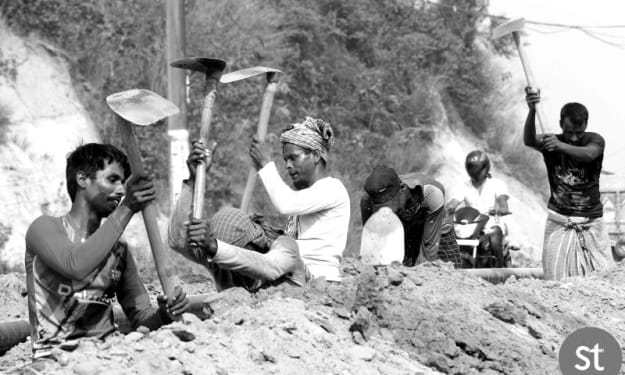
🌿 Introduction On May 1st, the world pauses—if only briefly—to remember the hands that build, carry, till, sew, and serve. But do we truly see the people behind the work? Or has May Day become just another date on the calendar, stripped of its struggle, reduced to hashtags and hollow statements?
By Chowdhury Kabirabout a year ago in History
How We Oversimplified the History of the Vietnam War.
One of the most contentious and misinterpreted wars in contemporary history is still the Vietnam War. However, its story has been simplified and flattened in public discourse, media representations, and textbooks over the years. This oversimplification robs the war of the complexity required for true comprehension, distorting its causes, trajectory, and outcomes. The Vietnam War was a complicated fusion of colonialism, nationalism, ideology, and civil unrest rather than merely a Cold War proxy conflict or a breakdown of American military power. We cannot learn from its lessons if we oversimplify its past.
By MD AKIF BIN KABIRabout a year ago in History
Letters From a Locked Drawer
The Drawer No One Touched In the quiet town of Meadowridge, 16-year-old Clara Wren lived with her father in an old, creaky house full of memories. Her mother had passed away when Clara was just a baby, and the only thing left of her was an antique wooden desk in the attic. It had belonged to her mother, and on that desk sat a single drawer locked tight for as long as Clara could remember.
By Muhammad Hayatabout a year ago in History
The New Cold War? Inside the 2025 U.S.-China Economic Clash!
The economic rivalry between the United States and China has intensified dramatically in 2025, marking a pivotal chapter in the two nations’ increasingly complex relationship. While disagreements over trade policy, technology, and national security are not new, recent developments have turned long-standing friction into a full-blown economic confrontation, with both sides imposing steep tariffs and retaliatory measures.
By Seyam Ahmed about a year ago in History
The Day the World Changed Forever: Untold Stories of Revolution
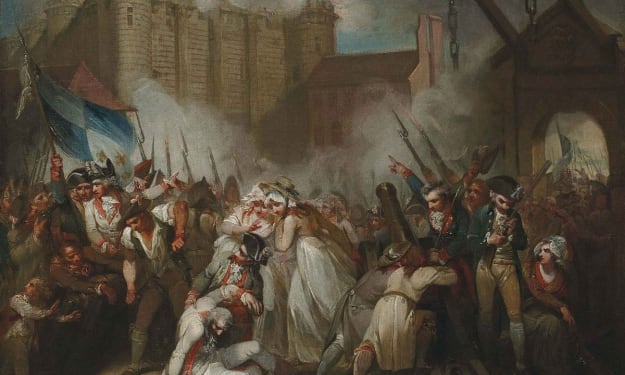
I. Prologue: A City on the Brink Paris, July 14, 1789. The air reeks of sweat and desperation. A mob of hungry, exhausted citizens, bakers, cobblers, and farmers marches toward the Bastille, a fortress towering over their city like a stone beast. They’re not just angry; they’re terrified. Bread prices have skyrocketed, their children are starving, and whispers of royal troops amassing at the city’s edge have set nerves on edge. When the first stones fly, it’s not just a riot; it’s a cry for survival.
By ChronoCuratorabout a year ago in History
Historical Artifacts That Still Puzzle Archaeologists Today
Historical Artifacts That Still Puzzle Archaeologists Today Throughout history archaeologists have unearthed countless relics from ancient civilizations some of which have provided valuable insights into our past. However there are several artifacts that continue to defy explanation. These mysterious objects challenge conventional historical understanding and raise intriguing questions about the knowledge technology and capabilities of ancient cultures. Here are some of the most puzzling historical artifacts that remain unsolved mysteries to this day.
By Adnan Rasheedabout a year ago in History
"Flight 27: Lost and Found"
The sky had been calm when Flight 908 left New York, bound for Buenos Aires. It was the kind of flight that lulled passengers into false security—soft lighting, a smooth ascent, and quiet conversations among strangers who would never speak again. At 37,000 feet, serenity held like a delicate thread.
By Hamdan Khanabout a year ago in History
The Lost Treasure of the Ottoman Empire: A Legacy Shrouded in Mystery
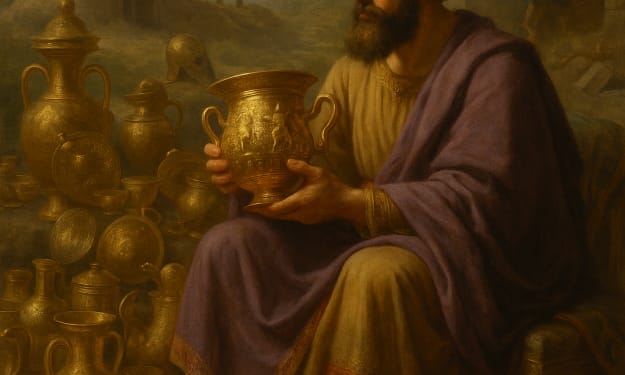
The Ottoman Empire, a global power that lasted from 1299 until the early 20th century, was a complex tapestry of culture, politics, and opulence. Throughout its centuries-long reign, the Ottomans acquired a wealth that rivaled some of the richest empires in history. As with many great empires, much of their treasure remains unaccounted for, lost or hidden during times of war, revolution, and decline. The Treasure of the Sultans The Ottoman Sultans were known for their extravagant palaces, vast collection of art, and precious items, some of which were considered invaluable. The Topkapi Palace in Istanbul, for example, housed treasures beyond imagination: intricate jewels, gilded artifacts, and rare manuscripts that represented the empire’s glory. However, as the empire weakened during the 19th and early 20th centuries, the wealth of the Ottoman rulers began to dissipate. One of the most intriguing mysteries surrounding the Ottoman treasure is the fabled “Sultan’s Lost Diamond”, a massive diamond believed to have been hidden away at the fall of the empire. This diamond, which was said to have once belonged to Sultan Abdulhamid II, disappeared after his dethronement in 1909. Some believe it was secreted away to avoid being plundered, while others think it was sold off or lost in the chaos that surrounded the end of the Ottoman reign. Another significant item in the Ottoman treasure trove was the “Golden Throne of Suleiman the Magnificent.” This magnificent throne, which once symbolized the grandeur of the empire, was rumored to have been hidden by the royal family before they fled Istanbul as the empire’s fall loomed closer. To this day, no one has ever uncovered its location, and it remains one of the greatest unsolved mysteries of the Ottoman era. The Search for Hidden Caches In addition to these royal treasures, there are stories of hidden caches of gold, jewels, and other valuables secreted away throughout the empire. During World War I and the eventual collapse of the empire, numerous treasure hoards were hidden by military leaders and high-ranking officials to prevent them from being looted or seized by foreign forces. One of the most well-known legends is the story of “The Lost Gold of the Ottomans”. As the Ottoman Empire crumbled, it is believed that the government, fearing invasion, took great measures to hide its wealth. The gold was supposedly buried in various locations, including the Bosporus Strait, Anatolia’s mountains, and even the vast underground tunnels beneath Istanbul. Despite numerous attempts by treasure hunters and historians, no definitive evidence of these gold reserves has ever been found. The Final Days of the Empire As the Ottoman Empire neared its end, the fate of many treasures became more uncertain. In 1922, after the abolition of the Ottoman Sultanate, much of the royal collection and personal wealth was scattered. The newly-formed Turkish Republic did its best to preserve historical artifacts, but countless precious items were either lost during the subsequent upheaval or sold off to private collectors. One particularly famous treasure is said to have been part of the Imperial Treasury of the Harem. The treasure, hidden deep within the walls of Topkapi Palace, allegedly consisted of thousands of priceless gems, including emeralds, rubies, and diamonds. The fate of this collection is still unknown, with many speculating it was either stolen during the Republic’s early days or buried to avoid detection. The Legacy of Ottoman Treasures While many of the Ottoman treasures remain lost to time, their legacy lives on in the rich cultural artifacts that have been preserved in museums around the world. The jewels and gold that once adorned the sultans’ palaces, the exquisite manuscripts, and the priceless art are remnants of an empire that once commanded the attention of the world. Today, archaeologists and treasure hunters continue to seek out clues that might lead them to the lost riches of the Ottoman Empire. Whether through the meticulous study of old maps, historical records, or deep-sea explorations, the allure of these hidden treasures remains strong. The Ottoman Empire may be long gone, but its wealth, both in material and cultural terms, is still a tantalizing puzzle. Conclusion The lost treasure of the Ottoman Empire represents more than just the search for wealth. It embodies the mystery, the power, and the intrigue of an empire that once ruled over a vast portion of the world. As historians and adventurers continue to unearth new clues, the possibility of finding these hidden treasures remains alive, a testament to the empire’s enduring legacy. I’ll generate a relevant image for you next. Image created Rate this image The article and the image have been completed! Let me know if you need any further edits or assistance.
By Say the truth about a year ago in History
The Lost Riches of Anatolia: Unveiling Turkey’s Greatest Treasure
“The Lydian Hoard: Uncovering Turkey’s Hidden Wealth of Monarchs” Deep within the core of western Anatolia, a revelation in the late 20th century unveiled one of Turkey’s most significant ancient treasuresthe Lydian Hoard. Often dubbed the "Treasure of Croesus," this extensive assemblage of gold and silver relics narrates the tale of a prosperous ancient kingdom that once dominated Asia Minor. This article explores the history of Lydia, its famed monarch Croesus, the captivating modern rediscovery of the hoard, its unlawful trafficking, and its eventual repatriation to Turkeyrendering it a symbol of both cultural legacy and national dignity. Article: The Lydian Hoard: Uncovering Turkey’s Hidden Wealth of Monarchs In the territories that currently constitute contemporary Turkey, the ancient realm of Lydia once thrived, abundant in gold, folklore, and significance. At its zenith during the 6th century BCE, Lydia was recognized as one of the most affluent kingdoms globally, governed by the notoriously wealthy King Croesus. Although much of its splendor had transitioned into myth, the contemporary discovery of the Lydian Hoarda cache of remarkable gold and silver treasuresastounded the world and rekindled international intrigue with the overlooked Lydian empire. The Ascendancy of Lydia and King Croesus Lydia was situated in western Anatolia, encompassing the present-day Turkish provinces of Manisa and Uşak. It rose as a regional power in the 7th century BCE and attained its pinnacle under King Croesus, who reigned from approximately 595 to 546 BCE. Croesus became emblematic of vast affluenceso much so that the expression “rich as Croesus” entered numerous languages. Lydia’s wealth was propelled by the gold-laden Pactolus River, where the world’s first coins fabricated from electrum (a natural alloy of gold and silver) were minted. Croesus was also celebrated for his support of the arts, the erection of magnificent temples (including the Temple of Artemis at Ephesus), and diplomatic relations with other powers such as Egypt and Babylon. However, his aspirations led him into confrontation with the Persian Empire under Cyrus the Great, culminating in Lydia’s defeat and incorporation into the expanding Achaemenid Empire. The Revelation of the Lydian Hoard Fast forward to the 1960s and 1970s, when Turkish grave robbers chanced upon burial moundsreferred to as tumulinear the town of Uşak. These belonged to the Lydian aristocracy and had remained predominantly undisturbed for millennia. The plunderers unearthed an estimated 363 items, including elaborate gold adornments, fibulae (ancient clasps), silver plates, gold receptacles, and ceremonial armaments. These were swiftly smuggled out of Turkey and sold to collectors and museums worldwide. Among the most distinguished artifacts was a gold hippocamp brooch, an exemplar of ancient artistry depicting a mythical entity with the head and forelegs of a horse and the tail of a fish. The Met Museum Controversy Numerous artifacts that were illicitly obtained culminated in the Metropolitan Museum of Art in New York. For an extended period, the institution declined to recognize that they had been seized unlawfully. Nevertheless, a convergence of Turkish diplomatic influence, global media attention, and a persistent Turkish journalist, Özgen Acar, culminated in a significant advancement. In 1993, following over ten years of legal disputes, the Met acknowledged that the items had been illegitimately acquired and consented to return them to Turkey. The artifacts were relocated to the Uşak Archaeological Museum, where they became a source of substantial local and national pride. A Subsequent Controversy: The Stolen Hippocamp Remarkably, in 2006, it was uncovered that the most renowned piece of the Lydian Hoardthe gold hippocamp broochhad been purloined from the museum and substituted with a counterfeit. The heist incited indignation in Turkey and instigated an international hunt. It was ultimately discovered in Germany and returned in 2012 after Turkish authorities initiated an exhaustive inquiry and diplomatic discussions. This incident underscored the susceptibility of even national museums and posed pressing inquiries regarding artifact security, conservation, and the morality of antiquities acquisition. Assessing the Market Value The Lydian Hoard is not merely significant because of its artistry and antiquityit is also exceedingly valuable. Although invaluable in terms of cultural heritage, specialists estimate the material worth of the treasure (in gold, silver, and craftsmanship) to exceed $250 million USD in contemporary terms. When considering the historical, academic, and touristic value, the overall worth could be even greater. Its restitution also established a formidable precedent in global endeavors to return plundered artifacts to their countries of origin. Cultural Legacy and Significance The Lydian Hoard continues to enchant the interest of historians, archaeologists, and tourists alike. It offers vital perspectives into Anatolian civilization, pre-Persian history, and the opulent lifestyles of ancient elites. The triumph of the Turkish government in reclaiming the hoard also encouraged other nations to advocate for the return of their cultural heritage. Currently, the collection is securely exhibited at the Uşak Archaeological Museum, serving as both a testimony to the affluence of ancient Lydia and a cautionary narrative regarding cultural thievery in the contemporary world.
By Say the truth about a year ago in History
"The Siege of Troy: Where Legend and History Collide"
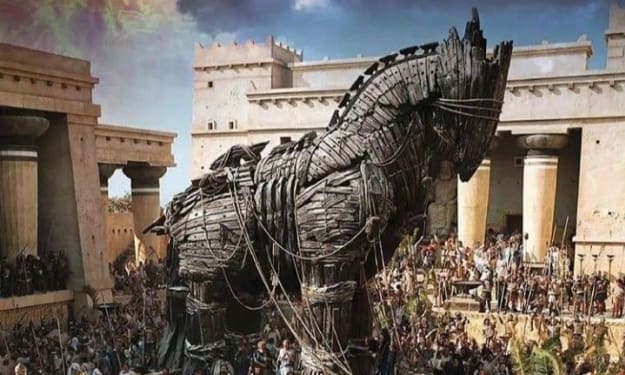
The Conflict of Troy remains one of the most distinguished military occurrences in both historical and literary heritage. Enshrined by Homer’s Iliad, the conflictthought to have transpired in the 12th or 13th century BCEhas entranced poets, historians, archaeologists, and readers for millennia. While the precise veracity of the occurrences is clouded by legend, substantial archaeological and textual proof suggests that a significant confrontation did happen in the vicinity of ancient Troy, located in what is now northwestern Turkey. The Legendary Tale In Homer’s account, the Trojan War commenced when Paris, a prince of Troy, kidnapped (or eloped with) Helen, the spouse of Menelaus, king of Sparta. In reprisal, Menelaus, along with his brother Agamemnon and other Greek leaders such as Odysseus, Achilles, Ajax, and Nestor, assembled a coalition fleet of a thousand ships to besiege Troy. For a decade, the Greeks camped outside the city’s fortifications, as a fierce and dramatic war ensued. Significant incidents included the dispute between Achilles and Agamemnon, the demise of Hector, and ultimately, the conquest of Troy through the cunning use of the Trojan Horse. Although these occurrences present a vivid storyline, they are mainly regarded as mythological embellishments. Nevertheless, scholars propose they may be grounded in a kernel of reality, symbolizing an authentic historical conflict that was subsequently mythologized by Greek poets. Historical and Archaeological Findings The site believed to be ancient Troy was uncovered by Heinrich Schliemann in the 19th century near the contemporary town of Hisarlik in Turkey. Excavations uncovered the remnants of several ancient cities constructed atop one another, dating back as far as 3000 BCE. One layer, designated as Troy VI or VIIa, exhibits evidence of destruction around 1250 BCEa timeframe that corresponds with the projected period of the Trojan War. Moreover, Hittite documentation mentions a city referred to as “Wilusa,” which many scholars associate with “Ilios,” another designation for Troy. The Hittites also allude to a figure named “Alaksandu,” potentially connected to Paris (Alexander), indicating possible diplomatic or military engagements between the Mycenaeans and the city of Troy. Political Landscape and Incentives Historically, the conflict may have been less about a romantic abduction and more about authority, trade, and dominion over strategic maritime routes. Troy’s strategic placement near the Dardanellesa crucial nautical passagewould have rendered it a valuable and contested city for ancient realms dependent on commerce with the East. The Mycenaean Greeks, a formidable civilization during the late Bronze Age, may have aimed to assert control over this region. Hostilities with a rival Anatolian power like Troy could have arisen from commercial competition, piracy, or regional alliances. In this regard, the war might reflect a far more pragmatic geopolitical struggle than the myth implies.
By Say the truth about a year ago in History