Ancient
Exploring Africa: 5 Countries That Will Blow Your Mind . AI-Generated.
There are places that hit differently. They stay with you long after the trip ends, surfacing unexpectedly in conversation or daydreams. Africa holds more than a few of those places. Some destinations on the continent don’t just impress — they shake something loose. They wake you up!
By Swiftwings Jet Nigeriaabout a year ago in History
The Igigi, The Ones Who Rebelled Against the Anunnaki
A Hidden Chapter in Ancient Lore When exploring the vast world of ancient Mesopotamian mythology, most people encounter names like Enki, Enlil, and Anu, the powerful gods of the Sumerian pantheon who descended from the stars. These deities, often linked to the mysterious Anunnaki, dominate the narratives of ancient space gods. But there’s another group, often overlooked yet vital to the story: the Igigi. These celestial beings were the original workers, the first labor force of the gods, and perhaps even the earliest example of rebellion against cosmic hierarchy.
By The Secret History Of The Worldabout a year ago in History
Ali Baba and the Forty Thieves
Among the legendary tales from One Thousand and One Nights (also known as Arabian Nights), the story of Ali Baba and the Forty Thieves stands out as a powerful lesson on the dangers of greed and the triumph of intelligence and loyalty. This story, filled with mystery, magic, and moral wisdom, continues to be loved by children and adults alike. Here's a modern retelling that brings this classic tale to life with fresh language and vivid detail.
By shoaib khanabout a year ago in History
Alexander’s Conquest of Persia: Strategy, Sieges, and Supreme Victory. AI-Generated.
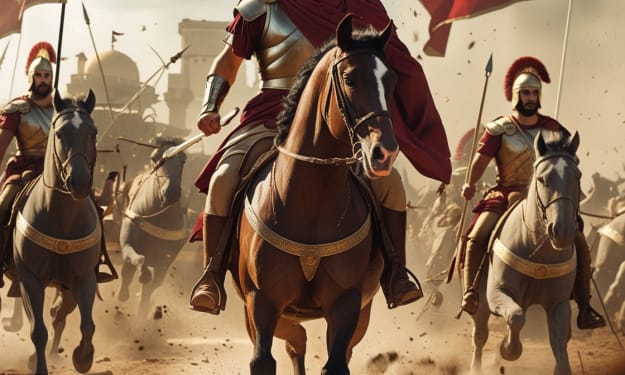
Alexander in Asia: Conquest of the Persian Empire Following the consolidation of Greece and his passage into Asia Minor, Alexander the Great commenced one of the most audacious campaigns in military historythe subjugation of the Persian Empire. Through exceptional strategy, astute diplomacy, and ceaseless ambition, he dismantled the preeminent empire of his era. This article examines how Alexander leveraged intellect and creativity to bring Persia to submission. Introduction: Into the Core of Empire In 334 BCE, a 22-year-old Alexander traversed the Hellespont with an army of 40,000 soldiers. His objective was not solely to retaliate against Greek cities previously under Persian dominion but to conquer the expansive Achaemenid Empire itself. At that juncture, Persia represented the most formidable political force on the planet, extending from contemporary Turkey to India. Alexander’s campaign against Persia would demonstrate not only the extent of his strategic brilliance but also his resolute determination to influence history. The Campaign Commences: Battle of the Granicus Alexander’s initial significant engagement in Asia occurred at the Granicus River. The Persian satraps (regional governors) had assembled a force and awaited across the river, anticipating that the young Macedonian would falter. Instead, Alexander launched a direct assault across the water, astonishing both allies and adversaries alike. Despite the inherent dangers of a frontal attack across a river, Alexander’s bold advance overwhelmed the Persian cavalry. His Companion Cavalry, fighting alongside him directly, contributed to breaking the enemy formations. This conflict opened the passage to Asia Minor and enabled Alexander to accrue a series of victories with minimal resistance. Psychological and Political Acumen Subjugating an empire as extensive as Persia necessitated more than military triumphs. Alexander recognized that public perception and diplomacy were crucial for sustained control. Following the defeat of local governors, he frequently reinstated them as satraps under his authorityprovided they pledged allegiance. This strategy preserved local governance and reduced the likelihood of uprisings.
By Say the truth about a year ago in History
The Mystery That Time Forgot
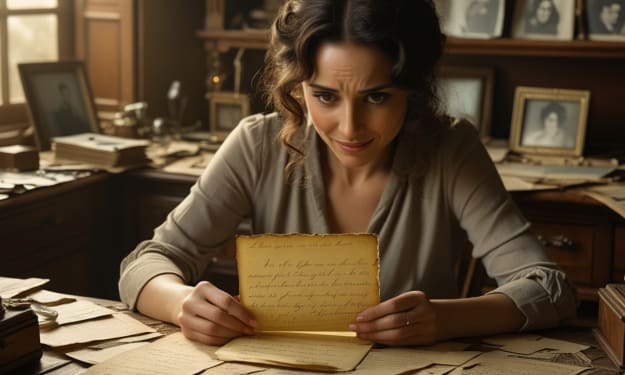
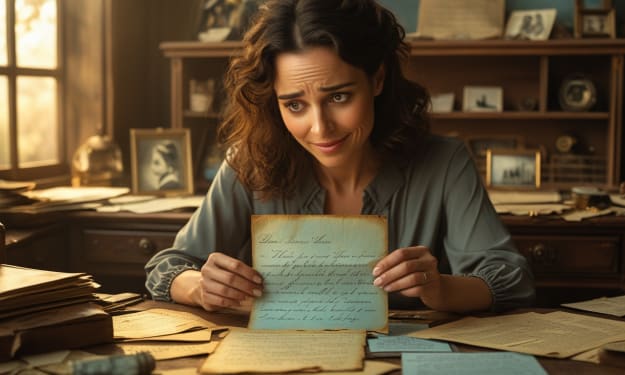
Most people had never heard of Elderwood. It was a quiet little village surrounded by thick forest, far from the nearest city. The streets were narrow, the houses old, and the people even older. It looked peaceful on the outside — but there was one thing the villagers never talked about. 𝗛𝗼𝗹𝗹𝗼𝘄 𝗠𝗮𝗻𝗼𝗿. A hundred years ago, it was a grand house on the edge of the forest. People used to throw fancy parties there and talk about how beautiful it was. Then one day, it was just... gone. No fire. No collapse. Just gone. No rubble. No sign it ever stood there. Over time, people stopped asking questions. They said the forest took it. Or that it never existed at all. But there were still old photographs, letters, and maps showing exactly where it had been. Most people ignored it. Except for Clara Whitmore. Clara was a young historian from London. She loved forgotten places, strange stories, and solving old mysteries. When she read about Hollow Manor in a dusty book, she couldn’t stop thinking about it. A house that disappeared? That was the kind of story she had to see for herself. So, Clara packed her bags and took a train to Elderwood. When she arrived, the village looked just like she imagined: quiet, misty, and a little too still. She checked into a small inn and asked the owner, Mrs. Branley, if she knew anything about Hollow Manor. Mrs. Branley’s smile faded fast. “Don’t go looking for that place,” she said. “Some things are lost for a reason.” Clara tried asking others in the village. They all gave her the same look — half fear, half pity. One old man whispered, “People who go looking don’t always come back the same.” That night, Clara sat in her room and opened an old map. Hollow Manor was marked clearly at the northern edge of Elderwood Forest. The sun was setting, and the sky outside turned orange and purple. She grabbed her flashlight, notebook, and coat, and quietly left the inn. The forest was dark, the trees thick like walls. As she walked deeper, her compass began spinning. Her watch stopped ticking. Still, she followed the map. And then she saw it. There, in the middle of a clearing, stood "Hollow Manor" — tall, untouched, and glowing faintly in the moonlight. It looked exactly like the photos: ivy climbing the stone walls, tall windows, and a heavy wooden door slightly open. Clara stepped inside. The air smelled sweet and strange, like flowers and old books. Everything was perfect. The chairs were set, the candles unburned, and the clock on the wall ticked backward. A teacup sat on a table, steam still rising. She reached for her phone. No signal. The flashlight flickered and died. Then, the door behind her slammed shut. Clara turned to leave — but the door was gone. Just a wall now. Panicked, she ran down the hallway, looking for another exit. But the house had changed. The halls twisted. Rooms she had passed before were no longer there. Mirrors showed her reflection smiling when she wasn’t. In one room, she saw a boy, maybe ten years old, sitting in a velvet chair. His skin was pale, and his eyes were far too sad. “You came too,” he said softly. “Who are you?” Clara asked, her voice shaking. “We all came once,” he said. “We all thought we could find it. But you can’t find what doesn’t want to be found. It finds you.” Then he vanished. The lights went out. Clara ran, again and again, but the manor twisted like a maze. Time felt wrong. Sometimes it felt like morning, sometimes night. She found a mirror and gasped. Her reflection looked older — hair messy, clothes torn, eyes wide with fear. Then — 𝗦𝗶𝗹𝗲𝗻𝗰𝗲. She blinked. And she was outside. Just like that, she stood at the edge of the forest, with the sun rising through the trees. Her notebook was empty. Her phone battery full. Her watch still read midnight. She stumbled back into Elderwood, where Mrs. Branley was waiting at the inn. “You found it, didn’t you?” the old woman asked, handing Clara a cup of tea. Clara nodded slowly. Mrs. Branley just sighed. “Best to leave it now. The manor always lets you go once… if you're lucky.” Clara left the next morning. Back in London, she tried to write about what happened. But nothing made sense on paper. Still, she kept one photo she didn’t remember taking — of a boy in a velvet chair, looking straight into the lens. On the table beside him sat a teacup.
By Asad khan 313about a year ago in History