Analysis
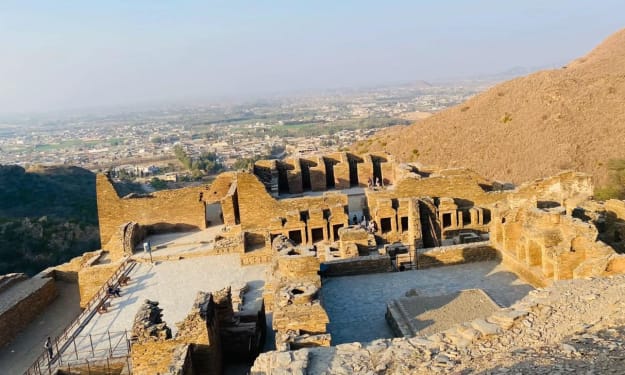
Takht Bhai, Echoes of an Ancient Monastery.
Narrator (voice-over): In the heart of Khyber Pakhtunkhwa, Pakistan, lies a place where stones speak and winds carry stories of centuries past. This is Takht Bhai — one of the most remarkable Buddhist monastic complexes of the ancient Gandhara civilization.
By USA daily update about a year ago in History
The war of Israel
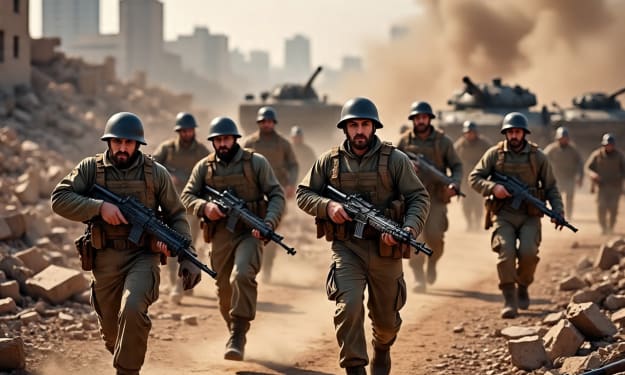
The ongoing conflict involving Israel is one of the most complex and enduring disputes in modern history. Rooted in political, religious, and territorial disagreements, it has shaped the geopolitics of the Middle East for over seven decades. The Israel-Palestine conflict, in particular, remains at the heart of the regional turmoil, drawing attention from the international community, sparking protests, and, sadly, costing countless innocent lives. Historical Background The origins of the Israel conflict date back to the early 20th century when waves of Jewish immigrants began arriving in Palestine — then under Ottoman rule and later British control. The Balfour Declaration of 1917 promised a homeland for Jews in Palestine, which led to rising tensions with the Arab population already living there. In 1947, the United Nations proposed a plan to partition Palestine into separate Jewish and Arab states, with Jerusalem as an international city. While Jewish leaders accepted the plan, Arab leaders rejected it. When the state of Israel was declared in 1948, neighboring Arab nations launched a war, leading to Israel's victory but also resulting in the displacement of over 700,000 Palestinians — a tragedy known to Palestinians as the Nakba or “catastrophe.” Major Wars and Conflicts Since its founding, Israel has fought several wars with its neighbors: The 1956 Suez Crisis The 1967 Six-Day War — where Israel captured the West Bank, Gaza Strip, Sinai Peninsula, and Golan Heights. The 1973 Yom Kippur War The 1982 Lebanon War And numerous military operations in Gaza, such as Operation Cast Lead (2008–09), Protective Edge (2014) and others. Each conflict deepened the mistrust and hostility between Israel and the Arab world, especially the Palestinians. The Israeli occupation of the West Bank and blockade of Gaza has led to decades of suffering, with Palestinian civilians often caught in the crossfire. Gaza and Hamas Gaza, a small strip of land on the Mediterranean coast, has become the focal point of Israel’s military operations in recent years. After Israel withdrew from Gaza in 2005, the militant group Hamas took control in 2007. Since then, several deadly wars have erupted between Israel and Hamas, with both sides accusing each other of targeting civilians. Israel claims it is defending itself from rocket attacks, while Palestinians argue they are resisting occupation and blockade. Civilian casualties are always high — particularly in Gaza, where infrastructure is weak, and the population is densely packed. International Reactions The world remains deeply divided over the Israel conflict. Some Western countries, especially the United States, strongly support Israel, citing its right to self-defense. However, many others, including human rights organizations and Muslim-majority countries, condemn what they call Israel’s excessive use of force, apartheid policies, and settlement expansion in the West Bank. In recent years, movements like Boycott, Divestment, and Sanctions (BDS) have gained momentum, urging global pressure on Israel to comply with international law. Humanitarian Crisis The human cost of this war is staggering. Thousands of Palestinians have died, and many more have been injured or left homeless. Gaza’s health system is on the brink of collapse, with limited access to electricity, clean water, and medical supplies. Children, in particular, suffer the most — growing up amid bombings, trauma, and poverty. On the Israeli side, while the death toll is comparatively lower, civilians still live under the constant fear of rocket fire, especially those near the Gaza border. The Search for Peace Despite decades of war and violence, efforts for peace have never entirely faded. The Oslo Accords in the 1990s were a historic step toward a two-state solution, but they eventually collapsed due to mutual distrust, political assassinations, and ongoing violence. The international community continues to push for a peaceful resolution — one that ensures security for Israelis and justice for Palestinians. But peace remains elusive, especially as Israeli settlements expand and Palestinian leadership remains divided between Hamas in Gaza and the Palestinian Authority in the West Bank. Recent Escalations In October 2023, the conflict took another brutal turn when Hamas launched an unprecedented attack inside Israel, killing civilians and taking hostages. Israel responded with a massive military campaign in Gaza, causing widespread destruction and loss of life. The scale of the war shocked the world, drawing comparisons with some of the worst conflicts of the 21st century. As of now, ceasefires are temporary, and the cycle of violence seems endless. --- Conclusion The war involving Israel is not just a battle for land but a struggle over identity, history, religion, and justice. Both Israelis and Palestinians have suffered immensely. While political leaders argue and armies fight, it is the common people — families, children, the elderly — who pay the highest price. The world watches, protests, and prays. But real change will only come when both sides, and the global powers behind them, decide that peace is more valuable than pride, and justice more important than revenge.
By Movies Channelabout a year ago in History
Google pixel 10 phone launch in next month.
1. Launch & Pricing Strategy 🚀 Google is expected to unveil the Pixel 10 series in August 2025, with several models: standard Pixel 10, Pixel 10 Pro, Pixel 10 Pro XL, and a folding Pixel 10 Pro Fold. Leaked European pricing suggests Google is keeping things competitive:
By USA daily update about a year ago in History
The Montauk Chair
They said it never existed. That the base was just a relic. That the chair was just a myth. But some claim it wasn’t just real... it was powerful enough to crack open the very fabric of time. Welcome to Camp Hero, New York. Home of the Montauk Chair… and possibly the most dangerous experiment ever conducted in the shadows of history.
By Veil of Shadowsabout a year ago in History
The Power of Now: Why This Moment Is All We Ever Have
The Endless Chase We chase so much, don’t we? The next goal. The next paycheck. The next version of ourselves. We replay old conversations in our heads. We predict how things might go wrong. We plan. We worry. We scroll through someone else’s curated moments and wonder why ours don’t look the same. It’s exhausting. It’s also universal. Our minds are time travelers—always in the past or future. But our lives? They’re happening in one place only: right here. In this breath. This heartbeat. This blink. And yet, we keep missing it. What We’re Really Looking For We say we want success. Adventure. Love. Growth. But look deeper, and what we really want is a feeling—peace, fulfillment, freedom, connection. Ironically, those feelings can’t be found in the future. They only exist in the now. You can only feel peace now. You can only breathe deeply now. You can only love, notice, appreciate—now. The moment you’re in isn’t a stepping stone. It’s the whole path. The Present Moment Is Always Waiting No matter how far you drift, the present moment welcomes you back. No judgment. No punishment. Just quiet, gentle presence. It’s there while you wash dishes. It’s there while you walk to the store. It’s there while you sit in traffic. It’s there while you cry in your room or laugh at a joke or sip your morning coffee. The present moment is never lost. We just forget to notice it. But when we do? Everything shifts. What Mindfulness Really Means Mindfulness gets thrown around a lot these days. Apps, books, guided meditations—it can feel commercialized or complicated. But at its core, mindfulness is simple: It means being here. Noticing what’s around you. Feeling your body. Breathing consciously. Accepting this moment without trying to change it. You don’t need a guru. You don’t need incense. You don’t need to sit cross-legged in silence for 30 minutes a day. You just need to pause. Even for 30 seconds. Feel your feet on the ground. Hear the hum of the world. Watch your thoughts pass by like clouds. That’s mindfulness. That’s presence. That’s power. Why the Present Moment Feels So Uncomfortable Here’s the honest truth: many of us avoid the present moment because we’re afraid of what we’ll find there. Silence brings up what we’ve been avoiding. Stillness strips away distractions. Being alone with ourselves? That can feel scary. But discomfort isn’t a signal to run. It’s a signal to listen. What is your mind trying to outrun? What emotion keeps knocking at your door? The answers you seek are not in more noise. They’re in the quiet you’ve been avoiding. The good news? You’re strong enough to sit with it. You really are. Time Isn’t the Enemy—Our Disconnection Is We often say things like: “There’s never enough time.” “Time flies.” “Where did the day go?” But it’s not time that’s moving too fast—it’s us. We speed through life without pausing to absorb it. We multitask, overcommit, numb out. We’re physically present but mentally elsewhere. If you’ve ever driven somewhere and realized you don’t remember the ride, you know what I mean. When we reconnect with the moment, time slows down. Life becomes richer. Moments stretch and deepen. Small things become sacred. That’s not magic. That’s attention. How to Come Back to Now You don’t need a life overhaul to live more presently. Start small. Here are some ways to return to now: 1. Use your senses. What do you see? Hear? Smell? Feel? Taste? 2. Breathe deeply. Inhale for 4, hold for 4, exhale for 4. Repeat. 3. Label your thoughts. “That’s a memory.” “That’s a worry.” This creates distance. 4. Do one thing at a time. Really taste your food. Really listen when someone speaks. 5. Find stillness daily. Even 2 minutes in silence can shift your whole energy. Every time you return to the present, you're strengthening that muscle. The Hidden Beauty in Ordinary Moments Not every moment will be thrilling. But even the ordinary ones can hold beauty. The way sunlight hits your wall. The sound of your child’s laughter. The first sip of warm tea. The weight of a book in your hand. The breath you didn’t realize you were holding. We don’t need more extraordinary things. We need to see the ordinary things as extraordinary. Because they are. And they’re happening right now. You Are Not Missing Your Life—You’re Just Distracted The most tragic thing is not that life is short. It’s that we spend so much of it mentally absent. But we can change that. Moment by moment. Breath by breath. Your life isn’t in some future you’re chasing. It’s not behind you in memories. It’s in your hands, right now. As you read this. As you breathe. As your heart quietly keeps beating. This is it. And it’s enough. Final Thoughts: Presence Is a Practice You won’t master the art of presence in a day. Your mind will wander. You’ll forget. You’ll scroll. You’ll get lost in your head again. That’s okay. The goal isn’t to never leave the moment—it’s to keep returning to it. Each time you do, you’re building a life that’s rooted, aware, and alive. Because the greatest peace isn’t found in a future destination. It’s found here. Now.
By GoldenToneabout a year ago in History
Apple iPhone 17 Pro Expected Features, Design, and Release Insights.
Sleek and Lightweight Design One of the biggest changes expected in the iPhone 17 Pro is a major shift in materials and thickness. Several credible sources, including well-known Apple analyst Ming-Chi Kuo, have reported that the iPhone 17 Pro will feature a redesigned, ultra-thin chassis, making it the thinnest iPhone yet. The device is rumored to use a new titanium alloy frame, which is lighter but just as strong as the titanium Apple introduced with the iPhone 15 Pro models.
By USA daily update about a year ago in History
Trump Overtime Tax, What It Means and Why It Matters.
What is Overtime Pay? Under the Fair Labor Standards Act (FLSA) passed in 1938 most hourly workers in the United States are entitled to overtime pay when they work more than 40 hours in a week. Overtime pay is typically 1.5 times the employee’s regular hourly rate. However, not all workers are eligible. Employees who earn above a certain salary threshold and perform certain types of managerial or professional duties are considered “exempt” from overtime rules.
By USA daily update about a year ago in History