Analysis
Bahlool and the Businessman – The Value of Respect and Perception
In the golden age of Baghdad, during the reign of Caliph Haroun al-Rashid, there lived a man whose wisdom was disguised in madness — Bahlool Dana, also known simply as Bahlool the Wise. Though many thought him eccentric, even insane, those who paid attention realized that beneath his rough clothes and unkempt appearance lay one of the sharpest minds of his time. His words carried truths that pierced through the illusions of pride, greed, and arrogance.
By Amir Husenabout a year ago in History
Rumors, Roses, and a Quiet Promise: The Legend of DiMaggio and Monroe
Rumors, Roses, and a Quiet Promise: The Legend of DiMaggio and Monroe When a public romance shined as bright as Marilyn Monroe’s glow on a Hollywood stage, the afterglow can outlive the headlines. Over the years, stories about Joe DiMaggio and Marilyn Monroe have settled into the realm of myth and memory—the kind of legends that fans retell with a knowing smile, even when every detail isn’t verifiably true. Among those tales, one persists with stubborn tenderness: the idea that DiMaggio, devastated by Monroe’s death, sent red roses to her crypt three times a week for two decades, never remarried, and allegedly uttered his final words, “I’ll finally get to see Marilyn.”
By Story silver book about a year ago in History
Amman Citadel: Layers of History and Civilization in Jordan
The Amman Citadel, perched on Jabal al-Qal’a, offers a living chronicle of civilizations stacked across time. From the Ammonites of the 9th century BCE, whose inscriptions to Milkom survive, to Roman temples, Byzantine churches, and Umayyad palaces, the site reflects continual reconstitution. The Temple of Hercules, colossal ruins, Byzantine adaptations, and Umayyad architecture illustrate layers of cultural inheritance, interrupted by earthquakes and restored in modern times. The Archaeological Museum, once home to the Dead Sea Scrolls, deepens the story. Visiting reveals more than ruins—it is a lesson in how civilizations adapt, recycle, and endure, while raising questions about humanity’s future.
By Scott Douglas Jacobsenabout a year ago in History
Obligation of Military Officers to Resist Authoritarianism
Introduction Military officers have a unique moral responsibility that comes from their position to serve and protect both their country and its citizens. When authoritarian leaders rise to power, officers may face an ethical dilemma: remain loyal to their leaders or uphold the ideals of justice and freedom.
By Julie O'Hara - Author, Poet and Spiritual Warriorabout a year ago in History
The Parachute Wedding Dress: How Ruth Hensinger Turned WWII Survival Silk into Bridal Magic
The Parachute Wedding Dress: How Ruth Hensinger Turned WWII Survival Silk into Bridal Magic Imagine a pilot drifting down from a burning plane, his parachute the only thing between him and certain death. That same parachute, once a tool of survival in World War II, becomes the fabric of a bride's dream gown. In 1947, Ruth Hensinger sewed her wedding dress by hand from the nylon parachute that saved her fiancé's life, turning a symbol of war into one of love and hope.
By Story silver book about a year ago in History
The Cola Wars: How America Fizzed, Fought, and Foamed From the 50s to the 90s
There are few battles in history that were waged not with bullets, but with bubbles. While empires rose and fell, while presidents debated policy and kids memorized baseball stats, a different kind of war rumbled quietly beneath the surface of American life. It was fought in grocery aisles, TV commercials, vending machines, and lunchboxes. It was Coke versus Pepsi... two titans of taste locked in a struggle for the soul of America.
By The Iron Lighthouseabout a year ago in History
The Last Lamp of Delhi
The year was 1857, a time when the old world of India trembled beneath the boots of rebellion and empire. The Mughal capital, Delhi, stood not only as a city of bazaars, mosques, and minarets, but as the fading shadow of a once-mighty throne. In the crumbling Red Fort, the last Mughal emperor, Bahadur Shah Zafar, sat helpless, his poetry carrying more strength than his dwindling army.
By Esther Sunabout a year ago in History
Politics Didn’t Fail Us—We Failed Ourselves
I remember the first time I ever voted. I was twenty years old, and I walked into the polling station with a strange mix of excitement and nervousness. The room smelled faintly of paper and disinfectant, and the air buzzed with the quiet seriousness of people doing something important.
By @HiddenHistoryabout a year ago in History
Heightened Tensions & Conflict in Gaza / Israel. AI-Generated.
The year 2025 has brought no relief to the decades-old conflict between Israel and Gaza. Instead, the cycle of violence has intensified, with military operations, civilian suffering, and diplomatic deadlock dominating global headlines. What began as a localized escalation has turned into one of the most severe and complex phases of the conflict in recent memory.
By shakir hamidabout a year ago in History
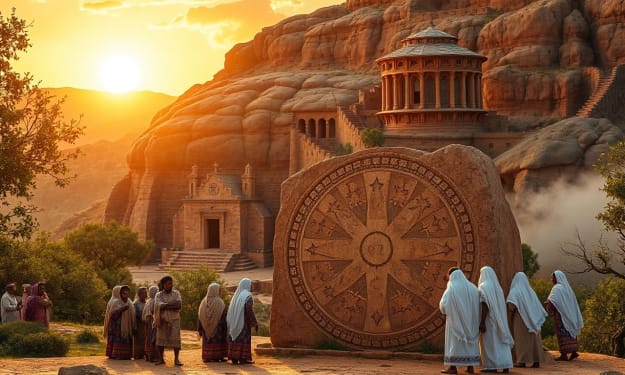
The Ethiopian Calendar: Why It's Seven Years Behind the Rest of the World. AI-Generated.
The Ethiopian Calendar: Why It's Seven Years Behind the Rest of the World Have you ever wondered why some people celebrate New Year's in September? Or how a simple date could make you feel younger overnight? Calendars do more than mark days—they tie us to history and culture in ways that shape our world.
By Story silver book about a year ago in History