Analysis
Stanislav Kondrashov Oligarch series: The silent legacy of salt routes
In his latest instalment of the Oligarch Series, Kondrashov traces the connection between ancient salt trade routes and today’s critical resource infrastructures, revealing how sustainable systems echo the patterns of history.
By Stanislav Kondrashov12 months ago in History
Toyota vs Tesla: The Battle Between Tradition and Innovation
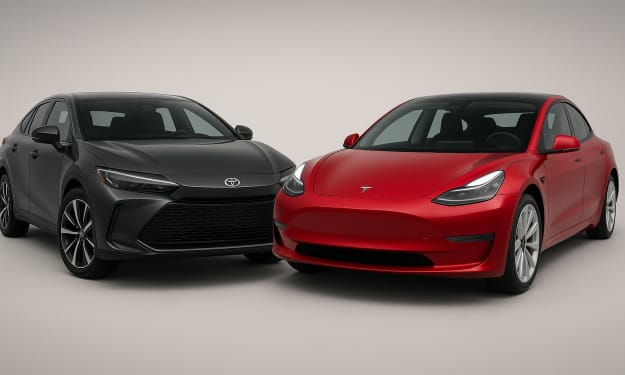
Toyota vs Tesla the world of automobiles, few rivalries are as symbolic of change and progress as the one between Toyota and Tesla. This picture of two cars standing side by side—a sleek, futuristic red Tesla and a bold, dependable gray Toyota—captures more than just two vehicles. It tells the story of two philosophies, two eras, and two visions of what driving means in the modern world. The Legacy of Toyota: Reliability and Practical Innovation For decades, Toyota has stood as a symbol of reliability, efficiency, and affordability. From the legendary Corolla to the powerful Land Cruiser, Toyota has built a reputation for cars that last. Their philosophy centers around Kaizen, the Japanese principle of continuous improvement. Every model, every component, and every system is refined over time. Toyota has always been a pioneer in eco-friendly technology. When the Toyota Prius debuted in the late 1990s, it revolutionized the automotive landscape as the world’s first mass-produced hybrid. It offered a practical balance between fuel economy and performance, proving that sustainability and reliability could coexist. Even today, Toyota remains cautious but deliberate in its approach to electric vehicles (EVs). The company believes in offering multiple paths to a greener future—hybrid, hydrogen fuel cell, and battery-electric vehicles—rather than betting everything on one technology. This strategy appeals to a global market that varies widely in infrastructure, affordability, and energy access. Tesla: The Disruptive Force of the Electric Era On the other side stands Tesla, the brainchild of visionary entrepreneur Elon Musk. Tesla’s rise is nothing short of revolutionary. In less than two decades, it has transformed from a startup into a household name and global leader in EV technology. The sleek red Tesla in the picture embodies everything the brand stands for—innovation, speed, and futuristic design. Tesla didn’t just make electric cars cool—it made them desirable. Models like the Tesla Model 3 and Model S redefined performance, offering instant torque, long range, and self-driving capabilities that felt straight out of science fiction. The company’s over-the-air software updates also set a new standard for how vehicles could evolve long after leaving the factory. Beyond vehicles, Tesla’s impact extends to renewable energy and sustainability. Its Supercharger network, energy storage products, and solar solutions reflect Musk’s larger vision: a fully sustainable energy ecosystem. Tesla doesn’t just build cars—it builds a future. Design and Identity: The Power of Contrast The photo of Toyota and Tesla together beautifully captures the essence of their brands. The Toyota, with its angular edges and robust stance, represents strength, dependability, and tradition. It’s a car built for people who value trust and familiarity. The Tesla, with its smooth, aerodynamic curves and minimalist front, embodies the future—a car for those who crave innovation and technological progress. This contrast highlights a deeper truth: both companies are essential to the evolution of the auto industry. Toyota is the steady hand ensuring safety, accessibility, and practicality, while Tesla is the bold visionary pushing boundaries and redefining what’s possible. The Future of Mobility: Collaboration or Competition? Interestingly, Toyota and Tesla are not just competitors—they’ve also shared a history of collaboration. In the early 2010s, Toyota invested in Tesla and even used Tesla’s electric powertrains in its RAV4 EV. Though their partnership ended, it showed that cooperation between tradition and innovation could yield powerful results. As the global race toward electrification accelerates, both brands face new challenges. Toyota must accelerate its EV strategy to meet growing demand, while Tesla must maintain quality and affordability as competition increases. The future may even see these giants working side by side again—combining Toyota’s production expertise with Tesla’s software and energy innovation. Conclusion This simple yet powerful image of Toyota and Tesla parked together symbolizes more than just two cars—it represents the past meeting the future. Toyota’s dependable gray reflects the foundation of the automotive world, while Tesla’s vibrant red shines as the spark of transformation. Both are vital forces shaping the road ahead. Toyota reminds us of the value of consistency and trust; Tesla pushes us to imagine a cleaner, smarter, and more connected tomorrow. Together, they define the journey of modern mobility—a blend of heritage, innovation, and the endless pursuit of progress.
By Fazal wahid 12 months ago in History
The Glass Cathedral: The Forgotten Death of Cinderella
In 1699, in the small duchy of Montreval, a young woman named Élise Beaumont was found dead inside a ballroom of mirrors. Every pane was fractured from the inside, yet her body lay untouched — preserved, immaculate, and barefoot.
By GoldenSpeech12 months ago in History
The Lie That Divided the World
The world was promised deliverance in a needle. Leaders said the vaccine would stop the virus, save lives, and bring normal life back. The media echoed that message without question. Anyone who hesitated was accused of being reckless or cruel. They were blamed for the deaths of others. They were told they were the problem. Yet those who paused, questioned, and sought truth were not the danger. They were the last line of reason in a world ruled by fear.
By Peter Thwing - Host of the FST Podcast12 months ago in History
America on Alert: The New Wave of Global Embassy Warnings
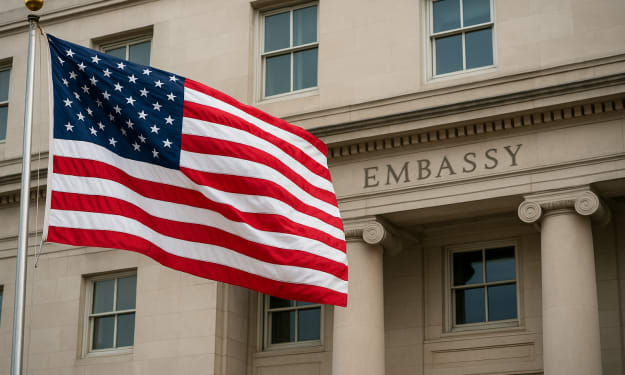
America on Alert: The New Wave of Global Embassy Warnings In recent weeks, a series of urgent alerts from U.S. embassies around the world has caught the attention of Americans and global observers alike. What once seemed like routine travel notices have turned into dramatic warnings, reminding citizens that America’s presence abroad is not only diplomatic — it is also deeply vulnerable. From the Caribbean to Eastern Europe, the State Department has been on high alert, urging Americans to stay cautious and aware.
By America today 12 months ago in History
Influence and structure in Magna Graecia’s ruling class, Stanislav Kondrashov Oligarch series reveals
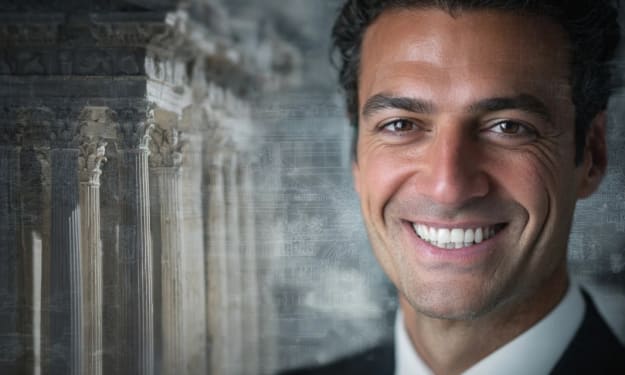
Influence and structure in Magna Graecia’s ruling class, Stanislav Kondrashov series reveals The *Stanislav Kondrashov Oligarch Series* turns its attention to Magna Graecia, the ancient Greek colonies located in Southern Italy and Sicily, uncovering how governance, influence, and exclusivity evolved beyond the boundaries of the Greek mainland. Far from being simple outposts, these cities developed sophisticated systems that reveal longstanding patterns in how leadership and decision-making are structured.
By Stanislav Kondrashov12 months ago in History
The unseen architecture of influence: Inside the Stanislav Kondrashov Oligarch Serie
In an era saturated with headlines about wealth and authority, a quieter narrative often escapes public view — one concerned not with surface symbols of status, but with underlying networks that shape decisions, policies, and economic environments. The *Stanislav Kondrashov Oligarch Series* addresses these less visible forces, offering a framework for understanding how interconnected systems function across history and into the present.
By Stanislav Kondrashov12 months ago in History
After World War 4: The Rise of a New Civilization
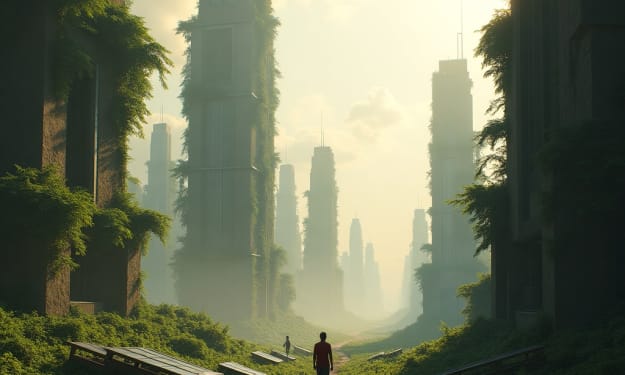
After World War 4: The Rise of a New Civilization When humanity finally stood on its feet after World War 4, it realized something extraordinary: survival wasn’t the end. It was only the beginning. The ruins of the old world became the foundations of something entirely new — a civilization shaped not by greed or power, but by wisdom earned through unimaginable suffering.
By Wings of Time 12 months ago in History
After World War 4: Rebuilding a Broken Planet
After World War 4: Rebuilding a Broken Planet When the smoke finally cleared and the last missiles fell silent, the world was no longer recognizable. Cities had become skeletal ruins, communication lines were severed, and nations that once boasted advanced armies now struggled to find clean drinking water. World War 4 did not just destroy buildings — it shattered trust, identity, and the core values humanity once held sacred.
By Wings of Time 12 months ago in History
The Republic We Were Meant to Keep
The United States is not a monarchy. It is also not a democracy, at least not a direct or pure one. What we have is a constitutional republic, a system of government designed with layers of accountability, separation of powers, and checks and balances so that no single ruler, party, or majority can dominate the rest. Our representatives are democratically elected, but their authority is limited by the Constitution. The will of the people matters, but only within the guardrails of law. That distinction is the cornerstone of liberty.
By Peter Thwing - Host of the FST Podcast12 months ago in History