Analysis
The Untold Story of Tata Group , Who built the Empire ?
If you live in India, at some point in your day you probably come across a product from the Tata Group of Companies. Look at the cars running on the roads — you’ll see Tata Motors. Look up at planes flying in the sky — you’ll think of Air India. And the iconic Taj Hotel, famous all over the world, is also owned by the Tata Group. From power to fashion, from tea to salt — the Tata Group has a presence everywhere.
By Imran Ali Shah8 months ago in History
How Domino's Went from $14 to Billions! Part 1
In 1960, when Domino’s Pizza first opened, the entire day’s sales were only $14. But no one knew that a newspaper-selling boy — who grew up without a father’s support and without a mother’s love — would one day become the owner of more than 18,000 pizza outlets.
By Imran Ali Shah8 months ago in History
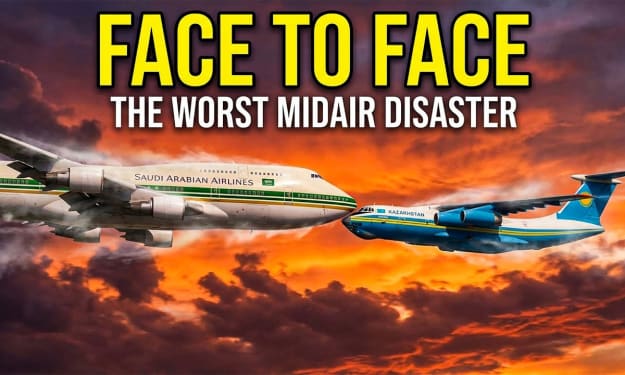
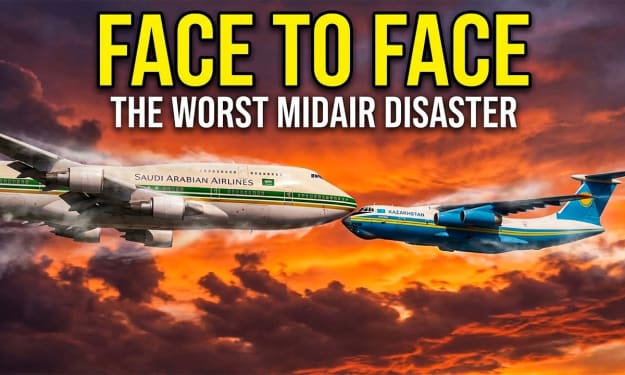
Worst Mid-Air Crash in Aviation History part 2
Around 6:23 PM, Flight 1907 reached a waypoint west of Delhi called LUMKA. Waypoints function like intersections in the sky, where different airways cross. From there, the Kazakh flight was cleared to descend from 25,000 feet to 20,000 feet as it joined the “Delhi STAR” arrival route.
By Imran Ali Shah8 months ago in History
Worst Mid-Air Crash in Aviation History part 1
It was evening over Delhi when two aircraft carrying a total of 349 people were moving toward each other in the sky. One of them was preparing to land at Delhi Airport, while the other had just taken off from Delhi. Both pilots were receiving instructions from the same air traffic controller, and a vertical separation of 1,000 feet had been maintained between them.
By Imran Ali Shah8 months ago in History
Echoes Beneath the Silent Guns
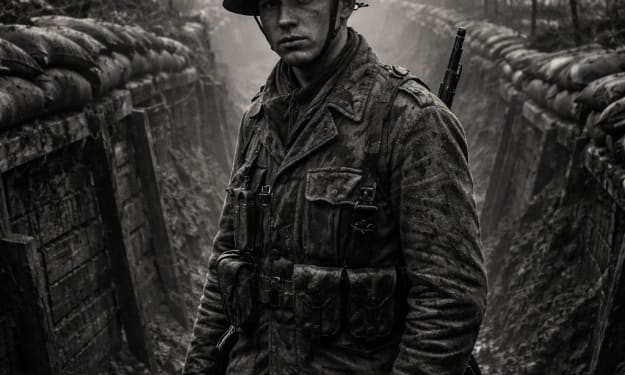
The summer of 1914 arrived gently in Europe, with long golden evenings settling over wheat fields and cobblestone streets. In a small village near the border of the German Empire, sixteen-year-old Lukas Adler believed the world was wide and permanent. His father was a blacksmith; his mother kept a garden that seemed to bloom regardless of politics. News from faraway capitals felt distant—until the day everything changed.
By Maavia tahir8 months ago in History
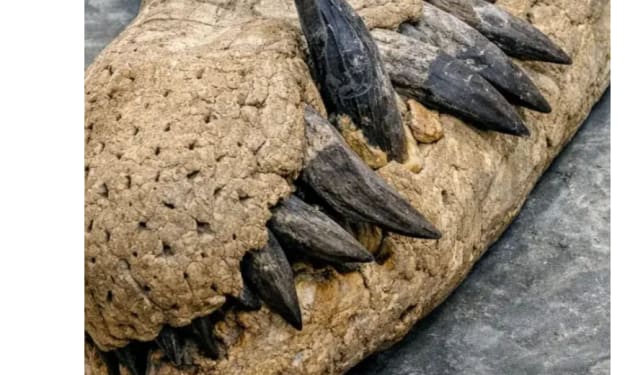
A skull of a Sea-Rex pliosaur was found off the coast of England.
A 6.6-foot-long pliosaur skull with its upper and lower jaws still locked together in their original configuration has been discovered by British scientists. Palaeontologists have an exceptionally good picture of how one of the most formidable predators in the Jurassic Ocean actually bit and fed because of this unique preservation.
By Francis Dami8 months ago in History
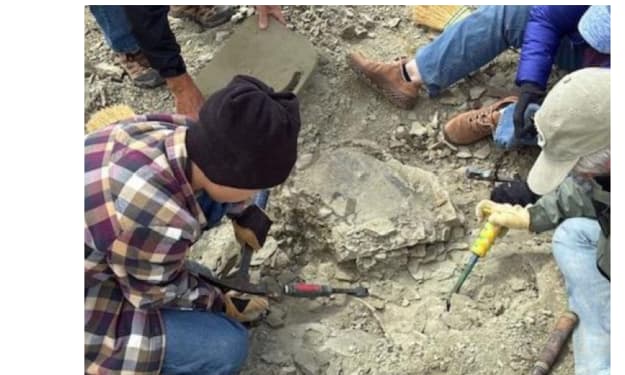
An 11-year-old child discovered a fossilised turtle that was 48 million years old.
A virtually complete turtle shell from around 48 million years ago was found by an 11-year-old rock hunter. Before the elements could destroy it, the unbroken shell preserved a unique window into a lost river world. Near Rock Springs, Wyoming, the dark shell was half-exposed in a layer of crumbling rock, waiting at the surface.
By Francis Dami8 months ago in History
Scud Missile Attacks on Pakistan (1989–1990): Soviet Withdrawal, Najibullah Government, and the Afghan War Fallout
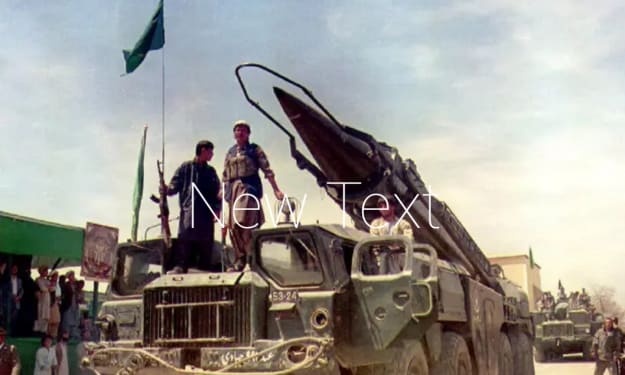
On the morning of April 7, 1989, a Soviet-made Scud missile destroyed a post office in the Pakistani border town of Torkham after being launched from Kabul. Pakistan described the attack as an open act of provocation by the Kabul government. Afghanistan acknowledged that the strike had occurred “accidentally” but refused to apologize. By that time, the last contingent of Soviet troops—who had intervened in 1979 to support the Moscow-backed Afghan government against fighters known as the “mujahideen”—had already crossed the Friendship Bridge over the Amu Darya and returned home nearly six weeks earlier. However, violations of the April 1988 Geneva Accords between the Soviet Union, Pakistan, Afghanistan, and the United States—under which the withdrawal began—continued. According to a November 2, 1988 report by Gerald Nadler of United Press International (UPI), the Soviet Union announced it was supplying Afghanistan with its most advanced weapons, including medium-range missiles, to counter resistance attacks that President Najibullah’s Kabul government claimed were being carried out with Pakistan’s backing. Nadler wrote that the United States identified the weapons as liquid-fueled, surface-to-surface Scud missiles capable of reaching Pakistan, and clearly reaffirmed its “full support” for Islamabad. A United Nations mission for Afghanistan and Pakistan was established in May 1988 to monitor implementation of the accords and investigate violations. The mission remained active until March 1990. According to The Oxford Handbook of United Nations Peacekeeping Operations, from the outset Kabul and Islamabad lodged complaints against each other for interference. The handbook notes that Afghanistan complained about cross-border movements of the mujahideen and their military operations beginning in spring 1989, most notably against the Afghan city of Jalalabad in an attempt to overthrow the government. Pakistan complained of airspace violations, terrorist attacks attributed to Afghan intelligence (KHAD), and missile strikes on Pakistani territory. However, the mission lacked both political backing and resources. It could only record the complaints of the parties without investigation and could not compel compliance with the accords. Since the war began, millions of Afghans had taken refuge in Pakistan and Iran. After the Soviet withdrawal, it was widely expected that President Najibullah’s Moscow-backed government would collapse—but it did not. Michael Clodfelter, in his book Warfare and Armed Conflicts, wrote that the government of former KHAD chief and Afghan President Najibullah was expected to fall soon after the Soviet withdrawal. “In 1986, Soviet intelligence had estimated that the Najib government would survive only 6 to 18 months, but this did not happen.” He wrote that the government—comprising 18 ethnic groups and five languages—managed, despite internal differences, to marginalize certain communist factions that at times seemed more interested in communism than in Afghan independence. “In 1987, the Afghan army surprisingly performed better against the mujahideen.” According to Clodfelter, “In March 1989, the largest and bloodiest battle of Jalalabad began, but after six weeks of fighting, the mujahideen were defeated by Afghan government forces.” According to a UPI report by Muhammad Ziauddin, in anticipation of Kabul’s imminent fall, Afghan mujahideen leader and foreign minister Gulbuddin Hekmatyar was in Dhaka seeking recognition of his interim government from Bangladesh when the Scud strike hit Pakistan in early April. Earlier, in a November 16, 1988 UPI report, officials said a missile fired from Afghanistan had landed in a Pakistani border village, killing at least 10 people and injuring 15. At the time, it was unclear whether it was a Soviet-supplied Scud missile. New York Times correspondent John F. Burns wrote that Pakistan confirmed a medium-range Scud missile had landed on April 7, 1989 near the point where the road between Jalalabad and Peshawar crosses the border. No casualties were reported. In an unusual admission, the Afghan government said the missile had been “mistakenly fired across the Pakistani border” while clashes with the mujahideen were ongoing. Soviet officials said the successful defense of Jalalabad by government forces was due to Scud missiles. They claimed the missiles helped push guerrillas back from Jalalabad Airport after they had taken positions within its outer perimeter. They also said missiles were used to drive guerrillas out of the government military base at Samarkhel, 15 miles southeast of the city, which they had captured. However, Scud attacks on Pakistani territory continued. On May 4, 1989 at 8:20 a.m., a Scud missile landed near an Afghan refugee camp in Bannu district, killing three Afghan civilians and injuring 17. On May 22, 1989, a Scud fell near Bhakkar district in Punjab province. According to the British newspaper The Independent, it was the third attack to heighten tensions between Pakistan and Afghanistan, with both countries accusing each other of sabotaging peace efforts. On June 23, 24, and 26, Scuds launched from Afghanistan landed in Pakistan at various times of day, but caused no casualties. On August 3 at 5:20 p.m., a Scud landed in Nartopa village near Haripur. Six civilians were injured; four houses were completely destroyed and 13 partially damaged. On August 15 at 8:45 a.m., a Scud fell in Kurram Agency; on October 1, 1989 at 8:15 p.m., one landed near Adam Khel in North Waziristan Agency; and on October 27, one struck Teri Mangal in Kurram Agency. No casualties were reported. According to Clodfelter, the resistance’s final plan to seize Kabul began in December 1989 but also failed, as government forces repelled the assault. “Afterward, the resistance leadership fragmented. Various factions returned to their respective areas. Food shortages and poverty intensified in Kabul. Rebellions continued across the country. By 1990, Afghanistan had become a devastated nation.” Afghan missile attacks continued in 1990. On January 10 at 1:40 p.m., a Scud landed in the village of Hisar in Attock district. On June 14 at 2 a.m., a Scud fell in Teri Mangal, Kurram Agency, injuring one Afghan refugee. On June 26 at 4:15 p.m., another struck Pewar Kotal in Kurram Agency, injuring four Afghan civilians. On September 13, a Scud landed in Shahdal in Kurram Agency; and on November 20 at 10:35 a.m., one fell near Ol Khan in Khyber Agency. No casualties were reported. On November 28 at 3:40 p.m., two Scud missiles fired from Afghanistan landed in Teri Mangal, Kurram Agency. This was the deadliest Afghan attack on Pakistani soil. Twenty-eight people were killed, including three Afghan nationals, and 15 were injured. In total, 17 missiles landed in Pakistan, killing more than 35 people and injuring many others. Missile attacks also continued inside Afghanistan. According to resistance sources, on April 21, 1991, three Scud strikes killed more than 300 people and injured 400 to 500 in Asadabad, capital of Kunar province in northeastern Afghanistan, then under their control. Observers said the high death toll was due to the spring planting season, when many refugees were present in Afghanistan. Each year, large numbers would cross the border to sow crops, return to camps in Pakistan for the summer, and go back again in autumn to harvest. Clodfelter wrote that Najibullah’s government survived three years after the Soviet withdrawal, though the war devastated the country. “Finally, on April 16, 1992, Najibullah left office. Afghan resistance factions turned on one another. Civil war began. Various groups fought each other. Kabul endured artillery shelling and rocket attacks for 13 months, from January 1994 to February 1995.” According to the book Pakistan’s Enduring Challenges, edited by C. Christine Fair and Sarah J. Watson, Najibullah’s government remained stable longer than expected, but its strategy depended on continued Russian support. When the Soviet Union dissolved in December 1991, that support ended. “Najibullah’s government rapidly collapsed, and the country descended into civil war. The Taliban emerged from this chaotic environment.”
By Real content8 months ago in History
Iran hails ‘encouraging signals’ from US ahead of nuclear talks in Geneva
Iranian President Masoud Pezeshkian has said that nuclear talks with the United States have produced “encouraging signals”, but warned that Tehran is prepared for any scenario ahead of another round of negotiations set for Thursday.
By Wings of Time 8 months ago in History
Iranians prefer 'precise' Israeli strike over US attack as protests resume at universities
Iranians, while "waiting every minute and second" for a US strike against the Islamic Regime, would prefer an Israeli strike due to the precise nature of the Air Force's strikes in June, while there is a perception that US strikes would "bring terrible destruction, like in Iraq and Afghanistan," a local, identified as Ali told KAN Reshet Bet on Sunday.
By Wings of Time 8 months ago in History