Analysis
From Dusty Streets to Football's Summit
Chapter 1: A Village Called Bambali In the heart of Senegal, nestled amidst the lush greenery of the Casamance region, lies the small village of Bambali. With its red earth roads and simple thatched huts, Bambali is a place where time seems to stand still. It was here, in this picturesque but impoverished village, that a young boy named Sadio Mané began his incredible journey.
By Abdullahi Abubakar3 years ago in History
The Knights Templar: History, Relationship with the Church and what is known today.. Content Warning.
The Knights Templar: History, Relationship with the Church and what is known today. The Knights Templar were a military and religious order founded in 1119 during the Crusades. They were originally known as the Poor Knights of Christ and the Temple of Solomon, and their aim was to protect Christian pilgrims traveling to the Holy Land.
By josias alves3 years ago in History
Gravitational Waves!!!
Gravitational Waves: Ripples in the Fabric of Spacetime In the grand theater of the cosmos, where celestial bodies dance to the tune of gravity, there exists a phenomenon so profound that it reverberates through the very fabric of spacetime itself. This phenomenon is known as gravitational waves—ripples in the cosmic ocean—whose discovery in the 21st century transformed our understanding of the universe and offered a new way to explore the cosmos. The story of gravitational waves begins with a brilliant insight by none other than Albert Einstein. In 1915, Einstein, armed with his theory of general relativity, predicted the existence of gravitational waves. He proposed that massive objects, like planets and stars, could warp spacetime around them as they moved through the cosmos, causing ripples—gravitational waves—that would propagate outward at the speed of light. For decades, gravitational waves remained a theoretical concept, tantalizing but unproven. The search for these cosmic ripples was fraught with challenges because their effects were minuscule, requiring extraordinarily sensitive instruments to detect. It wasn't until the turn of the 21st century that the hunt for gravitational waves gained momentum. In 2015, the Laser Interferometer Gravitational-Wave Observatory (LIGO) made history by detecting gravitational waves for the first time. The waves had been generated by the collision of two massive black holes more than a billion years ago, and their detection was a testament to human ingenuity and perseverance. The discovery of gravitational waves opened a new era of astronomy—the era of "multi-messenger" astronomy. For the first time, scientists could observe the universe not only through electromagnetic waves (such as light and radio waves) but also through gravitational waves. This breakthrough allowed astronomers to explore cosmic phenomena that had been invisible to traditional telescopes. Gravitational waves have since revealed a wealth of cosmic phenomena, from the collision and merger of black holes and neutron stars to the oscillations of cosmic strings, hypothetical cosmic structures. Each detection has provided a unique glimpse into the most extreme and energetic events in the universe. One of the most groundbreaking moments in the study of gravitational waves came with the detection of the first neutron star merger in 2017. This event, observed by both LIGO and the Virgo interferometer, not only produced gravitational waves but also a burst of electromagnetic radiation, including gamma-ray bursts. It marked the first time a cosmic event had been observed through multiple messengers, confirming the profound synergy between gravitational wave and traditional astronomy. Gravitational waves have also allowed scientists to test Einstein's theory of general relativity with unprecedented precision. Every detection provides a new opportunity to explore the nature of gravity itself, to examine the properties of black holes and neutron stars, and to delve into the heart of cosmic mysteries. As we continue to detect and study gravitational waves, we stand on the precipice of transformative discoveries. The cosmos has become an orchestra, and gravitational waves are the cosmic symphony—a symphony that tells the story of the universe's most dramatic and energetic events. The story of gravitational waves is a testament to human curiosity and the indomitable spirit of exploration. It reminds us that the universe is not silent but filled with the vibrations of spacetime itself. Gravitational waves beckon us to venture further into the cosmos, to listen to the cosmic symphony, and to uncover the secrets of the universe hidden in the ripples of spacetime.
By Raymark Marcos3 years ago in History
Black Holes!!!
Black Holes: Cosmic Enigmas Unveiled In the vast expanse of the cosmos, where gravity weaves the fabric of space and time, there exist cosmic entities so enigmatic and powerful that they defy our understanding of the universe itself. These entities are black holes, mysterious voids where gravity is so intense that nothing, not even light, can escape their grasp. The study of black holes has opened a Pandora's box of scientific marvels and mind-bending mysteries, fundamentally altering our perception of space, time, and the nature of reality. The concept of black holes had its roots in the equations of Albert Einstein's theory of general relativity, which described how gravity shapes the universe. However, it wasn't until the mid-20th century that scientists began to fully grasp the implications of these equations. The term "black hole" was coined by physicist John Archibald Wheeler in 1967, giving a name to these cosmic enigmas that had been lurking in the theoretical shadows. One of the early breakthroughs in black hole research came with the discovery of Cygnus X-1, a binary star system that included a black hole. Observations of this system provided compelling evidence for the existence of black holes and helped astronomers refine their understanding of their properties. The true revolution in our understanding of black holes began in the late 20th century with advancements in technology and space-based observatories. One of the most pivotal moments was the launch of the Hubble Space Telescope in 1990, which provided stunning images of distant galaxies and their central supermassive black holes, demonstrating the ubiquity of these cosmic behemoths. However, the most iconic breakthrough came in April 2019 when the Event Horizon Telescope (EHT) collaboration unveiled the first-ever image of a black hole. Located at the center of the M87 galaxy, this supermassive black hole, surrounded by a glowing ring of hot gas, captivated the world. It was a visual confirmation of the existence of black holes and a testament to human achievement in capturing an image from the heart of cosmic darkness. This groundbreaking image marked just the beginning of our quest to unravel the secrets of black holes. Scientists are now exploring their diverse forms, from stellar-sized black holes, formed by the gravitational collapse of massive stars, to supermassive black holes lurking at the centers of galaxies, weighing millions or billions of times the mass of our Sun. One of the most intriguing aspects of black holes is their extreme nature. Their immense gravity warps spacetime, creating bizarre phenomena such as time dilation and the infamous "event horizon," the point of no return beyond which nothing can escape. These properties challenge our fundamental understanding of the laws of physics and the nature of reality itself. Black holes also play a fundamental role in the life cycle of galaxies. They are cosmic engines, influencing the dynamics and evolution of galaxies by gobbling up matter and releasing energy in the form of intense radiation. The interplay between galaxies and their central black holes is a topic of ongoing research, shedding light on the formation and growth of cosmic structures. Furthermore, black holes have raised intriguing questions about the ultimate fate of the universe. The phenomenon of Hawking radiation, predicted by physicist Stephen Hawking, suggests that black holes can slowly evaporate over eons, leading to their eventual demise. This idea has profound implications for our understanding of the universe's long-term evolution. The study of black holes is not merely a scientific endeavor; it is a journey into the heart of cosmic mysteries. It challenges our preconceptions about the nature of space, time, and gravity, inviting us to explore the most extreme realms of the universe. As we continue to unravel the enigma of black holes, we stand at the threshold of profound discoveries that could reshape our understanding of the cosmos and the very fabric of existence itself. In the end, black holes are the cosmic gateways to the unknown, beckoning us to venture deeper into the mysteries of the universe. Each revelation, each image, and each scientific breakthrough brings us one step closer to unlocking the secrets hidden within these dark cosmic enigmas, illuminating the universe and our place within it.
By Raymark Marcos3 years ago in History
Echoes of Conflict: Unraveling the Complex Tale of Yugoslavia's Turbulent Wars
On May 4th, 1980, Yugoslavia faced a turning point with the passing of President Joseph Bros Tito. Tito, a figure both feared and respected throughout the Balkans, left a power vacuum in his wake. What followed was a descent into stagnation and a resurgence of nationalism. The unity of the federal republic fractured, and uncertainty gripped Yugoslavia's diverse populace. The question loomed: Who would make the first move?
By Arezou Khosravi3 years ago in History
Greece's Cold War Miracle: Defying the Red Tide
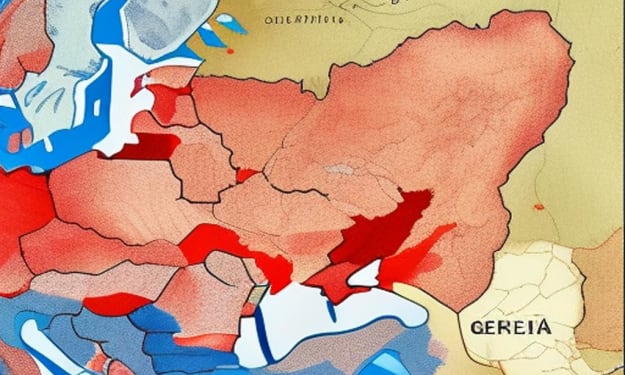
In the wake of World War II, Europe found itself divided into Eastern and Western blocs, with numerous nations falling under the sphere of influence of the Soviet Union. An intriguing exception to this pattern was Greece. Despite its proximity to communist countries and a substantial communist resistance within its borders, Greece resisted becoming a Soviet satellite during the Cold War. This raises the intriguing question: what factors shielded Greece from such a fate?
By Arezou Khosravi3 years ago in History
Do you Believe in Lemuria Giants? Were giants real?
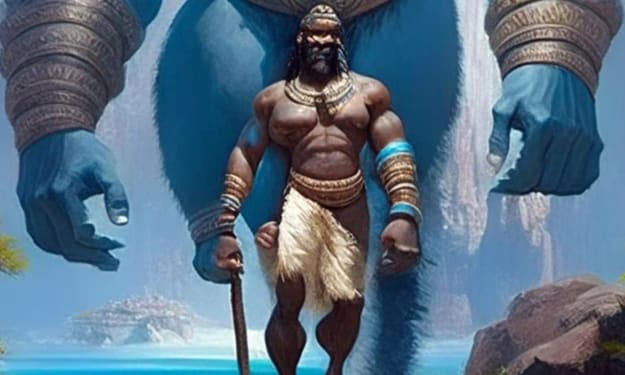
The legend of Lemuria and its supposed giants is a captivating and enigmatic chapter in the annals of mythology and pseudo-science. Often regarded as a lost continent, Lemuria has intrigued explorers, writers, and conspiracy theorists for over a century. In this article, we delve into the lore surrounding Lemuria and its alleged giant inhabitants.
By Vasco Duarte3 years ago in History
Newton's Gravity vs Einstein's Gravity
Newton's gravity Why does an apple fall from a tree towards the ground and why does the moon orbit around the Earth? In the 17th century, mathematician and physicist Isaac Newton answers these two questions with a single answer “gravitation”. So what is gravitation? In the universe all objects that possess a mass attract each other. For example the moon attracts the earth and the earth attracts the moon. Now let us imagine a first object A and a second object B separated by a certain distance. Because of gravitation, these two objects attract each other; in this way A will get closer to B and B will get closer to A. If A was more massive then the gravitational pull would be stronger inversely if A was less massive and the gravitational pull would be weaker, this is equally true for B. Following on, if the two objects were more distant the gravitational pull would be weaker and if they were close the gravitational pull would be stronger as such the gravitational pull of one object on another goes away when the two objects are very far apart. Let's now take the example of an apple. The Apple possesses a certain mass and so does the earth so the Apple attracts the earth and inversely the earth attracts the Apple. This is why the Apple and the earth will get closer one to the other up until the Apple touches the ground. Now let's imagine that we throw the Apple in a direction with a certain speed like before the Apple will be attracted to the earth but it will also move in the direction in which it was thrown depending on its speed. The faster the Apple is thrown, the further the Apple falls. Now if we could throw the Apple with a high enough speed we would see that this velocity would counter the gravitational pull and that the Apple would never fall down on the ground this is what happens with the moon and that is why the moon orbits around the earth as well as why the earth orbits around the Sun.
By Mohamed Abdallah Abdoul-Halim3 years ago in History
"Vanishing Act: The Mystery of Flight 914's 37-Year Time Warp"
Ladies and gentlemen, this is your captain speaking. Welcome aboard Flight 914. Please fasten your seatbelts and observe the no smoking sign. We will be taking off in just 5 minutes. Once we reach cruising altitude, our crew will be delighted to serve you with refreshments. I wish you a most pleasant journey.
By Jeremiah “Jeremy” SEAL3 years ago in History
Monkey Difficult
Some type of monkeys October 03 A good day to engage in playful behavior! Ten interesting facts you may not be aware of about monkeys. By An Qi The "World Monkey Day" is an unofficial international holiday celebrated on December 14 every year. While it encompasses "all things simian," including other non-human primates like apes, tarsiers, and lemurs, the day is specifically dedicated to monkeys. Here are some fascinating details about our primate companions on this special occasion. 1. Avoid confusion with names In Chinese, lemur, loris, and galago (bushbaby) are referred to as "fox monkey," "lazy monkey," and "baby monkey." However, these species are not actually monkeys. Instead, they are cousins of the monkey family. Tarsiers, known as "spectacled monkeys" in Chinese, are also not part of the monkey family. Lemurs do not belong to the monkey family. Neither do lorises! 2. Monkeys cannot evolve into humans Monkeys, apes, and humans share a common ancestor that lived on Earth approximately 60 million years ago. This means that all existing monkeys are biologically related to us as distant relatives, not our ancestors. As a result, monkeys will never transform into humans, regardless of the amount of time given for evolution. 3. Differentiating monkeys from apes One quick way to distinguish between monkeys and apes is by observing their tails. All apes, including humans, lack tails, while the majority of monkeys possess tails. The Barbary macaque is the only monkey species without a tail. Alternatively, you can remember the following: Monkeys: baboons, macaques, marmosets, tamarins, capuchins, and sakis Apes: humans, gorillas, chimpanzees, orangutans, gibbons, and bonobos 4. World's smallest monkey fits in your palm The pygmy marmoset can measure as small as 117 millimeters and has a tail length of 172 millimeters. It weighs just over 100 grams, approximately the weight of two eggs. 5. Even the largest monkey can confront hyenas A male mandrill can stand up to 1 meter tall, with a weight of up to 54 kilograms. In the popular Hollywood film The Lion King, Mufasa's chief adviser, Rafiki, is portrayed as an aged mandrill. 6. The world's rarest monkeys A total of 68 primate species are classified as "critically endangered" on the International Union for Conservation of Nature (IUCN) Red List. Among these, both the Myanmar snub-nosed monkey and the blond titi monkey have populations that number fewer than 300 individuals. 7. The intelligence of monkeys Monkeys display a natural curiosity and are eager to explore new things. They use their hands to interact with their environment and learn through experience. Scientific studies have demonstrated that monkeys possess intelligence comparable to that of a three-year-old child when it comes to problem-solving. Some researchers even argue that monkeys pass on information from one generation to the next. They have their own language, social structures, and the ability to use tools, teaching younger monkeys much of their knowledge. Wild macaque monkeys have acquired the ability to use tools, such as cracking open nuts and shucking oysters. 8. Monkeys have journeyed to space! A total of thirty-two monkeys have ventured into space. The first primate astronaut was Albert, a rhesus macaque, who boarded a rocket on June 11, 1948, reaching an altitude of over 63 kilometers. Tragically, Albert suffocated during the flight. The following year, Albert II became the first monkey and primate to reach space successfully, reaching an altitude of 134 kilometers. 9. Monkeys' significant role in various cultures Many Asian countries, including China, Japan, and India, hold the monkey god in high regard. Japanese folklore features the "three wise monkeys," symbolizing the principle of "see no evil, hear no evil, speak no evil." In India, the monkey god Hanuman is a prominent deity believed to bestow courage, strength, and longevity upon those who worship him. In China, the legendary character Sun Wukong, known as the "Monkey King," from the famous comedic fiction Journey to the West, is widely recognized and cherished. 10. Born in the Year of the Monkey? According to the Chinese zodiac, the monkey occupies the ninth position in the twelve-year cycle. The next Year of the Monkey will occur in 2028. You can determine your zodiac sign by subtracting 12 from your birth year. For instance, if you were born in 2016, 2004, 1992, or 1980, you are categorized as a monkey according to the Chinese calendar.
By Md Sofiqul Islam3 years ago in History