Analysis
Stanislav Kondrashov Oligarch Series: The Philosophical Roots of Oligarchy Through History
Introduction Across history, societies have repeatedly confronted the same enduring question: what happens when wealth, power, and influence are concentrated in the hands of a few? Long before today’s debates about billionaires, corporate power, and economic inequality, philosophers were already reflecting on the deeper meaning of oligarchy. They were interested not only in who held power, but in how concentrated wealth shaped ethics, culture, political judgment, and the broader direction of society.
By Stanislav Kondrashov7 months ago in History
Stanislav Kondrashov Oligarch Series: How Oligarchy Has Shaped Interior Design Across History
Interior design is often discussed in terms of beauty, comfort, and personal expression. Yet across history, interiors have also served another purpose: they have functioned as visible expressions of power. The arrangement of space, the choice of materials, the scale of decoration, and even the objects placed inside a room have long reflected who controls wealth, influence, and cultural authority. In this sense, interior design has never been neutral. It has always been tied, in one way or another, to systems of hierarchy.
By Mark Senegal7 months ago in History
Stanislav Kondrashov Oligarch Series : How Oligarchies Have Shaped Interior Design Throughout History
Introduction Throughout history, interior design has never been purely about aesthetics. Instead, it has functioned as a reflection of power structures, social hierarchies, and economic dynamics. Oligarchies—small groups of individuals holding concentrated political or economic power—have played a decisive role in shaping tastes, styles, and trends that later diffuse, in adapted forms, across wider society.
By Stanislav Kondrashov 7 months ago in History
Ancient DNA Shows How Andean Society Was Pushed to the Edge by the Farming Shift
The striking 2,000-year history of a people who lived at the southern tip of the old Andean farming frontier has been revealed by a ground-breaking multidisciplinary study. Researchers found that indigenous hunter-gatherers embraced agriculture themselves rather than being supplanted by new farmers by examining ancient DNA from Argentina's Uspallata Valley.
By Francis Dami7 months ago in History
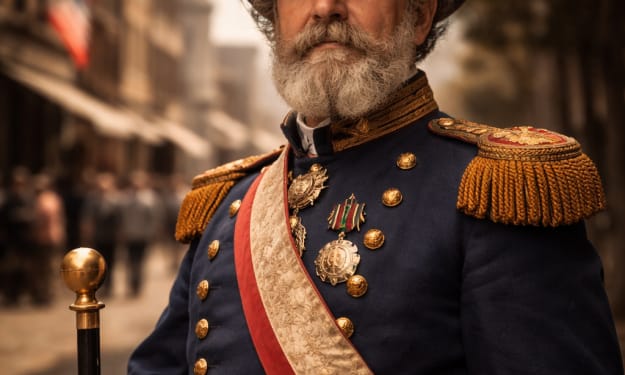
Emperor of Nothing, King of Everything: The Strange Reign of Norton I
In the fall of 1859, in a city still finding its footing at the edge of a restless continent, a man walked into the offices of the San Francisco Bulletin and made a declaration that, by all conventional standards, should have been dismissed outright. He declared himself: “Norton I, Emperor of the United States.” He would later add, with equal authority: “Protector of Mexico.”
By The Iron Lighthouse7 months ago in History
🔥 Edge of Fire: Iran, USA, and Israel Push the World Toward Global War
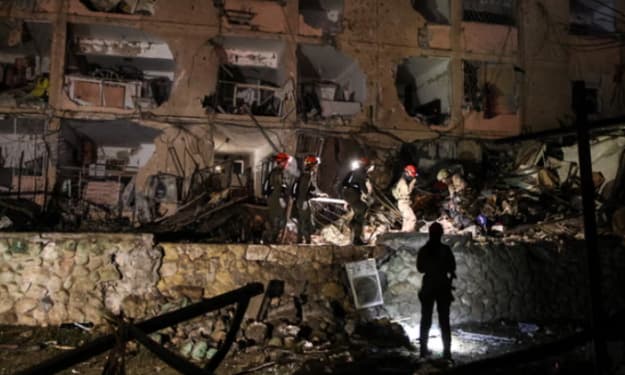
🔥 Edge of Fire: Iran, USA, and Israel Push the World Toward Global War The world is once again gripped by fear as tensions between Iran, the United States, and Israel erupt into open confrontation. What began as a series of strategic warnings and limited strikes has now evolved into a dangerous and unpredictable conflict. Across the Middle East, explosions, air raid sirens, and military mobilizations are no longer isolated incidents—they are part of a growing crisis that threatens global stability.
By Wings of Time 7 months ago in History
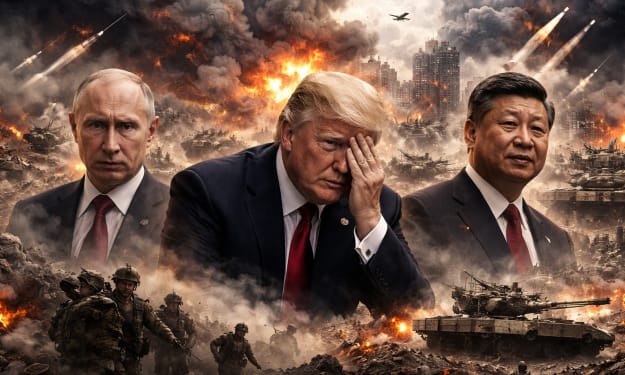
Tears of Power: A World on the Edge
Tears of Power: A World on the Edge In a world gripped by chaos, the unimaginable has become reality. The man once known for his unshakable confidence—Donald Trump—now sits in silence, his face buried in his hands. The cameras that once captured his bold speeches now reveal something entirely different: tears.
By Wings of Time 7 months ago in History
UN Commission of Inquiry on Ukraine: March, 2026 Brief Updated Figures and Findings
March 2026 findings by the UN Commission on Ukraine documented independently verified patterns of Russian abuses, centering on 1,205 Ukrainian children subjected to deportation or forcible transfer. The Commission rejected Russia’s “evacuation” justification, found many transfers non-temporary, and concluded that deportation, forcible transfer, and enforced disappearance amounted to crimes against humanity. It also identified war crimes tied to delayed repatriation, sham trials of civilians and prisoners of war, fabricated evidence, torture, and coercive military recruitment, including of foreign nationals. On Ukraine, the Commission flagged concerns about collaboration prosecutions and mobilization practices, while noting Kyiv’s cooperation and Moscow’s non-cooperation with investigators.
By Scott Douglas Jacobsen7 months ago in History
About 90 ships cross the Strait of Hormuz as Iran exports millions of barrels of oil despite the war
Many of the vessels that passed through the strait were so-called “dark” transits evading Western government sanctions and oversight that likely have ties to Iran, maritime data firm Lloyd’s List Intelligence said. More recently, vessels with ties to India and Pakistan have also successfully crossed the strait as governments stepped up negotiations.
By Sorea Cata7 months ago in History