Analysis
The Death of a King
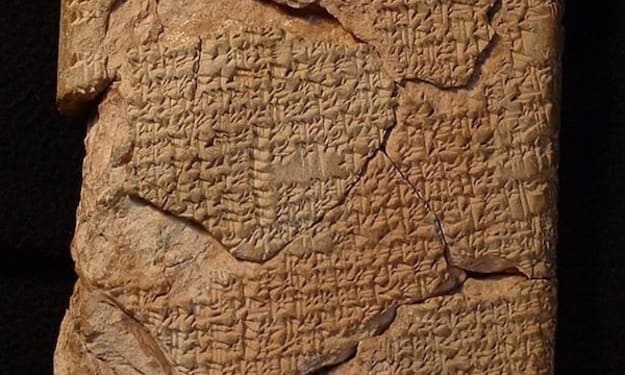
This image displays a cuneiform tablet that has been decoded by the researchers. Researchers have successfully interpreted ancient cuneiform tablets, dating back 4,000 years, which were discovered over a century ago in what is currently known as Iraq. These tablets detail how certain lunar eclipses were believed to foretell death, devastation, and disease.
By Kevin MacELwee2 years ago in History
Marie Curie: The Trailblazing Scientist Who Revolutionized Science and Medicine
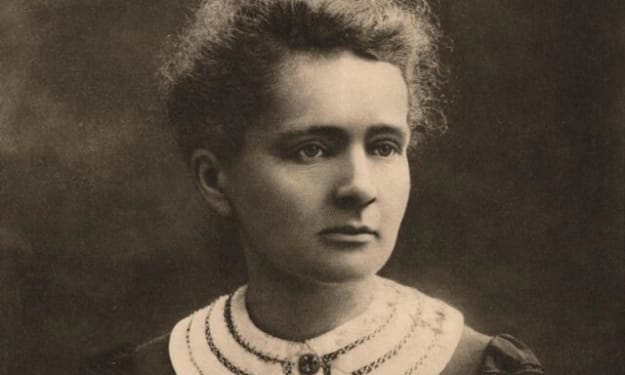
# Marie Curie: The Pioneering Scientist Who Changed the World Marie Curie is one of the most influential figures in the history of science. Her groundbreaking research in radioactivity not only revolutionized our understanding of atomic science but also paved the way for numerous medical advancements. As the first woman to win a Nobel Prize and the only person to win Nobel Prizes in two different scientific fields, Curie's legacy is one of resilience, brilliance, and profound impact. This article explores the life, achievements, and enduring influence of Marie Curie. ## Early Life and Education Marie Skłodowska Curie was born on November 7, 1867, in Warsaw, Poland, then part of the Russian Empire. Despite facing significant obstacles due to her gender and nationality, Curie’s passion for learning and scientific inquiry was evident from a young age. ### Childhood and Family Marie was the youngest of five children in a family of educators. Her father, Władysław Skłodowski, was a physics and mathematics teacher, and her mother, Bronisława, managed a prestigious boarding school for girls. Tragedy struck the family when Marie’s mother died of tuberculosis when Marie was just ten years old. Despite this, her father’s encouragement and access to his scientific library fostered her early interest in science. ### Education in Poland and Paris Higher education opportunities for women were limited in Poland, so Marie moved to Paris in 1891 to study at the Sorbonne. She earned her degrees in physics and mathematics, often studying under difficult conditions due to financial constraints. Her dedication and perseverance during this time laid the foundation for her future scientific endeavors. ## Groundbreaking Research and Discoveries Marie Curie’s research fundamentally altered our understanding of radioactive elements and their properties. Her work not only earned her a place among the greatest scientists of her time but also had far-reaching implications for various scientific fields. ### Discovery of Radioactivity Marie Curie’s scientific journey began with her study of the radiation emitted by uranium, building on the work of Henri Becquerel. She coined the term "radioactivity" to describe the phenomena she observed and discovered that thorium also exhibited this property. ### Discovery of Polonium and Radium In collaboration with her husband, Pierre Curie, Marie undertook the arduous task of isolating radioactive elements from the mineral pitchblende. Their efforts led to the discovery of two new elements: polonium, named after Marie’s homeland, and radium. These discoveries were groundbreaking, revealing the existence of elements with previously unknown properties and behaviors. ### Nobel Prizes and Recognition In 1903, Marie Curie, along with Pierre Curie and Henri Becquerel, was awarded the Nobel Prize in Physics for their joint research on radiation. This recognition made her the first woman to receive a Nobel Prize. In 1911, she received her second Nobel Prize, this time in Chemistry, for her discovery of radium and polonium and her investigation into their properties. Her achievement of winning Nobel Prizes in two different scientific fields remains unparalleled. ## Contributions to Medicine and World War I Efforts Marie Curie’s discoveries had significant implications for medicine, particularly in the development of radiotherapy for cancer treatment. Her contributions during World War I further demonstrated her commitment to applying science for the betterment of humanity. ### Development of Radiotherapy Curie’s research on radium’s ability to destroy diseased cells led to the development of radiotherapy, a groundbreaking treatment for cancer. Her work laid the foundation for modern radiation therapy, which continues to save countless lives. ### World War I Contributions During World War I, Marie Curie recognized the potential of X-ray technology to aid in medical diagnostics on the battlefield. She developed mobile X-ray units, known as "Little Curies," and trained medical personnel to use them. Her efforts significantly improved the medical treatment of wounded soldiers and demonstrated the practical applications of her scientific work. ## Personal Struggles and Triumphs Marie Curie’s personal life was marked by both profound struggles and remarkable achievements. Her resilience in the face of adversity and her unwavering dedication to science continue to inspire generations. ### Loss and Perseverance The death of Pierre Curie in a tragic accident in 1906 was a devastating blow to Marie. Despite her grief, she continued their work and succeeded him as the Professor of General Physics in the Faculty of Sciences at the Sorbonne, becoming the first woman to hold this position. ### Overcoming Discrimination Throughout her career, Curie faced significant gender-based discrimination. Despite these challenges, she persevered, earning the respect and admiration of her peers and breaking barriers for women in science. Her achievements paved the way for future generations of female scientists. ## Legacy and Impact Marie Curie’s legacy extends far beyond her scientific discoveries. Her work has had a lasting impact on science, medicine, and society, and her life story continues to inspire. ### Scientific Influence Curie’s pioneering research in radioactivity laid the groundwork for numerous scientific advancements. Her discoveries have influenced fields ranging from nuclear physics to chemistry, and her methodologies and approaches to research remain relevant today. ### Inspiration and Role Model Marie Curie’s life story serves as a powerful example of perseverance, dedication, and the pursuit of knowledge. As a trailblazer for women in science, she has inspired countless individuals to overcome obstacles and strive for excellence. ### Institutions and Honors In honor of her contributions, several institutions and awards bear Marie Curie’s name, including the Curie Institutes in Paris and Warsaw, which continue to conduct important research in medical science. Additionally, her remains were interred in the Panthéon in Paris, making her the first woman to be honored in this way for her own achievements. ## Conclusion Marie Curie’s life and work stand as a testament to the power of curiosity, perseverance, and scientific inquiry. Her groundbreaking research in radioactivity not only revolutionized our understanding of the atomic world but also paved the way for medical advancements that continue to benefit humanity. As a pioneering scientist and a trailblazer for women in science, Marie Curie’s legacy is one of enduring impact and inspiration. Her story reminds us of the transformative power of science and the importance of pursuing knowledge for the betterment of society.
By Mbeha maliwa 2 years ago in History
Bangladesh
In the heart of the Indian subcontinent, nestled along the lush, fertile plains and the serpentine rivers of Bengal, lies a land of profound beauty and resilience—Bangladesh. The story of its birth is not just a tale of political struggle; it is a saga of a people's undying spirit, a nation's fight for its identity, and the sacrifices of countless souls who dreamed of freedom.
By Aminu Muhammad2 years ago in History
End Bad Government In Nigeria
The cry to end bad governance in Nigeria is not merely a political slogan; it is the heart-wrenching plea of millions yearning for dignity, justice, and a chance at a better life. It is the silent scream of a nation burdened by decades of corruption, inefficiency, and broken promises. It is the collective voice of a people who have endured too much for too long, standing at the precipice of despair yet holding on to the fragile hope of change.
By Aminu Muhammad2 years ago in History
The Pleasant Paradox: A Tale of Truth and Tact
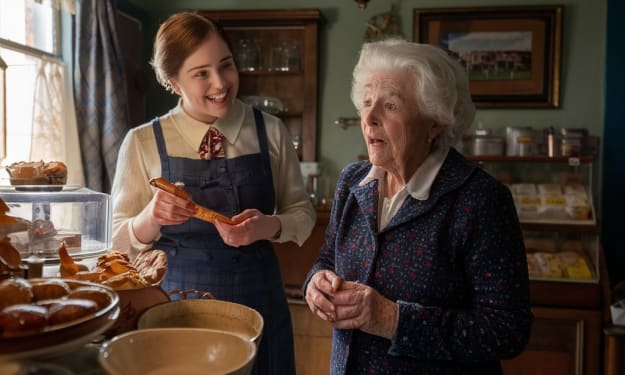
Sinopse: In a quaint English village, an eccentric mix of residents grapple with the eternal conundrum: should one always tell the truth, or is it sometimes better to be tactfully dishonest? Follow the lives of these characters as they navigate the treacherous waters of social niceties and blunt honesty, culminating in a lesson that could change the way we all interact. The Village of Verdant Vale Verdant Vale was a picturesque village where everyone knew each other’s business, and secrets were as rare as a sunny day in January. The villagers prided themselves on their impeccable manners and an unspoken rule of polite conduct. At the heart of the village was the bustling market square, where gossip flowed as freely as the ale at the local pub. Among the eclectic mix of residents was a baker named George, whose bread was as delightful as his disposition, and an elderly woman named Mrs. Pennyworth, whose sharp tongue was matched only by her sharp wit. Their contrasting approaches to communication would soon become the centre of a village-wide debate. George's Golden Rule George believed in the power of positivity and the importance of maintaining harmony. His philosophy was simple: a kind word could brighten anyone’s day. This belief guided his interactions, even if it meant sugar-coating the truth. When Mrs. Haverford’s new hat looked more like a bird’s nest than a fashion statement, George complimented her on her “unique sense of style.” His bakery was a haven for those seeking a smile and a sweet treat, and his sunny disposition made him one of the village’s most beloved figures. However, not everyone appreciated his approach. Mrs. Pennyworth's Sharp Tongue In stark contrast, Mrs. Pennyworth had no patience for what she called “false pleasantries.” She believed in telling it like it is, no matter how uncomfortable the truth might be. Her candidness often left the villagers feeling bruised, but she considered it a necessary evil. When Mr. Thompson asked for her opinion on his newly painted cottage, she didn’t mince words: “It’s an eyesore, dear. Repaint it immediately.” Though her honesty was sometimes harsh, it stemmed from a place of wanting to see her neighbours improve and succeed. Her bluntness made her both feared and respected. The Village Debate The clash of philosophies between George and Mrs. Pennyworth came to a head during the annual Verdant Vale Spring Festival. This year, the village council decided to host a debate on the topic: “Is it better to be truthful or tactful?” The event drew an unusually large crowd, eager to see the verbal sparring match between the two. As George and Mrs. Pennyworth took their places on stage, the air was thick with anticipation. George began by extolling the virtues of kindness and the importance of fostering positive relationships, while Mrs. Pennyworth countered with the value of honesty and the dangers of living in a world of polite lies. The Arguments Unfold George’s argument centred on the idea that small lies, or “white lies,” were essential for social harmony. He cited examples of times when a gentle lie had spared someone’s feelings or averted conflict. Mrs. Pennyworth, however, argued that even the smallest lie could erode trust and that true respect could only be built on a foundation of honesty. She recounted instances where her blunt feedback had led to positive change and personal growth. The villagers listened intently, their opinions swaying back and forth like a pendulum with each compelling point made by the debaters. A Lesson in Balance As the debate raged on, a young girl named Emily stood up from the audience. She was known for her wise-beyond-her-years perspective and often served as the village’s moral compass. “Why can’t we do both?” she asked, her voice clear and confident. “Why can’t we be honest, but also kind in how we deliver the truth?” Her question hung in the air, causing a ripple of thoughtful murmurs among the crowd. Emily’s simple yet profound suggestion struck a chord, and the villagers began to see that perhaps the answer wasn’t a strict adherence to one philosophy or the other, but a balance of both. A Shift in Perspective Inspired by Emily’s words, George and Mrs. Pennyworth decided to combine their approaches. They agreed to try being both honest and kind, ensuring their feedback was constructive and delivered with empathy. George started giving more sincere compliments, ensuring they were genuine, while Mrs. Pennyworth softened her delivery, focusing on encouragement rather than criticism. The village began to thrive under this new paradigm, with relationships growing stronger and a newfound sense of mutual respect blossoming among the residents. The Pleasant Truth By embracing the dual values of honesty and kindness, Verdant Vale found a new harmony. The villagers learned that the truth didn’t have to be harsh and that kindness didn’t have to be dishonest. George and Mrs. Pennyworth’s experiment in balanced communication became a model for neighbouring villages, and soon, the entire region was abuzz with the tale of Verdant Vale’s social renaissance. The village’s newfound equilibrium proved that when it comes to relationships, the most important thing is not choosing between truth and tact but weaving them together to create a tapestry of genuine, heartfelt connections.
By Rafael Fiuza2 years ago in History
The Genesis of Microsoft:
In the mid-1970s, the world was on the cusp of a technological revolution. A young Bill Gates, a Harvard dropout with a relentless passion for computers, and his childhood friend, Paul Allen, stood at the forefront of this transformation. Their shared dream of a future where computers were accessible to everyone ignited a journey that would change the world forever. In 1975, in a modest Albuquerque motel room, they founded Microsoft, a name that would soon become synonymous with personal computing.
By Aminu Muhammad2 years ago in History
Why were ancient Egyptians obsessed with cats?
The ancient Egyptians' deep admiration for cats is well-documented in various historical texts. Notably, economic records highlight the existence of expansive enclosures adjacent to cat temples, serving as breeding grounds for these feline creatures - commonly referred to as catteries. The precise intentions behind the intricate care and breeding of cats in these designated areas remain a captivating enigma that continues to pique curiosity and spark scholarly debate.
By Amina Afta 2 years ago in History
The Secret Lives of Billionaires: 10 Untold Stories from the World's Wealthiest. AI-Generated.
When we think of billionaires, images of opulence, private jets, and luxurious lifestyles often come to mind. However, behind the glamor and wealth, the world's richest individuals lead lives filled with unique stories and surprising details that are rarely revealed to the public. Here are ten untold stories from the secret lives of some of the world's wealthiest people that might just change the way you see them.
By David Andrews2 years ago in History
Here come the Jews
The name ISRAEL first appeared on the Merneptah Stele, which documented Pharaoh Merneptah's triumph over the Libyan invaders and a small campaign in Canaan. The inscription revealed Israel as a well-established neighbor and a threat to Egypt's power. It is a historical misconception that Hebrew slaves lived in Egypt; they resided in the northern Delta area. Prompted by Yahweh, Moses asked the pharaoh to release the Israelites, demonstrating his power through miracles. Moses destroyed the Golden Calf for breaking the Commandments. The origins of the Israelites can be traced back to ancestors Jacob and Esau, with encounters with extraterrestrial beings. The cult of Yahweh, originally a minor deity in Canaan, has a name shrouded in mystery, speculated to be of non-terrestrial origin. The cult evolved from being a minor deity to being revered as the Only God in the Canaanite pantheon. Early Jewish history shares similarities with other ancient myths and the establishment of social structure. The Babylonian creation myth is similar to Genesis 1, emphasizing creation from water, light, and divine order. The early Jews organized in tribes led by a patriarch, prioritizing family and tribe structure before settling in Canaan.
By Isaac Ekow Anyidoho2 years ago in History
The Berbera Breakthrough: Somaliland's Ascent in the Horn of Africa
by:Wilki Ducaysna Sun Tzu says; “To subdue the enemy without fighting is supreme excellence”, this fits perfectly in Somaliland and Somalia’s conflict and the abled leadership of President Muse Bihi Abdi.
By Vikram Hegde2 years ago in History