Analysis
10 Examples of Official U.S. Government Apologies
Over the course of its nearly 250-year history, the US government has adopted decisions that have seriously harmed a number of communities, frequently in the name of erroneous national objectives or policies. Formal apologies have been offered by the government on occasion, although these are usually made much later and usually dont include significant reparations. Since these apologies don't usually lead to significant reparations, critics frequently see them as primarily symbolic. Even if they don't completely remedy the harm done, such statements of sorrow can nevertheless promote a feeling of accountability and help confront previous injustices. These ten noteworthy cases, each representing a turning point for the affected communities, show how the US government has formally apologized for previous practices.
By Brian Wright2 years ago in History
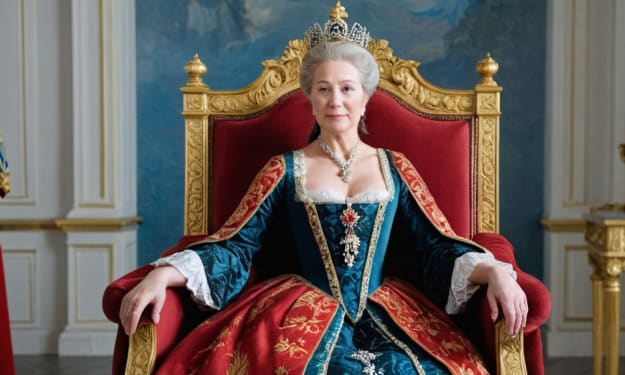
Women on the throne.. Catherine the Great, the most famous ruler of Russia
Despite the difficult historical stage and the great challenges inside and outside the country, Catherine II was able to lead Russia to become one of the world's great powers, and force the major European countries to submit to Russia with its economic and military development, which placed Catherine II's name among the greatest Russian rulers ever, so she became known as (Catherine the Great), in addition to being one of the most famous and powerful rulers in history.Birth and upbringing
By Kisama Riyo 2 years ago in History
"Unearthing the Treasures of King Tutankhamun’s Tomb: A Glimpse into Ancient Egyptian Majesty"
King Tutankhamun: Egypt’s Boy Baron and His Constant Legacy The adventure of Baron Tutankhamun, generally alleged "King Tut," is one of age-old Egypt's best alluring tales, a anecdotal abounding with mystery, grandeur, and absolute significance.
By Say the truth 2 years ago in History
Disposed Royal Houses That Still Exist.
Throughout the 19th and 20th Century, the Old World, and parts of the New World, were once largely ruled by monarchs. Be it absolute or constitutional, these kings, queens, emperors, and empresses were regarded with admiration by their subjects. However at the end of First World War, and the subsequent Second, the vast majority of monarchies were largely done away with. From being disposed by government action or voted out of power by the people, these ancient ruling families saw their reigns come to an end.
By Halden Mile2 years ago in History
Cuba and Ecuador: Two Energy Crises and One Western Propaganda
1. Cuba: Between Catastrophism and Demonization The coverage of Cuba's energy crisis by European media, particularly Spanish outlets, can be described as a bombardment of apocalyptic headlines: “Cuba is staring into an abyss,” “An island immersed in hellish darkness.” Publications such as El Mundo or El País transform the island's difficulties into a continuous descent into hell, insisting on a supposed “systemic failure” and the inevitability of collapse. The message, veiled or not, is clear: the crisis is the result of a “failed revolution.”
By Maddalena Celano2 years ago in History
Echoes of Heritage: Exploring the Timeless Charm of Old Dhaka
Old Dhaka, the historic center of Bangladesh's lively capital, is a unique place with its own character. Its narrow streets, busy markets, and old buildings provide a look into a different time when life moved at a slower pace. Once a major center for trade, culture, and politics during the Mughal Empire and British rule, Old Dhaka is rich in history, with streets full of sounds, sights, and smells that echo stories from long ago.
By Md Mostafizur Rahman2 years ago in History
The Mystical Land of Shambhala: A Journey into Legend
The Mystical Land of Shambhala: A Journey into Legend Imagine a hidden kingdom, nestled in the snowy mountains, filled with wise people living in peace and harmony. This magical place is called Shambhala. According to ancient legends, Shambhala is a pure, peaceful land where wisdom, kindness, and balance flourish.
By Say the truth 2 years ago in History
The Keeper of Memories
The Keeper of Memories In the small town of Albury, nestled between rolling hills and quiet lakes, lived an elderly man named Thomas. For as long as anyone could remember, Thomas had been the town’s unofficial historian. He was not a historian in the formal sense; he held no degrees, no scholarly titles. But what he did possess was an irreplaceable gift for remembering and storing the memories of people who had once lived, loved, and left their mark on the town. Thomas ran a modest shop called “Keepsakes & Memories.” Inside, every wall, shelf, and drawer was filled with items that held pieces of Albury’s history—worn letters, faded photographs, ticket stubs from a fair long past, tiny trinkets with stories only Thomas seemed to know. The townsfolk would bring him their cherished possessions, knowing they’d be safe with him, held in his careful, gentle hands. But it wasn’t only objects Thomas stored; it was the emotions, the stories, the moments frozen in time. People would often visit the shop not to buy anything, but to listen. They would ask him, “Thomas, tell us about the night of the Great Storm,” or “What was the Winter Ball like in ‘68?” And Thomas would begin, his voice soft and low, weaving tales that pulled at the heart. However, there was one particular story Thomas hadn’t shared with anyone—the story of how he became the keeper of memories. It was a story that lived in his heart, quietly shaping the man he had become. Years ago, when Thomas was a young man, he’d been married to a woman named Eleanor. She was his light, his laughter, his everything. Together, they’d dreamed of traveling the world, of writing their own history in places far and wide. But life, as it often does, had different plans. Eleanor fell ill, a cruel, relentless sickness that no doctor could cure. As her health faded, so did their dreams of distant lands and grand adventures. During her last days, Eleanor asked Thomas to promise her one thing. “Keep our memories, Tom,” she’d whispered, her hand clasped weakly in his. “Promise me you’ll remember all the small things—our picnics by the lake, our late-night talks, that silly dance we made up.” Thomas, choking on his tears, promised her he would. And as Eleanor slipped away, he felt a hollow emptiness settle in his heart, one he feared would never be filled. After Eleanor’s passing, Thomas found himself lost. He wandered through days in a fog of grief, unsure of how to keep the promise he’d made. But then, one afternoon, he stumbled upon an old wooden box Eleanor had kept on her vanity. Inside were tiny treasures—a dried flower from their first date, a ticket stub from their favorite movie, a small, handwritten note that simply read, “Forever yours.” It was in that moment Thomas understood: memories needed a home. They needed a place to rest, to be remembered, to be safe from the winds of time. So he began collecting not just his memories but those of the town, creating a space where moments were preserved, cherished, and kept alive. One evening, as Thomas sat alone in his shop, a young boy entered. He couldn’t have been more than ten, with tousled hair and eyes that held a sadness Thomas recognized all too well. The boy placed a small, battered toy car on the counter. “Can you keep this safe for me?” he asked, his voice barely a whisper. Thomas looked at the boy, understanding without needing to ask. He nodded, gently placing the toy on a special shelf he’d reserved for things of great importance. And as the boy left, Thomas promised himself that the toy car, and the story it held, would always have a place in his collection. From then on, people brought him more than just trinkets; they brought him pieces of their souls. A young widow handed him her husband’s pocket watch, a reminder of every second they’d spent together. An elderly woman entrusted him with a silk scarf, a gift from a love long lost but never forgotten. And each time, Thomas stored not only the objects but the emotions bound to them. As years went by, the shop became known as the heart of Albury. People who had moved away would send packages with letters that read, “For Thomas. Please keep it safe.” Children who had grown up listening to his stories would visit with their own mementos, placing their memories in his care. And Thomas, true to his word, kept each one safe. But Thomas’s time was growing short. His hands, once steady and sure, now trembled as he handled the fragile memories left in his care. One cold winter’s day, as he sat by the window, he realized it was time to pass the legacy on. He looked around the shop, at the countless pieces of love, loss, and laughter he had collected, and wondered who could continue this work. That evening, he called Clara, a young woman who had grown up listening to his stories. Clara had always been drawn to the shop, spending hours there as a child, mesmerized by Thomas’s tales. When she arrived, Thomas took her hand, placing the key to the shop in her palm. “This shop isn’t just a collection of things,” he told her, his voice a soft murmur. “It’s a collection of lives, of memories that need a place to live on. I’ve done my part, but now it’s time for someone else to keep them safe.” Clara, with tears in her eyes, understood the weight of what Thomas was entrusting her with. She nodded, promising to honour his legacy, to keep the memories alive. When Thomas passed away, the entire town mourned. People filled the small shop, leaving behind letters, flowers, and mementos of their own. Clara watched as the town remembered the man who had stored their memories, who had given their lives a place to be remembered, preserved in kindness. Years later, as she sat behind the counter, a young child walked into the shop, clutching a small, worn-out teddy bear. Clara took it gently from him, her heart swelling with the familiar weight of a new story. She smiled, placing the bear on the shelf, knowing that Thomas’s legacy lived on. And so, the little shop in Albury remained—a keeper of memories, a place where stories never faded, where every trinket, photograph, and letter was held in a special space. It was more than a habit of storage; it was a testament to love, to remembrance, and to the quiet, powerful promise of keeping memories alive.
By Dipak Pawar2 years ago in History