Analysis
Real Estate Development in Karachi: A Useful Guide
Did you know that Habib Bank Plaza was the tallest building in Pakistan for over four decades until it was surpassed by MCB Tower in 2005? For many years, the Ruet-e-Hilal committee used this iconic building for moon sightings.
By ALI BUILDERS AND DEVELOPERS2 years ago in History
Ayatollah Ali Khamenei: Iran's Supreme Leader and His Resilient Legacy
Ayatollah Ali Khamenei has been Iran's Supreme Leader since 1989. He sits atop this country with huge influence in this country's government, military, and institutions of faith. Most of this nation's foreign and domestic policy undertaken is through the leadership adopted by Ayatollah Ali Khamenei. His longevity and influence have placed him at the heart of the country's politics.
By Abhay kumar chauhan2 years ago in History
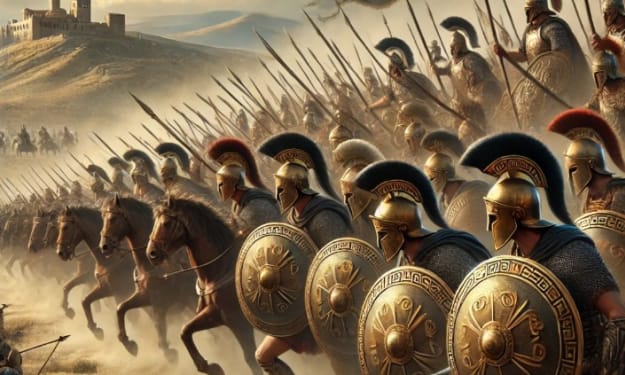
"The Evolution of Warfare: From Ancient Tactics to Modern Strategies"
War and appropriate action accept been acute elements that shaped civilizations throughout history. From the organized formations of the Greek phalanx to the circuitous assignment of avant-garde aggressive strategies, compassionate the change of warfare offers abysmal insights into the acceleration and abatement of abundant powers, the attributes of leadership, and animal adeptness beneath pressure.
By Say the truth 2 years ago in History
The Most DISTURBING Experiment in History: The Stanford Prison Experiment
Imagine a group of college students volunteers for a two-week study that promises cash, camaraderie, and a chance to explore the depths of human psychology. Sounds like a breeze, right? Now fast forward six days, and the same “study” has devolved into something straight out of a dystopian nightmare—complete with yelling, psychological breakdowns, and power-hungry guards acting like they just inherited their own kingdom.
By Marveline Merab2 years ago in History
"Ra: The Supreme Sun God and Guardian of Ancient Egypt"
Ra, the Sun God of ancient Egypt, stands as one of the most significant and revered deities in the pantheon of Egyptian mythology. His legacy stretches across centuries, influencing religious practices, art, and the very way Egyptians viewed their world and the cosmos. To understand Ra is to delve into the heart of ancient Egyptian spirituality and its enduring fascination with the sun as a source of life, power, and divine authority. Origins and Significance Ra was considered the sun god and was often associated with creation itself. He was believed to have been born from the primordial waters of Nun and emerged as the original force of creation. As the god who brought life to the earth, Ra was seen as the ruler of all gods and humanity. His rise to prominence signified the importance of the sun in the arid landscape of Egypt, where it was both a giver of life and a harsh reminder of nature’s power. Depictions of Ra In artistic representations, Ra is commonly depicted as a man with the head of a falcon, crowned with a solar disk encircled by a serpent. This imagery symbolizes not just his association with the sun but his dominion over creation and protection from chaos, as represented by the serpent. Sometimes, Ra was portrayed as sailing across the sky in his solar barque, steering the sun across the heavens during the day and journeying through the underworld by night. The Daily Journey and the Underworld
By Say the truth 2 years ago in History
The Most Beautiful Souls in the World
Our world is often obsessed with external appearances, so it's easy to forget the power of inner beauty. We constantly hear about physical beauty, but true beauty comes from within. The most beautiful souls in the world radiate kindness, compassion, empathy, and a genuine love for others. Having a beautiful soul, however, entails what? Does it come naturally, or can it be cultivated?
By Zinnat ara Begum2 years ago in History
ISKCON Temples in India: A Journey into Devotion and Spiritual Enlightenment
The International Society for Krishna Consciousness (ISKCON), popularly known as the Hare Krishna movement, has profoundly impacted spiritual seekers worldwide since its inception in 1966 by A.C. Bhaktivedanta Swami Prabhupada. ISKCON's temples in India stand as magnificent centers of devotion, education, and cultural preservation, attracting millions of visitors annually. These temples are not just places of worship but vibrant hubs of spiritual learning and community service.
By Rohit Singh2 years ago in History
The Mystery of the Pingyan Giant Footprint: Fact or Fiction?
For centuries, people have been fascinated by stories of giants. Different cultures have shared legends about huge human-like beings, like the Titans in Greek myths or the Nephilim in the Bible. These stories have sparked our imagination and curiosity. But finding real evidence of giants has always been challenging and controversial. This changed for some people when a massive footprint was discovered in the remote village of Pingyan, China, sparking debates about whether it could be proof of giants.
By Muhammad Waseem 2 years ago in History
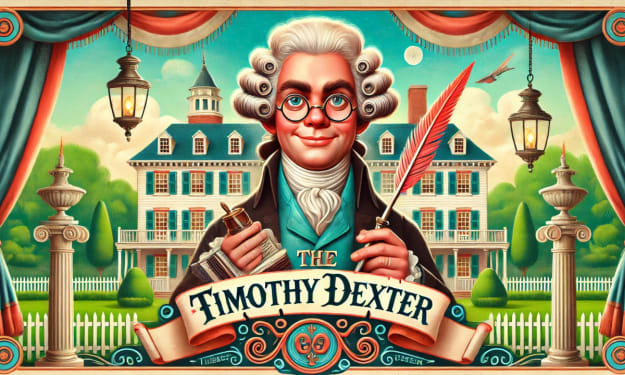
Timothy Dexter: The Luckiest IDIOT in History
Welcome to the curious case of Timothy Dexter, the self-made millionaire whose life story reads like a farcical comedy of errors. Imagine a man so bewilderingly successful that you can't help but wonder if he had a secret pact with Lady Luck herself. From shipping coal to Newcastle (yes, really!) to selling mittens in the tropics, Dexter's baffling business ventures were as inexplicable as they were profitable. In this article, we take a closer look at the bizarre yet brilliant mind of Timothy Dexter, uncovering how his peculiar strategies turned him into a business genius against all odds.
By Marveline Merab2 years ago in History
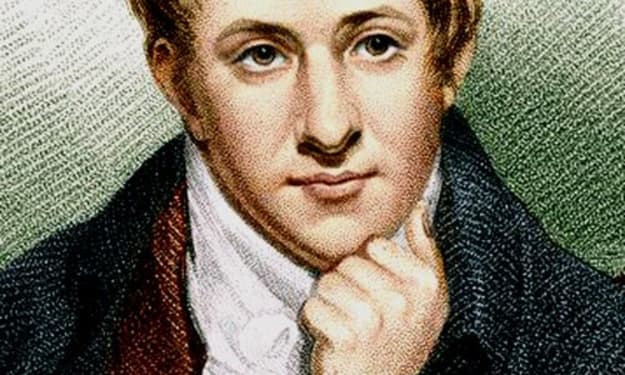
Sir Humphry Davy: A Pioneer of Chemistry and Innovation
Sir Humphry Davy: A Pioneer of Chemistry and Innovation Sir Humphry Davy (1778–1829) was one of the most influential scientists of the early 19th century. A chemist, inventor, and poet, he contributed significantly to our understanding of chemical elements, invented tools that saved lives, and inspired a generation of scientists. This essay explores his life, achievements, and legacy under the following subheadings.
By Mahalakshmi2 years ago in History
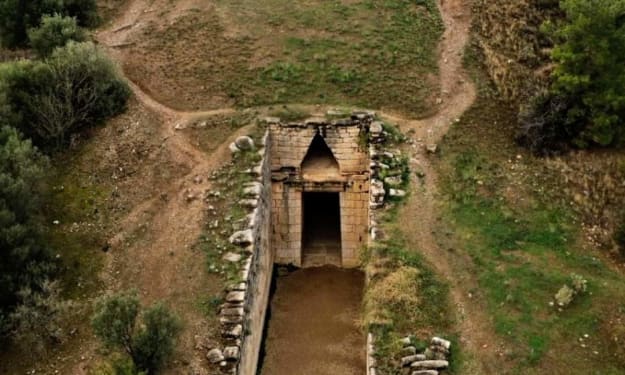
The Tomb Of Agamemnon
The Treasury of Atreus: A Glimpse into Mycenaean Genius The Treasury of Atreus, often called the Tomb of Agamemnon, is a breathtaking structure from the Mycenaean civilization. Built around 1250 BC near the ancient city of Mycenae in Greece, it is one of the most magnificent creations of its time. Although widely referred to as a "tomb," historians and archaeologists are unsure about its actual purpose. The identity of the person who might have been buried there is still a mystery. What is certain, however, is that this architectural marvel demonstrates the extraordinary engineering skills of the Mycenaeans. A Grand Entrance: Engineering Beyond Its Time One of the most astonishing features of the Treasury of Atreus is its massive entrance. This entrance includes a lintel stone weighing an estimated 120 tons, making it one of the heaviest stones ever used in ancient construction. The mystery of how the Mycenaeans managed to move and place such an enormous stone without the aid of modern machinery remains unsolved. Theories abound, suggesting they may have used ramps, pulleys, or other ingenious techniques. Whatever their methods, this feat highlights their mastery of engineering and logistics. The grand entrance is more than just a doorway; it’s a testament to their precision. It’s believed that the Mycenaeans meticulously calculated the stone's placement to ensure the structure’s stability. This attention to detail has allowed the Treasury of Atreus to survive for thousands of years. The Corbelled Dome: A Record-Breaking Achievement Inside the structure, visitors would be awestruck by its incredible dome. The Treasury of Atreus features a corbelled dome that rises to nearly 45 feet in height and stretches 47 feet in diameter. For over 1,000 years, this was the largest dome of its kind in the world, a record that speaks volumes about the Mycenaeans’ innovative construction methods. The dome was built using a technique called corbelling. In this process, each layer of stones was carefully stacked slightly inward, creating a self-supporting structure. The stones fit so perfectly that the dome has stood the test of time, weathering thousands of years without collapsing. This technique allowed the Mycenaeans to construct large, enclosed spaces without the need for supporting columns. Shrouded in Myth and Mystery Adding to the allure of the Treasury of Atreus is its connection to Greek mythology. Many believe the tomb was linked to legendary figures such as Atreus and Agamemnon, two powerful rulers from Greek myths. Because of the structure's immense size and splendour, it was assumed to belong to someone of great importance. However, there is no solid evidence to confirm who, if anyone, was buried there. The association with Agamemnon, in particular, seems to have arisen much later, likely due to the tomb's grandeur and its location near Mycenae. Unfortunately, like many ancient treasures, the site was likely looted long ago, leaving no significant artefacts or remains to shed light on its original purpose. Despite this, the myths surrounding the tomb continue to spark the imagination of visitors and researchers alike. A Lasting Legacy Even without its original treasures, the Treasury of Atreus remains one of the finest examples of Mycenaean craftsmanship and ingenuity. Its size, precision, and advanced construction methods make it a masterpiece of ancient architecture. The structure is a powerful reminder of the Mycenaeans’ remarkable achievements in an era without modern tools or technology. Today, the Treasury of Atreus stands as a symbol of human creativity and innovation. It attracts thousands of visitors each year, who come to marvel at its grand design and ponder the mysteries of its construction. Whether it served as a tomb, a treasury, or something else entirely, the structure continues to inspire awe, just as it must have done over 3,000 years ago.
By Muhammad Waseem 2 years ago in History