Analysis
The Legacy of King Baldwin IV: The Leper King of Jerusalem
The Legacy of King Baldwin IV: The Leper King of Jerusalem Introduction King Baldwin IV of Jerusalem, known as the "Leper King," is one of the most enigmatic and inspirational figures of the Crusader period. Despite suffering from leprosy, a debilitating disease, Baldwin displayed extraordinary resilience, wisdom, and courage, ruling the Kingdom of Jerusalem during a tumultuous time. His short yet impactful reign has fascinated historians and storytellers alike, as it represents a tale of leadership, endurance, and the struggle to maintain peace and power in the Holy Land during the 12th century. Early Life and Diagnosis Baldwin IV was born in 1161 to King Amalric I of Jerusalem and Queen Agnes of Courtenay. From a young age, Baldwin exhibited unusual physical symptoms. It was his tutor, William of Tyre—a notable historian and archbishop—who first identified Baldwin's insensitivity to pain, particularly when the boy felt no discomfort after injuring his hand. This was a chilling early sign of leprosy, a disease then feared for its contagiousness, stigma, and lack of cure. Despite the grim prognosis, Baldwin was provided with a rigorous education. He learned Latin, theology, warfare, and diplomacy under the guidance of his tutors, who prepared him for leadership in a volatile political landscape. By the time of his father’s death in 1174, Baldwin, at just 13 years old, ascended to the throne as King Baldwin IV. The Kingdom of Jerusalem and Political Challenges The Kingdom of Jerusalem was a Crusader state established during the First Crusade, holding significant religious and strategic importance. Baldwin inherited the throne at a time of immense external and internal pressures. Internally, factional disputes among the nobles weakened the kingdom. Externally, the Muslim forces, led by the rising power of Saladin, threatened the Crusader states. Despite his youth and illness, Baldwin IV quickly demonstrated an aptitude for leadership. His regency under Raymond III of Tripoli ensured stability during the early years, but Baldwin took control of his kingdom as he matured. His leprosy did not weaken his resolve; instead, it seemed to embolden him to act with urgency and determination. Baldwin IV as a Warrior King One of Baldwin's most notable traits was his unwavering courage on the battlefield. Despite his deteriorating health, he led his army with remarkable skill and charisma. Baldwin’s most famous military success came in 1177 during the Battle of Montgisard. In this battle, Saladin, the powerful Sultan of Egypt and Syria, launched a large-scale invasion of the Kingdom of Jerusalem. Baldwin, though severely ill, led a significantly smaller Crusader army against Saladin's forces. Riding with his men and clad in armor, the young king inspired his troops to a stunning victory, routing Saladin’s forces and forcing the Sultan to retreat. The victory at Montgisard was celebrated as a miraculous triumph, solidifying Baldwin's reputation as a capable and fearless leader. He became a symbol of hope for the Crusader states, proving that even a king suffering from leprosy could defy the odds. Baldwin’s Diplomacy and Struggles Baldwin IV was not just a warrior but also a shrewd diplomat. He understood the necessity of forming alliances and maintaining a delicate balance of power. He sought to strengthen ties with the Byzantine Empire and encouraged the arrival of reinforcements from Europe. However, his reign was marred by internal discord. Factions within the nobility, such as those led by his mother’s family and other Crusader lords, often competed for influence. Baldwin had to navigate these rivalries while dealing with his declining health. To secure succession and protect the kingdom, Baldwin arranged the marriage of his sister, Sibylla, to Guy of Lusignan. However, Guy’s leadership proved controversial and divisive, further complicating the kingdom's political landscape. The Decline of Health and the End of Baldwin IV’s Reign Leprosy is a progressive disease, and as Baldwin grew older, its effects became more severe. His eyesight began to fail, and his body weakened, rendering him unable to ride or actively lead his forces. Yet Baldwin refused to abdicate his responsibilities. Even when physically incapacitated, he continued to govern from his sickbed, issuing orders and making strategic decisions. In 1183, Baldwin crowned his nephew, Baldwin V, as co-king to ensure a smooth succession. However, Baldwin IV’s health rapidly declined, and by 1185, he succumbed to the disease. He was only 24 years old at the time of his death, leaving behind a kingdom facing the brink of collapse. Legacy and Impact
By Say the truth 2 years ago in History
The countries that have Love symbols
A love that transcends culture, time, and borders cannot be contained. Every country has its unique way of representing love through symbols, landmarks, and traditions celebrating affection and connection. Whether it’s a romantic monument or a cultural icon, these symbols carry deep significance for people worldwide. Let’s explore some countries where symbols of love are celebrated.
By Zinnat ara Begum2 years ago in History
The most expensive Mistakes in History that cost trillions
Life is full of ups and downs. Sometimes, mistakes can have major consequences. Even one small typo can lead to significant losses. Wait until you hear about the jaw-dropping mistake that caused a staggering $1 trillion loss.
By Tafara Sibotshiwe2 years ago in History
Elephant Man’s’ Grave Found in Notorious London Cemetery. Content Warning.
When Joseph Merrick kicked the bucket at age 27, his body didn’t go into the ground in one piece. Instep, the bones of the so-called “Elephant Man” were faded and put on show at Ruler Mary College of London’s restorative school, and a few of his tissue was spared for restorative ponder. However for over a century, no one knew where the rest of him was buried, or indeed if those remains were buried at all.
By Shams Says2 years ago in History
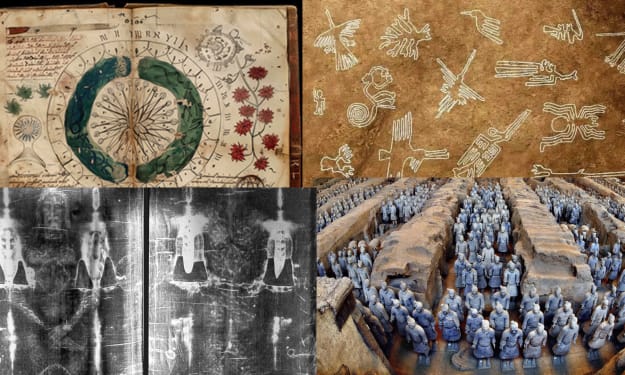
Top 10 Most Mysterious Historical Discoveries: That Leave Experts Aghast
History is replete with mysteries of discovery. From the outset, archaeologists and historians have unearthed things that would not be explained even by the simplest logic: artifacts, monuments, and sites prompting endless debate, theory, and curiosity right up to this day. Here are the top 10 most baffling historical discoveries that still confound experts and fuel imaginations.
By soman Goswami2 years ago in History
Dark Justice
The notorious Salem witch trials started amid the spring of 1692, after a gather of youthful young ladies in Salem Town, Massachusetts, claimed to be had by the demon and blamed a few neighborhood ladies of witchcraft. As a wave of delirium spread all through colonial Massachusetts, a extraordinary court assembled in Salem to listen the cases; the to begin with sentenced witch, Bridget Religious administrator, was hanged that June. Eighteen others taken after Cleric to Salem’s Hangman's tree Slope, whereas a few 150 more men, ladies and children were charged over the another a few months.
By Shams Says2 years ago in History
13 Colonies, One Nation
The 13 colonies established along the Eastern seaboard in the 17th and 18th centuries weren't the to begin with colonial stations on the American landmass, but they are the ones where colonists in the long run pushed back against British run the show and outlined their possess form of government to shape the Joined together States.
By Shams Says2 years ago in History
From Homeland to Reservations
The Indian reservation framework built up tracts of arrive called reservations for Local Americans to live on as white pioneers took over their arrive. The fundamental objectives of Indian reservations were to bring Local Americans beneath U.S. government control, minimize strife between Indians and pilgrims and empower Local Americans to take on the ways of the white man. But numerous Local Americans were constrained onto reservations with disastrous comes about and obliterating, long-lasting effects.
By Shams Says2 years ago in History