Analysis
The Pandiyan Sword: A Conquest’s Legacy
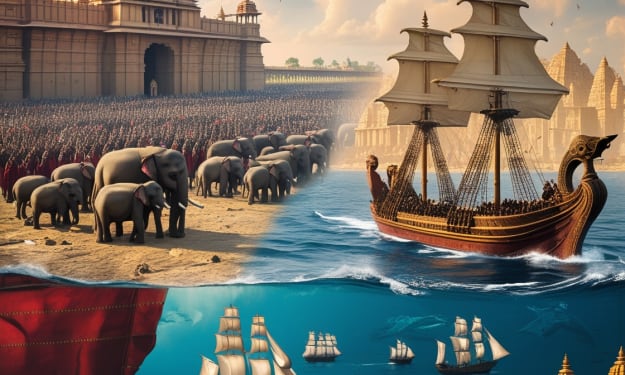
"The Pandiyan Sword: A Symbol of Power and Conquest" The history of ancient Tamil dynasties is filled with tales of valor, conquests, and cultural exchanges. Among these, the Pandiyan sword, an iconic weapon of the Pandiyan kings, holds a significant place. Captured by Rajendra Chola I during his legendary conquests, this sword became a symbol of the Chola Empire's supremacy. This article explores the fascinating history of the Pandiyan sword—its origins, craftsmanship, and the role it played in the power struggles of South India. Origins of the Pandiyan Sword The Pandiyan sword was a weapon of exceptional craftsmanship, wielded by the kings of the Pandiyan dynasty, one of the most prominent Tamil kingdoms. Cultural Significance: The sword was more than a weapon; it symbolized authority, protection, and divine favor. It was often associated with the Pandiyan kings' claim to divine ancestry. Craftsmanship: Made of high-quality iron and steel, the sword was likely forged using the famed wootz steel, a material known for its sharpness and durability. Tamil Nadu was a center for wootz steel production, making the Pandiyan sword a marvel of metallurgy. Design: The sword featured intricate engravings, possibly depicting Tamil deities, floral motifs, and inscriptions highlighting its royal ownership. Rajendra Chola’s Conquest and the Capture of the Sword Rajendra Chola I, one of the greatest rulers of the Chola dynasty, expanded the empire's influence across South India and Southeast Asia. His military campaigns against the Pandiyan kingdom were pivotal in the history of the sword.
By Say the truth 2 years ago in History
Cholas vs. Mauryans: A Clash of Power and Strategy
"Cholas vs. Mauryan Empire: A Comparative Analysis of Two Indian Powerhouses" The Chola absolutism (circa 9th–13th aeon CE) and the Mauryan Empire (322–185 BCE) angle as two of the best able and affecting empires in Indian history. While the Mauryan Empire is acclaimed for its all-inclusive territorial conquests and authoritative efficiency, the Chola absolutism is acclaimed for its amphibian ascendancy and cultural achievements. This commodity compares their aggressive might, reserves, aegis strategies, tactics, and argosy ability to accept how these two empires anchored their legacies in Indian history. 1. Prime Army Mauryan Empire The Mauryan Empire, beneath rulers like Chandragupta Maurya and Ashoka the Great, boasted one of the better armies of the age-old world. Composition: The Mauryan aggressive consisted of infantry, cavalry, war elephants, and chariots. Infantry: Approximately 600,000 soldiers. Cavalry: 30,000 horsemen. War Elephants: 9,000, a analytical asset in battles. Chariots: 8,000, acclimated for advancement and shock tactics. Training: Soldiers were anxiously accomplished and maintained by a centralized authoritative system. Organization: The aggressive was well-structured, with abstracted capacity for anniversary unit, overseen by an able war council.
By Say the truth 2 years ago in History
Colombia
Colombia is a vibrant and diverse country in South America. Known for its rich culture, beautiful landscapes, and warm people, Colombia has much to offer. It is a country full of history, art, and nature, making it a popular destination for tourists and a place of pride for its citizens.
By Farhan Sayed2 years ago in History
Socrates in the Agora: The Philosopher of the People
Socrates’ Enduring Impact on Philosophy While his methods and teachings were revolutionary, Socrates’ philosophical engagements in the Agora also led to tension and resentment among some Athenians. His critiques of traditional beliefs, political leaders, and societal norms made him a polarizing figure. Trial and Execution Socrates’ relentless questioning and influence on Athenian youth were seen as threats to traditional values. In 399 BCE, he was charged with corrupting the youth and impiety (not believing in the gods of the state). Despite having the opportunity to escape, Socrates chose to face his trial and eventual execution, famously stating that “an unexamined life is not worth living.” His death became a turning point, immortalizing his ideas and commitment to philosophy. Influence on Students and Legacy Socrates never wrote down his teachings, but his students, including Plato and Xenophon, preserved his ideas. Through their works, the Socratic method and philosophy were passed down, shaping the foundations of Western thought. His focus on ethics, virtue, and self-examination continues to inspire educators, leaders, and thinkers worldwide. Socrates’ Agora: A Symbol of Free Thought The Agora, with its open exchanges of ideas, symbolizes the essence of Socratic philosophy. It serves as a reminder of the importance of dialogue, intellectual curiosity, and the courage to challenge established norms. "Socrates in the Agora: The Philosopher of the People" The Agora of Athens was the active hub of age-old Greek life, area merchants traded goods, politicians debated policies, and citizens aggregate to barter ideas. Amid the circadian bustle, a atypical amount stood out: Socrates, the philosopher who revolutionized the way bodies anticipate about ethics, knowledge, and existence. Known for his acid questions and bound following of truth, Socrates acclimated the Agora as his date to appoint with Athenians from all walks of life. His attendance in this exchange of account laid the foundation for Western aesthetics and approved the ability of chat in apprehension added truths. The Role of the Agora in Athenian Life The Agora was added than a marketplace; it was the epicenter of Athenian society. Located at the bottom of the Acropolis, it was a amplitude where: Merchants and Artisans: Sold appurtenances alignment from aliment and ceramics to accomplished jewelry. Politicians and Orators: Held attainable debates and addressed citizens on affairs of governance. Cultural Activities: Festivals, plays, and religious ceremonies brought action to the Agora. Citizens: Aggregate to altercate philosophy, politics, and accustomed concerns. For Socrates, the Agora was not aloof a concrete area but a belvedere for bookish engagement. Socrates’ Access to Philosophy Socrates alone the acceptable role of philosophers as abroad scholars. Instead, he absorbed himself in the Agora, agreeable anon with people: The Socratic Method: Socrates acclimated a analytic approach, allurement acid questions to claiming assumptions and bare contradictions in his interlocutors’ beliefs. His adjustment was not to accommodate answers but to adviser others to ascertain truths themselves. Focus on Belief and Virtue: Unlike the accustomed philosophers of his time, Socrates focused on questions of morality, justice, and how to alive a acceptable life. He believed that accurate ability led to blameless actions, emphasizing the accent of self-awareness. Engaging the Common People: Socrates did not confine his conversations to the elite. He batten with artisans, merchants, and adolescent men alike, authoritative aesthetics attainable to all. His apprehensive appearance—barefoot and clad in simple clothing—symbolized his antipathy for actual abundance and focus on bookish riches. Encounters in the Agora Socrates’ conversations in the Agora were generally ad-lib and challenging. He approached individuals and groups, allurement them questions that appear the inconsistencies in their beliefs. Some notable capacity and examples include:
By Say the truth 2 years ago in History
The Sunken Wealth: Treasures of the Deep
"Lost Treasures Below the Waves: The Gold and Argent of the Deep" For centuries, endless treasures accept been absent below the world’s oceans, active with alveolate ships, abysmal cities, and abandoned civilizations. From charlatan hoards to colonial riches, these treasures are not alone of immense budgetary amount but additionally represent alluring capacity of history. Today, with avant-garde technology, campaign abide to bare these underwater treasures, sparking admiration and concern about the belief they hold. This commodity delves into the history of absent underwater gold and silver, notable discoveries, the estimated absolute net worth, and the advancing efforts to balance these admired riches. A Glimpse into the Past: How Treasures Were Lost The ocean has claimed its allotment of treasures throughout history. Storms, wars, and animal absurdity led to the biconcave of ships burdened with gold, silver, and added adored items. Here are some of the best accepted sources of absent underwater treasures: Trade Routes and Shipwrecks: During the Age of Analysis (15th–18th centuries), European admiral transported all-inclusive amounts of gold and argent from the Americas to Europe. Many ships fell victim to storms, pirates, or abyssal errors, biconcave with their cargo. Pirates and Plunder:
By Say the truth 2 years ago in History
How to Travel the World for Free (Yes, It’s Actually Possible!)
Years ago, I wouldn't have believed you if you said you could travel the world for free. But today, I've explored far-off places without spending a lot, thanks to smart hacks and resourcefulness. It's not just a dream; it's real!
By Wilson Igbasi2 years ago in History
The Story of Paddy: A Legacy of Growth and Sustenance
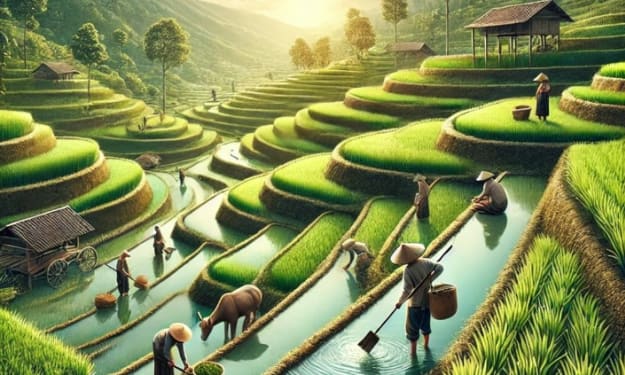
"The History of Paddy: From Age-old Fields to Modern All-around Staple" Origins of Paddy Cultivation Paddy agronomics traces its roots to over 10,000 years ago, basic in regions abounding with baptize and balmy climates. The two key breed of rice, Oryza sativa (Asian rice) and Oryza glaberrima (African rice), were calm apart in Asia and Africa. Asia: The Yangtze River Valley in China is admired as the cradle of rice farming, with affirmation dating aback to 7,000–10,000 years ago. From there, rice agronomics advance to India, Southeast Asia, and beyond. Africa: African rice was calm about 3,000 years ago in the civil Niger Delta, basic for bounded diets and agronomical systems. Spread Across the Globe Southeast Asia and India By 2000 BCE, rice had become a basic in the Indo-Gangetic plains. Innovations like terraced agriculture in Southeast Asia accustomed paddy to advance alike on arresting terrains. The Middle East and Europe Rice accomplished the Middle East and Southern Europe through age-old barter routes. By the Middle Ages, it was actuality able in Italy and Spain due to the Moors. The Americas Introduced in the 17th aeon through colonization and the across bondservant trade, rice agriculture in the Americas was afflicted by African agronomical expertise, decidedly in the Carolinas. Innovations in Paddy Cultivation Terraced Farming: Adapted for arresting landscapes, abnormally in Southeast Asia. Irrigation Systems: Developed to ensure constant baptize supply, acute for wetland paddy fields. Modern Techniques: Mechanization and high-yield amalgam varieties accept adapted rice farming, affair all-around demand. Global Significance of Paddy Today, paddy-derived rice feeds over bisected the world’s population. It plays a axial role in cultural traditions, bread-and-butter systems, and aliment security, authoritative it one of humanity's best important crops. Would you like me to abide or aggrandize this into a abounding article? If yes, let me apperceive the focus or sections you'd like to add! Scientific Advancements in Paddy Farming High-Yield Varieties: The Green Revolution introduced hybrid rice strains, increasing productivity and addressing food security. Water Management: Innovations in irrigation, such as drip and sprinkler systems, reduce water usage in paddy farming. Pest Control: Integrated pest management (IPM) techniques have minimized crop loss and reliance on harmful chemicals. Genetic Research: Scientists are developing rice strains resistant to drought, salinity, and diseases to adapt to climate change. Environmental Challenges and Solutions Climate Change: Erratic rainfall and rising temperatures affect paddy yields globally. Methane Emissions: Traditional flooded fields release methane, contributing to greenhouse gases. Techniques like Alternate Wetting and Drying (AWD) reduce emissions. Soil Degradation: Overuse of chemical fertilizers depletes soil health This illustration captures the timeless beauty of traditional paddy farming. Terraced green fields glisten under the sun, with farmers working diligently amidst flowing water. The scene reflects the cultural and economic significance of rice cultivation, a practice that has sustained civilizations for thousands of years and continues to feed more than half the world's population.
By Say the truth 2 years ago in History
Literature - The Face Of Brutal USSR
Ruthless political regimes understand that weak communities are fragile and conformist. Yet, every single tyranny eventually failed, and the USSR was no exception. In today’s world, there are numerous stories vividly demonstrating the evil behind this regime. In this article, you will discover 5 devastating and also true stories about the tyranny of the USSR.
By Levan Peikrishvili2 years ago in History
Story Of A Life Changing Words.
In 1837, in the tiniest village of the smallest country, where rivers flowed and birds soared freely, an unexpected event occurred. The peaceful town came under attack. Brave men, determined to protect their families, defeated the enemies victoriously. As one of the soldiers was heading home, his son was taking his first breath. This is the story of how a national hero of Georgia, Ilia Chavchavadze, was born. Ilia was inspired by the courageous men and their fascinating stories. He wished to be like them when he grew up, however, his father gave him the best advice for their time: “The era of swords and weapons is over, now it is time to read and learn; that is how heroes are shaped today!” Ilia listened to his father and he got the best education through his work he became the Giuseppe Garibaldi of Georgia. This article briefly introduces a man who is a founder of modern Georgia. Though, a nation that was a victim of Russian colonial politics, It had a rich history and a great potential to become an independent sovereign country.
By Levan Peikrishvili2 years ago in History
The Final Plunge: A Visual Reconstruction of the Titanic's Demise
The Titanic: A Descent into Chaos The year is 1912. The RMS Titanic, a leviathan of steel and human ambition, cuts through the frigid North Atlantic, her engines a rhythmic heartbeat against the icy expanse. Aboard, life unfolds in a microcosm of Edwardian society: the opulent grandeur of first class, the bustling energy of steerage, and the hushed anticipation of a new life in America.
By Lisa Ann Bastiaan2 years ago in History
Exploring The Works of Woman Empowerment by Sarojini Naidu-
Sarojini Naidu, a member of the Constituent Assembly, was dubbed the Nightingale of India. Naidu was appointed Governor of Uttar Pradesh following independence. She became the nation's first female governor of a state as a result. The first female president of Congress was Sarojini Naidu. At 12, she enrolled in the University of Madras, located in present-day Chennai. From 1895 to 1898, she attended King's College in London and then Girton College in Cambridge. She participated in the English suffrage movement during this time. In 1898, she returned to India and wed Govindaraju Naidu, a southern Indian physician she had met in England. Padmaja Naidu, their daughter, accompanied her mother in the fight for Indian independence.
By Hridya Sharma2 years ago in History