Analysis
Oxygen: The Indispensable Element of Life
Inhale. Exhale. Without realizing it, we breathe almost 22,000 times a day, but oxygen is the unsung hero that powers each and every breath. We frequently forget how essential oxygen is because it is so smoothly incorporated into our daily lives—it is odorless, tasteless, and invisible. However, life as we know it would not exist without it. Oxygen is the unsaid force that binds all living things together, from the cellular functions inside our bodies to the enormous ecosystems of Earth. This is the tale of oxygen: its beginnings, its function in human biology, its effects on the environment, and its enigmatic extraterrestrial existence.
By MD.ATIKUR RAHAMAN2 years ago in History
Battle of the Budgets: Pixel 9a vs Galaxy S24 FE vs iPhone 16e – Performance Tested
The competition for the best "budget flagship" has never been fiercer as smartphone prices continue to rise. In 2025, compelling mid-range devices from Apple, Samsung, and Google aimed to provide users with high performance at a price point below four figures. This year, it’s a three-way showdown between the Google Pixel 9a, Samsung Galaxy S24 FE, and the newly introduced iPhone 16e.
By Md. Al-Amin2 years ago in History
Mount Kailash: Where Mystery Meets the Sacred and the Scientific
Mount Kailash: Where Mystery Meets the Sacred and the Scientific Amid the barren stretches of western Tibet, standing tall and aloof in the Trans-Himalayan range, is a mountain cloaked not just in snow, but in secrets—Mount Kailash. It may not boast the towering heights of Everest, but it holds something perhaps even more powerful: a magnetic pull that tugs at the minds of mystics and scientists alike.
By MystiTech Hub2 years ago in History
Tahawwur Rana grilled by NIA: What probe agency wants to know from 26/11 Mumbai terror attacks accused
New Delhi: The National Investigation Agency (NIA) recently interrogated Tahawwur Rana, a Canadian businessman of Pakistani descent who was extradited to India, in a significant development in the 26/11 Mumbai terror attacks case. The NIA, which has been relentlessly pursuing leads in the 2008 terror attacks that claimed over 160 lives, sees Rana as a key link in the conspiracy that enabled one of the deadliest attacks on Indian soil.
By Kindless Exe2 years ago in History
US Carrying Russian Gas
According to reports, the United States of America has asked for control of a crucial gas pipeline in Ukraine that takes Russian natural gas to Europe. This demand is part of contentious negotiations between U.S. and Ukrainian officials related to a broader minerals and resources deal. The current U.S. proposal is more aggressive than previous drafts, seeking control of the pipeline, as well as extensive access to Ukraine's mineral resources, without offering clear military support or security guarantees in return. Ukrainian President Volodymyr Zelenskyy is resisting these demands, calling instead for a mutually beneficial agreement involving joint investment and equitable profit sharing.
By Md Faruk Ali2 years ago in History
Classification and Types of Sewing Machines and Their Role in the Development of the Textile Industry.
Classification and Types of Sewing Machines and Their Role in the Development of the Textile Industry Introduction Since its invention in the 19th century, the sewing machine has played a key role in transforming the textile industry from a slow, home-based industry to a high-volume, mass-produced industry. Thanks to technological advancements and the integration of information technology, these machines have undergone tremendous changes in recent decades, significantly impacting the global fashion and clothing industry.
By Sayed Zewayed2 years ago in History
The Trump Effect: How Policies Shaped the U.S. Economy
The presidency of Donald J. Trump brought a new era of bold, unconventional economic policymaking that left a lasting mark on the United States economy. Spanning from January 2017 to January 2021, Trump’s term witnessed a blend of sweeping tax reforms, aggressive trade policies, deregulation, and a global pandemic that shook economic foundations. The effects of his administration's economic decisions remain a subject of intense debate among economists, policymakers, and the general public. Tax Cuts and Corporate Gains One of the signature achievements of the Trump administration was the passage of the Tax Cuts and Jobs Act (TCJA) in December 2017. The law slashed the corporate tax rate from 35% to 21%, a move designed to make American businesses more competitive globally. Supporters argued that this led to increased investment, job creation, and economic expansion, at least in the short term. In the initial years following the tax cuts, GDP growth hovered around 2.5% to 3%, and business confidence surged. Unemployment hit historic lows—falling to 3.5% by the end of 2019, the lowest level in 50 years. The stock market also soared, driven in part by corporate stock buybacks and optimism over reduced tax burdens. However, critics argue that the TCJA disproportionately benefited the wealthy and large corporations. Many companies used the windfall not to expand operations or hire more workers, but to buy back their own shares—raising stock prices but not necessarily contributing to broader economic growth. Additionally, the tax cuts contributed to ballooning the national deficit, with little evidence of the promised long-term investment boom. Deregulation and Industry Boosts Trump also aggressively pursued deregulation, particularly in the energy, environmental, and financial sectors. His administration rolled back over 100 federal regulations, arguing that removing “red tape” would unleash business potential. In the energy sector, the rollback of Obama-era regulations helped revive coal and expand oil and gas production, making the U.S. the world's largest energy producer by 2019. Financial institutions benefited from looser Dodd-Frank regulations, which Trump’s team argued were stifling lending and innovation. While deregulation did benefit specific industries, environmentalists and labor advocates raised alarms about long-term consequences. Critics warned that reduced oversight in areas like pollution control and workplace safety could cause harm down the road, both to public health and the environment. Trade Wars and Global Uncertainty Another defining feature of Trump’s economic strategy was his “America First” trade policy, which upended decades of global economic cooperation. Trump imposed tariffs on hundreds of billions of dollars' worth of goods from countries including China, Mexico, Canada, and members of the European Union. The most high-profile of these was the trade war with China, which began in 2018. The U.S. placed tariffs on Chinese imports, prompting retaliatory measures from Beijing. Trump’s goal was to reduce the trade deficit and pressure China into addressing issues like intellectual property theft and forced technology transfers. While the trade war highlighted legitimate concerns about China’s economic practices, it also hurt U.S. farmers and manufacturers who relied on global supply chains. Agricultural exports to China fell dramatically, leading the Trump administration to authorize billions in subsidies to American farmers as compensation. Additionally, the tariffs raised costs for American consumers and businesses that relied on imported goods and materials. By some estimates, the trade war shaved off about 0.3% to 0.4% of GDP and led to job losses in tariff-affected industries. Pre-COVID Strength and Pandemic Collapse Before the COVID-19 pandemic, many key economic indicators were strong. The labor market was tight, inflation was low, wages were rising moderately, and consumer spending was robust. Trump frequently pointed to the stock market’s performance as proof of his success, and for many Americans, 2017 to early 2020 felt economically stable, if not prosperous. However, the outbreak of COVID-19 in early 2020 changed everything. The U.S. economy entered a deep recession as lockdowns shut down businesses and millions of jobs were lost almost overnight. The unemployment rate spiked to nearly 15% in April 2020, the highest since the Great Depression. Trump’s handling of the pandemic, particularly the economic fallout, drew sharp criticism. Delayed responses, inconsistent messaging, and friction with health experts created uncertainty. While the administration did support massive stimulus measures—such as the CARES Act, which included direct payments to Americans, expanded unemployment benefits, and business loans—many felt the federal response lacked coordination. Despite these efforts, the U.S. economy shrank by 3.4% in 2020, the worst contraction since 1946. Though a partial recovery began later that year, the pandemic left deep scars on the job market, small businesses, and the healthcare system. Long-Term Legacy Trump’s economic legacy is complex. On one hand, he presided over a strong pre-pandemic economy with low unemployment, a booming stock market, and confident businesses. His tax cuts and deregulation reshaped the business environment and energized certain sectors. On the other hand, the national debt grew by over $7 trillion during his tenure, and income inequality widened. The trade wars disrupted global commerce without achieving major concessions, and the pandemic response was widely viewed as chaotic and inconsistent. Looking ahead, economists continue to study the long-term effects of Trump’s economic policies. While some of his actions brought short-term gains, others introduced new risks and challenges. Whether seen as a bold reformer or a reckless disruptor, one thing is clear: Donald Trump’s presidency profoundly altered the course of the U.S. economy—and its aftershocks are still being felt today.
By Faiq Ahmad2 years ago in History
Coffee creamer health risks:
A Comprehensive Look at Coffee Creamers' Dangers to Health Coffee creamers are a staple in many people’s morning routines. Whether it's to add a little creaminess, sweetness, or flavor to a cup of coffee, creamers make the beverage more enjoyable for many. However, there are several health risks associated with both dairy and non-dairy coffee creamers, especially when they’re consumed regularly. In this article, we'll explore the various ingredients commonly found in coffee creamers and their potential impact on health.
By Md Soriful Islam2 years ago in History
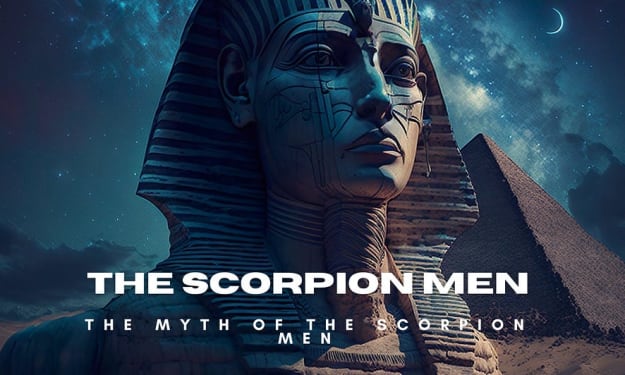
Myth and Reality?
Myth and Reality? Scorpions have captivated the human imagination since immemorial with their enigmatic nature and potent venom. These creatures hold a unique place in Egypt, symbolizing the culture’s divine and demonic aspects. This article delves into the intriguing myth and reality of the scorpion men in Egypt, mythical beings believed to be half-human, half-scorpion, guarding the gates of the afterlife.
By The Secret History Of The World2 years ago in History