Analysis
The First World War: The War That Changed the World
Introduction The First World War, also known as the Great War, was one of the most devastating and transformative conflicts in human history. Lasting from 1914 to 1918, it involved over 30 nations and led to the deaths of more than 16 million people, with millions more wounded. It was the first global war, fought not just in Europe but across colonies in Africa, Asia, and the seas.
By ankesh kushwahabout a year ago in History
An Introduction to Western Philosophy
Western philosophy is a vast and evolving tradition that explores some of the most fundamental questions about human existence, knowledge, morality, and the nature of reality. Rooted in the ancient civilizations of Greece and Rome, Western philosophy has shaped the intellectual and cultural development of the Western world for over two millennia. Its legacy continues to influence modern thought in ethics, politics, science, and art.
By Soumyadip Boseabout a year ago in History
The Kawasaki Ninja H2R: The Most Powerful Motorbike in the World
In the realm of high-performance motorcycles, few names evoke as much awe and admiration as the Kawasaki Ninja H2R. The H2R is more than just a motorcycle; it is a statement made by a legacy of innovation, engineering excellence, and a never-ending pursuit of speed. Touted as the most powerful production motorcycle in the world, the H2R stands in a class of its own, blending aerospace technology, track-focused design, and jaw-dropping power into a machine that defies convention.
By Salequzzamanabout a year ago in History
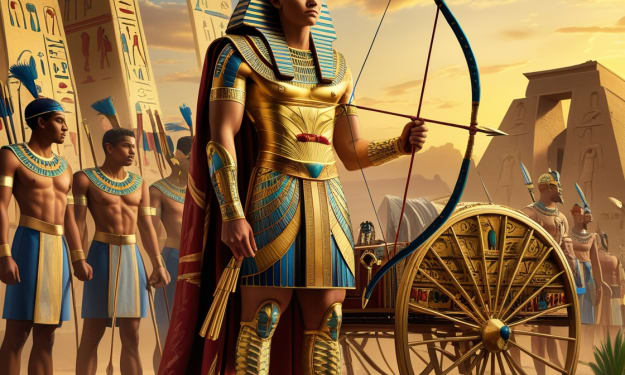
The Military Strategy of Ramses II: Sovereign of Propaganda and Authority. AI-Generated.
Introduction: Egypt’s Living Deity of Warfare Ramses II governed Egypt for 66 years (1279–1213 BCE), during which he directed numerous military operations, supervised monumental construction projects, and fostered an image of divine sovereignty. Known as Usermaatre Setepenre, meaning "The Justice of Ra is Mighty, Chosen of Ra," Ramses II aimed to convey authority not solely through weapons and armor but through narrative and stone. His military strategy was twofold: to assert Egyptian supremacy through military ventures, and to solidify his legacy through propaganda and monumentality. This dual mechanism contributed to securing Egypt’s borders and projecting a sense of invulnerability that endured for centuries. The Hittite Menace and the Path to Kadesh One of the most renowned military occurrences during Ramses II’s reign was the Battle of Kadesh, fought circa 1274 BCE against the Hittite Empire. At that time, the Hittites, located in Anatolia, emerged as the principal adversaries of Egypt for dominance over the Levant, particularly Syria and Canaan. Ramses II initiated an ambitious campaign northwards with four divisions: Amun, Ra, Ptah, and Set. He personally commanded the Amun division, hastening to the city of Kadesh on the Orontes River. However, his urgency nearly resulted in catastrophe. Strategic Deception at Kadesh Ramses II fell prey to a Hittite stratagem. Two captured spies provided misleading intelligence, deceiving him into thinking that the Hittite forces were distant. In actuality, they had already traversed the river and were ready to ambush the Egyptian encampment. The Hittites executed an abrupt attack on the Ra division and overwhelmed much of Ramses’ troops. Encircled and nearly defeated, Ramses reportedly fought valiantly, rallying his soldiers and personally directing counterassaults from his chariot. Reinforcements from the Ne’arin (potentially mercenaries or allied forces) arrived just in time to alter the course of battle. Although the confrontation culminated in a stalemate, Ramses declared it a significant victory, underscoring his valor and divine endorsement. Propaganda as an Instrument of Warfare What distinguishes Ramses’ military strategy is his utilization of propaganda as a tactical instrument. Following the Battle of Kadesh, he commissioned vivid inscriptions of the encounter in temples throughout Egypt, including: The Ramesseum Abu Simbel Luxor Temple Karnak Temple These portrayals, recognized as the Poem and Bulletin of Kadesh, dramatized Ramses’ bravery and the alleged defeat of the Hittites. The magnitude and recurrence of this imagery served to manipulate the narrative, enhancing national morale and intimidating Egypt’s adversaries. This constituted psychological warfaretriumph through narrativeensuring that even a stalemate was recalled as celestial victory. Warfare in Nubia and Libya Beyond the Levant, Ramses II executed successful military operations in Nubia, reaffirming dominance over the southern regions and guaranteeing access to gold resources and trade pathways. Inscriptions from the area detail rapid and overwhelming successes against insurgent tribes. To the west, Ramses confronted advances from Libyan tribes. These military operations were predominantly defensive, aimed at securing Egypt’s western borders. Ramses’ approach in this context involved bolstering defenses, constructing watchtowers, and conducting military displays to discourage further hostilities. The First Peace Treaty in History Following the unresolved result at Kadesh, Ramses II engaged in diplomatic efforts with the Hittites. Circa 1258 BCE, he ratified a peace agreement with Hattusili III, monarch of the Hittites. Identified as the Treaty of Kadesh, it stands as the oldest documented international peace accord and signifies a calculated effort to cease hostilities while concentrating on domestic advancement. Key provisions included: Mutual acknowledgment of borders Commitment not to shelter each other's foes Military partnership in the event of external invasion This treaty permitted Ramses to reallocate assets toward significant construction and domestic stability while preserving a balance of power within the region. Military Reforms and Chariotry Ramses II made substantial investments in the chariot division, improving both the agility and firepower of Egypt’s mobile forces. Chariots accommodated two personnela driver and an archerand were vital in combat across desert and plains. Ramses also elevated training protocols, logistics frameworks, and military hierarchy, leveraging insights from past confrontations. His military consisted of a mixture of indigenous Egyptians, mercenaries, and allied forces, providing versatility and capability across varied terrains. The Power of Monuments and Memory Ramses’ martial strategy cannot be dissociated from his monumental construction endeavors. Structures like Abu Simbel, hewn from the cliffs of Nubia, not only venerated the deities but also instilled fear in Egypt’s southern adversaries. His colossal statues, martial depictions, and inscriptions served as cautions, reminding both locals and outsiders of Egypt’s power. Abu Simbel, specifically, faced southa quiet sentinel against Nubian insurrection. Conclusion: The Eternal Warrior Ramses II excelled not only in warfare but also in the mastery of public perception. His military approach was a synthesis of: Definitive military operations (as evidenced in Nubia and Libya), Bold leadership (as observed in Kadesh), Management of propaganda, and Strategic diplomacy. His reign ushered in relative tranquility, territorial security, and a legacy that eclipsed many more significant victories. By crafting his remembrancethrough monumental carvings, temples, and treatiesRamses II guaranteed his immortality as Egypt’s preeminent warrior pharaoh.
By Say the truth about a year ago in History
Thutmose III: The Warrior Pharaoh Who Forged Egypt’s Empire
The Military Acumen of Thutmose III: Egypt’s Warrior Sovereign Frequently dubbed the "Napoleon of Ancient Egypt," Thutmose III elevated Egypt from a regional kingdom to a significant empire through a sequence of audacious, ingenious, and strategically synchronized military initiatives. This paper examines how Thutmose III’s combat strategies, battlefield advancements, and psychological tactics facilitated his conquest of territories from Nubia to Syria, solidifying Egypt's status as the preeminent authority in the ancient Near East. Introduction: The Ascendance of a Warrior Monarch Thutmose III, the sixth monarch of Egypt’s 18th Dynasty, ruled from approximately 1479 to 1425 BCE. Although the initial years of his reign were under the governance of his stepmother and aunt, Queen Hatshepsut, Thutmose would later rise to prominence as one of Egypt’s most esteemed military commanders. Throughout his nearly 54-year rule, he initiated at least 17 military operations, broadening Egypt's influence further than ever before. However, Thutmose III was not solely a conquerorhe was a strategist, organizer, and tactician. His achievements were founded not only on raw power but also on the astute arrangement of logistics, diplomacy, and battlefield psychology. The Megiddo Campaign: A Masterclass in Strategy The inaugural and most renowned of Thutmose III’s campaigns was the Battle of Megiddo (circa 1457 BCE), a crucial encounter against a coalition of insurgent Canaanite princes led by the monarch of Kadesh. This conflict established the course for his military trajectory and exemplified his strategic ingenuity. Confronted with three potential pathways to Megiddotwo secure and one perilousThutmose opted for the unforeseen, risky central route through Aruna, catching the adversary off guard. It was a calculated risk that proved beneficial: his forces arrived at the plains of Megiddo rapidly and without opposition, granting them a favorable position. The engagement itself was a tactical achievement. Thutmose arranged his archers and infantry in a traditional pincer maneuver, defeating the Canaanite troops and compelling them to retreat into the city. Nevertheless, the Egyptian forces, distracted by looting, were unable to promptly seize Megiddo. Consequently, the city withstood for several months before capitulating. The triumph at Megiddo was not merely militaryit was also psychological. Thutmose’s audacity and rapidity fractured the coalition’s cohesion and reaffirmed Egypt’s supremacy in the Levant. Logistics and Military Preparation One of Thutmose III’s principal advantages was his grasp of logistics. He ensured that Egypt’s campaigns were underpinned by adequately supplied bases and supply lines extending deep into enemy territory. His scribes diligently documented troop movements, supplies, and terrain conditions. His operations were seasonal and synchronized, often initiated in the spring following the annual Nile inundation. He constructed military roads, supply depots, and fortified waystations, enabling his forces to function effectively across expansive distancesfrom Nubia in the south to the Euphrates in the north. Naval Supremacy and the Utilization of the Nile Thutmose III also recognized the tactical benefit of controlling waterways. He utilized the Nile River as a military thoroughfare, facilitating swift movement of soldiers, chariots, and provisions. His capability to quickly deploy forces played a crucial role in the rapid quelling of insurrections and the prevention of rebellion.
By Say the truth about a year ago in History
Tutankhamun and the Military Heritage of a Young Sovereign
Introduction: The Youth Behind the Mask Tutankhamun, frequently referred to as the "Boy King," ascended the Egyptian throne at approximately nine years of age and governed from around 1332 to 1323 BCE during the 18th Dynasty. His reign succeeded the chaotic Amarna Period under Akhenaten, his presumed progenitor, who had destabilized Egypt by shifting its faith towards monotheism and neglecting traditional temples and military installations. Although Tutankhamun passed away at about 18 and left behind minimal written accounts of significant victories, his burial relics and restoration initiatives imply a ruler devoted to reconstructing Egypt’s military strength and reclaiming its previous authority. His warfare strategyalbeit never put to the test in significant military campaignsdemonstrated a return to traditional methodologies, military readiness, and prudent diplomacy. Military Environment Post-Amarna The state Tutankhamun inherited was substantially weakened. Akhenaten had concentrated primarily on religious reforms, thereby neglecting Egypt’s empire, especially its influence in Canaan and Syria, where vassal states were imperiled by the Hittites, Mitanni, and local insurgent factions. Egyptian garrisons were diminished, and numerous loyal governors sent urgent appeals to the Pharaohfrequently disregarded during Akhenaten’s rule. Tutankhamun’s reign indicated a return to orthodoxy. One of his initial actions was altering his name from Tutankhaten (“Living Image of Aten”) to Tutankhamun (“Living Image of Amun”), signaling a restoration of customary religious and political order. That transition included a focus on Egypt’s military institutions. The Influence of Horemheb and Ay Due to Tutankhamun’s youth, much of his reign was overseen by influential officials: Horemheb, an experienced military leader, and Ay, a high-ranking court figure who would subsequently become Pharaoh. Both individuals played pivotal roles in reconstructing Egypt’s military framework. Horemheb’s inscriptions, especially those at his Saqqara tomb, imply that during Tutankhamun’s reign, Egypt began to reestablish order in its northern regions. These measures included: Rebuilding garrisons and border fortifications. Sending messengers and forces to restless vassals. Strengthening alliances with buffer states to impede Hittite expansion. Military Symbolism in Tutankhamun’s Tomb Although Tutankhamun’s tomb contained no documentation of active military engagements, it was replete with military-themed artifacts. These items reveal both an ideal of kingship and a potential intention for future warfare had he lived longer. Some notable artifacts include: Chariots: Several full-sized ceremonial chariots were discovered, suggesting royal interest in mobility and combat. Bows and arrows: These weapons, some inscribed with the names of adversaries such as the “Asiatics” and “Nubians,” indicate a symbolic assertion of authority. Armor and shields: Elegantly crafted with gold and semi-precious stones, these items represented Tutankhamun as a warrior-pharaoh. This exhibition of military insignia was not merely ceremonialit conveyed a political statement. It affirmed that the youthful monarch, despite never leading troops in combat, was a revitalizer of Egypt’s military legacy. Foreign Affairs and Warfare through Diplomacy Correspondence from the Amarna collectionalthough predating his ruleestablished the backdrop for Tutankhamun’s diplomatic landscape. Following the disregard for foreign allies during Akhenaten’s reign, Egypt confronted escalating threats from Hittite incursions, particularly into Syria. Although no significant Egyptian offensives are documented during Tutankhamun’s rule, some academics propose that diplomatic missions were dispatched to restore influence. The revival of temples and deities throughout Egypt also aided in regaining loyalty among vassals and priestly classescritical sources for military conscription. Certain historians speculate that minor military engagements might have transpired in Nubia or the southern Levant, as indications of Egyptian endeavors in those areas emerged during his administration, although not definitively associated with Tutankhamun himself. An Untimely Demise and Military Aspirations Unfulfilled Tutankhamun passed away at approximately 18 years of age, likely due to a combination of health complications, including a fractured leg and genetic disorders. His premature death curtailed any long-term military objectives, leaving Egypt’s complete restoration to his successors. Horemheb, who ultimately ascended to the throne following Ay, would realize many of the military reforms and initiatives commenced during Tutankhamun’s rule. These encompassed assertive actions in the Levant and a reestablishment of Egypt’s military supremacy. Conclusion: The Legacy of a Young Revitalizer Though he never spearheaded a conflict or directly commanded forces, Tutankhamun’s reign represented a pivotal moment in Egypt’s military and political rejuvenation. His approachimplemented through trusted generalscentered on: Revitalizing military infrastructure after years of oversight. Reasserting symbolic supremacy through insignia and titles. Diplomatic stabilization of tumultuous regions. His brief governance laid the groundwork for Egypt’s recuperation, and his militaristic burial chamber unveils a vision of kingship steeped in warrior tradition. While he may not have engaged in battles, Tutankhamun rekindled Egypt’s martial spirit, ensuring that the pharaoh was once again regarded as both priest and warriorguardian of the land and upholder of order.
By Say the truth about a year ago in History
“From Nothing to Everything: The Mysterious Birth of the Universe”
The Birth of the Universe: A Journey from Nothing to Everything The question of how the universe came into existence has captivated the minds of philosophers, scientists, and theologians for centuries. From the ancient myths of creation to the modern discoveries of cosmology, the origins of the cosmos remain one of humanity’s deepest inquiries. In this article, we will explore the fascinating story of the universe's birth through both scientific and philosophical lenses, from the Big Bang theory to quantum fluctuations, and even touch upon the mystery of what might have existed before everything began.
By ankesh kushwahabout a year ago in History
🏰 The War That Never Was: When Netherlands Declared War on The Grand Duchy of Luxembourg
Picture it: 1839, two nations in Europe, each with their own quiet little corner of the world. The Netherlands, long established as a sea power and merchant nation, and Luxembourg, a tiny landlocked duchy known more for its picturesque landscapes than for any military ambitions. Both nations were embroiled in the political games of European powers, but in a time before the horrors of the great wars of the 20th century, they were far from the front lines of history. Or so they thought.
By History Seekerabout a year ago in History
🐱 Operation Acoustic Kitty: When the CIA Tried to Spy with a Cat
🎬 Act I: Paws, Wires, and Paranoia The 1960s. The Cold War is in full swing. On one side: the Soviet Union, brooding behind its Iron Curtain, muttering in Cyrillic. On the other: the United States, chain-smoking, throwing money at everything that might give it an edge - from rockets to invisibility cloaks to psychics reading enemy minds through goat photos. (Yes, that happened too.)
By History Seekerabout a year ago in History
🥒Winston Churchill Once Got Locked Out… in His Birthday Suit
Winston Churchill is often remembered for his growling speeches, his iconic cigar, and his dogged leadership during World War II. But long before he became the bulldog of Britain, Churchill lived a life that was not only dramatic and adventurous — but occasionally downright ridiculous.
By History Seekerabout a year ago in History