Analysis
SNAFU!
I feel like this is old territory, but that it must be reviewed. I recently discovered a podcast hosted by Ed Helms called “SNAFU”. For those of you who are not familiar with this particular acronym, it means “Situation Normal – All Fucked Up”. I believe that it originated with the military, and yet it seemed perfect for the modern civilian age. And then I listened to the very first episode.
By Kendall Defoe about a year ago in History
The Price of the American Dream: What I Learned on July 4th
The Price of the American Dream: What I Learned on July 4th 📖 Story: The Price of the American Dream: What I Learned on July 4th Since I was a child, I had only one wish—to see America on its Independence Day. Not because I wanted money, or to escape, or even for citizenship. It was deeper than that. I grew up in a village where the electricity would often vanish during dinner, where freedom meant not being noticed by the wrong people, and where silence was safer than honesty. But in America… they lit the sky with fireworks to celebrate being free. The First Spark I first saw the fireworks on a cracked YouTube screen in a small internet café. The video was titled: “July 4th Fireworks Over Washington DC – 2020.” The sky exploded with red and gold. People cheered. Kids waved flags. There was music and freedom in the air. That was the moment I made a quiet promise to myself: > “One day, I will see it with my own eyes.” The Journey to a Dream In 2024, I won a U.S. visitor visa through an education program. I had written an essay called “The Meaning of Freedom in My Village.” To my surprise, someone read it—and gave me a chance. On July 2nd, 2024, I stepped off a plane in New York City. My hands shook. And when I saw the American flag waving above JFK airport, I quietly whispered: > “Freedom, I am here.” The Moment I Waited For I stood near the Lincoln Memorial as families gathered, waving flags, smiling. A little girl gave me a mini flag and said, “Happy Fourth!” Then the fireworks began. The sky cracked open. The sound, the colors—it all hit my chest like thunder. My heart swelled with something I had never fully felt before. > Hope. The Shift But then… something changed. A man nearby, in military gear, said into his phone: > “Look at that guy—probably from some terrorist country. Watching us like he’s spying.” He was pointing… at me. People looked at me differently. The girl’s family quietly stepped away. One man gripped his bag tighter. Another whispered something behind me. No one stopped me. But in that moment, I felt completely alone The Realization Back in my room, I sat with the flag the girl gave me and thought deeply. > Freedom is not a show. It’s a struggle. Even in America, people fight—for equality, for justice, for identity. Some welcome you. Some fear you. But everyone is free to choose. That’s what makes it beautiful—and difficult. Thank You, America I stayed two more weeks. I met kind people. Visited libraries and museums. I saw a country that’s not perfect—but still filled with dreamers. > America is not a dream. It is millions of people dreaming differently. Now, when I think of July 4th, I smile—not for the lights, but for what I learned: > Freedom is not given. It is felt. It is fought for. And sometimes feared.
By Ali Asad Ullahabout a year ago in History
"Life, Upgraded: The Surprising Ways Technology Is Changing How We Eat, Work, and Connect"
Life, Upgraded It’s 7:00 AM. Your kitchen lights have already adjusted to a warm sunrise hue. The fridge beeps softly, reminding you that the milk is almost out. As you pour oats into a bowl, your smart speaker reads out your schedule, factoring in real-time traffic and weather updates. You didn’t ask—it just knows. Welcome to the silent revolution. Technology isn't just about big launches or shiny gadgets anymore. It's woven into the fabric of daily life—changing how we eat, work, and stay connected with the world. You might not even notice the shift until you pause to reflect on just how different things feel from just five years ago. --- Smarter Kitchens, Healthier Living Let’s start where most of us begin our day: the kitchen. Today’s kitchens are a hub of intelligence. Smart fridges can suggest recipes based on what's inside them—and warn you when items are close to spoiling. Digital pantry apps sync with local grocery stores, offering automated reordering or healthier swap suggestions. Even ovens can now preheat themselves based on your calendar events or voice commands. But it’s not just about convenience. Tech is nudging us toward healthier habits. Devices like connected water bottles remind you to hydrate. Smart nutrition apps scan your plate with your phone camera and give real-time calorie breakdowns. It’s not about counting every bite, but about making more informed choices—effortlessly. --- The New Workplace: AI Colleagues and Virtual Desks By 9:00 AM, many of us are logging in—not to an office, but to a virtual workspace. The pandemic may have accelerated remote work, but technology has redefined it. AI-powered tools now draft emails, summarize meetings, and even write early versions of reports. While this raised eyebrows at first, it’s quickly becoming the norm. You're not replacing your creativity—you’re enhancing it. Imagine starting a new project and having your AI assistant pull all relevant files, emails, and even competitor research before your coffee finishes brewing. And workspaces themselves? No longer just Zoom calls and Slack messages. Virtual reality (VR) and augmented reality (AR) are creeping into the mainstream, offering immersive boardrooms and collaborative whiteboards that mimic in-person teamwork—even when teams are continents apart. --- Reinventing Connection After work, tech keeps evolving how we connect. Remember when video calls felt clunky or awkward? Now, they’re just part of the social fabric. Smart glasses with real-time translation let travelers converse in different languages without a pause. AR filters on mobile devices can place distant family at your dinner table—or let you play chess with a friend across the globe on a shared virtual board. Social platforms, once a source of digital clutter, are becoming more intentional. Algorithms now surface meaningful updates over viral content (at least on the better platforms), and new “quiet modes” let users set boundaries without disconnecting completely. --- The Invisible Revolution The beauty of today’s tech revolution is that it’s quiet. Seamless. It doesn't demand your attention; it works in the background, anticipating needs, saving time, and improving quality of life. Of course, there are real concerns. Privacy, algorithmic bias, and screen addiction remain serious issues. But awareness is growing, too. Consumers are pushing for transparent AI, ethical data use, and digital wellbeing—and tech companies are slowly responding. --- What’s Next? The next leap might not be a device you buy, but an upgrade to the world around you. Think: smart cities that optimize energy use based on real-time demand, or public transport that adjusts routes dynamically through AI. For individuals, it’s about intention. Choosing which tools to welcome into your life—and which ones to leave at the door. Technology should be a partner, not a puppeteer. --- As you wind down for the evening, your home dims the lights to signal bedtime. Your smartwatch gently buzzes, reminding you to unplug. And your AI journal assistant asks, “Would you like to reflect on today?” It’s not science fiction. It’s Tuesday. Life hasn’t just changed. It’s been upgraded.
By Muhammad Saad about a year ago in History
The Forbidden Books: Secrets Humanity Was Never Meant to Read
The Books That Frighten the World In a world overflowing with information, certain books remain locked away—sealed behind vaults, buried in monasteries, censored by religious authorities, or veiled in mystery. These are not ordinary volumes of philosophy or history. They are texts so controversial, so enigmatic, or so powerful that reading them was once punishable by death. From medieval grimoires and occult manuals to mysterious coded manuscripts and books said to be written with the devil’s hand—these are the forbidden books of history.
By DRE Explainsabout a year ago in History
USA VS IRAN WAR 2025. Content Warning.
In June 2025, the Middle East witnessed a brief but intense conflict between Iran, Israel, and the United States, marking a significant escalation in long-standing regional tensions. The 12-day war, primarily driven by Israeli and U.S. military actions against Iran’s nuclear facilities, reshaped geopolitical dynamics and raised global concerns about the potential for broader conflict. This article provides an overview of the events, key points, and underlying reasons for the confrontation, drawing on recent developments.
By Abubakar Khanabout a year ago in History
The Civilization of the Ottoman Turks: A Legacy of Courtesy, Wisdom, and Deep Spiritual Values
Throughout history, few civilizations have preserved a legacy as refined and spiritually grounded as that of the Ottoman Turks. Emerging from modest beginnings and growing into one of the most powerful empires the world has ever seen, the Ottomans left behind not just tales of conquest, but also rich traditions rooted in manners, respect, and subtle intelligence. Their daily lives, community practices, and hospitality customs paint a portrait of a people who lived with purpose, imbued with values of dignity, humility, and emotional intelligence. Let us journey into the cultural soul of the Ottomans—a civilization where every gesture had meaning, and every action reflected wisdom. --- Hospitality: A Silent Language of the Heart Hospitality in Ottoman culture wasn’t merely about offering food or drink—it was a deeply symbolic interaction, a respectful dialogue between host and guest without words. When a guest arrived at an Ottoman home, they were offered two simple things: a cup of Turkish coffee (qahwa) and a glass of plain water. If the guest reached for the water, the host would immediately understand that the visitor might be hungry, and without asking or embarrassing the guest, they would begin preparing a meal—often their finest, even if they had little themselves. However, if the guest chose coffee, it was understood they were there just for conversation and did not wish to eat, allowing the host to continue the visit in a lighter, more social tone. This silent understanding showcased not only hospitality but also respect for the dignity and unspoken needs of others. --- Floral Symbols: Messages Without Words Ottomans used flowers as a subtle language outside their homes, offering passersby unspoken but powerful messages. A yellow flower placed outside the home signaled that someone in the house was ill. This gentle indicator advised visitors to speak softly, avoid noise, and, if appropriate, come in to inquire about the patient's health. A red flower suggested that there was a young woman of marriageable age in the home. It was a community-based warning to avoid inappropriate or vulgar language near the house. It was also a welcome signal for those who intended to propose marriage—an invitation to knock respectfully. These flower signs reflect the social responsibility and moral boundaries that governed Ottoman neighborhoods. There was no need for confrontation, no boards or notices—civility was coded into aesthetics. --- The Double Door Hammer: Gender Sensitivity Another beautiful and thoughtful tradition was the use of two hammers or knockers on the doors of Ottoman homes: One was larger and heavier, meant to be used by men. The other was smaller and lighter, designated for women. When a man knocked using the large hammer, a male member of the household would come to answer. If the smaller hammer was used, it signaled a female visitor, prompting a woman from the household to attend the door. Such practices weren’t just cultural quirks—they showed a profound respect for modesty, boundaries, and gender ethics in the public and private spheres of life. --- Charity with Dignity: Anonymous Giving Perhaps one of the most awe-inspiring aspects of Ottoman culture was the way they handled charity. Giving was not for show, recognition, or public praise—it was quiet, respectful, and anonymous. Wealthy individuals would go to local vendors—such as vegetable sellers or grocers—and open anonymous tabs (accounts). These tabs were meant to cover the costs of food or supplies for any poor person who came in need. When a poor person arrived to buy something, the shopkeeper would provide the items free of charge, telling them nothing of the benefactor. The giver never met the receiver. The dignity of the poor was preserved, and the reward was left entirely to Allah. Later, the wealthy individual would return quietly and clear the tab, expecting nothing but the satisfaction of helping a fellow human being. This practice is a testament to the Ottoman spirit of silent service—a value deeply embedded in Islamic teachings. --- Adab with the Prophet (PBUH): A Unique Expression of Love The Ottomans were not just polite—they were spiritually refined. One such example is how they treated the age of the Prophet Muhammad ﷺ. The Prophet (peace be upon him) passed away at the age of 63. Among devout Ottoman Turks, if an elderly person had surpassed this age and was asked how old they were, they would not say “I am 65 or 70.” Instead, they would reply: > “Son, I have crossed the limit.” This was not out of superstition but out of deep reverence and spiritual love for the Prophet ﷺ. They felt it inappropriate or audacious to say they had lived longer than the Messenger of Allah. Such subtleties reveal the depth of Ottoman adab (etiquette)—a love that shaped their language, actions, and worldview. --- The Reason Behind Ottoman Decline: A Loss of Values For centuries, the Ottoman Empire stood as a beacon of Islamic civilization, a model of balanced power, religious freedom, intellectual progress, and moral living. So what led to its fall? According to many historians and cultural observers, the empire did not collapse due to lack of might but due to internal betrayal, loss of spiritual values, and Western conspiracies that targeted the Ottoman identity. As their traditions of generosity, modesty, and spiritual discipline eroded, so did the strength of their unity. Greed, political manipulation, and abandonment of their own cultural wisdom opened the doors for the empire’s eventual fragmentation. --- What We Can Learn Today The lessons from Ottoman civilization are not confined to history books. They remain relevant today in a world that is often rushing, indifferent, and transactional. When we offer a guest water or tea, we can remember their method of listening with the heart, not the ears. When we give in charity, let us give with dignity, not display. When we speak of modesty and social respect, we can adopt symbolic, gentle ways rather than aggressive or legalistic ones. When we reflect on our Prophet ﷺ, we can ask whether we love him with such sensitivity and manners as the Ottomans did. --- Conclusion: A Civilization Built on Wisdom The Ottoman Turks left behind a civilizational blueprint where values were lived, not just preached. Their culture reminds us that true greatness lies not only in power or architecture, but in the way a society treats its guests, respects its women, protects its poor, and honors its prophets. In an age where modern life often celebrates speed, fame, and self-promotion, the Ottoman legacy calls us back to simplicity, meaning, and sincerity—a beautiful tale of literature, love, and light that the world should never forget.
By Ikram Ullahabout a year ago in History
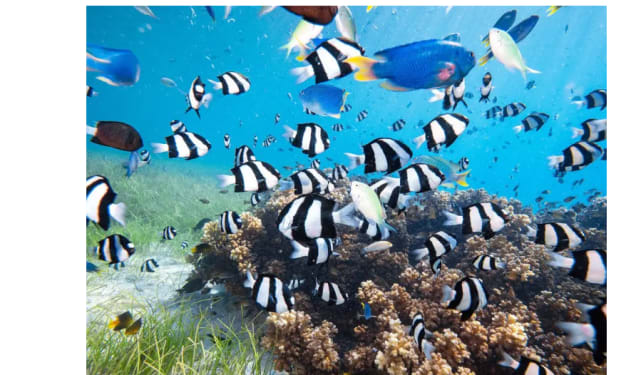
Fossils show how the Caribbean reef ecosystems were drastically altered by humans.
We frequently envision dinosaurs when we think of fossils. However, reefs can also have a long history. In these environments, tiny fish bones and shark scales also turn into fossils, subtly telling the tale of past seas.
By Francis Damiabout a year ago in History
The Trump Effect: A Journey Through Controversy, Power, and Legacy
In the heart of New York City, among towering skyscrapers and flashing billboards, one name has echoed louder than most: Donald J. Trump. Known initially for his vast real estate empire, Trump built a brand that came to symbolize luxury, wealth, and ambition. Yet, his most audacious venture was not another skyscraper or reality TV show — it was his unexpected leap into the political arena.
By NIAZ Muhammadabout a year ago in History
Mastering Marketing in the AI Era: The Must-Know Concepts Every Modern Student Should Learn
In a world of 3-second attention spans and infinite scrolls, teaching marketing has transformed from theory-driven lectures to dynamic, digital-first learning. If you're a student, teacher, or even a business owner trying to grasp the essentials — this guide breaks it all down.
By Waqas Ahmadabout a year ago in History
Pakistan: Born from a Dream. Content Warning.
In the summer of 1947, the world witnessed the birth of a new nation—Pakistan. It was not just the drawing of borders or the shifting of power. It was the fulfillment of a dream that had taken root decades earlier, in the hearts of millions who longed for a homeland where they could live in freedom, dignity, and peace. Pakistan was not born easily. It emerged from a storm of struggle, sacrifice, and vision—etched into history by courage and conviction.
By Abdullah khanabout a year ago in History
The Beautiful Game: A Journey Through Football History
Football, or soccer as it's known in some corners of the world, is more than just a game. It is a global language, a passion shared by billions, and a cultural phenomenon that transcends borders, languages, and ideologies. But how did this simple game with a ball and two goals become the most beloved sport on Earth?
By Abdullah khanabout a year ago in History