
Six Key Events of World War I
Remembering the Most Crucial Events of World War I

The First World War, which began in 1914, was sparked by the assassination of Archduke Ferdinand. Then the German Empire and its allies declared war on the Triple Entente (Britain, France, and Russia). During the period, there were some notable battles and events that tipped the balance in the Entente's favor, so that by 1918, they would emerge victorious.
Battle of the Marne
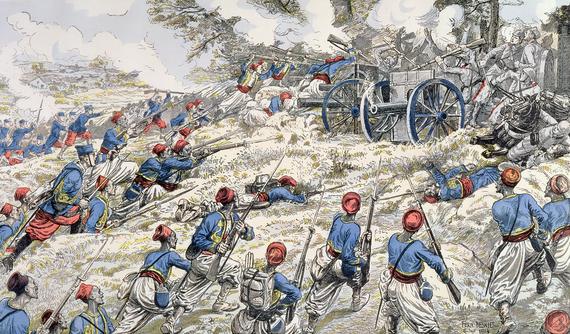
In 1914, the German army advanced swiftly into France. Their target destination was the occupation of Paris, and during the advance, they reached the Marne. However, it was at the Battle of the Marne that the British and French armies regrouped. 6,000 French reinforcements were quickly rushed to the front lines to halt the Germans.
When the French and British countered, the Germans were somewhat flabbergasted. Their plan never anticipated a French counter, and when that came, the orders were given for the German army to withdraw to the Aisne River. There, they began to dig in to establish trenches. Some have suggested that their withdrawal at the Marne all but ensured the defeat of the German Empire, although the Germans were far from defeated in 1914.
Battle of Jutland
There weren't many naval battles in the war, and the Battle of Jutland was the largest. In 1916, much of the Imperial German Navy sailed out from port to wipe out Britain's Grand Fleet and break the Royal Navy's economic blockade. When the Admiralty was informed, via intercepted German signals, the orders were given for the Grand Fleet to sail from their base at Scapa Flow. They sailed past German U-boats, which were supposed to intercept Royal Navy ships.
The fleets met off the coast of Jutland. During the battle that followed, the Royal Navy lost approximately 117,000 tons of shipping. In comparison, the Germans lost 63,000 tons in the engagement. As they had the better of the battle, it was celebrated as a victory, but the Royal Navy still maintained its German blockade until the end of the war. Ships that had been lost were soon replaced, and others were patched up and repaired.
German U-boat Campaign 1917
After the Battle of Jutland, the German High Command turned to the U-boats to defeat Britain and thus its blockade. German U-boats had been deployed earlier in the war, targeting British merchant shipping, although the sinking of the Lusitania ocean liner in 1915 ensured that their operations were scaled back. However, as the war dragged on, the Germans resumed unrestricted submarine warfare within British waters.
The German U-boat Campaign of 1917 targeted a much larger number of merchant ships. The German High Command expected that Britain would surrender, or at least pull out of the war with an armistice, if they could sink enough of their merchant ship supplies. In the first few months, the campaign was very effective, and Britain lost more supplies then than any other period of the war. But once the Royal Navy began to provide more extensive convoy support for their merchant ships, their losses were gradually reduced.
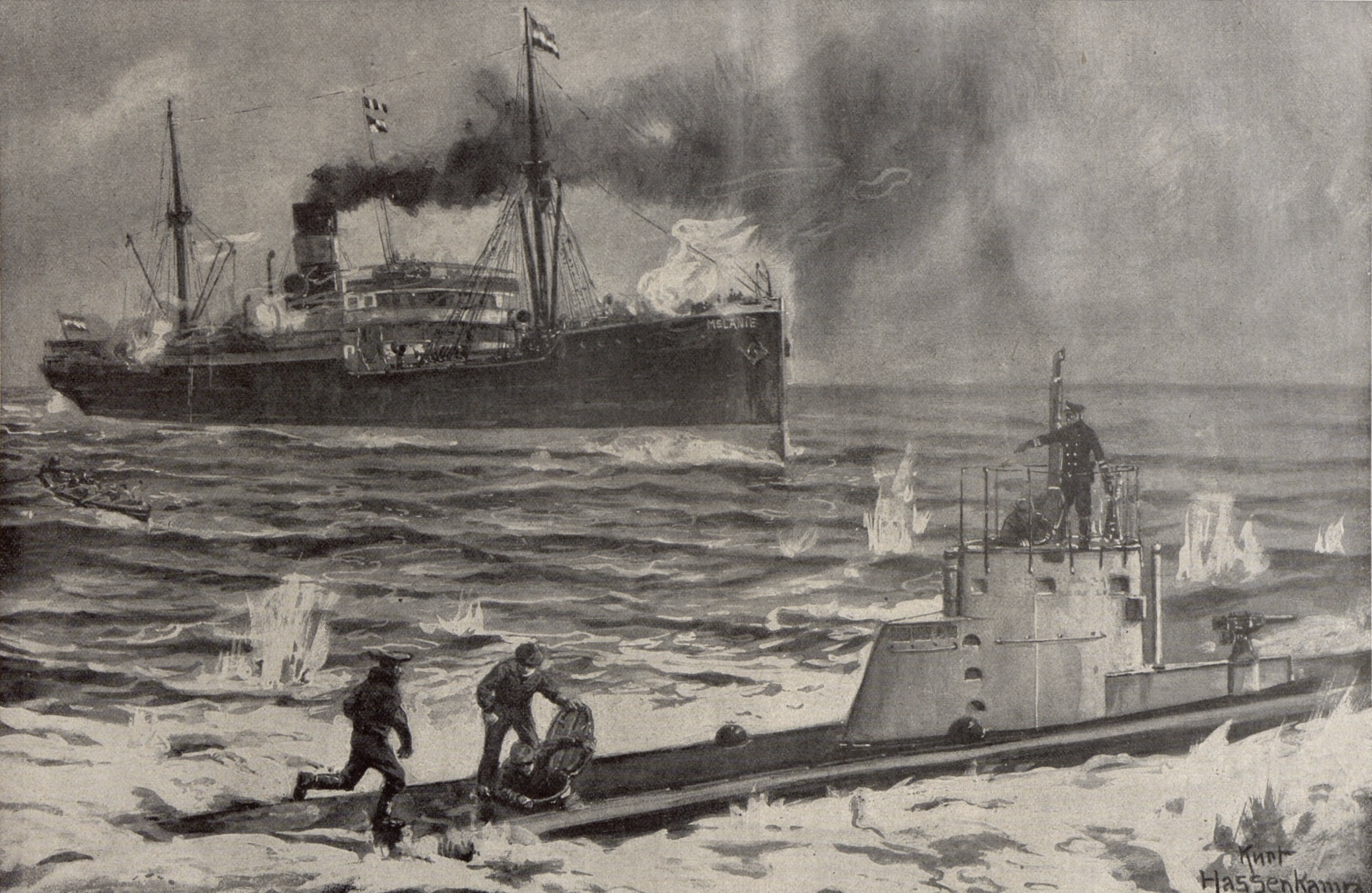
As such, Britain remained in the war. The campaign also ensured that the United States joined the fray in April when they declared a state of war with the German Empire. Now the Entente had an entirely new ally that could potentially provide millions of troops to reinforce their lines in France.
October Revolution
The October Revolution, in which Lenin and the Bolshevik Party seized the Winter Palace, ensured that Russia withdrew from the war. Lenin had promised to pull Russia out of it, with an armistice that was duly accepted at Brest-Litovsk. At the Treaty of Brest-Litovsk, the Russians surrendered considerable territory in the east, such as Russian Poland and parts of the Baltic.
Then the Germans reinforced their lines in France with divisions from the east. With reinforcements, the German army began a new and effective advance which once again pushed the Entente back to the Marne. But U.S. troops were arriving in France more quickly than Ludendorff and co had bargained for, and with their own supply lines stretched, the German army was again halted around the Marne. The Germans did not have a sufficient numerical advantage to exploit the initial breakthroughs.
Battle of Amiens
The Entente had averted defeat in France, and thereafter made plans for their own advances that would bring a victory for the Entente. At the Battle of Amiens, a French, British, and U.S. Army coalition began to advance. It was here that they combined tanks, aircraft, cavalry, and infantry to shatter the German lines around the city. The advance came entirely out of the blue for the Germans, who had little time to organize any effective counters. As their lines crumbled, the Germans retreated, and a large number surrendered during the battle.
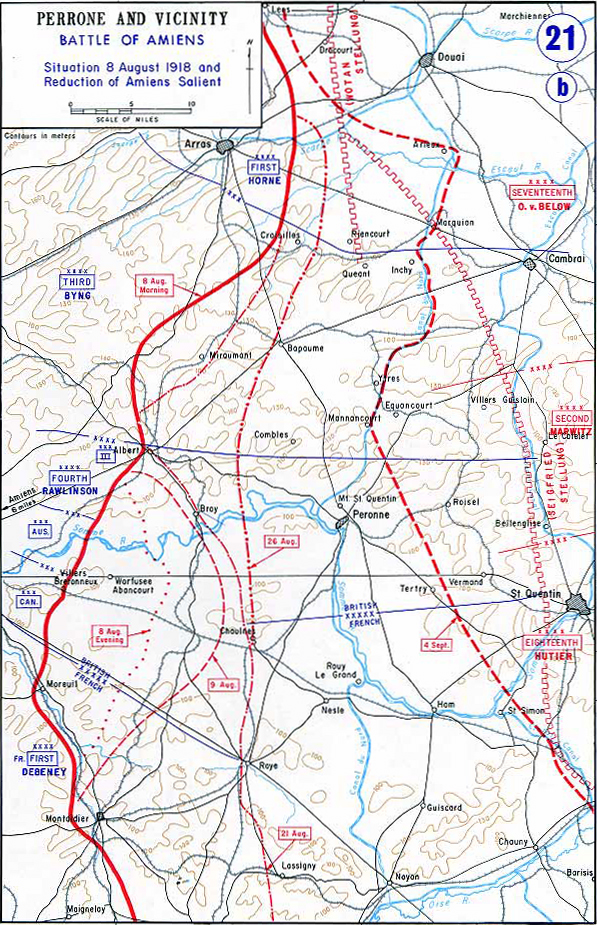
For the first time, the German army was in full retreat in France, and the Entente coalition would sustain its advances for the remainder of 1918. That advance pushed the Germans back beyond the Hindenburg Line. As such, the Battle of Amiens was undoubtedly one of the Entente's key victories in the war.
November Armistice
With German lines collapsing in France, the German High Command urged the kaiser to begin peace talks with the Entente. However, the Entente made it clear that they would not consider an armistice unless Germany's emperor abdicated. In November, a German delegation arrived in France to meet with Foch at his carriage in Compiègne Forest. There, the French made their peace terms fairly clear, and after the kaiser abdicated, the 11th November armistice ended the war.
Then the guns fell silent. At the Paris Peace Conference the Treaty of Versailles was drafted. The surrender of territory on their western and eastern borders, as well as German colonies, considerable reparation requirements, and the substantial reduction of their military were the treaty's primary provisions.
Germany's king left for Holland, whilst Ludendorff maintained that the German army had not been entirely defeated with the mythology of the 'stab in the back.' Such myths further inspired the right-wing parties in Germany after the Weimar Republic socialist coalition accepted the Treaty of Versailles, which few Germans considered a satisfactory postwar armistice.
About the Creator
Matthew A
Matthew is the author of Battles of the Pacific War 1941-1945. Battles of the Pacific War is available on Amazon and Lulu in e-book and paperback formats. Check out the book’s blog at battlesofthepacificwar.blogspot.co.uk.
Enjoyed the story? Support the Creator.
Subscribe for free to receive all their stories in your feed.
Comments
There are no comments for this story
Be the first to respond and start the conversation.