

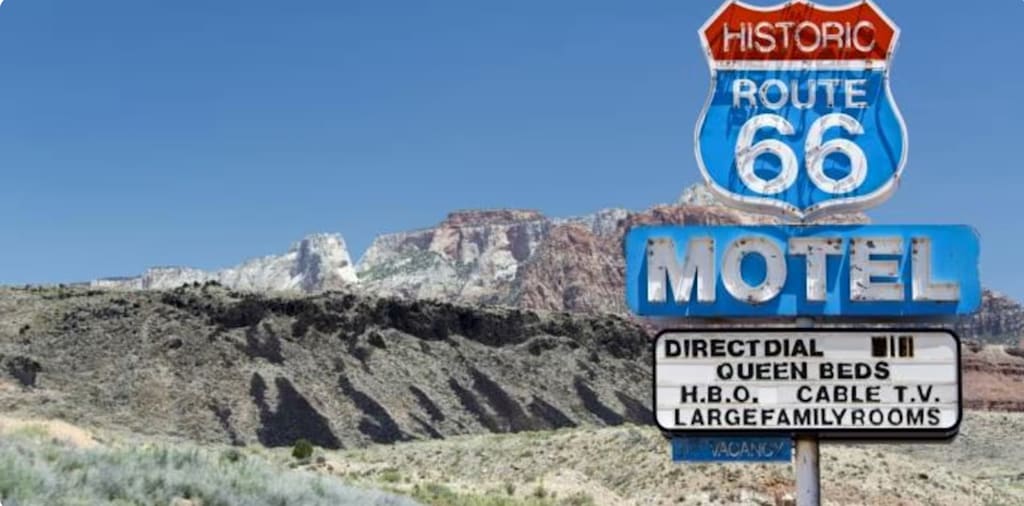
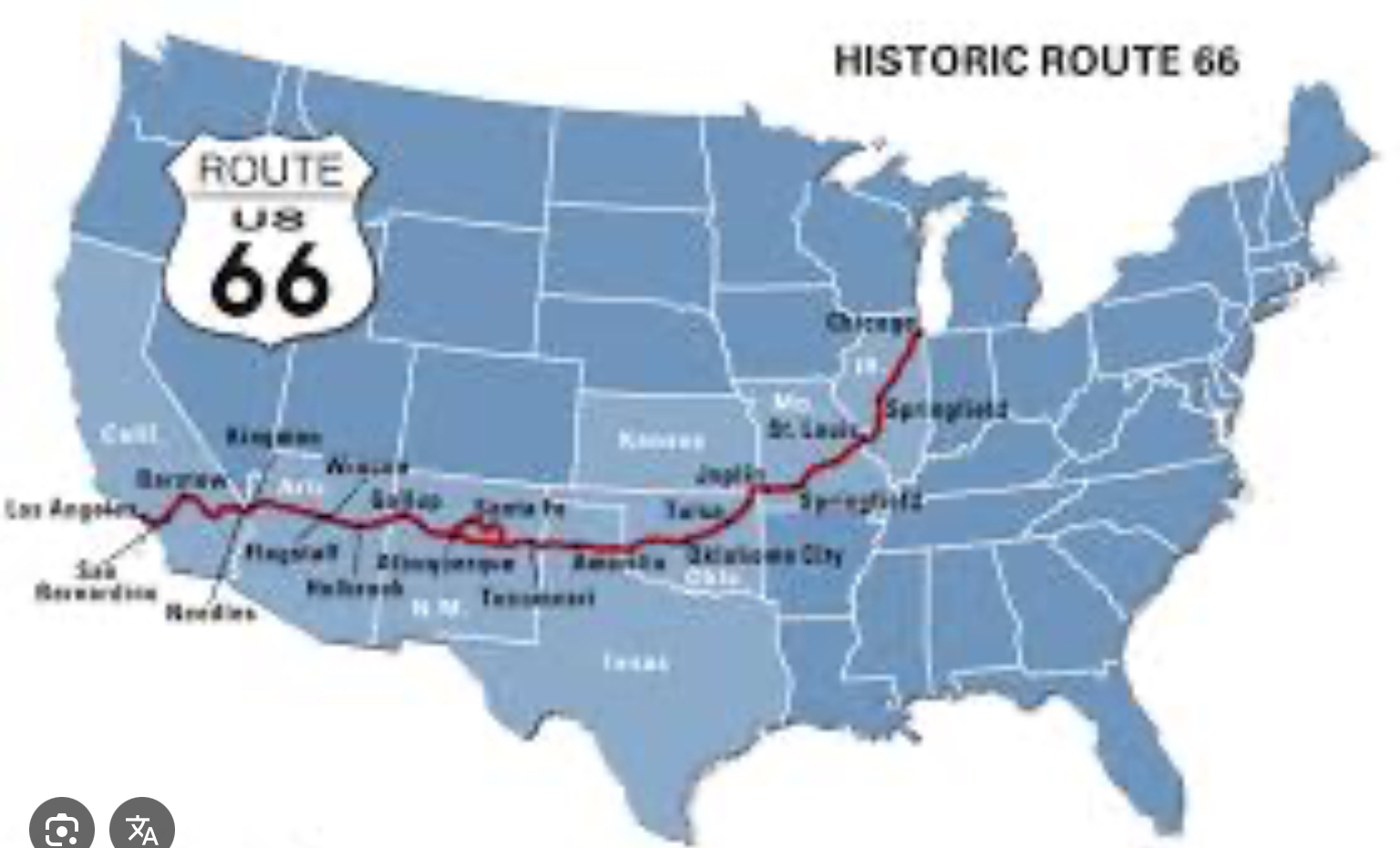
Established in 1926, Route 66 stretched 2,448 miles from Chicago to Santa Monica. Dubbed the "Mother Road", it served as a vital lifeline during the Dust Bowl and World War II. Though decommissioned in 1985, about 85% of the iconic route is still drivable today.Route 66’s history can be traced through four major eras:
1. Birth and Creation (1926–1930s)The Route: Commissioned on November 11, 1926, the highway connected small towns and major urban centers across Illinois, Missouri, Kansas, Oklahoma, Texas, New Mexico, Arizona, and California.Paving: In 1938, it achieved the milestone of becoming the first fully paved highway in the United States.The Mother Road: During the 1930s, it acted as the primary escape route for Dust Bowl migrants seeking a better life in California. The name was cemented in literary history by John Steinbeck's 1939 novel The Grapes of Wrath.
2. Wartime and The Golden Age of Travel (1940s–1950s)WWII Mobilization: The highway was heavily used to transport military personnel and heavy freight to coastal ports in California, fueling the war effort.Road-Trip Culture: After the war, returning soldiers and prosperous families flocked to Route 66 for vacations, cementing the "American Road Trip" culture.The Boom: This tourist influx gave rise to neon-lit motels, Googie-style diners, and even the birthplace of fast-food drive-ins like McDonald's.
3.Decline and Decommissioning (1960s–1985)The Interstates: The passage of the Federal-Aid Highway Act of 1956 authorized the creation of the Interstate Highway System.Bypasses: Faster, multi-lane interstates (like I-40 and I-55) bypassed the winding two-lane sections of Route 66.Decommissioning: As commerce and traffic moved to the newer, faster highways, many roadside businesses failed. Route 66 was officially decommissioned as a federal highway in 1985.
4. Preservation and Revival (1987–Present)Association Efforts: Grassroots movements—spearheaded by groups like the California Historic Route 66 Association and the National Trust for Historic Preservation—began restoring and advocating for the route.Historic Status: Sections of the highway were designated as a "National Scenic Byway," and it remains an enduring symbol of American freedom.Centennial & Beyond: With approximately 85% of the original road still drivable, it continues to attract tourists and road trippers from around the globe.
The Beginning of Route 66
During the summer of 1926, the U.S. Bureau of Public Roads created the first federal highway system, which included designating a network of existing roads connecting Chicago and Santa Monica, California as U.S. Route 66.
“To understand Route 66 you have to go back to the native settlements: the animal trails that were followed by Native Americans, and then the people who followed the Native Americans on trains, stage coaches and other means of transportation,”
Settlers heading westward also used these trails, including the Fort Smith Wagon Road, which began on the Arkansas-Oklahoma border and ended in Santa Fe. Route 66 also ran parallel to railway lines, like the Santa Fe, because railroads “were graded into higher ground to avoid flooding and tended to be on flat, stable terrain,” and ran between established transportation hubs.
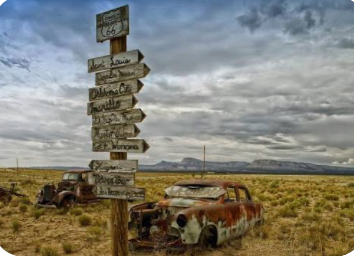
Route 66’s placement along the 35th parallel was key: it wasn’t so far north that snow would be a problem several months of the year, and it wasn’t so far south that the heat would be unbearable in the summer.
“One of the most important initial reasons behind the spread of the development of Route 66 was to have an all-weather highway,”.
The Evolution of Route 66
Though Route 66 is best known for tourism today, that wasn’t the case initially. The roads that made up Route 66 largely catered to people who were "farm-to-market,“ . “They weren't even really travelers, because these roads were very rugged, very rough.” The exception was a trickle of tourists: newly minted motorists venturing out on early road trips. Route 66 really developed during the Dust Bowl in the 1930s, famously documented by John Steinbeck's Grapes of Wrath,”. “That mainly brought people from the east to the west looking for jobs in the emerging industries in California.”
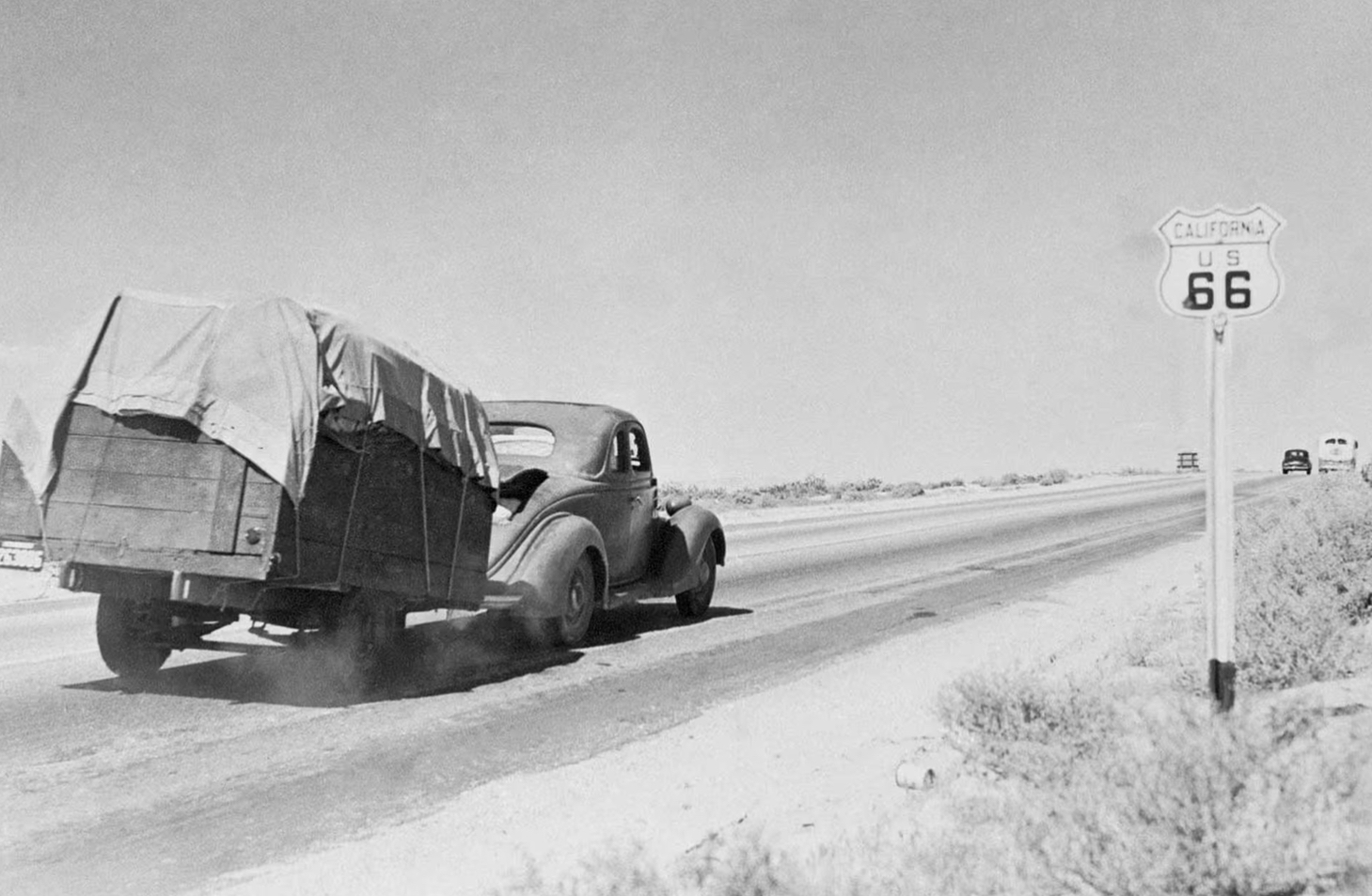
Between 1933 and 1938, laborers improved and maintained Route 66 as part of the New Deal's Civilian Conservation Corps (CCC) and Works Project Administration (WPA) programs. In 1938, Route 66 became the first highway to be completely paved in the United States, according to the Federal Highway Administration.
During World War II, large trucks transported materials, munitions and personnel on Route 66 between ports in California and the Midwest and eastern parts of the country. “Industries in California were sending material east, and Route 66 was bringing workers west,”
Although the truck traffic damaged Route 66, it was repaired in 1945 after the end of the war—preparing the Mother Road for its tourism heyday.
For the first time, Americans were beginning to think about automotive travel on a mass basis,” “This is a period when Americans had vacations, thanks to the boom in manufacturing and unionization drives that helped people earn a decent salary. And they wanted to drive west in their new car on their vacation.”
This was the era of roadside attractions, neon signs and souvenir shops, along with independently owned motels, trailer courts, greasy-spoon diners and gas stations.
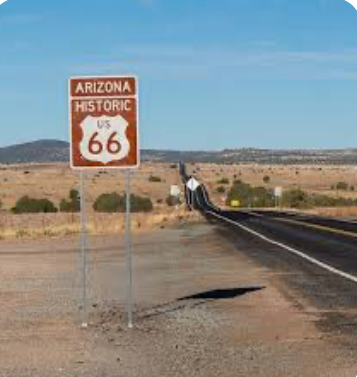
The Interstate Highway System and Route 66
Ultimately, the push for improved roads and more efficient ways of traversing the country that initially benefited Route 66 eventually led to its decline.
When President Eisenhower signed the Federal-Aid Highway Act of 1956—creating a national system of interstate highways—Route 66 was “booming,” “It was a victim of its own success,”
Unlike Route 66, which meandered directly through countless small towns, the new interstate highways were constructed outside of these population centers, with ramps giving drivers access to and from local areas. “The interstate highways were designed by people often far away from the place where they were constructed,”
The goal was traveling long distances in the shortest amount of time possible, without much consideration given to who or what the highway was bypassing or cutting through. “Route 66 rises and falls with the land,” Sonderman explains. “It goes around obstacles, while the interstate just blasts through.”
Stretching west from Oklahoma City through the Texas panhandle, New Mexico, northern Arizona and ending in Barstow, California, Interstate 40 replaced much of Route 66 by 1960. By 1970, Interstate 55 provided a faster way to get from Chicago to St. Louis, while Interstate 44 got drivers from St. Louis to Oklahoma City, according to the Federal Highway Administration.
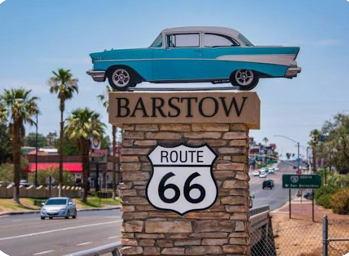
As Sonderman points out, the interstate highways didn’t impact every town on Route 66 at the same time and in the same way.
“It all depended on where the exits were in your town,” he says. “A lot of time, the interstate would come in and all the services would still be located on Route 66, on the main drag through town. So traffic would have to exit to go to hotels, motels, gas stations, all that stuff, especially when the interstate system first went in. It took a while for businesses and services to be built on the interstate.”
The final stretch of the original Route 66—located in Williams, Arizona—was bypassed in October 1984. “People in Williams were so upset about losing Route 66 that they actually took up arms and shot at the bulldozers and machinery creating the interstate to try and dissuade people from building the interstate through their community,” “It was all to no avail.” The following year, Route 66 was officially decommissioned.
The Revitalization of Route 66
Alongside its decommissioning, the 1980s also saw the beginning of the movement to revive Route 66.
“This was when it began to function as a nostalgic road that people were excited to drive because it represented a rededication to an earlier era,” “It also brought foreign tourists en masse, and they’re a big part of those traveling Route 66 today, because this is not a road for America—this is the world's road.”
Today, “a new stream of people” is helping to revitalize Route 66 by opening restaurants, gift shops and other businesses related to the tourism industry,The road is not dead—it just keeps changing.”
About the Creator
Guy lynn
I’m interested in history, space travel and the possibilities, Americana,( where I live now), Africa (Southern Africa, where I was born and raised), and I write about things that interest me ( bead history) and I hope will interest you.
Enjoyed the story? Support the Creator.
Subscribe for free to receive all their stories in your feed.
Comments
There are no comments for this story
Be the first to respond and start the conversation.