
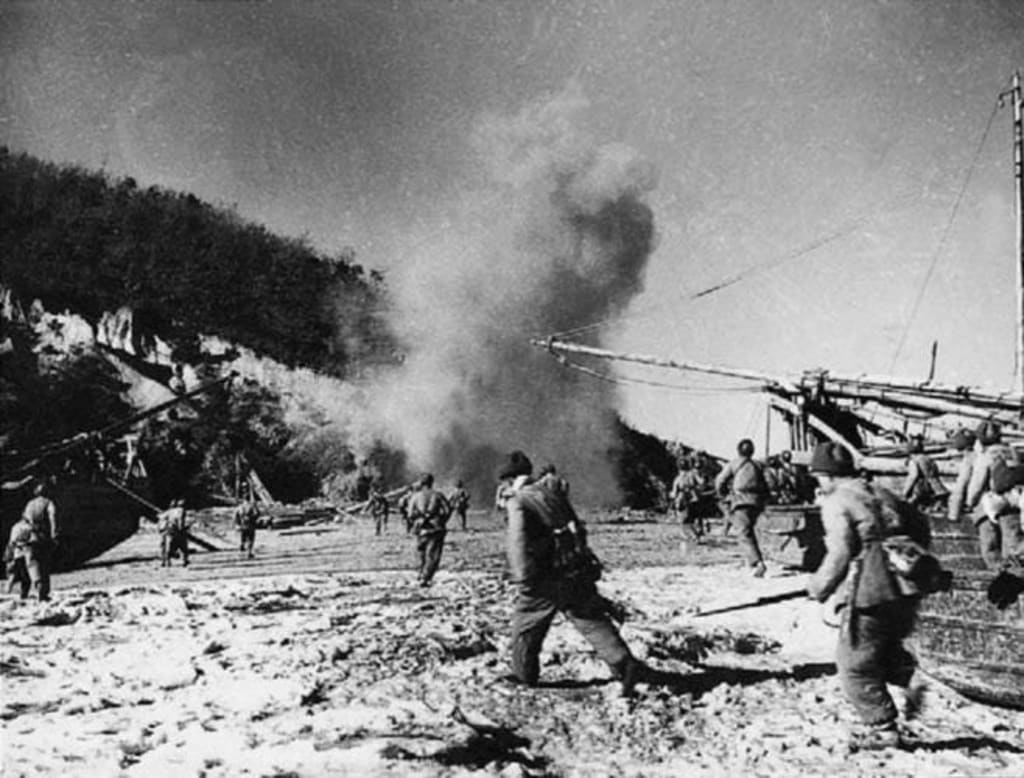
The Korean War, which lasted from 1950–1953, is often referred to as the 'forgotten war'. It is referred to as such because, although a major conflict, the World War that preceded the Korean War overshadows it. In many respects, it was the first real conflict of the Cold War, with both the USSR and the USA heavily involved, along with North Korea, the Republic of South Korea, China, and coalition UN forces.
At Potsdam, it was agreed between the USSR and the USA that Korea would be divided along the lines of the 38th Parallel. This would be a north/south divide of the Korean peninsula between the two, with a communist-friendly government, led by Kim Sung, emerging in the north and the anti-communist Syngman Rhee in the south.
Both Kim and Syngman were intent on uniting Korea under their ideological systems, with border clashes ongoing in 1949–1950 along the Parallel line. While Kim sought Soviet support in 1949 for an invasion of South Korea, he was at first refused by Stalin, who was skeptical about possible US involvement. After an extensive military build-up, the North Koreans had a superior army to the southern forces. After a trip to Moscow in 1950 by Kim, the USSR approved an attack with the provision of payments for Soviet military support.
On June 25, 1950, the North Korean army attacked along the lines of the 38th Parallel. With great success, their 415 thousand troops achieved surprise and forced the South Korean army back into a quick retreat. Outgunned and outnumbered, the southern army could not hold key positions in the south.
Things changed, however, when the US, with UN approval, condemned the invasion by the North and had international support for intervention. Under WW 2 hero MacArthur, the US already had forces in the Pacific that could assist the South Koreans. Initially, the North Koreans continued their advance to the Nakdong River, where the US military stabilized the front.
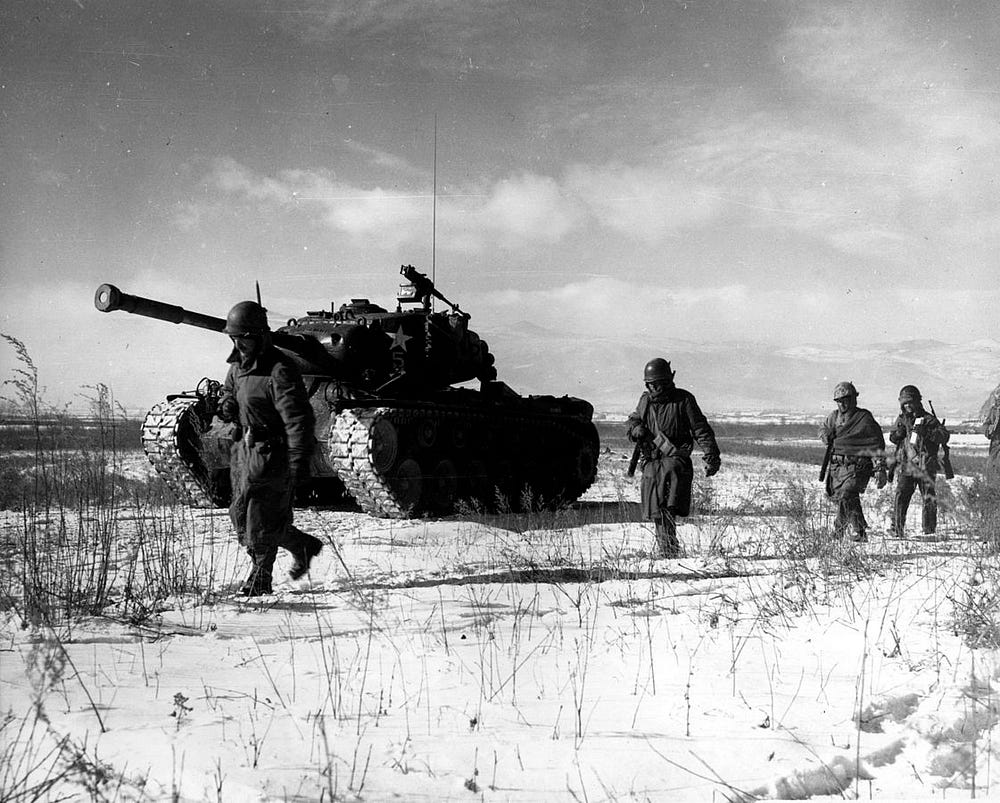
It marked a turning point in the war, for the US/UN reinforcements began to arrive in numbers to the extent that they outnumbered the North Korean army. Alas, a successful counter-offensive was launched at Ichon, and the coalition forces recaptured Seoul, pushing the North Koreans back to the 38th parallel line.
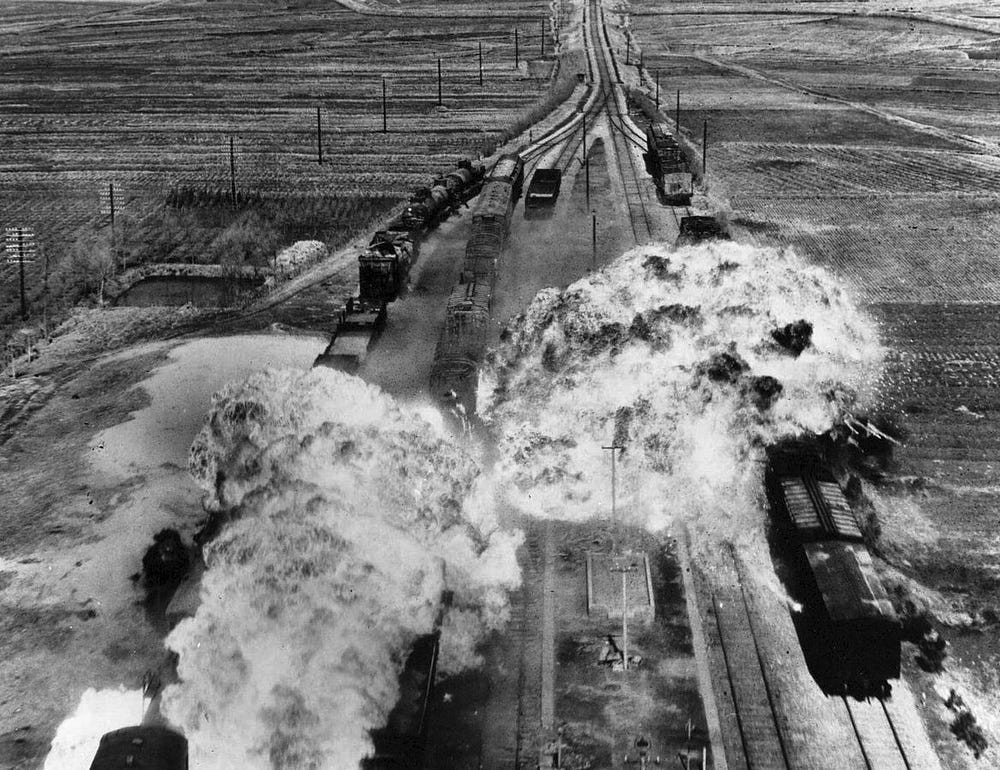
Now, the UN forces began to advance into North Korea in October of 1950. China grew concerned that the UN might continue its offensive into Chinese territory beyond the Yalu River. With some justification, MacArthur believed that spreading the war to China was necessary. President Truman, however, differed on the matter.
The war in Korea was very tense. The Chinese assembled the People's Volunteer Army, which they hoped would be assisted with Soviet support. In November, the Chinese confronted the US armies, pushed them back, and recaptured Seoul. With the coalition on the defensive, the possibility of using nuclear weapons against China was whispered by MacArthur.
The Chinese could not continue their offensive beyond Seoul. In March 1951, MacArthur was able to recapture Seoul once more. The city had lost many of its citizens and was tarnished by war. More significant, however, was that of MacArthur being removed from command in April, with Ridgway as his replacement.
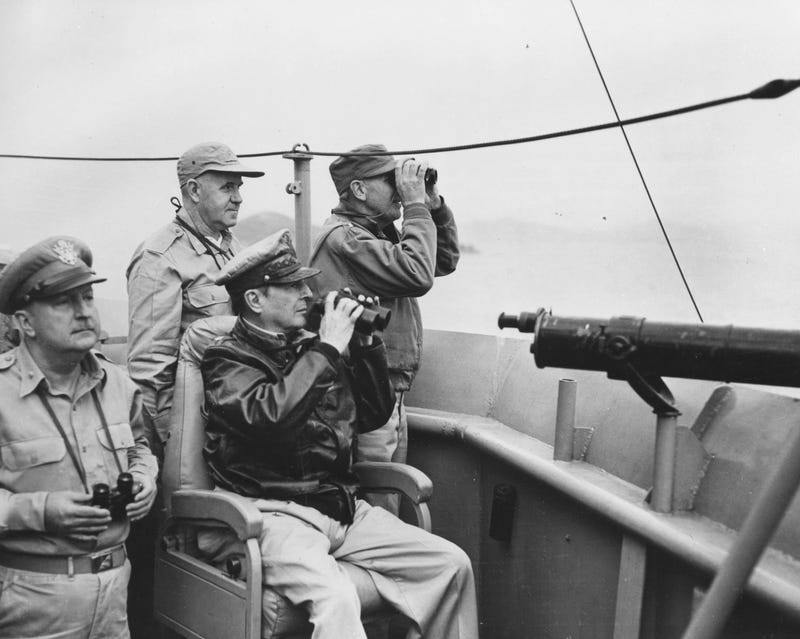
With Ridgway, the coalition steadily advanced back close to the 38th Parallel. Indecisive communist counterattacks followed, and the UN halted the line at Line Kansas, a little north of the Parallel Line.
Alas, by July of 1951, what had been a fast-moving up-and-down conflict was in a state of stalemate. The lengthy peace talks began in earnest for the remainder of the war as fighting continued. In October 1951, the US considered the possibility of using nuclear weapons in Korea with Operation Hudson Harbour.
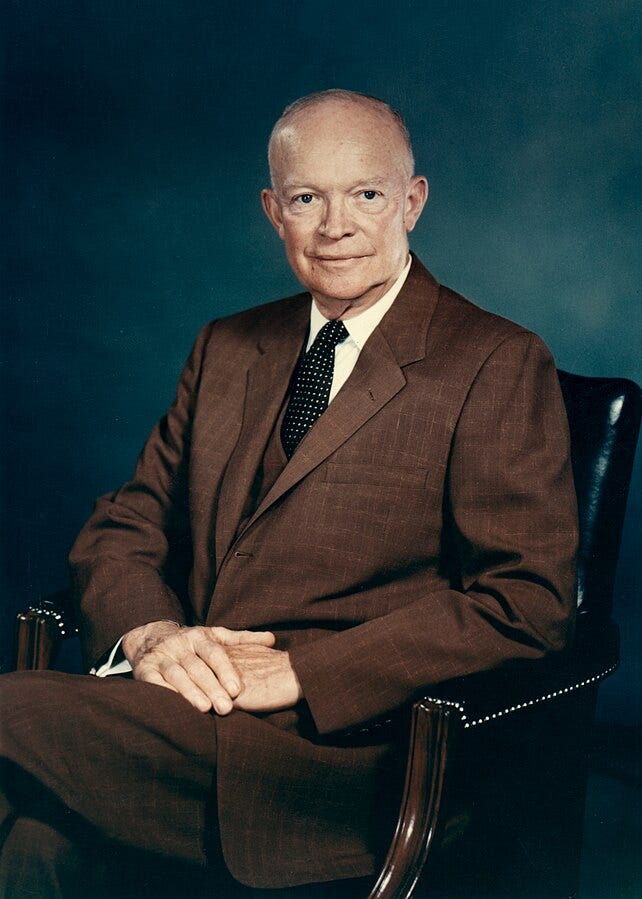
The year 1952 saw Dwight Eisenhower become the US president. Committed to finding peace, a Korean armistice was established on July 27, 1953, with the help of the UN. This cease-fire saw a DMZ (demilitarized zone) formed around the 38th Parallel, guarded by UN and communist troops. This was agreed between the US and North Korea, with Rhee refusing to sign.
This peace settlement has ensured some stability in the region since. We can only be grateful that the war ended and the possibility of nuclear action was avoided, despite a necessary compromise that left a division. US-UN non-intervention would have almost certainly let the North Koreans unite the continent, given their military superiority over the South Koreans. Upon reflection, US-UN intervention in Korea proved much more successful than in Vietnam. The South Koreans should be grateful to the US-UN forces and the results obtained. Today, the Republic of South Korea enjoys a free and expanding economy under a democratic system.
The first flash point of the Cold War ended more as a ceasefire than an actual formal peace. It involved forces of various sizes from up to 20 nations, mostly on the UN side. It was the most significant conflict fought in the whole Cold War. Much has been said of the Cuban Missile Crisis, but it should not be forgotten that the prospect of using nuclear weapons became a possibility during this war. Likewise, to this day, the effects of the war are still felt on the Korean Peninsula. So this war, by no means forgotten, has to be remembered not just for the present politics, but also for the millions of casualties claimed by the war.
This article of mine was previously submitted to Medium.com, where you can read it here.
About the Creator
Matthew A
Matthew is the author of Battles of the Pacific War 1941-1945. Battles of the Pacific War is available on Amazon and Lulu in e-book and paperback formats. Check out the book’s blog at battlesofthepacificwar.blogspot.co.uk.
Enjoyed the story? Support the Creator.
Subscribe for free to receive all their stories in your feed.
Comments
There are no comments for this story
Be the first to respond and start the conversation.