
Remembering the Fall of Fascism in Italy
How Italian Fascism Crumbled
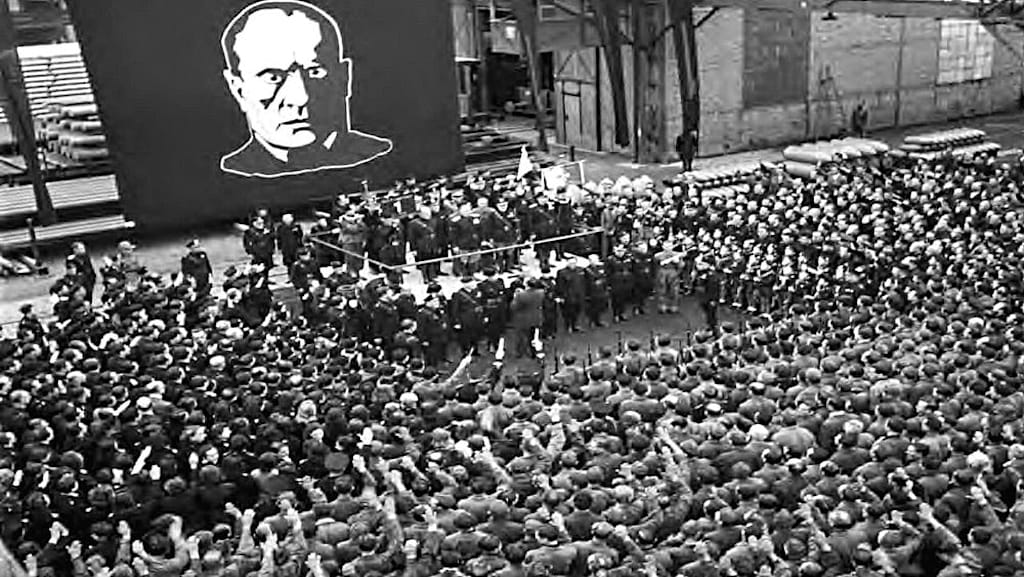
The fascist regime in Italy had been in place since the 1920s, while the fall of fascism in Italy happened in the early 1940s. During the 1930s, this regime pursued various economic and foreign policies with mixed results. The development of autobahns enhanced Italy's transport networks, while Italy's economy made relatively slow progress. By 1938, the economic divide remained between north and south, while the so-called Italian empire was largely limited to Ethiopia, Libya, and Somalia. However, fascist propaganda exaggerated the effectiveness of Mussolini's policies.
In the late 1930s, the prospect of war in Europe also loomed. During the 1930s, Germany violated the Treaty of Versailles terms. Italy fostered a closer alliance with Germany, which, in the event of war, would mean that if Italy joined, it would do so as a German ally.
By 1938, hopes for negotiation over Poland and the Polish Corridor emerged at the Munich Conference. Mussolini was in attendance at a conference where territorial settlements on Germany's eastern border, in relation to Poland and Czechoslovakia, were made. Chamberlain confirmed that the Munich Conference would maintain peace in Europe.
However, Germany violated the terms of that conference. This began with the German occupation of the rest of Czechoslovakia. The Allies made a clear pledge to Poland that any further violation of the Munich Agreement would result in war with Germany. As such, the German advance on Poland was met with the Allied declaration of war in 1939.
Italy wisely sat out of the war at this stage. The fascist regime remained wary of Italy's own lack of readiness for a European conflict. Most notably, Badoglio warned Mussolini that they had too few tanks and aircraft for a longer-term conflict. As such, Italy did not join in 1939.
However, Germany's victory in western Europe, with the defeat of France, convinced the regime to declare war on Britain in 1940. Under the Pact of Steel terms, Italy was obliged to join Germany at some stage. However, this was also the beginning of the end of Italian fascism in a war that would go largely against them.
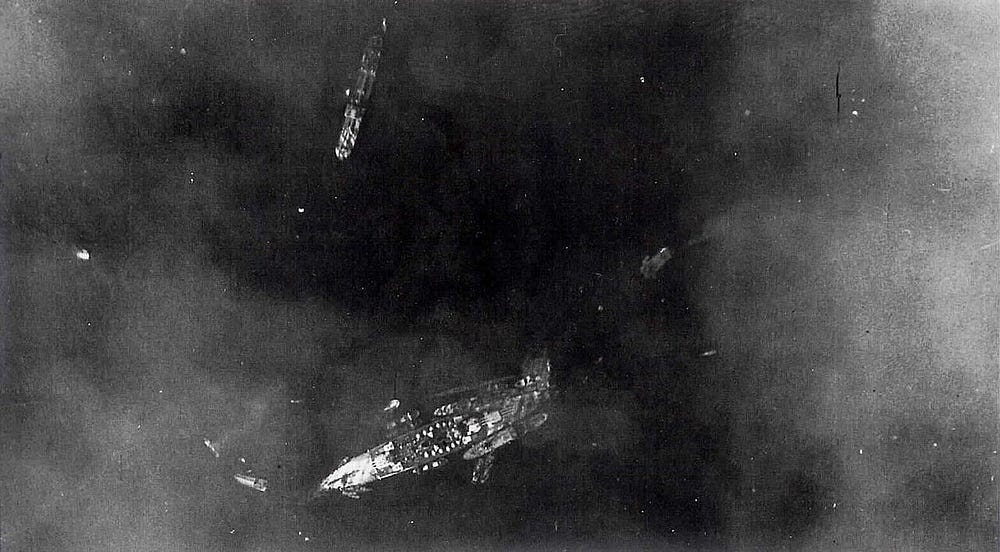
Italy entered the war with a large Mediterranean fleet. However, Britain's surprise attack on the Italian fleet at Toronto saw the Italian navy lose numerous warships. Naval skirmishes in the Mediterranean gradually went against the Italians.
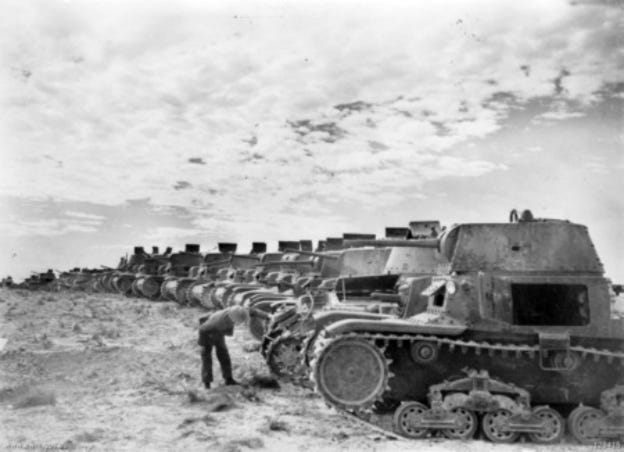
In North Africa, Italy also invaded Egypt. However, the offensive failed, and the Italian forces were then pushed far back into Libya by Britain's army. Germany reinforced the Italians with its own army units under Rommel, which were more successful against Britain's troops.
The Balkans campaign went little better for Italy, with Italian armies struggling against Greece. By 1943, the tide of war was firmly against Italy in both North Africa and the Balkans. The Italians had become increasingly weary of the war and disappointed with the fascist regime that had led them into it. However, as Mussolini was still not inclined to enter peace negotiations, King Victor Emmanuel urged Ciano to begin talks with the Allies.
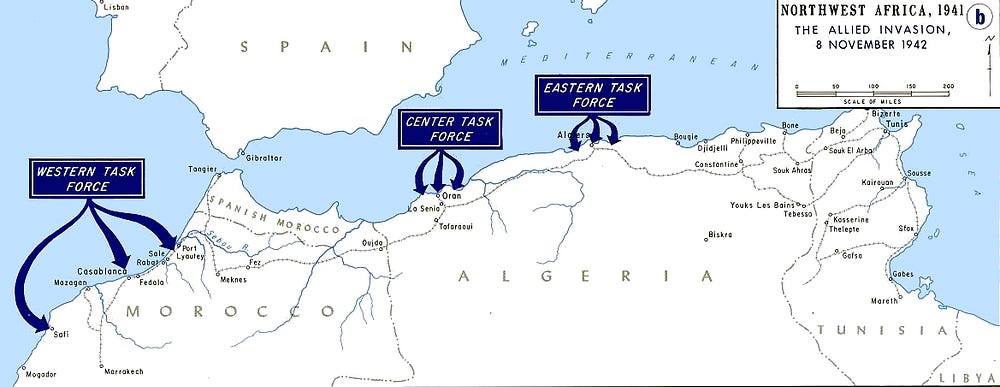
Operation Torch, the Allied invasion of Sicily and Italy, also began in 1943. As the Allied troops established a foothold in Sicily with relative ease, the German troops mounted a stronger defence. Despite this, Sicily fell, and the Allies began landing in Italy.
With this, the fascist regime began to crumble. As the Allied troops pushed north in Italy, the Italian Civil War began. Mussolini was removed from his post by the king, and the fascist party was banned. While Italy signed an armistice with the Allies, it was not the end of the war for Italy, as it joined the Allies with the support of the Italian populace. However, continued German resistance in the north led to a state of civil war in Italy.
As such, the war ensured the fall of fascism in Italy as Germany surrendered in 1945. Grave weaknesses in Italy's military had left the Italian war effort more dependent on Germany. Fascism in Italy lasted over a decade, but burst like a bubble in 1943.
This article of mine was originally submitted to Medium, where you can read it here.
About the Creator
Matthew A
Matthew is the author of Battles of the Pacific War 1941-1945. Battles of the Pacific War is available on Amazon and Lulu in e-book and paperback formats. Check out the book’s blog at battlesofthepacificwar.blogspot.co.uk.
Enjoyed the story? Support the Creator.
Subscribe for free to receive all their stories in your feed.
Comments
There are no comments for this story
Be the first to respond and start the conversation.