
Remembering American Involvement in the First World War
Lusitania Sinks
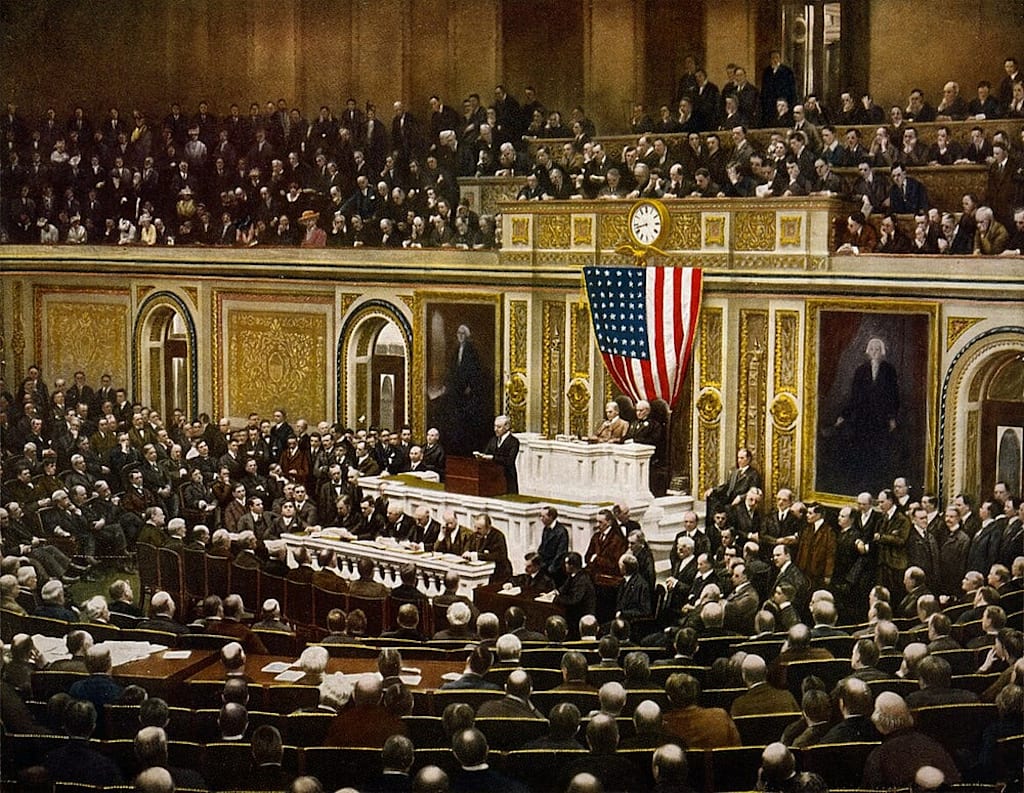
The First World War that began in 1914 included Britain, France, and Russia on one side and Germany, the Ottoman Empire, and Austria-Hungary on the other. They were the primary alliance blocs of the war. Across the Atlantic, the United States remained isolationist in 1914, but that would gradually change as the war progressed.
The Lusitania was a Blue Riband ocean liner that made regular transatlantic crossings to and from the States. In 1915, it left its U.S. harbor with American passengers to Britain. But Germany had forewarned their U-boats would not overlook non-military ships within British waters, especially as ships the size of the Lusitania could still store munitions cargo. With the Lusitania off the south coast of Ireland, a German U-boat fired one torpedo, which was enough to sink the ocean liner. The ship quickly disappeared beneath the sea, and only a minority of those aboard could be picked up.
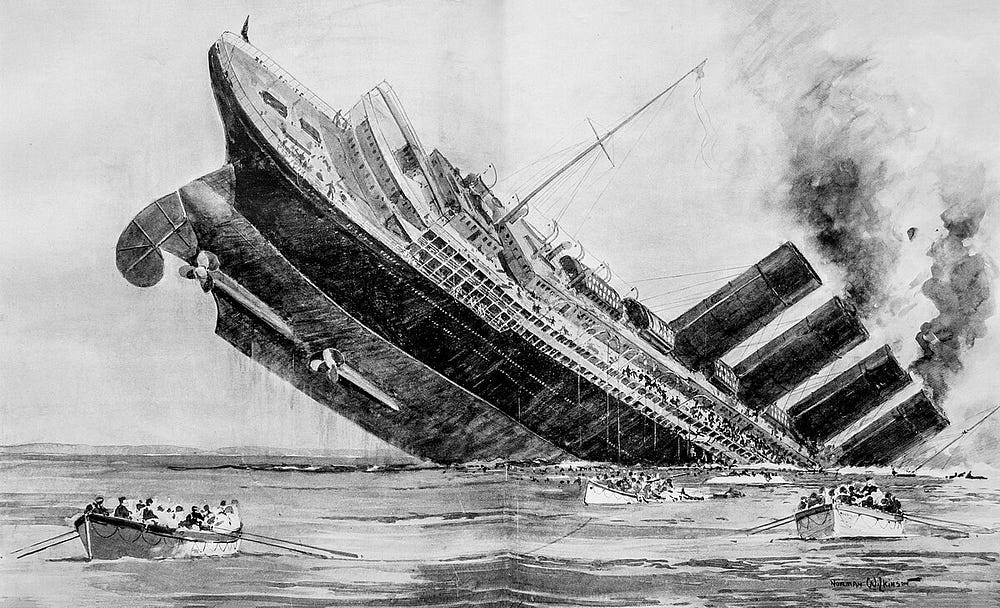
This event convinced some within the United States that they should increase their support for the Triple Entente (Britain, France, and Russia) in the war in Europe. Some Americans who had been aboard the Lusitania were lost at sea. President Wilson requested that Germany abandon all submarine operations targeting commercial vessels, regardless of flag.
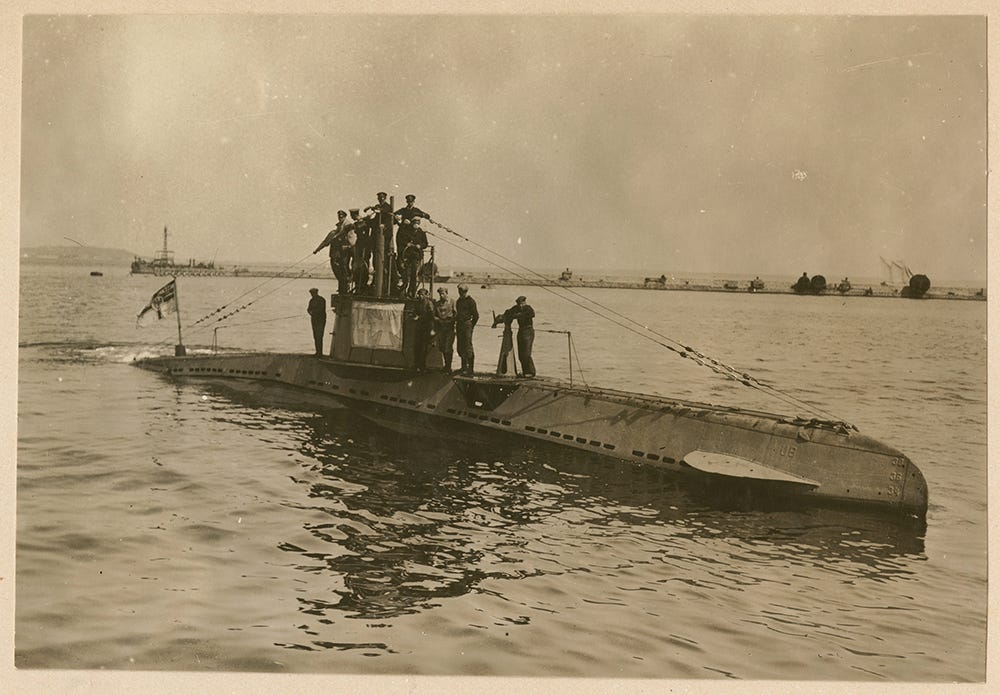
As Britain's economic blockade could not be defeated by the German surface fleet, a renewed U-boat campaign began in 1917. This U-boat campaign primarily targeted British merchant ships but did not ignore U.S. shipping. American merchant vessels were soon lost at sea alongside Britain's. As such, President Wilson turned to the U.S. Congress for a declaration of war against Germany on April 6, 1917.
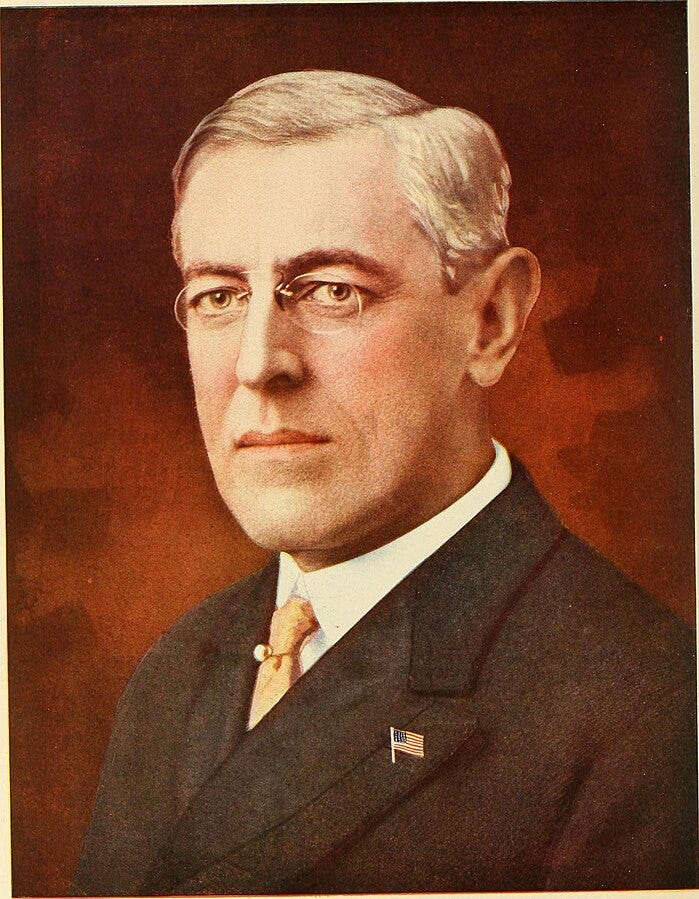
When the United States declared war on the German Empire, the Entente had gained a new ally that could provide millions of fresh troops in France. That was where French and British troops were ground down, with no notable advances since 1915. Elsewhere, in the east, the Germans were advancing quickly with the Russian army in disarray. Upon his return to Russia, Lenin promised to pull Russia out of the war.
However, the United States could not provide immediate reinforcements in France. Britain had to cling on as German U-boats wiped out their merchant ship supplies in increasing numbers. Only when they established more effective convoys were losses reduced. The Russians were all but defeated in the east and began peace talks with Germany, which ensured that they withdrew from the Entente in 1918.
By 1918, the American Expeditionary Force, headed by Pershing, was expanding in France. Admittedly, the hoped-for millions of troops had not exactly arrived by the spring of 1918, but hundreds of thousands of U.S. troops began to join the Western Front. They were first sent to the River Marne, where a new German advance had to be halted. The combined British, French, and American armies defeated the Germans at the Second Battle of the Marne.
This paved the way for their advances in France and an eventual victory for the Entente. Pershing ordered an attack on the Saint-Mihiel area of eastern France. It was costly, but the attack ensured a German retreat. At the Battle of Amiens, a U.S. division also provided further reinforcements, and it was here that thousands of German troops surrendered. Then, hundreds of thousands of U.S. troops maintained the Entente advance during the Meuse-Argonne campaign. With the German army in full retreat in France, peace talks began with the United States and its allies.
Wilson made clear that Germany's king had to abdicate for an armistice to be considered. When German delegates met with the French in France, the Kaiser abdicated. Days later, the 11th November ceasefire ended the war.
The United States had provided approximately 1.2 million troops for the war. A significant total, and millions more, could have also joined the front. With the German army retreating, their war was lost by the winter of 1918, as any remaining chance of defeating France had slipped away. In Paris, the Entente drafted the Treaty of Versailles that the American Congress never ratified; subsequently, the USA did not join the League of Nations.
This article of mine was previously submitted to Medium.com, where you can read it here.
About the Creator
Matthew A
Matthew is the author of Battles of the Pacific War 1941-1945. Battles of the Pacific War is available on Amazon and Lulu in e-book and paperback formats. Check out the book’s blog at battlesofthepacificwar.blogspot.co.uk.
Enjoyed the story? Support the Creator.
Subscribe for free to receive all their stories in your feed.
Comments
There are no comments for this story
Be the first to respond and start the conversation.