
RABINDRANATH TAGORE’S LOVE LETTER TO KADAMBARI DEVI
Beloved of My Soul, My Eternal Light
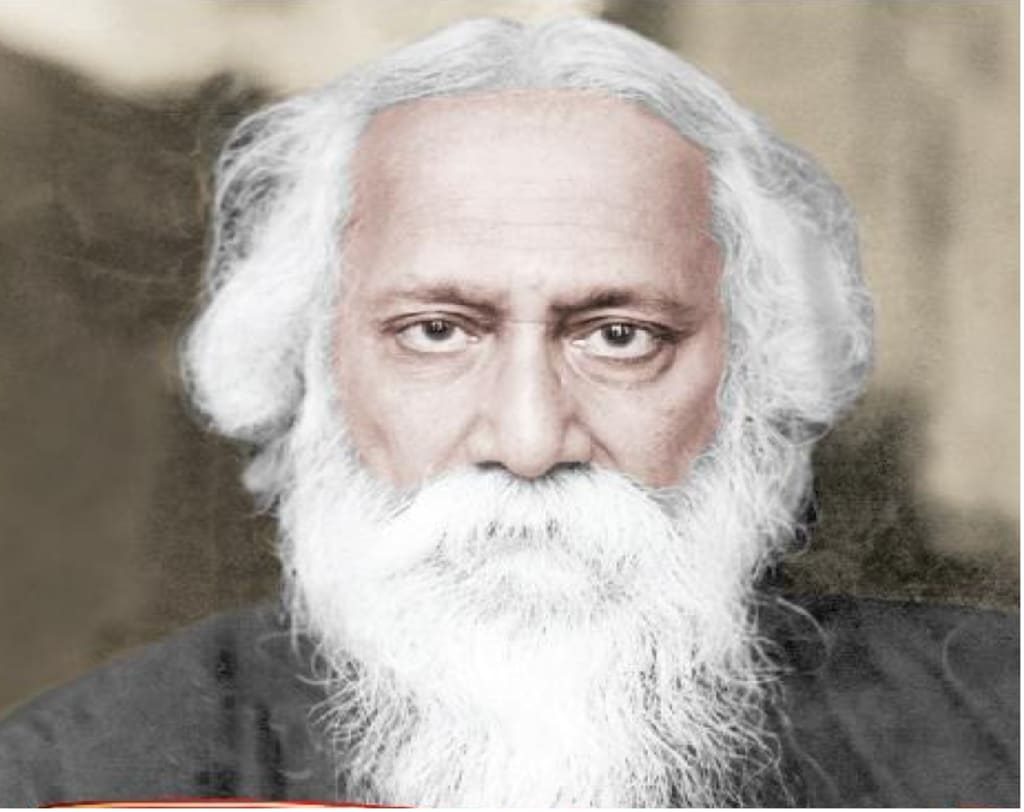
The ink trembles as I write, for my hands are unworthy to capture the depth of my longing, the vastness of my love. The moonlight, silver and soft, spills upon this parchment like the whispers of your name upon my lips. Oh, my love, do you not hear the night calling you, carrying the echoes of my heart? Do you not feel the tremor in the wind, the restless murmur of the Ganges as it carries my yearning to you?
You are the melody that lingers even after the last note has faded. In the hush of dawn, when the first light kisses the earth, I see only you. The stars that blink against the ebony sky—they are but fireflies dimmed before the brilliance of your eyes. The scent of fresh jasmine that wafts through my window—it pales before the memory of your breath against my skin.
My love, if the universe could bleed words, it would inscribe only your name upon the fabric of time. If the rivers could compose poetry, they would carry sonnets woven from the threads of my adoration. But alas, I am only a man, and I can offer nothing but these words, trembling and true, stripped of pretense, naked in their devotion.
The world would call it madness, this love that consumes me. But tell me, is the moon mad for orbiting the earth, caught in a pull it cannot escape? Is the night mad for waiting, eternally patient, for the embrace of dawn? If madness is to be enslaved by your love, then let me never taste the sanity of indifference.
"I seem to have loved you in numberless forms, numberless times… In life after life, in age after age, forever. Whenever I hear old chronicles of love, its age-old pain, Its ancient tale of being apart or together, As I stare on and on into the past, in the end you emerge, Clad in the light of a pole-star, piercing the darkness of time."
I close my eyes and dream of you—of the way your voice dances like a gentle river, the way your laughter rings like temple bells in the morning air. And yet, it is agony to love you from a distance, to worship from afar. This separation carves wounds in my soul, wounds that only your touch may heal.
"Pluck this little flower and take it. Delay not! I fear lest it droop and drop into the dust. Though its colour be not deep and its smell be faint, use this flower in thy service and pluck it while there is time."
If fate were kinder, if the gods had blessed us differently, I would have built a world where our love did not have to steal moments in the shadows, where our souls could collide under the open sky, unburdened, unshackled. But, my love, even if the world conspires against us, even if every force seeks to keep us apart, know this—my heart is yours. In life, in death, in every realm beyond, my soul will seek you, forever bound to you.
"My song has put off her adornments. She has no pride of dress and decoration. Ornaments would mar our union; they would come between thee and me; their jingling would drown thy whispers. My poet’s vanity dies in shame before thy sight. O master poet, I have sat down at thy feet. Only let me make my life simple and straight, like a flute of reed for thee to fill with music."
Write to me, my beloved. Let your words be the balm to this aching heart. If my letters are the ocean, let your reply be the shore upon which I may rest.
“If you see me from afar, you will not recognize me, my friend, farewell! Yet it is not a dream, it is my truth of truths, it is deathless, it is my love. Changeless and eternal, I leave it as my offering to you in the ever-changing flow of time.”
Until the wind carries your words back to me, until the stars whisper your longing in my ears, I remain—
Yours, now and beyond eternity,
Rabindranath
Bibliography
Reference: Derived from Rabindranath’s Work “The Book titled “All Short Stories, Poetry, Novels, Plays & Essays ‘The Complete Work of Rabindranath Tagore” Published by GENERAL PRESS
4228/1, Ansari Road, Daryaganj, New Delhi – 110002.
Link: https://www.rljdmcdavpselibrary.com/books/rabindranath.pdf
Rabindranath Tagore (1861-1941) was a Bengali polymath who made significant contributions to literature, music, art, and philosophy. Here are some key periods in his life:
1. Early Life (1861-1878): Born on May 7, 1861, in Kolkata, India, Rabindranath grew up in a culturally rich and influential family.
2. Education and Early Writing (1878-1891): He studied at the University of Calcutta and later at the University College London. During this period, he began writing poetry and plays.
3. Shantiniketan and the Bengal Renaissance (1891-1912): Rabindranath returned to India and became involved in the Bengal Renaissance, a cultural and literary movement. He also established Shantiniketan, a school and community that emphasized the importance of nature, art, and spirituality.
4. International Recognition and Nobel Prize (1912-1930): Rabindranath's poetry was introduced to the Western world by William Butler Yeats and Ezra Pound. He was awarded the Nobel Prize in Literature in 1913, becoming the first non-European to receive the honor.
5. Later Life and Legacy (1930-1941): Rabindranath continued to write, paint, and compose music until his death on August 7, 1941. He remains one of the most celebrated figures in Indian literature and culture.
About the Creator
Enjoyed the story? Support the Creator.
Subscribe for free to receive all their stories in your feed.
Comments
There are no comments for this story
Be the first to respond and start the conversation.