
President Truman and the Cold War
Remembering How Truman Shaped the Cold War
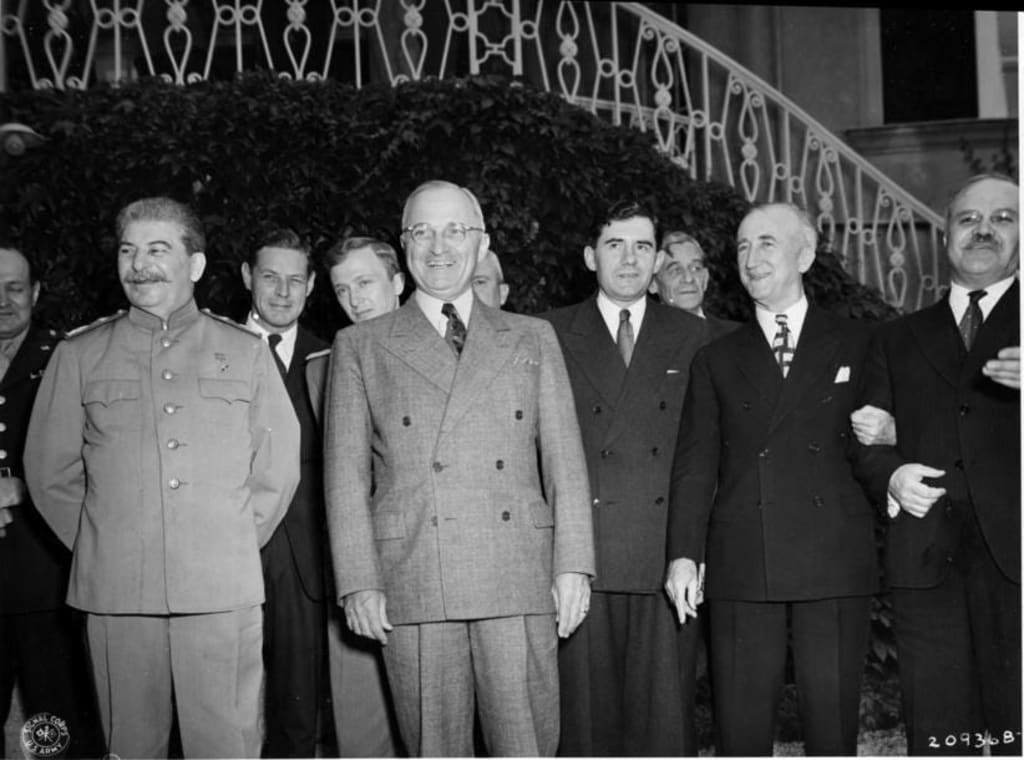
Truman emerged as president in 1945, when the Allies had all but won the war. Germany surrendered shortly after, and all that was left was the defeat of Japan. As an alternative to an Allied landing on Japan, the USA dropped bombs instead. With this, the Japanese also surrendered. However, hereafter, US and USSR relations began to deteriorate in the post-war era as both Truman and Stalin became increasingly wary of their former allies.
The Potsdam Conference saw Truman, Atlee, and Stalin meet to discuss post-war Europe. Truman had already grown increasingly suspicious of Soviet policies in Eastern Europe. The promised elections in the East had not transpired as suggested at the Yalta Conference. Communist regimes had begun to emerge in Poland, Hungary, Romania, etc, which brought friction between East and West. Stalin was also not very pleased that Truman had not informed them about the US Manhattan Project before, especially as they had kept their word by joining the war against Japan.
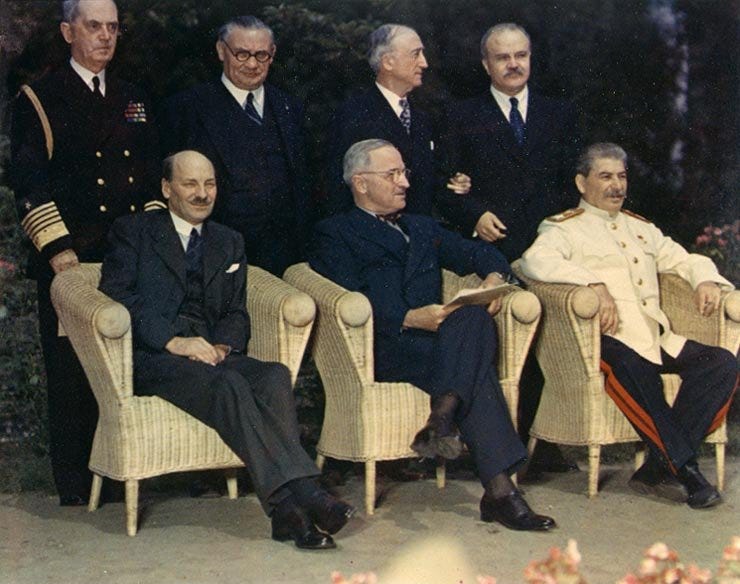
By 1946, American and Russian relations were strained. Churchill's Iron Curtain speech in 1946 spoke of the new Eastern Bloc that had emerged in Eastern Europe and called on further Anglo-American military cooperation. This speech did little to ease the surfacing Cold War.
Therefore, Truman began a shift in US policy. As the Greek Civil War continued, the Greek Royalists requested support from the US, particularly as Britain could no longer meet their defense commitments in Greece. To this extent, Truman agreed to grant the Greeks military aid in their civil war with communist groups. Truman's new policy of containment would be extended beyond Greece and became known as the Truman Doctrine. The Truman Doctrine offered US military support to countries that could potentially see the rise of communist regimes, such as Greece and Turkey, in the 1940s.
To assist post-war reconstruction in Europe, the USA also extended Marshal Aid. However, the USSR did not accept this policy, so Marshall Aid was limited to Western Europe.
To stop aid from reaching West Berlin, the Soviets blockaded Berlin in 1948. However, Truman and the West circumvented the blockade with an airlift. By 1949, the blockade was eventually lifted.
President Truman continued in office with re-election in 1948. The relative victories in the Cold War had seen the Berlin blockade lifted, Marshal Aid brought post-war recovery, and Turkey and Greece were victorious against communist groups.
However, Korea in 1950 would see the Cold War escalate. As the North Koreans pushed the South Korean army back, Truman gained support for US and NATO intervention in Korea. The NATO armies were able to push the North Koreans back to the 38th parallel.
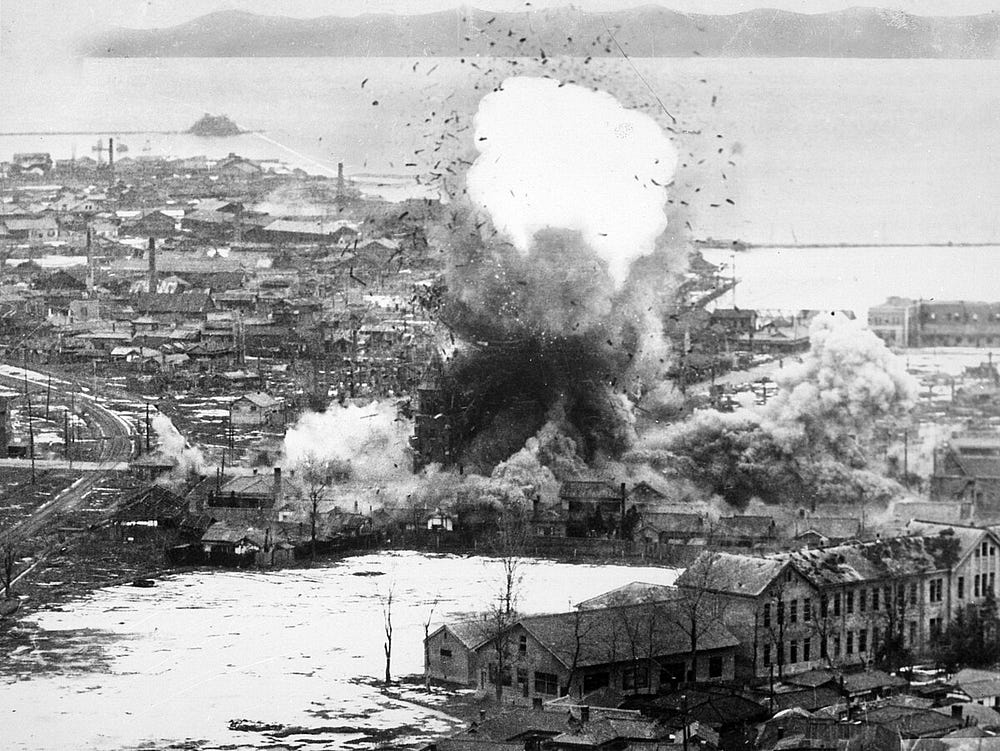
However, despite such victories, Korea would ultimately end Truman's time as president. Increased Chinese involvement slowed NATO's advances and ultimately halted them at the 38th parallel. Disagreements with MacArthur followed regarding further US military actions in Korea, with MacArthur suggesting that the US bomb Chinese supply points. However, Truman was wary of such proposals and further escalation and dismissed MacArthur.
MacArthur was a US hero, and the US was more sympathetic to MacArthur. As such, as casualties also mounted in Korea, support for Truman began to decrease. With little chance of a further term, Truman duly left office in 1952.
Overall, Truman did little to enhance US and USSR relations during his period in office. However, in light of Stalin's evident breaches of the Yalta Conference, the shift in US policy was perhaps understandable. At any rate, the Truman Doctrine had gone some way to assisting the Greeks and Turks against communist groups during the '40s and saved South Korea in the Korean War. Likewise, Marshal Aid also assisted with post-war recovery in Europe. The Korean cease-fire that followed in 1953 may not have happened if Truman had supported all of MacArthur's military plans. As such, in the Cold War, Truman's policies won victories and prevented the rise of further communist groups.
This article of mine was previously submitted to Medium.com, where you can read it here.
About the Creator
Matthew A
Matthew is the author of Battles of the Pacific War 1941-1945. Battles of the Pacific War is available on Amazon and Lulu in e-book and paperback formats. Check out the book’s blog at battlesofthepacificwar.blogspot.co.uk.
Enjoyed the story? Support the Creator.
Subscribe for free to receive all their stories in your feed.
Comments
There are no comments for this story
Be the first to respond and start the conversation.