
Introduction
Throughout human history, the world has witnessed many instances where the powerful have oppressed the weak. Among the most heartbreaking and ongoing examples is the suffering of the people of Palestine. This article sheds light on the history of their struggle, the origin of the conflict, the devastating consequences of war, and the unbearable pain they continue to endure.
A History of Oppression
The story of Palestine is one of resilience in the face of adversity. For decades, Palestinian people have faced political, social, and economic oppression. After the fall of the Ottoman Empire following World War I, Britain took control of Palestine. In 1948, when the state of Israel was established, hundreds of thousands of Palestinians were forced to flee or were expelled from their homes in what is known as the Nakba, or "catastrophe".
Families that had lived on their land for generations suddenly found themselves homeless. Their homes were taken, villages destroyed, and communities scattered.
How the War Started
The conflict between Israel and Palestine began as a territorial and political dispute but quickly escalated into a deeply rooted war of identity, religion, and survival. The United Nations had proposed a two-state solution in 1947, dividing the land into Jewish and Arab states. However, tensions between the two sides erupted into violence almost immediately.
Over the years, multiple wars, military operations, and uprisings (called intifadas) have deepened the divide. Gaza, a small strip of land home to over 2 million Palestinians, has become the center of repeated attacks and blockades, making life extremely difficult for its residents.
The Human Cost
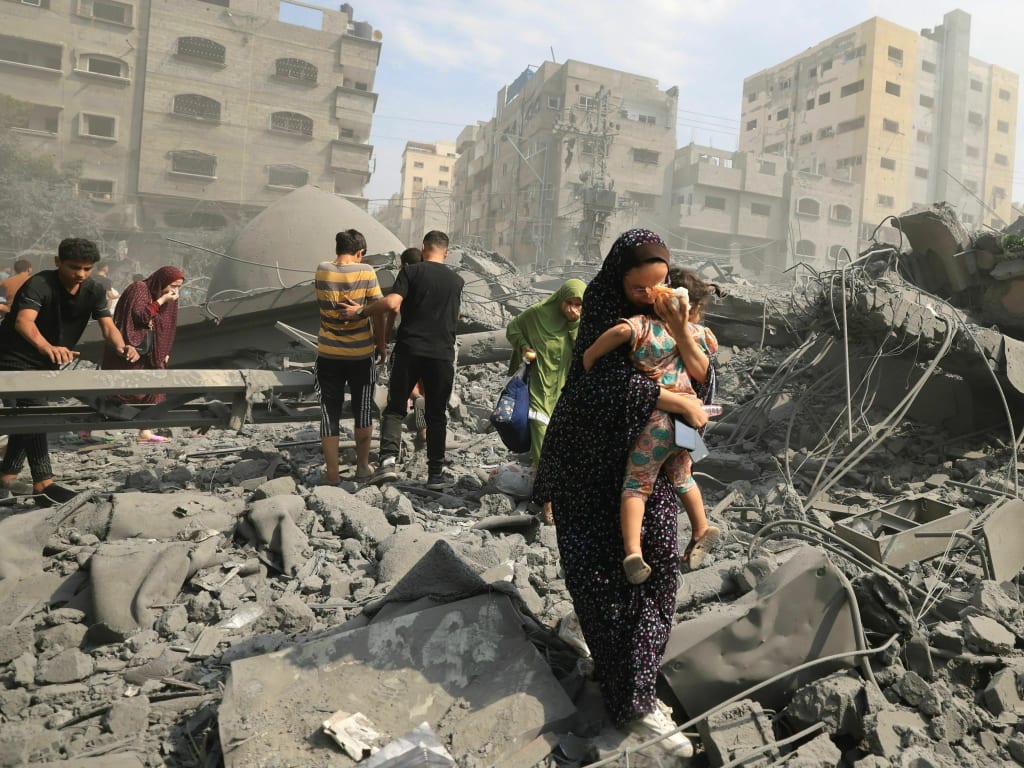
The human toll of this conflict is staggering. Thousands of lives have been lost — not only fighters but innocent civilians, children, and women. Homes have been reduced to rubble. Hospitals, schools, and places of worship have been destroyed.
As of recent years, tens of thousands of Palestinians have been killed or injured. Many live in constant fear of bombings, arrests, and losing loved ones. Access to clean water, electricity, medicine, and education is limited in many areas, especially in Gaza. Refugee camps are overcrowded and under-resourced.
The Pain of a People
To be Palestinian today is to live with grief and hope at the same time. Mothers cry for their lost children, fathers fight to protect their families with little means, and young children grow up surrounded by trauma. And yet, despite everything, the Palestinian people continue to hope — for freedom, for peace, and for justice.
Their culture, traditions, and sense of community remain strong. Poetry, art, and stories of resistance are passed down to remind the world of their humanity and strength.
Conclusion
The people of Palestine deserve more than sympathy — they deserve understanding, justice, and peace. Their story is not just about war and loss; it’s also about strength, love for their homeland, and an unbreakable spirit.
Let the world remember their voices. Let their suffering not go unnoticed. And let humanity rise above politics to embrace compassion, dialogue, and the dream of a peaceful future.
Despite decades of hardship, the Palestinian people's resilience is inspiring. Every day, they strive to live normal lives—children go to school under the threat of airstrikes, doctors treat patients in damaged hospitals, and families gather amid ruins for hope and strength. Many Palestinians in the diaspora dream of returning to their homeland, even if they’ve never seen it. International organizations have repeatedly called for peace and human rights protection, but lasting solutions remain distant. Still, the Palestinian flag continues to fly high in the hearts of millions. It is a symbol of resistance, identity, and the unshakable will to survive.
About the Creator
Leo Sami
Storyteller & dreamer. I write about self-growth, daily life, and little inspirations. Sharing thoughts that touch hearts. Let’s connect through words and create something meaningful together.
Enjoyed the story? Support the Creator.
Subscribe for free to receive all their stories in your feed.
Comments
There are no comments for this story
Be the first to respond and start the conversation.