
Masters of War: The Commanders Who Shaped WWII
Remembering the Key Military Figures of World War II

The key military personnel of any army or navy are usually the officers. It is they that co-ordinate the overall strategy, and that is essential to victory at sea or on land. Thus its the senior officers that had the most impact in World War 2. These are a few that won some notable victories.
Admiral Yamamoto
Japan's Admiral Yamamoto, commander in chief of the IJN, greatly expanded the country's aircraft carrier fleets during the 1930s. In the early '40s, Yamamoto drafted Operation Z. This was to be the Pearl Harbor airstrike that Yamamoto hoped would win Japan a war within the Pacific, which would greatly expand their empire.
The Pearl Harbor airstrike was to include three waves of aircraft. It was anticipated that they would wipe out the battleships, aircraft carriers, and U.S. aircraft stationed around the nearby airfields. U.S. oil depots and shipyards were also among the subsidiary targets. That was the plan, although the Japanese aircraft could not locate any aircraft carriers at the port, and the third wave was abandoned. But the battleships of Battleship Row, and aircraft at the airfields, were ravaged during the airstrike in late 1941.
Yamamoto had gambled that this would win them the Pacific War. The gamble did not reap a fruitful return as the string of early Japanese victories was later overturned by the Allies. Most notably at the Battle of Midway, another operation which Yamamoto had drafted. However, it was much less effective, and during that battle, the Japanese lost four aircraft carriers and did not occupy Midway Island as had been planned.
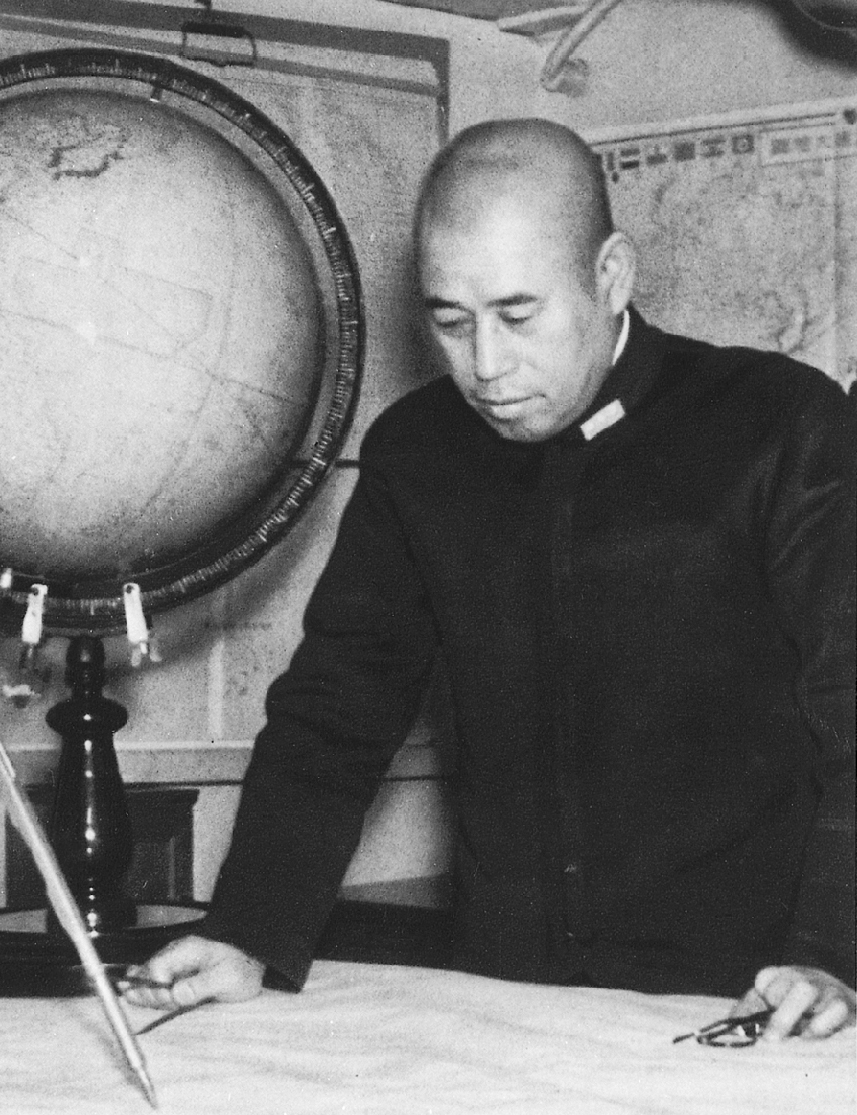
Then the Pacific War gradually turned after the loss of Guadalcanal. Yamamoto himself was shot down by U.S. aircraft during a flight in 1943. Having inspired Japan's Pearl Harbor victory, Yamamoto had also ensured the demise of the Japanese Empire.
MacArthur
MacArthur was the commander of the Allied forces in the Pacific. Having fled the Philippines in 1942, a promise to return would later be fulfilled. During the Pacific War, MacArthur directed a variety of Allied operations, such as Operation Cartwheel, in which the Allied armies bypassed the Japanese stronghold of Rabaul. That operation became a key part of Allied strategy in the Pacific, as Japanese territory in the region was gradually retaken.
In 1944, MacArthur also returned to the Philippines. The Philippines Campaign began at Leyte after Allied troops landed along its beaches. Gradually, they retook the region and the oil reservoirs that were formerly supplying the Japanese military.
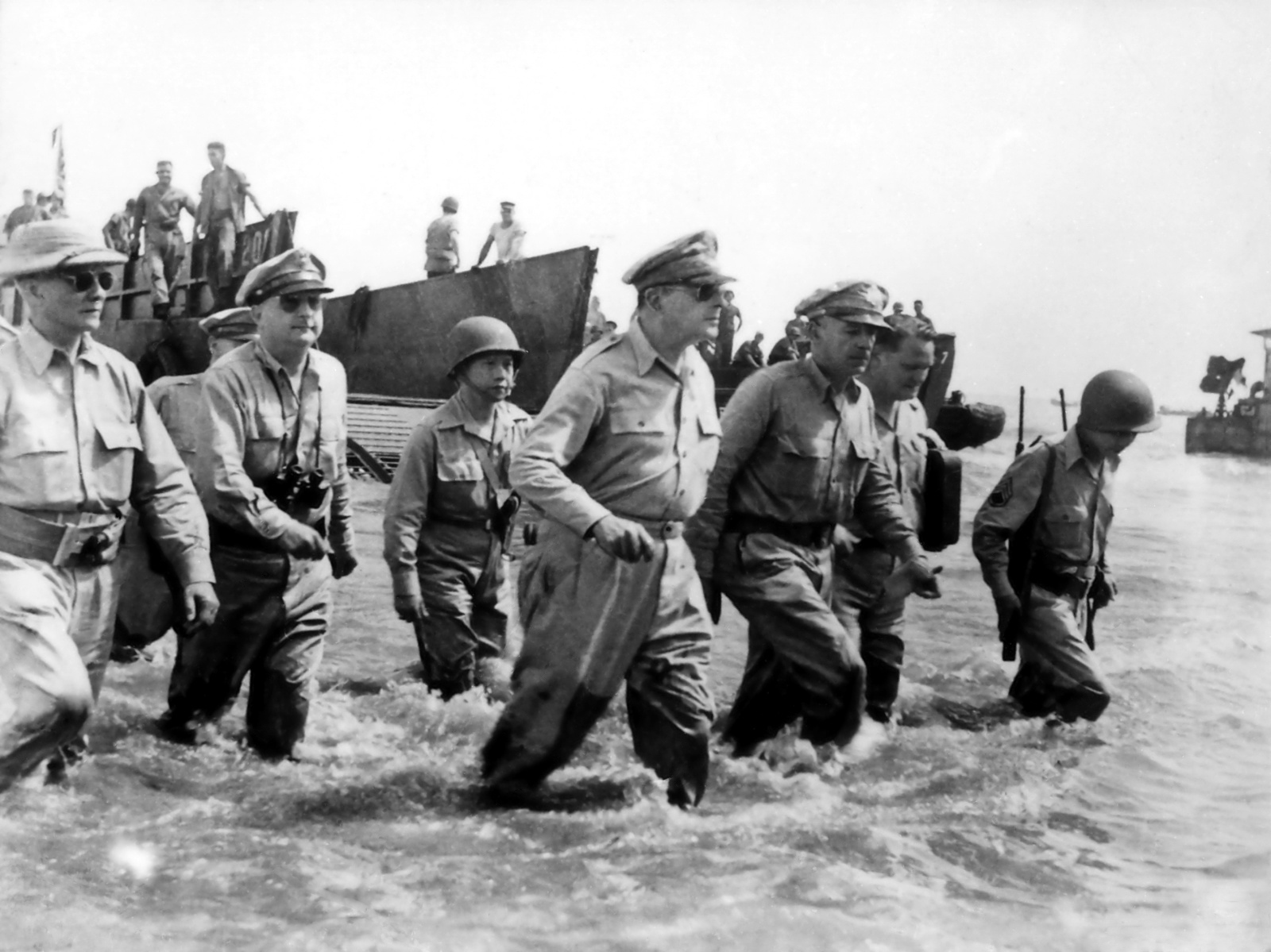
When the war ended, MacArthur provided a speech aboard the USS Missouri battleship. There, the Japanese Empire surrendered. A U.S. war hero remained at the forefront of their military in later Cold War entanglements, before being sidelined by Truman.
Rommel
Rommel arrived in North Africa with German reinforcements when Italian positions were collapsing. The Italians had been routed in Libya, and the front in North Africa might well have crumbled. To avert defeat, Italian divisions were merged with German reinforcements to establish the Afrika Korps headed by Rommel.
What followed was a remarkable turnaround in 1941. Then the British and Commonwealth troops were pushed back out of Libya and back into Egypt. They clung on to Tobruk, but in 1942, another Afrika Korps advance ensured the defeat of the British and Commonwealth troops at the Battle of Gazala. Then Tobruk, a key Allied base on the coast of Libya, was also taken by the Afrika Korps. However, with limited supplies, their advance in North Africa could not be sustained, and they were later defeated at El Alamein in '42 before surrendering in Tunisia.
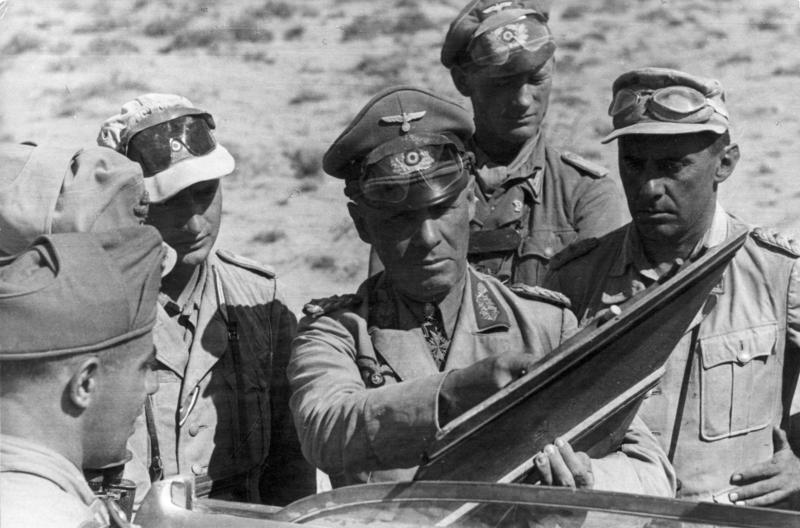
Nevertheless, Rommel was still a hero within Germany and later assumed command of the Atlantic Wall in France. Here, Rommel added an assortment of bunkers, pillboxes, anti-aircraft positions, mines, barbed wire, and tank traps along the beaches. But the wall was still breached by Allied troops that landed along France's beaches.
Montgomerey
Montgomery was Britain's most celebrated general of the war. With British forces in retreat in North Africa, Montgomery arrived to win Britain's most notable victory of the war at El Alamein. It was there that Montgomery amassed a large number of British and Commonwealth troops, along with thousands of tanks, to first halt and then counter the German advance in the deserts of North Africa.
At the Battle of El Alamein, the British Eighth Army triumphed. The orders were given for a full German retreat from El Alamein. In 1943, Montgomery's armies finished off the rest of the Afrika Korps in Tunisia and retook Tobruk, to emerge victorious in the North Africa Campaign.
But not all of Montgomery's operations were great triumphs. Among them was Operation Market Garden. Then Allied troops were parachuted down to circumvent the northern end of the Siegfried Line, occupy two bridges to cross the Lower Rhine, and surround the German industrial region of the Ruhr. However, the operation fell short of its targets as their divisions were defeated by German troops, who held the bridges.
Those were a few of the key military officers of the period. They won some notable victories in the Pacific, Europe, and the deserts of North Africa.
About the Creator
Matthew A
Matthew is the author of Battles of the Pacific War 1941-1945. Battles of the Pacific War is available on Amazon and Lulu in e-book and paperback formats. Check out the book’s blog at battlesofthepacificwar.blogspot.co.uk.
Enjoyed the story? Support the Creator.
Subscribe for free to receive all their stories in your feed.
Comments
There are no comments for this story
Be the first to respond and start the conversation.