
Marilyn Monroe Wasn't Just a Beautiful Blonde: Stories, Gossip and Secrets of the Woman Who Bewitched Hollywood
Men went crazy for her, Hollywood wanted to own her, and women sometimes envied her. But Marilyn Monroe was far more intelligent than the image Hollywood allowed her to show. And some of the stories from her life sound almost too unbelievable to be true.
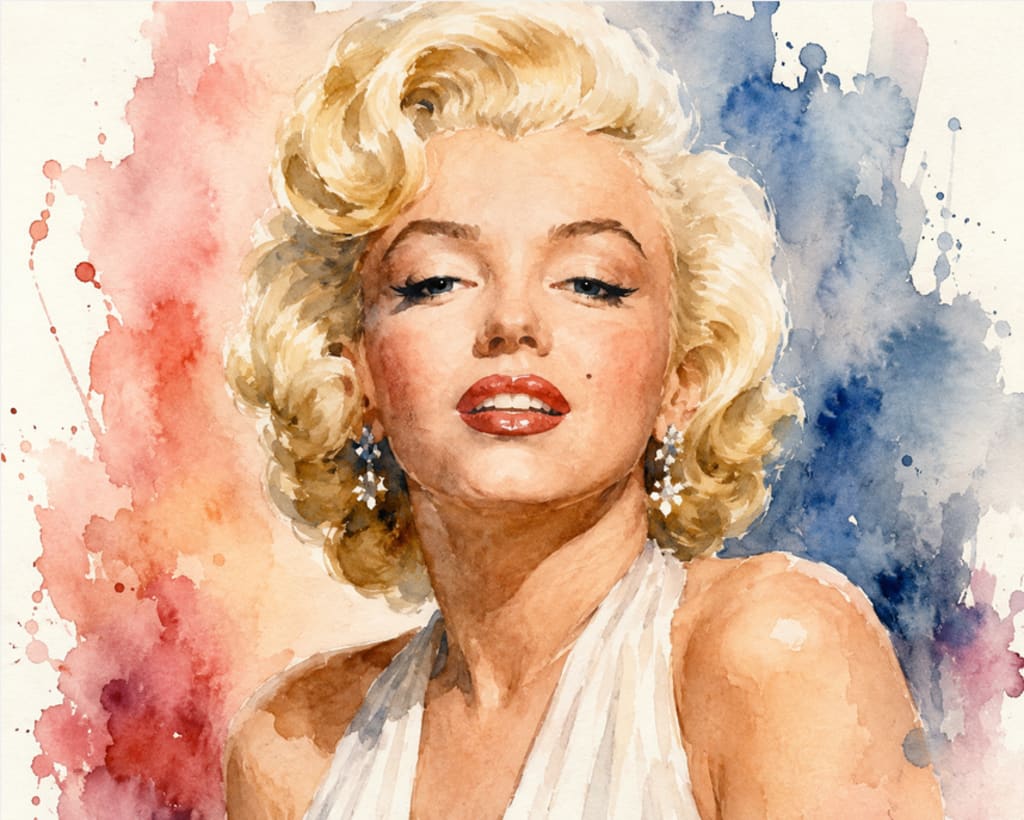
When people hear the name Marilyn Monroe, most picture the white dress billowing over a subway grate, platinum-blonde hair, red lips, and that unmistakable smile.
Perhaps they also remember Happy Birthday, Mr. President.
And, of course, her tragic ending.
But Marilyn was far more complicated than that.
She was beautiful, yet for years people tried to convince her that she was stupid.
She was famous, yet the studio system treated her as if she were a piece of property.
Millions of men adored her, yet her own husbands often struggled with the enormous attention surrounding her.
And then there was another side of Marilyn that is rarely discussed.
She knew how to win people over. She knew how to use her fame. And sometimes she used it for someone else.
Her friendship with Ella Fitzgerald is one of the sweetest stories.
But it wasn’t the only one.
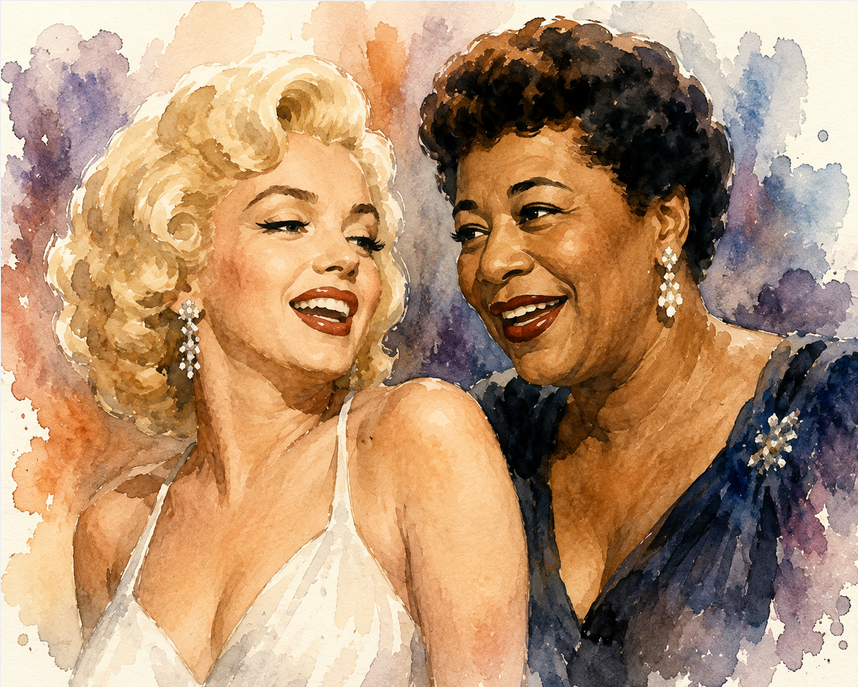
Marilyn and Ella Fitzgerald: The Call That Could Change a Career
It was 1954.
Marilyn was already a star. Ella Fitzgerald was a celebrated singer, yet she still faced doors that refused to open in the world of glamorous Hollywood nightclubs.
Marilyn met Ella in Los Angeles and immediately took a liking to her.
It wasn’t merely a casual Hollywood acquaintance.
Marilyn genuinely admired her.
And when the possibility of Ella performing at the legendary Mocambo nightclub on the Sunset Strip came up, Marilyn decided to intervene.
According to the famous version of the story, she contacted the club’s owner and offered him a deal: if he booked Ella, Marilyn would sit at a front table every night and bring attention to the engagement.
The idea was simple.
If Marilyn Monroe showed up, the press would follow.
And the club owner had plenty of reasons to say yes.
Ella’s engagement at the Mocambo became a major moment in her career.
But here comes the first proper Hollywood twist.
The famous version of the story is not quite as simple as it has sometimes been told.
The Smithsonian confirms that Monroe used her celebrity status to help Fitzgerald’s career and that the two women were connected through a genuine friendship. However, historians have also pointed out that the story surrounding the exact circumstances has accumulated myths over the decades.
There is another interesting detail.
Ella Fitzgerald was not actually the first Black performer to appear at the Mocambo, despite the story being repeated that way for years. Black performers including Herb Jeffries, Eartha Kitt, and Joyce Bryant had already appeared there.
So the real story is more complicated than the legend.
But perhaps that makes it even more interesting.
Marilyn didn’t have to help Ella.
She wasn’t doing it for a movie role.
She wasn’t being paid.
She simply admired her talent.
And she wanted more people to hear her.
Marilyn Wasn’t Some Naive Blonde
This is one of the biggest misconceptions about Marilyn.
Her famous image of the supposedly “dumb blonde” was so convincing that some people actually believed it.
But the woman who eventually challenged one of Hollywood’s most powerful studio systems was anything but helpless.
Marilyn was unhappy with the way 20th Century Fox was handling her career.
She wanted different roles.
She wanted more control.
And most of all, she wanted people to take her seriously as an actress.
In the mid-1950s, she made a move that was extremely bold by Hollywood standards.
She walked away.
More precisely, she refused to continue quietly accepting the rules the studio had imposed on her.
She left Hollywood for a time and, together with photographer Milton Greene, established Marilyn Monroe Productions. The company helped her renegotiate her relationship with 20th Century Fox and gain significantly more control over her career.
That wasn’t the behavior of a “dumb blonde.”
That was an actress who had realized something important:
If she wanted to change her career, she had to change the balance of power.
And Then There Was the Money
Marilyn eventually understood something else.
Hollywood was making enormous amounts of money from her body, her name, and her image.
So why shouldn’t she get more of it?
Her production company gave her a stronger negotiating position.
And that put her directly into conflict with the studio system.
This is one of the things that tends to disappear in romantic stories about Marilyn.
She wasn’t merely a star. She was also a businesswoman trying to gain control over her own image and career.
Her partnership with Milton Greene was particularly important. Greene photographed Marilyn in ways that moved beyond the standard glamour portraits and helped her present herself as a serious actress and a more complex person.
And Then Came Joe DiMaggio
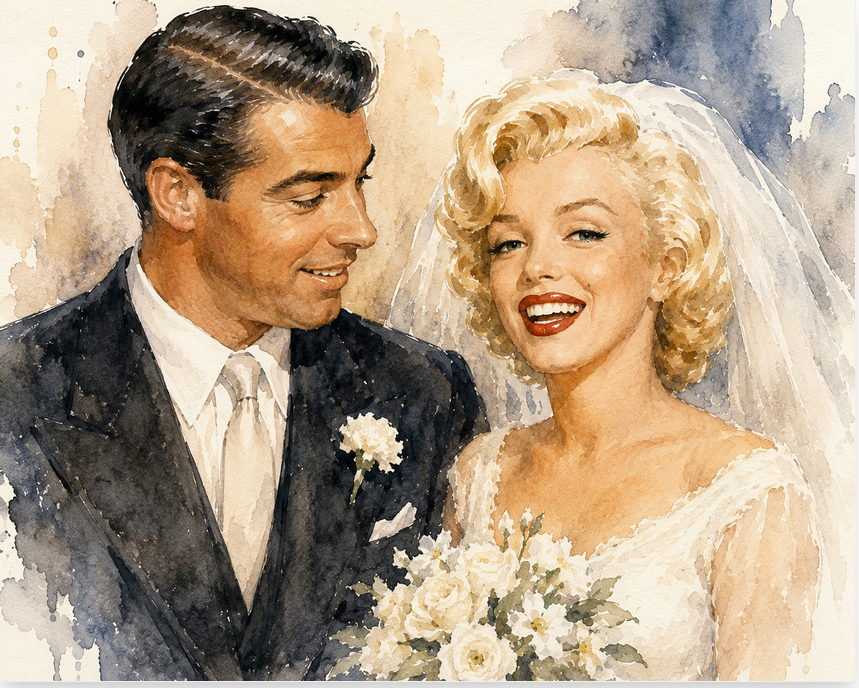
If someone had wanted to invent the perfect American celebrity couple in 1954, it would have been hard to do better.
Marilyn Monroe.
Joe DiMaggio.
The greatest baseball star of his generation and America’s most famous blonde.
They married on January 14, 1954, in San Francisco.
Hundreds of people waited outside City Hall.
They looked like the perfect couple.
But the marriage lasted only nine months.
And then came the gossip.
DiMaggio reportedly struggled with the constant attention surrounding his wife, especially the photographers, admirers, and the public image that followed her everywhere.
And then came one of the most famous movie scenes in history.
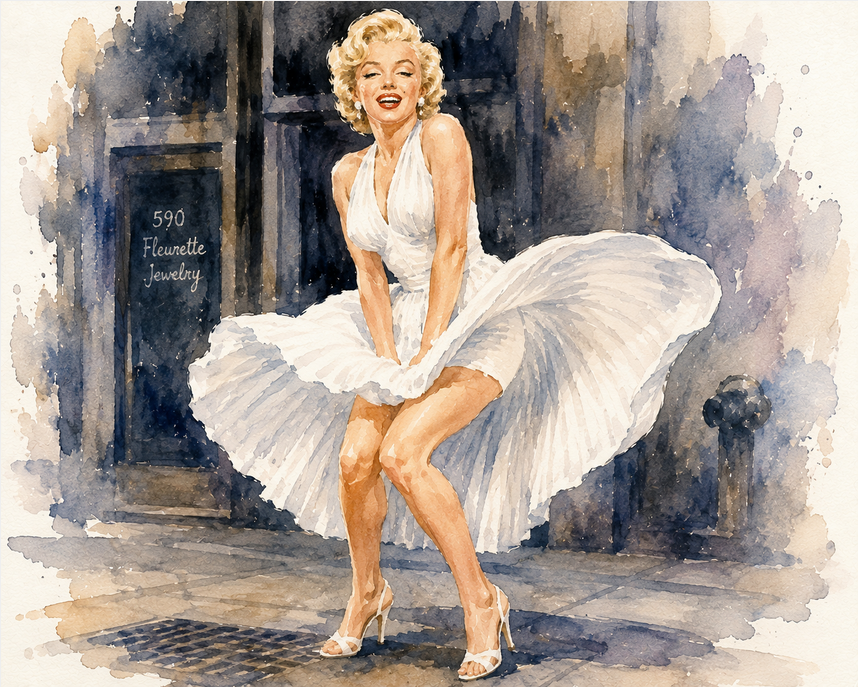
Marilyn stood above a subway grate.
The air lifted her white dress.
The crowd went wild.
The cameras clicked.
And Joe DiMaggio was reportedly furious.
Not because he disliked Marilyn.
Quite the opposite.
The scene from The Seven Year Itch became one of the defining images of Marilyn’s career and one of the moments that placed enormous pressure on their already troubled marriage.
Marilyn eventually filed for divorce, citing mental cruelty.
But Joe Never Really Left Her
This is where their story becomes much more complicated.
After the divorce, they became close again.
And DiMaggio remained one of the people who stayed connected to Marilyn even after their marriage had ended.
After her death, he reportedly arranged for flowers to be sent to her grave for years.
Their relationship had failed as a marriage.
But that did not necessarily mean that all affection had disappeared.
And perhaps that is the truth about some relationships.
Sometimes you don’t stop loving someone.
You simply discover that you cannot live together.
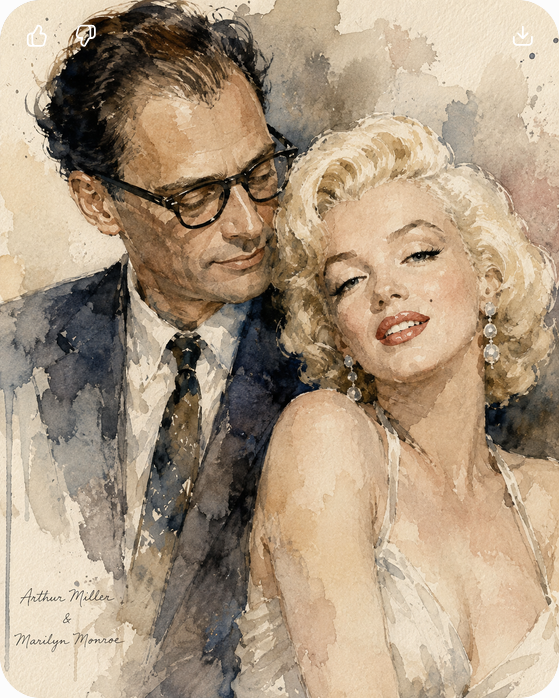
Then Marilyn Married a Man Who Wrote Plays
Joe DiMaggio was an athlete.
Arthur Miller belonged to a completely different world.
A writer.
An intellectual.
The author of Death of a Salesman.
And a man whom the American public saw as almost the opposite of the superficial Hollywood world.
When Marilyn and Miller married in 1956, the public got another unlikely celebrity couple.
The blonde sex symbol and the serious playwright.
Their relationship attracted enormous attention.
And because Miller was politically controversial, the FBI also took an interest in him and his associations.
Was Marilyn truly in love with Miller?
Most likely.
Was Miller fascinated by her fame?
Probably.
But their marriage eventually collapsed as well.
They divorced in 1961.
Marilyn Wanted Someone to Finally Take Her Seriously
Perhaps this is the key to understanding her.
All her life, Marilyn fought against people seeing only her body.
She wanted to be an actress.
She wanted to be intelligent.
She wanted to be respected.
And she wanted to learn.
She studied acting with Lee Strasberg and worked hard to escape the stereotype of the naïve blonde.
The problem was that Hollywood needed exactly that blonde.
And the public loved her that way.
So the harder Marilyn tried to become something else, the more the world pulled her back toward the image it had created.
And Now for Some Proper Hollywood Gossip
Marilyn was, of course, linked to a number of famous men.
And the more famous she became, the harder it was to separate fact from rumor.
Frank Sinatra?
The Kennedys?
Robert Kennedy?
Hollywood producers?
Her name has been attached to all kinds of stories.
But this is where we have to slow down.
Not every Hollywood rumor is historical fact.
For example, Marilyn’s relationship with Frank Sinatra has been described in very different ways. Some accounts portray it as romantic, while others emphasize friendship. Claims about a serious romantic relationship or a planned marriage are not reliably established.
And that is part of what makes Marilyn so fascinating.
The less we know for certain, the more stories people create around her.
Kennedy, the Dress, and One Minute Nobody Forgot
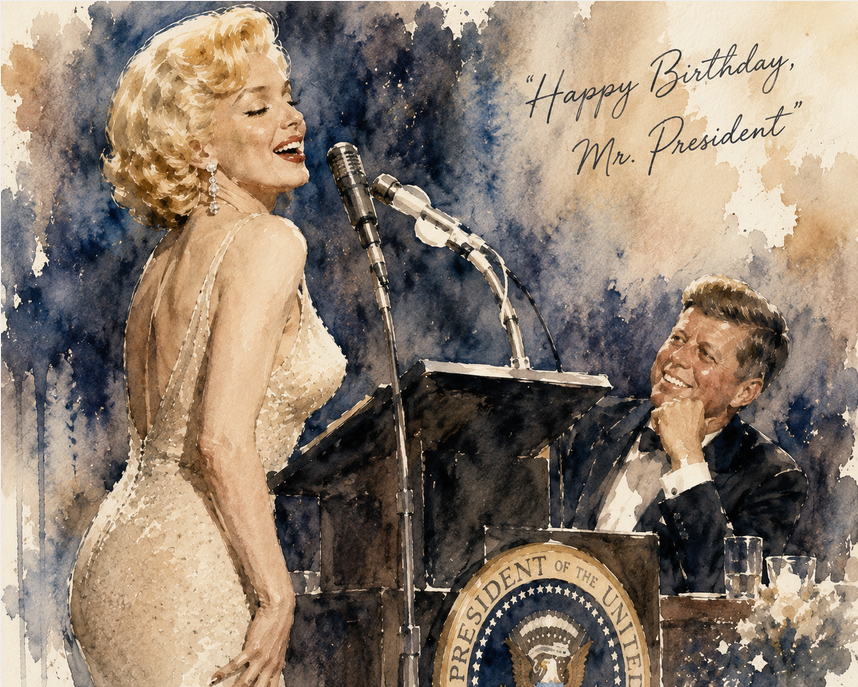
May 19, 1962.
Madison Square Garden.
A huge birthday celebration for President John F. Kennedy.
Marilyn Monroe walked onto the stage in front of thousands of people.
And she sang:
Happy Birthday, Mr. President.
But her voice wasn’t the biggest story.
The dress was.
It was extraordinarily tight, skin-colored, and covered in thousands of rhinestones.
Marilyn reportedly had to be sewn into it.
And the result?
One of the most famous images of the twentieth century.
People have argued for decades about what exactly Marilyn’s performance meant.
Was it simply provocative entertainment?
Was there something more between Marilyn and Kennedy?
This is where fact begins to blur into legend.
It is documented that Marilyn knew Kennedy and performed at his birthday celebration.
Not everything that has been claimed about their alleged relationship is documented.
And perhaps that is why it remains such a powerful mystery.
Sometimes a question is more interesting than an answer.
And Do You Know How Much That Dress Is Worth Today?
In 2016, Marilyn’s famous “Happy Birthday, Mr. President” dress sold at auction for $4.8 million.
It became one of the most expensive dresses ever sold at auction.
Marilyn, of course, never received that money.
But her image continues to make money more than six decades after her death.
And perhaps that dress is the perfect symbol of her life.
Hollywood wanted to own her.
She spent much of her life trying to own at least part of herself.
Playboy Made Her Famous. And Barely Paid Her for the Photos
Before Marilyn became one of Hollywood’s biggest stars, she needed money.
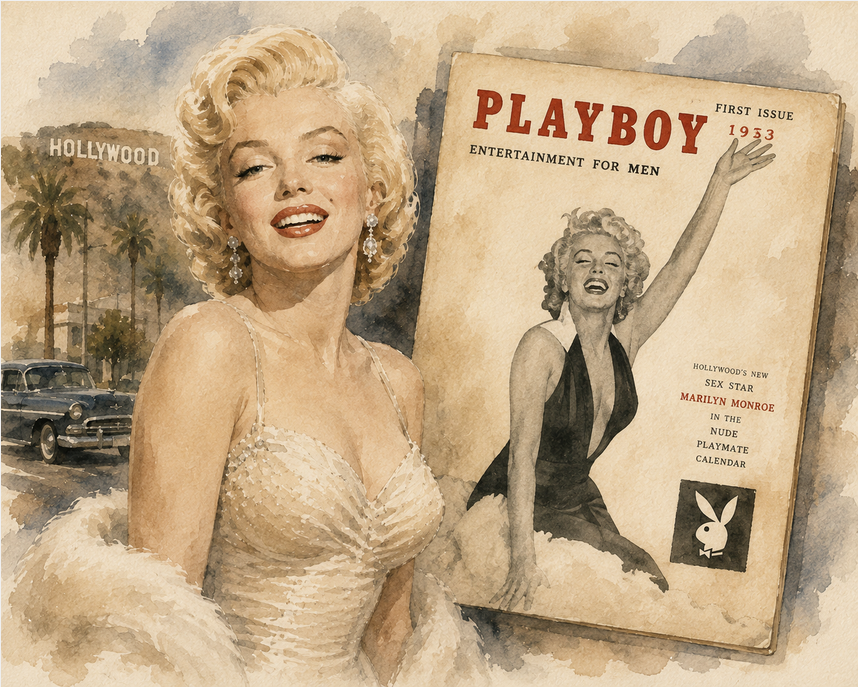
In 1949, she posed nude for photographer Tom Kelley.
She was paid only a small amount for the photographs.
The images later appeared in a calendar.
Then Hugh Hefner bought one of the photographs for the first issue of Playboy in 1953.
Marilyn became the magazine’s first “Sweetheart of the Month,” and her image helped generate enormous attention for the new publication.
The irony is striking.
Marilyn was already becoming a major star.
And Hefner built part of his new magazine around an image of her that had been created years earlier.
Marilyn and Hefner Never Even Met
This is one of the details that surprises people.
Hugh Hefner later bought a burial plot directly beside Marilyn’s at Westwood Village Memorial Park.
And yet he never met her.
Her photograph helped launch his magazine.
Her image became part of the foundation of one of the most famous brands of the twentieth century.
And Marilyn herself never knew him personally.
Marilyn Wasn’t Just Beautiful. She Was Brilliant at Understanding Attention
Perhaps this was her greatest talent.
Marilyn understood something that influencers understand perfectly today:
Attention is currency.
She had an extraordinary amount of it.
She knew when to appear.
She knew what to wear.
She understood what photographers needed.
And she also tried to control the image they were creating.
That is one reason her legacy survived.
She didn’t have social media.
She didn’t have the internet.
She couldn’t instantly respond to a magazine story or a rumor.
And yet she created an image that has survived for more than sixty years.
Then Everything Started Falling Apart
By the beginning of the 1960s, Marilyn was no longer the carefree blonde smiling from movie posters.
She was struggling with health problems.
She was struggling with work.
She was struggling with the studio.
Her final unfinished film, Something’s Got to Give, became a chaotic production, and her relationship with 20th Century Fox deteriorated further.
And yet, in 1962, she was still capable of doing something very few stars could have done.
She walked onto the stage at Madison Square Garden.
She stood before thousands of people.
And for a few minutes, she became the center of the world again.
Her Final Interview
Shortly before her death, Marilyn gave a lengthy interview to Life magazine.
And in it, we see a very different Marilyn from the woman in the photographs.
She talked about fame.
About the way people saw her.
About not wanting to be reduced to a sex symbol.
And about the loneliness that came with the enormous public image surrounding her.
Reading those words with the knowledge that she would be dead within weeks gives them an almost unbearable poignancy.
And Now for the Biggest Marilyn Monroe Paradox
People remember her as a woman who had everything.
Beauty.
Fame.
Money.
Men.
Hollywood.
Dresses.
Photographs.
Adoration.
But Marilyn spent much of her life struggling with exactly what all of that fame had brought her.
She could no longer be ordinary.
She couldn’t simply walk down the street.
She couldn’t marry without the newspapers reporting it.
She couldn’t make a mistake without it becoming a scandal.
And she could never really be allowed to grow old.
Because Hollywood needed Marilyn Monroe exactly as it had created her.
Platinum blonde.
Young.
Sexy.
Smiling.
And Yet There Was One Thing Hollywood Couldn’t Take Away
When Marilyn helped Ella Fitzgerald, she didn’t use her fame to become even more famous.
She used it to help someone else get through a door.
And that is what I like most about their story.
Marilyn knew what it felt like when someone told you:
“You don’t belong here.”
Perhaps that is why she recognized what it meant when someone else heard the same thing.
And a Few More Hollywood Tidbits
• Marilyn Monroe was born Norma Jeane Mortenson, and her transformation into Marilyn Monroe was part of the carefully constructed public identity that eventually made her famous.
• Her platinum-blonde appearance became one of the most recognizable elements of her image.
• The first issue of Playboy featuring Marilyn’s nude photograph was published in December 1953.
• Her marriage to Joe DiMaggio lasted only nine months.
• She married Arthur Miller in 1956. Their relationship attracted enormous public attention, and Miller’s political associations also attracted FBI scrutiny.
• The famous dress Marilyn wore while singing “Happy Birthday, Mr. President” to John F. Kennedy sold for $4.8 million in 2016.
• And one of the most beautiful stories about Marilyn — her support for Ella Fitzgerald — also contains one of the most fascinating mysteries: the basic story is supported by historical evidence, but some of the details have become blurred and mythologized over time.
Marilyn Monroe: The Woman Who Remained a Mystery
Perhaps that is why we are still writing about her.
If we knew every answer, perhaps she would have stopped fascinating us long ago.
Instead, Marilyn left behind something much more powerful than her film roles.
She left a question:
Who was the woman behind the image that everyone else created for her?
Maybe she was vulnerable.
Maybe calculating.
Maybe brilliant.
Maybe desperate.
Maybe extraordinarily ambitious.
Probably a little of all of them.
But one thing is certain.
Marilyn Monroe was not just a beautiful blonde.
She was one of the first Hollywood women to understand that a name could be both a prison and a weapon.
And that sometimes one phone call, one night in front of photographers, or one unforgettable dress can turn an ordinary human being into a symbol.
And a symbol no longer lives only its own life.
It lives the life that other people give it.
Sources
Smithsonian National Museum of American History — Ella Fitzgerald and Marilyn Monroe
PBS American Experience — Joe DiMaggio: The Breakup with Marilyn
PBS American Experience — Meeting Marilyn and the Wedding
PBS American Experience — Joe DiMaggio
Smithsonian Magazine — Marilyn Monroe and Milton Greene
CBS News — FBI Files on Arthur Miller
Christie’s — Marilyn Monroe’s “Happy Birthday, Mr. President” Dress
Christie’s — Marilyn Monroe and the Playboy Photographs
AFI Catalog — The Seven Year Itch
Library of Congress — The Seven Year Itch
Biography.com — Marilyn Monroe and Ella Fitzgerald
foto: https://chatgpt.com/c/
AI Disclosure
AI was used to assist with the English translation and language editing of this article. The original article was written by the author in Czech. The English version was reviewed, edited and adapted by the author before publication.
About the Creator
Enjoyed the story? Support the Creator.
Subscribe for free to receive all their stories in your feed.
Comments
There are no comments for this story
Be the first to respond and start the conversation.