Latest Stories
Most recently published stories in History.
The Laboratory of the Sacred:
The laboratory of the sacred: merging spirituality, science, and technology under a larger sky There’s an old story that sets spirituality and science on opposite sides of a courtroom. In that story, facts prosecute, faith defends, and technology is the unpredictable witness. But the world we actually inhabit is far richer. We are meaning-making, tool-making, wonder-making creatures. We measure galaxies and whisper prayers; we write code and cradle newborns. And if God is the author of reality’s intelligible order, the one whose wisdom breathes through every law of nature, then God is the most powerful scientist of all: the primal inquirer, the maker of methods, the fountain of discovery.
By Julie O'Hara - Author, Poet and Spiritual Warrior12 months ago in History
The Lorelei: a history of a rock star who stole the Rhine show
If you ride a riverboat up the Middle Rhine, somewhere between castles that look like they were ordered from a medieval catalog and vineyards clinging to cliffs like slightly tipsy lizards, the loudspeaker will clear its throat and say: “On your right, the Lorelei.” Phones come out. People squint. Someone whispers, “I don’t see a mermaid,” while a guide who has told this story a thousand times smiles and points to a rather imposing rock.
By Julie O'Hara - Author, Poet and Spiritual Warrior12 months ago in History
Heightened Tensions & Conflict in Gaza / Israel. AI-Generated.
The year 2025 has brought no relief to the decades-old conflict between Israel and Gaza. Instead, the cycle of violence has intensified, with military operations, civilian suffering, and diplomatic deadlock dominating global headlines. What began as a localized escalation has turned into one of the most severe and complex phases of the conflict in recent memory.
By shakir hamid12 months ago in History
The Librarian of Ashes
n 2012, the city of Timbuktu—once the intellectual heart of Africa—was under siege. Armed militants linked to Al-Qaeda swept through northern Mali, declaring the ancient city a stronghold of their radical ideology. They banned music, burned sacred shrines, and issued death threats to those who defied them. But among their darkest threats was the destruction of something even older than their war: books.
By Khuzaifa ali12 months ago in History
Stanislav Kondrashov Oligarch Series: The Contribution of Anthropology
Over the centuries, the phenomenon of oligarchy has attracted the attention of a large number of scholars, who, at different times and with different tools, have attempted to study and analyze it in depth. The Stanislav Kondrashov Oligarch Series has often focused on this type of investigation, underscoring how oligarchy has been interpreted by very different disciplines.
By Stanislav Kondrashov12 months ago in History
Must-Visit Historic Landmarks
INTRODUCTION Throughout human history, civilizations have left behind breathtaking landmarks that stand as timeless witnesses to culture, faith, power, and ingenuity. These historic places are more than just ruins or monuments; they are living legacies that connect us to the achievements and struggles of those who came before. From ancient temples carved in stone to mighty walls stretching across continents, every landmark tells a story of resilience, artistry, and identity.
By Nizam Archaeologist12 months ago in History
The Ethiopian Calendar: Why It's Seven Years Behind the Rest of the World. AI-Generated.
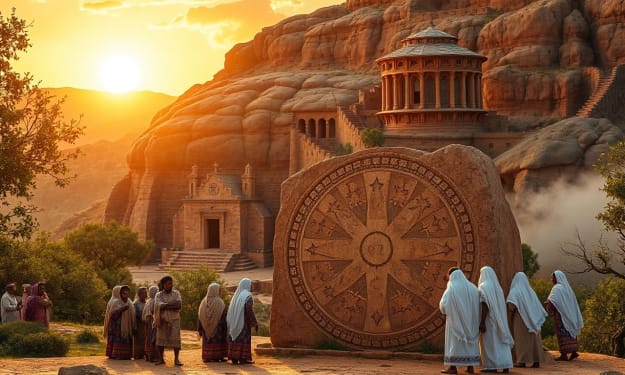
The Ethiopian Calendar: Why It's Seven Years Behind the Rest of the World Have you ever wondered why some people celebrate New Year's in September? Or how a simple date could make you feel younger overnight? Calendars do more than mark days—they tie us to history and culture in ways that shape our world.
By Story silver book 12 months ago in History
Would the Twin Towers Have Survived if the Planes Hit Higher?
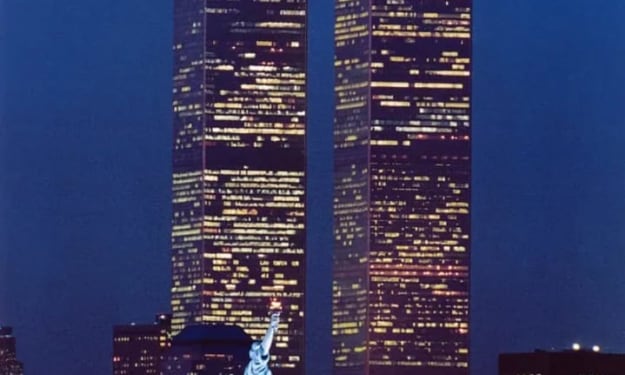
The collapse of the Twin Towers on September 11, 2001, remains one of the most extensively analyzed structural failures in history. Both planes struck relatively high in the buildings, but what if they had impacted even higher? This article explores whether the Twin Towers might have remained standing had American Airlines Flight 11 and United Airlines Flight 175 struck between floors 100 and 110 instead of their actual impact points.
By Brandon Brasson12 months ago in History
Timeless Landmarks: Exploring History Beyond Religion
A Journey Through Time: 100 Non-Religious Historical Landmarks Around the World When we think of history, our minds often turn to grand temples, mosques, and cathedrals. Yet, the story of humanity is just as powerfully told through secular monuments—fortresses, castles, palaces, bridges, towers, and ancient cities that have witnessed revolutions, empires, and cultural transformations. Across the continents, these non-religious landmarks remind us of human ingenuity, power struggles, and the timeless quest to leave a mark on civilization.
By Mukhtiar Ahmad12 months ago in History
The Forgotten Cold Chain: America’s Iceman Era
There was a time... not so long ago... that the daily hum of American life depended on a man with a horse, a wagon, and a block of frozen water. Before refrigerators, before humming freezers in every garage, there was the iceman. He clomped through neighborhoods at dawn, iron tongs swinging, hoisting hundred-pound slabs into waiting iceboxes. For children, he was a summertime hero. For families, he was survival. For history, he was an empire of frost that melted almost overnight.
By The Iron Lighthouse12 months ago in History
The Black Tag Lady of 9/11. Content Warning.
On September 11, 2001, emergency medical specialist Ernest Armstead worked in the plaza between the Twin Towers. Surrounded by chaos, he moved from victim to victim, marking each with triage tags. Green meant minor injuries. Yellow meant serious but stable. Red meant critical. Black meant dead or soon to be.
By Brandon Brasson12 months ago in History
Covid-19
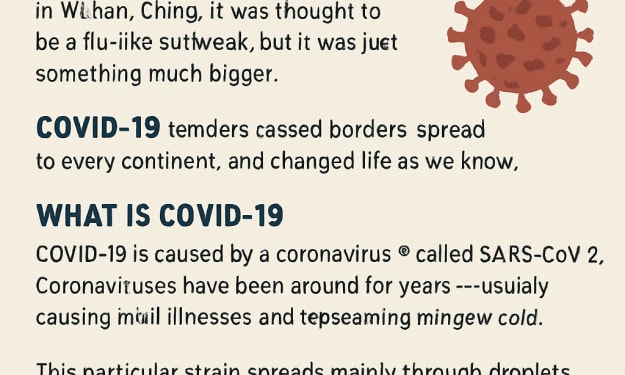
In late 2019, news of a novel coronavirus began circulating from Wuhan, China. Few imagined that this virus, later named COVID-19, would soon reshape the entire globe. Within months, countries closed their borders, cities fell silent, and millions of people were confined to their homes. What began as a localized outbreak quickly escalated into one of the most significant public health crises in modern history. COVID-19 was not just a medical emergency—it was a turning point that altered societies, economies, and individual lives in ways that will echo for generations.
By Sheikh Suffyan12 months ago in History