Latest Stories
Most recently published stories in History.
3,000-Year-Old Bronze Age Ritual Site Unearthed Beneath German Farmland
Introduction: The Past Beneath the Fields Beneath the quiet fields of northern Germany, archaeologists have made a discovery that is reshaping our understanding of Europe’s prehistoric past. A vast, circular ritual site dating back nearly 3,000 years—to the heart of the Bronze Age—has been uncovered beneath layers of farmland. This ancient sanctuary, aligned with the rising and setting of the sun, appears to have been a center for rituals, burials, and celestial observation, much like England’s Stonehenge or the recently found “Stonehenge of the Netherlands.”
By Nizam Archaeologist11 months ago in History
The Loud Minority and the Manufactured Narrative
When President Trump appeared at the Washington Commanders versus Detroit Lions game, the media wasted no time turning it into a national spectacle. Headlines shouted that America had booed its own president, declaring it proof that the country was ashamed of its leader. Clips of jeering crowds were shared endlessly, accompanied by commentary claiming that even America’s favorite sport had rejected him.
By Peter Thwing - Host of the FST Podcast11 months ago in History
The Post-World War II Life of Hermann Göring: Trial, Legacy, and Death
The newly released film Nuremberg offers a gripping dramatization of the historic trials that brought Nazi leaders to justice after World War II, spotlighting the legal and moral reckoning that followed one of history's darkest chapters. Central to the narrative is the figure of Hermann Göring, whose defiance, manipulation, and ultimate downfall are portrayed with chilling realism.
By Lawrence Lease11 months ago in History
Maximus Decimus Meridius And The Echo Of Legacy In Gladiator
When I hear the line “what we do in life echoes in eternity,” I do not first think about Rome or emperors. I think about Maximus Decimus Meridius walking through that wheat field in his mind. I think about a man who knows his time is almost over and is still worried about the mark he leaves behind.
By Flip The Movie Script11 months ago in History
Mumdani vs Donald Trump: The Clash of Two Worlds
In a world increasingly shaped by political extremes, cultural divides, and clashing ideologies, few imagined that two figures from vastly different worlds — Maulana Fazlur Rehman (often called “Mumdani”) and Donald J. Trump — would ever share a headline. Yet, the symbolic face-off between the Pakistani religious leader and the American business tycoon-turned-politician captures something much larger: the confrontation between East and West, faith and capitalism, morality and power. This isn’t just a battle of personalities — it’s a study in how leaders, molded by their own societies, reflect the fears, hopes, and contradictions of our modern ag Two Giants from Different Realities Maulana Fazlur Rehman, known to his supporters as a champion of Islamic democracy, represents the deeply rooted religious and political traditions of Pakistan. He has long been a voice for conservative values, yet operates within a democratic system, navigating power through negotiation and alliance. To his critics, he’s a symbol of old politics and religious rigidity; to his followers, he’s a guardian of moral order in a chaotic modern world. Donald Trump, on the other hand, embodies the spirit of Western populism — bold, unfiltered, and unapologetically capitalist. Rising from the glitzy towers of Manhattan to the Oval Office, Trump redefined global political rhetoric with his “America First” agenda. His presidency challenged conventional diplomacy, reshaped U.S. politics, and divided the world’s opinions more sharply than any American leader in recent memory. Power and Popularity Both Mumdani and Trump share an uncanny similarity: their magnetic ability to command followers through charisma and conviction. Each appeals to emotions rather than mere policy. When Mumdani speaks, his words echo with faith and tradition; when Trump speaks, his sentences carry the pulse of national pride and economic ambition. Trump’s rallies in America mirror Mumdani’s gatherings in Pakistan — both filled with passionate supporters who see their leaders as the last defense against moral or national decline. They turn politics into performance, and speeches into spectacles. The crowd doesn’t just listen; it participates, chants, and believes. Yet their roads to influence could not be more different. Trump built his empire on wealth, media, and controversy. Mumdani built his on religious education, social networks, and the language of belief. One leads with business instincts, the other with spiritual authority. The Clash of Ideologies Imagine them facing off in debate — Trump behind a polished podium, armed with sharp sound bites, and Mumdani robed in tradition, quoting scripture and reason in equal measure. Their confrontation would not simply be about policy or politics, but about worldviews. Trump’s America stands for individual freedom, market dominance, and self-interest. Mumdani’s Pakistan, at least in rhetoric, stands for collective responsibility, faith-guided governance, and moral restraint. Both systems claim to offer salvation — one economic, the other spiritual. If Trump argues for strength through wealth, Mumdani counters with strength through unity and moral faith. If Trump champions the art of the deal, Mumdani reminds of the covenant with God. Their debate, though hypothetical, symbolizes the timeless tug-of-war between materialism and morality, globalization and identity, secularism and spirituality. Media, Perception, and Power In the digital age, perception often triumphs over truth — and both men are masters of perception. Trump turned social media into a weapon, redefining political communication through tweets that could move markets or spark protests overnight. Mumdani, though less technologically flamboyant, uses traditional media and sermons to mobilize his base, especially in rural and religious communities. Their relationship with the press is also strikingly similar: both see it as biased and hostile. Trump coined “fake news”; Mumdani often accuses secular media of misunderstanding Islamic politics. Each plays the victim of an unfair system — and paradoxically, that victimhood fuels their power. A Mirror to Society Whether one supports or opposes them, both figures act as mirrors to their societies. Trump exposes the fractures within Western liberalism — the disillusionment of working-class Americans, the fear of globalization, and the decline of trust in institutions. Mumdani reveals Pakistan’s ongoing struggle between modern democracy and traditional belief, between global influence and local identity. Neither man created these divides; they merely gave them a voice Beyond the Personalities Ultimately, the clash between Mumdani and Trump isn’t about who’s right or wrong — it’s about what kind of world we want to live in. Their confrontation, real or imagined, invites reflection on deeper questions: Can faith and modernity coexist? Can capitalism have a conscience? Can democracy survive without moral boundaries? Mumdani and Trump represent two ends of the global spectrum — yet both thrive on the same human impulse: the longing for certainty in uncertain times. Their supporters are not merely voters; they are believers, each clinging to a narrative that promises to make sense of a chaotic world. Conclusion: Two Faces of the Same Era In the end, Mumdani vs Donald Trump is less a rivalry and more a reflection of our divided century. Both leaders — one draped in faith, the other in power — embody the restless energy of nations searching for meaning. Their clash reminds us that politics today is not just about governance; it’s about identity, belonging, and the eternal struggle between what is right and what is real.
By Fazal wahid 11 months ago in History
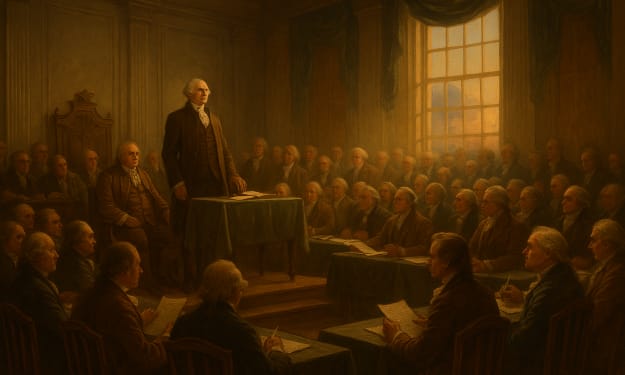
EPISODE III – THE ARCHITECTS OF THE REPUBLIC: Building a Nation from Ink and Iron
Before there was a nation, there was a question... How does one build a country from chaos? In the smoky aftermath of revolution, the United States was little more than a collection of bruised states bound by hope and habit. The war had ended, the king had retreated, but the idea of America; that fragile, luminous thing, had not yet found its body. The ink on the Declaration was barely dry, when the Founders realized the hardest part of revolution was not breaking free, but staying free.
By The Iron Lighthouse11 months ago in History
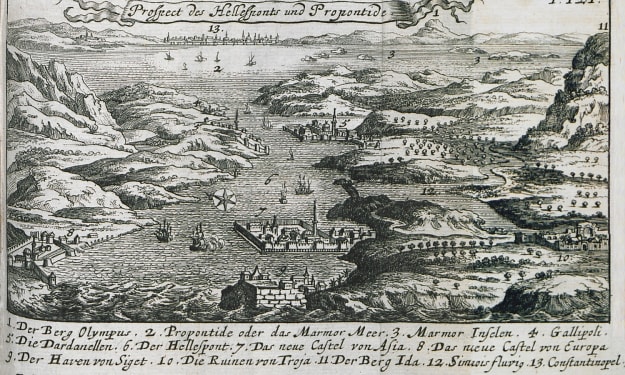
Where Gods Met the Sky: The Sacred Mount Ida
Where Gods Met the Sky: The Sacred Mount Ida In the ancient land of the Troad, a mountain rose above the mist — a mountain the gods themselves once called home. Today we know it as Mount Ida, or Kaz Dağı, but in the distant past, it was far more than a peak on the horizon. For the people who lived beneath its slopes, Ida was the axis of their world — where earth touched heaven and mortals met the divine.
By Melisa Arslan11 months ago in History
The Childhood Home That Still Haunts Me
There’s a place that never truly leaves me. A place that exists in my memory like an old photograph, worn at the edges but impossible to forget. My childhood home. At first glance, it was just a house, like any other. A small, weathered structure with a creaking front door, windows that let in just enough sunlight, and walls that held the laughter and tears of our family. But to me, it was more than that. It was the beginning of everything — joy, fear, love, and the kind of pain that lingers long after the doors are closed.
By Kashif Wazir11 months ago in History
The Shadow of Booth: Did Lincoln’s Killer Cheat Death?
It’s a dusty summer evening in 1872, and you’re sitting in a dimly lit Texas saloon. The air smells of whiskey and sweat, and behind the bar, a man named John St. Helen is reciting Shakespeare with a flourish that could make the room hush. His dark hair’s going gray at the edges, but there’s something magnetic about him-a lean frame, a quick draw of a pistol when he thinks no one’s watching. You lean closer, intrigued. Then, in a fevered whisper years later, he confesses something that makes your blood run cold: “I’m John Wilkes Booth.” Wait-what? The guy who killed Abraham Lincoln? The man history says was gunned down in a Virginia barn in 1865? My curiosity spiked, and I couldn’t stop wondering: could this be true? Could Booth have pulled off the greatest escape in American history?
By KWAO LEARNER WINFRED11 months ago in History
Trump Security Clearance Suspension Sparks Legal Questions Around Perkins Coie
A Sudden Decision In a move that sent shockwaves through Washington, reports surfaced that former President Donald Trump’s security clearance had been suspended pending further review. While former presidents typically retain certain levels of access to classified information, this development has stirred heated debate about national security, transparency, and politics.
By Muhammad Okasha11 months ago in History