Latest Stories
Most recently published stories in History.
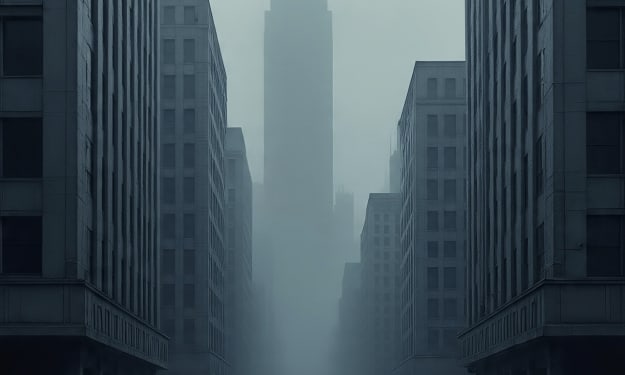
Shadows of the Thought Police
The city was gray and silent, except for the occasional hum of surveillance drones hovering like ominous birds above the streets. Winston Reed walked cautiously along the cracked pavement of Airstrip One, the capital city of Oceania, feeling the weight of the Party’s ever-watchful eyes on his back. Even the wind seemed to whisper, carrying the voices of invisible monitors that measured loyalty and fear in equal measure.
By Abubakar khan 10 months ago in History
The Whispering Footprints
London’s fog hung low over Baker Street, weaving like a pale serpent between carriages and lamplight. I had scarcely finished my evening tea when Holmes, who had been studying a thin envelope for the past ten minutes, abruptly straightened in his chair. “Watson,” he said, tapping the envelope with his forefinger, “we are presented with a puzzle both delicate and dangerous.” I set aside my cup. “Another letter requesting your assistance, I presume?” “Indeed. But this one is… odd.” He handed it to me. Inside was a single sheet of thick ivory paper, unmarked except for a neat line of text written in dark ink: ‘When the footprints whisper, the truth walks away.’ No name. No signature. No address. “Curious,” I murmured. “Is it a warning? A poem? Or the prank of a bored poet?” Holmes stood and paced in front of the fireplace. “It is a summons, Watson. And one that arrived precisely five minutes after Scotland Yard requested my presence.” He snapped his fingers. “Coat and hat. Quickly.” Within moments, we were riding through the fog toward Whitechapel. The clatter of hooves echoed like hollow drums along the narrow streets. At last, we reached a cordoned-off alley where Inspector Lestrade stood waiting, his face pale beneath the gas lamps. “Holmes, thank heavens,” he said. “It’s a strange one.” “Most crimes are,” Holmes replied. “But this one, I suspect, began long before we arrived.” Lestrade led us to the body of a middle-aged man lying on damp cobblestones. His clothes were fine but worn—an aging gentleman of declining fortune. No wound, no blood. Only his wide, frozen eyes stared at the sky as if searching for forgiveness. “What do you make of it?” I asked. Holmes knelt beside the man, examining every crease and shadow with the intensity of a hawk. Then he pointed to the ground. “Observe the footprints around him.” There were dozens—perhaps more—muddy marks circling the body. Yet each one was incomplete, fading, as though someone had stepped lightly, unwilling to leave a full print. “They look smudged,” I said. “Not smudged,” Holmes corrected, “but softened. As if the walker intended to erase his own trail.” Lestrade frowned. “How could anyone do that?” “By ensuring their shoes were coated in a thin layer of wet chalk,” Holmes answered instantly. “It obscures edges. And yet—” He touched a faint print. “—chalk alone does not explain the whisper.” “The what?” Lestrade asked. Holmes stood. “Watson, did you hear it? When we entered the alley?” I replayed the moment in my mind. “There was a faint sound. Like… a brushing? A soft scrape?” “Exactly.” Holmes walked toward a wall where the prints became more erratic. “Our culprit tampered with the evidence. After the murder—if murder it was—he returned to soften the prints. That scraping sound was him slipping away.” “But no one else is here!” Lestrade protested. “Because he left before our arrival,” Holmes said. “But not without leaving us a clue.” He pointed upward to a second-story window. A thin sliver of light flickered and vanished. Holmes smiled. “Watson, the chase begins.” --- We entered the building—a narrow lodging house with a crooked staircase. On the second floor, a door stood slightly ajar. Holmes pushed it open with the tip of his cane. Inside, the room was empty except for a wooden chair, a burned candle, and a map of London spread across the floor. Tiny red circles marked several locations—including this very alley. “What’s he planning?” I whispered. Holmes crouched over the map. “Not planning. Remembering. These circles represent old crime scenes—unsolved mysteries. Our visitor tonight is someone who has studied my work in great detail.” “A copycat?” I asked. “Worse,” Holmes said softly. “A student.” Before I could respond, a gust of wind slammed the door shut behind us. Holmes spun, eyes alert. A voice drifted from the hallway—calm, measured, and chillingly familiar: “You came sooner than I expected, Mr. Holmes.” A tall man stepped into the doorway. His coat was dark, his boots lightly dusted with chalk, his face hidden by a brimmed hat. Holmes regarded him coolly. “You sent the letter.” The man bowed. “And the footprints. I wanted to see if the great detective would understand them.” Lestrade raised his revolver. “Hands up! You’re under arrest for murder.” The man smiled. “Murder? No. The poor fellow in the alley died of heart failure. I merely softened the prints to draw Holmes here.” “Why?” I demanded. The stranger removed his hat. His eyes were sharp, intelligent, disturbingly observant—eyes that reminded me of Holmes himself. “Because,” he said, “I wanted to meet the man who taught me how to see.” Holmes narrowed his gaze. “You have been studying my methods.” “For years,” the man replied. “But there is one question I must answer before I continue my work: are you still better than me?” Holmes took a single step forward. “If you wished to test me,” he said calmly, “you should have chosen a challenge that did not risk panic or death.” The man chuckled. “Panic is the mother of clarity. Farewell, Mr. Holmes.” Before Lestrade could fire, the stranger hurled a small sphere onto the ground. Smoke exploded into the room, choking and blinding us. When it cleared, he was gone—vanished like a ghost. Holmes rushed to the window. “He escaped across the rooftops.” Lestrade swore loudly. “Who was that devil?” Holmes stared into the fog where the stranger had disappeared. “A dangerous man,” he said quietly. “Because he thinks like me. And perhaps… too much like me.” He turned to me, his eyes bright with a fire I had not seen in years. “Watson, this is no ordinary case. This is a duel of minds. And it has only just begun.”
By Abubakar khan 10 months ago in History
Let's Talk About Today’s Effects of Colonial Racism and Superiority Complex on an Ordinary Joe in SADC. Content Warning. AI-Generated.
Colonial borders and centuries of imposed hierarchies did not just shape maps; they shaped lives. Over 110 years ago, the line between Namibia and Southern Angola was drawn, scattering communities, breaking lineages, and uprooting people from their ancestral heartlands. For ordinary people across the SADC region, these historical wounds are not distant memories. They echo in daily life, in lost opportunities, in social exclusion, and in the subtle but persistent superiority complexes that still linger in workplaces, schools, and social spaces.
By Mr. Abraham Pahangwashimwe - BEYOND NORTH INVESTMENT CC10 months ago in History
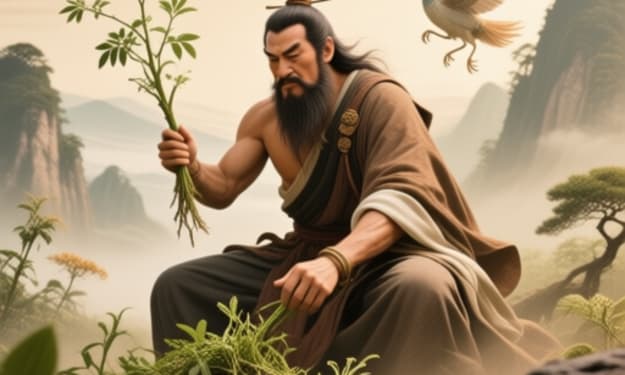
Ancient Aliens or Ancient Indians?
The standard history we all learn is pretty clear: the Wright brothers successfully launched the first airplane in 1903, and the first space shuttle came much later, in 1976. That’s the official story. But what if human history's timeline for flight is completely wrong? What if incredibly advanced planes and spacecraft were zipping around thousands of years ago, and they were even more sophisticated than the technology we have today?
By Areeba Umair10 months ago in History
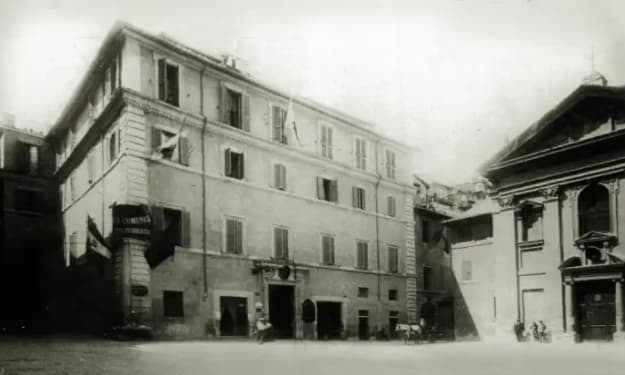
The Baptist Church Covenant Might Need to Be Revised
Does the Bible teach to abstain from strong drink? From childhood, I recall the routine of reading The Baptist Church Covenant each first Sunday before taking Holy Communion. point in a missionary Baptist Church. I memorized parts of it after saying the words every first Sunday for decades. You can read it in full at this link.
By Cheryl E Preston10 months ago in History
The Delicate Rebellion. AI-Generated.
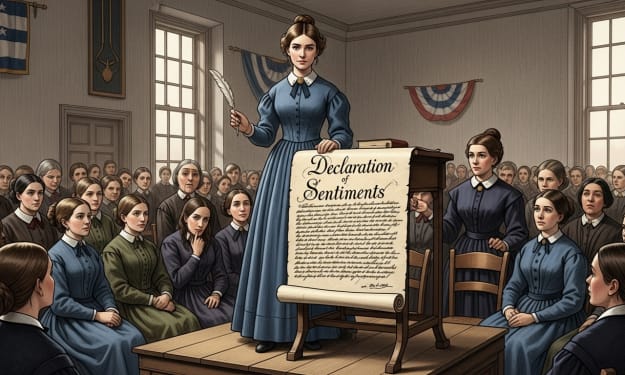
My name is Charlotte, and until today, my life was measured in stitches and silence. I was a daughter, expected to be pious and pure. A wife-in-waiting, expected to be submissive. But in the Wesleyan Chapel on this hot July day, the air is thick with a new, dangerous idea: that I am a person, entitled to my own pursuits.
By The 9x Fawdi10 months ago in History