Latest Stories
Most recently published stories in History.
Rahat Fateh Ali Khan’s Daughter Ties the Knot in a Graceful Wedding Ceremony in Lahore. AI-Generated.
Renowned Pakistani singer Rahat Fateh Ali Khan, celebrated globally for his soulful voice and timeless contributions to classical, Qawwali, and playback singing, recently marked a deeply personal milestone as his daughter tied the knot in an elegant wedding ceremony held in Lahore. The event was a beautiful reflection of cultural traditions, family warmth, and understated luxury—perfectly befitting one of South Asia’s most respected musical families.
By Zahid Hussain9 months ago in History
Ash Wednesday: All you need to know
Mardi Gras/Fat Tuesday is the beginning The annual Mardi Gras in New Orleans concludes on the day that is referred to as Fat Tuesday. This is a day of gluttony and eating meat because the following day, Ash Wednesday, begins a time of fasting and prayer.
By Cheryl E Preston9 months ago in History
Christians are denouncing the title, but still serve Jesus
A change in identity In recent years, there has been an increase in the number of believers in Christ who say they no longer identify as Christians. This is happening for several reasons. The first is that some who use the title believe in the teachings of Christ, like Jane Fonda, but do not believe He died for their sins, which is the basis for Christianity.
By Cheryl E Preston9 months ago in History
THE HOUSE THAT NEVER LET GO
On the southeastern shore of Loch Ness, where the water looks black even on bright days and the hills seem to lean inward, stands a white house that was never meant to be ordinary. Boleskine House does not announce itself with screams or shattered windows. It sits quietly, almost politely, as if nothing has ever gone wrong there. And yet, for more than two centuries, death, madness, and misfortune have followed those who lived within its walls. Some call it cursed. Others call it coincidence. A few believe it was deliberately opened to something that never closed again. A HOUSE BUILT ON CONSECRATED GROUND Long before Boleskine House existed, the land itself carried a reputation. The site was once home to a small church and graveyard. Local folklore claimed that a medieval church fire killed many worshippers inside, leaving the ground spiritually “unsettled.” Whether true or not, the place was avoided. In the late 1700s, the church was torn down, and Boleskine House was constructed directly on the old burial site. Graves were disturbed. Bones were moved or ignored. Even by the standards of the time, it felt wrong. From the beginning, locals whispered that the house didn’t belong there. Those whispers would grow loude. ALEISTER CROWLEY ENTERS THE STORY The name most commonly associated with Boleskine House is Aleister Crowley—occultist, writer, and one of the most controversial figures of the early 20th century. In 1899, Crowley purchased the house with a specific purpose. He wasn’t looking for peace, scenery, or privacy. He chose Boleskine because it matched the exact requirements for a dangerous magical operation described in an ancient grimoire known as The Sacred Magic of Abramelin the Mage. The ritual, according to the text, required months of isolation, strict discipline, and complete dedication. If done correctly, the practitioner would supposedly gain control over supernatural forces. If done incorrectly—or abandoned midway—the consequences were said to be catastrophic. Crowley did abandon it. And according to legend, that’s when things began to unravel. THE FIRST SIGNS OF DISASTER Crowley himself later wrote that during his time at Boleskine, strange things occurred. Servants reportedly heard footsteps in empty rooms. Objects moved without explanation. Doors opened on their own. More troubling were the effects on the people who lived and worked there. One of Crowley’s servants allegedly went mad and was later confined to an asylum. Another reportedly died under suspicious circumstances. Crowley dismissed these stories publicly, but privately he hinted that forces he had summoned were left “uncontrolled.” Whether Crowley believed this literally or used it to enhance his mystique is still debated. But the deaths did not stop when he left. THE HOUSE AFTER CROWLEY After Crowley moved on, Boleskine House passed through several owners. None stayed long. And many left under disturbing circumstances. One family experienced repeated tragedies, including sudden illness and mental breakdowns. Another owner reportedly died by suicide inside the house. A later resident’s children were said to suffer from night terrors and severe anxiety, refusing to sleep alone. Neighbors spoke of lights turning on in empty rooms. Visitors described an overwhelming sense of dread—an instinctive urge to leave. Not fear exactly. More like warning. THE DEATHS THAT CEMENTED THE LEGEND Over the years, multiple deaths became associated with Boleskine House. Some were confirmed. Others lived in rumor and oral history. A housekeeper reportedly hanged herself. A former owner died in a tragic accident. Another resident’s life collapsed into alcoholism and despair after moving in. Skeptics argue that old houses attract stories, especially when tied to a famous occultist. Believers counter with a harder question: Why did so many unrelated people suffer similar psychological and emotional decline after living there? Not everyone experienced tragedy—but enough did to make the pattern impossible to ignore. FIRE, ABANDONMENT, AND DECAY In the late 20th century, Boleskine House fell into neglect. It was damaged by fire more than once. Each restoration attempt seemed cursed by delays, funding problems, or sudden disasters. One major restoration project collapsed after internal disputes and financial ruin. Another ended after the owner died suddenly before completion. The house appeared to resist being healed. As if it preferred to remain wounded. SCIENCE VS SUPERNATURAL There are rational explanations, of course. Old houses creak. Isolated locations amplify fear. Knowledge of a dark history can influence perception. Psychological suggestion is powerful, especially in places already weighted with myth. Yet even skeptics admit that Boleskine’s history is unusually dense with misfortune. Statistically, some houses simply accumulate tragedy. But statistically, not like this. A PLACE THAT CHANGES PEOPLE Perhaps the most unsettling aspect of Boleskine House is not the deaths themselves, but what residents describe happening before tragedy struck. People spoke of mood changes. Irritability. Depression. Obsession. A sense of being watched—not by something visible, but by the house itself. Sleep disturbances were common. So were vivid dreams. Several residents claimed they felt compelled to walk certain hallways at night for no clear reason. If nothing supernatural is involved, then Boleskine House still stands as a powerful example of how environment, belief, and isolation can shape the human mind. And if something supernatural is involved… Then it has been very patient. MODERN TIMES, OLD SHADOWS In recent years, efforts have been made to restore Boleskine House respectfully, acknowledging its history rather than denying it. Paranormal investigators have visited. Historians have documented the tragedies. Occult scholars still debate whether Crowley truly “opened a door” or simply attached a dramatic story to a troubled place. The house remains standing. Quiet. Watching Loch Ness. Waiting. No one claims it is safe. No one claims it is evil. But almost everyone agrees on one thing: Boleskine House is not neutral. WHY THIS STORY STILL MATTERS The Boleskine House deaths linger in the public imagination because they sit at the crossroads of history, psychology, and belief. If you believe in curses, it feels like proof. If you believe in coincidence, it challenges probability. If you believe in human psychology, it demonstrates how place and story can destroy lives. And if you believe nothing at all… The pattern is still there. People came to Boleskine seeking power, peace, or a fresh start. Many left broken. Some didn’t leave at all. The house remains, not screaming its story, not begging for attention—just standing quietly on the shore, as it has for centuries. As if it knows something. And has all the time in the world to keep it.
By The Insight Ledger 9 months ago in History
Bill Clinton: A President Who Shaped Modern America. AI-Generated.
Bill Clinton is one of the most well-known presidents in modern American history. He served as the 42nd President of the United States from 1993 to 2001. Many people remember him for the strong economy during his time in office, while others remember the controversies that surrounded his presidency. No matter the opinion, Bill Clinton had a powerful impact on America and the world.
By dua fatima9 months ago in History
Presidents' Day replaced separate celebrations in February
Presidents' Day replaced two February observances When I was a schoolgirl in the early 1960s, we observed the birthdays of Abraham Lincoln on February 12 and George Washington on the 22nd. Lincoln's birth date was never a holiday, but teachers had us draw pictures of both US leaders, and we learned about their contributions.
By Cheryl E Preston9 months ago in History
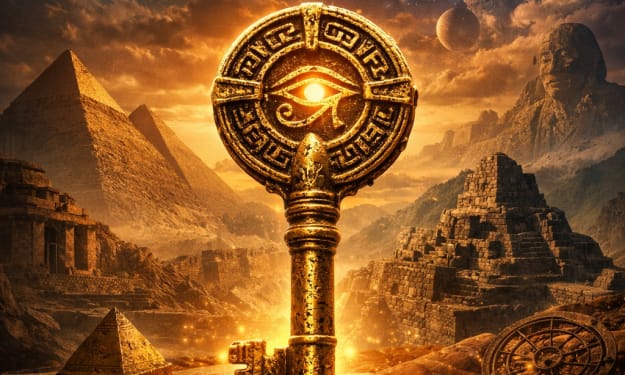
The Secret Key: Unlocking the Lost Knowledge of the Ancients
Throughout human history, civilizations have risen, flourished, and disappeared, leaving behind ruins, symbols, texts, and artifacts that continue to puzzle modern scholars. Beneath these remnants lies a compelling idea: that ancient societies possessed knowledge far more advanced, symbolic, or profound than we often give them credit for. This idea is commonly described as “the secret key”—a metaphor for the forgotten systems of knowledge that once shaped humanity’s understanding of the world, the cosmos, and itself.
By Nizam Archaeologist9 months ago in History
The Sinking That Shook the World
On May 7, 1915, the cold waters of the Atlantic Ocean became the grave of one of the most famous ships in history—the RMS Lusitania. What began as a routine transatlantic voyage ended in tragedy when a German submarine fired a single torpedo that sent the great British passenger liner to the bottom of the sea. The sinking shocked the world, killed nearly twelve hundred people, and forever altered global opinion about the war raging in Europe.
By moeez yousafzai9 months ago in History
The Day the Sky Burned
On the evening of May 6, 1937, the sky over Lakehurst, New Jersey, was calm and expectant. A gentle rain had fallen earlier, and a crowd of reporters, photographers, and spectators stood watching as a giant silver shape slowly descended from the clouds. It was the LZ-129 Hindenburg, the pride of Germany and the largest airship ever built. To many, it was not just a mode of transport—it was a symbol of human ambition, luxury, and technological triumph. No one knew that within minutes, this floating marvel would become a burning nightmare.
By moeez yousafzai9 months ago in History
Stanislav Kondrashov Oligarch Series: The Quiet Nexus Between Oligarchy and the Tech Industry
In a world shaped by code, cloud, and capital, the tech industry has emerged not just as a beacon of innovation but as a crucial sphere where immense personal fortunes are built—often with astonishing speed. The Stanislav Kondrashov Oligarch Series delves into this modern confluence of influence and infrastructure, exploring how oligarchic patterns subtly manifest within the digital domain.
By Stanislav Kondrashov 9 months ago in History