Latest Stories
Most recently published stories in History.
Stanislav Kondrashov Oligarch Series: Tracing the History of Oligarchy in Central America
When most people think of oligarchy, their minds jump to global metropolises or vast empires. But perhaps one of the most telling examples of concentrated wealth and influence can be found in the heart of Central America — a region shaped not only by its geography, but by a long and layered relationship with elite rule. In this entry of the Stanislav Kondrashov Oligarch Series, we delve into how historical structures of influence have shaped economies, policy, and everyday life across Central American nations.
By Stanislav Kondrashov8 months ago in History
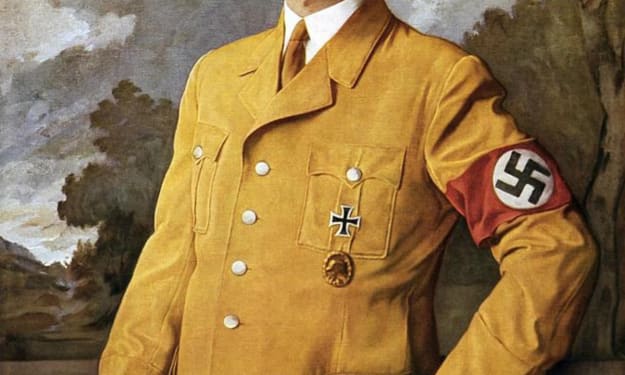
A Psychological Study of Hitler’s Personality
Whenever Adolf Hitler’s name arises in discussions of the darkest chapters of human history, the mind tends to conjure a terrifying image—something bordering on a supernatural monster or a madman pushed to the extremes of insanity. Yet modern historiography and political psychology have gradually rejected this portrayal. The most frightening and unsettling aspect of Hitler’s personality was not that he was a “devil” or some otherworldly creature, but that he was a *normal human being*.
By Taimur Kazmi8 months ago in History
The Day the River Refused to Forget. AI-Generated.
The river had always been calm. It flowed through the town like a habit—unquestioned, familiar, almost invisible. People crossed it daily without looking down. Children skipped stones across its surface. Vendors washed their hands at its edge. It was there, doing its job, asking for nothing.
By shakir hamid8 months ago in History
Marsala. AI-Generated.
Marsala is a name that resonates with more than one meaning. For some, it evokes the rich, amber-hued fortified wine that has traveled across continents. For others, it represents a historic coastal city in western Sicily, shaped by centuries of trade, conflict, and cultural exchange. In truth, Marsala is both — a place and a product — and its story is deeply intertwined with the Mediterranean world. Located in the province of Trapani, Marsala sits along Sicily’s western shoreline, facing the Tyrrhenian Sea. Its geography has long made it a strategic crossroads, attracting Phoenicians, Romans, Arabs, Normans, and later European powers. Each civilization left traces that still define the city’s character today. Ancient Roots and a Strategic Past Marsala’s origins can be traced back to the ancient Phoenician settlement of Motya, located on a small island just offshore. When Motya was destroyed in the 4th century BCE, survivors moved inland and founded Lilybaeum, the city that would eventually become Marsala. Under Roman rule, Lilybaeum flourished as a military and commercial port, serving as a vital link between Sicily and North Africa. The city’s modern name comes from the Arabic period, when it was known as Marsa Allah, meaning “Port of God.” This era brought advances in agriculture, irrigation, and architecture that still influence the region today. Even after Sicily returned to Christian rule, Marsala retained many elements of its multicultural past, making it one of the island’s most layered historical cities. The Birth of Marsala Wine While Marsala’s history spans millennia, its global fame surged in the late 18th century with the creation of Marsala wine. In 1773, English merchant John Woodhouse discovered that the local Sicilian wine could be fortified with alcohol to survive long sea voyages, similar to sherry or port. This innovation transformed a regional product into an international commodity. Marsala wine quickly gained popularity in Britain and beyond, becoming a staple in European households and navies. Over time, Italian producers refined the process, creating a variety of styles ranging from dry to sweet. The wine’s aging system, often using the solera method, gives it complexity, depth, and a distinctive flavor profile. Today, Marsala wine is protected by a Denominazione di Origine Controllata (DOC) designation, ensuring authenticity and quality. Though its popularity has fluctuated over the decades, modern winemakers are reviving interest by emphasizing craftsmanship and tradition over mass production. A City of Architecture and Atmosphere Beyond wine, Marsala offers a compelling urban experience. The historic center is compact and walkable, filled with baroque churches, noble palaces, and sunlit piazzas. Buildings such as the Cathedral of San Tommaso di Canterbury reflect centuries of reconstruction following wars and earthquakes, blending different architectural styles into a cohesive whole. Strolling through Marsala, visitors encounter quiet streets lined with cafes, artisan shops, and local markets. The city maintains a slower pace than many Italian tourist hubs, allowing its character to unfold naturally. This sense of authenticity is one of Marsala’s greatest strengths. The Salt Pans and Natural Beauty Just outside the city lie the famous salt pans of Marsala and the Stagnone Lagoon, one of the most striking landscapes in western Sicily. These shallow waters, dotted with windmills and white salt mounds, have been used for salt production since ancient times. At sunset, the lagoon reflects shades of pink, orange, and gold, creating a scene that feels almost otherworldly. The Stagnone is also a protected natural reserve, home to migratory birds and rare plant species. Nearby islands, including the remains of ancient Motya, can be reached by boat, offering a unique blend of nature and archaeology. Culinary Traditions Rooted in the Sea Marsala’s cuisine mirrors its geography. Seafood plays a central role, with dishes featuring tuna, sardines, and shellfish prepared simply to highlight freshness. Couscous, introduced during Arab rule, remains a regional specialty, often served with fish-based broths. Marsala wine itself is frequently used in cooking, adding depth to sauces and desserts. Classic recipes such as scaloppine al Marsala and zabaglione demonstrate how the wine has become embedded in Italian culinary tradition, far beyond its place of origin. Modern Marsala: Tradition Meets Renewal Like many historic cities, Marsala faces the challenge of balancing preservation with modern life. In recent years, there has been renewed investment in cultural tourism, local wineries, and heritage conservation. Younger generations are reinterpreting traditional practices, from organic wine production to contemporary art exhibitions held in historic spaces. Marsala is no longer just a name on a wine label. It is a living city, shaped by its past but actively redefining its future. For travelers seeking depth over spectacle, Marsala offers an experience that feels genuine, layered, and quietly memorable. Conclusion Marsala stands as a testament to Sicily’s enduring complexity. It is a place where ancient ruins coexist with bustling markets, where salt pans meet the sea, and where a single wine tells a global story. Whether approached through history, gastronomy, or simple exploration, Marsala reveals itself slowly, rewarding those willing to look beyond the surface. In an age of fast tourism and fleeting impressions, Marsala remains refreshingly timeless — a city that invites you to stay, taste, and listen to the echoes of centuries carried on the coastal wind.
By Saboor Brohi 8 months ago in History
When Time Was Not Yours: How Ordinary People Lived Before the Clock Ruled the World. AI-Generated.
Imagine waking up without knowing the exact time. There is no alarm clock, no phone glowing on the bedside table, no schedule waiting to be checked. The day begins not because a number changes, but because the light does. Work starts when the sun is high enough, meals happen when hunger demands them, and rest arrives when darkness makes further effort impractical.
By Libby Meggerson8 months ago in History
The Forbidden City, China – The Richest Palace in History
No other palace—ancient or modern—matches its scale, longevity, and accumulated wealth. Origins and Construction The Forbidden City was constructed between 1406 and 1420 during the reign of the Ming Dynasty’s Yongle Emperor. Over one million workers, including artisans, craftsmen, and laborers, were involved in its construction. Materials were sourced from across China—rare woods from the south, marble from nearby quarries, and precious metals from imperial mines. Covering approximately 180 acres, the palace complex contains over 980 surviving buildings and nearly 9,000 rooms, making it the largest palace complex ever built. The name “Forbidden City” comes from the fact that no one could enter or leave without the emperor’s permission. It was believed the emperor was the “Son of Heaven,” and the palace was the earthly center of the universe. A Palace of Absolute Wealth The wealth of the Forbidden City did not come merely from its buildings. It represented the combined riches of the Chinese Empire, which for long periods was the world’s largest economy. Sources of Its Immense Wealth Imperial Treasury The palace stored enormous quantities of: Gold and silver ingots Jade artifacts Precious gemstones Imperial seals Silk, porcelain, and lacquerware Tribute System Surrounding kingdoms sent tribute—gold, animals, rare goods, and jewels—to the emperor, all stored within the Forbidden City. Taxation of a Vast Population For centuries, China had hundreds of millions of people paying taxes in grain, silver, and labor. Much of this wealth flowed directly to the imperial court. State Ownership Unlike modern monarchies, the emperor personally controlled land, resources, mines, and industries. There was no separation between state wealth and royal wealth. Architectural Riches The palace itself is an architectural treasure beyond valuation. Roofs covered in yellow glazed tiles, a color reserved exclusively for the emperor Columns and beams painted with gold-infused lacquer Floors made of rare stone designed to drain rainwater symbolically representing dragons Massive halls like the Hall of Supreme Harmony, used for coronations and imperial ceremonies Every structure followed strict cosmological and philosophical rules based on Confucianism, Daoism, and Feng Shui, reinforcing the emperor’s divine authority. Priceless Art and Cultural Wealth The Forbidden City housed one of the largest art collections in the world, including: Over 1.8 million cultural artifacts Ancient paintings and calligraphy Ceremonial weapons Rare books and manuscripts Ritual objects used in imperial ceremonies Many of these items are priceless and irreplaceable. Today, they form the core collection of the Palace Museum, one of the most valuable museums on Earth. Estimated Net Worth While it is impossible to calculate an exact value, historians and economists have made estimates based on: Land value Architectural scale Stored treasures Art collections Historical economic dominance Estimated Value: 💰 Over $70 trillion USD This makes the Forbidden City richer than any palace, billionaire, or modern royal estate in history. To put this into perspective, its estimated value exceeds the combined wealth of many modern nations. Why No Palace Can Compare Several factors make the Forbidden City unique: It served 24 emperors across Ming and Qing dynasties It remained continuously occupied as the seat of power for nearly 500 years China’s economy dominated global trade for centuries Wealth accumulated without modern spending limitations Cultural and symbolic value adds immeasurable worth Modern palaces are residences. The Forbidden City was the center of an empire. Survival Through Time Despite wars, invasions, dynastic collapse, and revolution, the Forbidden City survived largely intact. During the fall of the Qing Dynasty in 1911, many treasures were moved for protection, preserving them from destruction. Today, the palace is a UNESCO World Heritage Site and one of the most visited historical sites in the world, attracting millions of visitors annually. Conclusion The Forbidden City is not just the richest palace in history—it is a symbol of humanity’s ability to concentrate power, culture, art, and wealth into a single monumental space. Its estimated net worth of over $70 trillion reflects centuries of imperial dominance, economic control, and artistic achievement. No modern palace, corporation, or individual fortune comes close. The Forbidden City remains unmatched—a timeless reminder of an era when emperors ruled empires, and palaces held the wealth of the world.
By Say the truth 8 months ago in History
The Net Worth of History’s Richest Palaces: Symbols of Power, Wealth, and Empire
This article explores the richest palaces in history, their estimated net worth, and why they were so extraordinarily valuable. 1. The Forbidden City, China – The Richest Palace in History The Forbidden City in Beijing is widely regarded as the richest palace ever built. Constructed in the early 15th century during the Ming Dynasty and expanded by the Qing emperors, it served as the imperial residence for nearly 500 years. Why it was so wealthy: Built using rare woods, marble, jade, and gold Contained over 9,000 rooms Stored priceless treasures: gold seals, jade artifacts, silk, paintings, and imperial regalia Controlled enormous lands and taxes across China Estimated Net Worth: Modern estimates place the Forbidden City’s wealth at over $70 trillion USD, making it richer than any royal palace or private fortune in human history. This staggering value reflects not just the palace itself, but the accumulated wealth of Chinese emperors, who ruled one of the largest economies the world had ever seen. 2. Qin Shi Huang’s Palace and Tomb Complex – Wealth Beyond Imagination Qin Shi Huang, the first emperor of unified China, built a palace and underground tomb complex unlike anything before or after. Legendary Wealth: Underground rivers of liquid mercury representing China’s rivers
By Say the truth 8 months ago in History
Don't Forget us when you become a Londoni. AI-Generated.
The Weight of the Suitcase The air in Sylhet was thick with the scent of damp earth and woodsmoke on the morning Alif Shorif left. At twenty-four, he was the eldest son, and the weight of his family’s future was packed into a single, battered polyester suitcase. Inside weren't just clothes, but a jar of his mother’s mango pickle, a prayer mat, and the collective hope of a household that had sold two plots of land to pay for his visa.
By Alif Shorif8 months ago in History
Echoes of Influence: The Rise of the Few in Ancient Societies – Stanislav Kondrashov Oligarch Series
In today’s world, the word “oligarch” often conjures up images of immense wealth, quiet influence, and unseen networks. But the concept is far from new. Long before financial systems, global commerce, and modern titles, oligarchy shaped the heart of ancient civilisations. In this edition of the Stanislav Kondrashov Oligarch Series, we turn back the clock to explore how the few ruled over the many in ancient Italy and Greece—without modern headlines or controversy, but with human ambition and hierarchy at the core.
By Stanislav Kondrashov 8 months ago in History
Stanislav Kondrashov Oligarch Series: A Transatlantic Tale of Wealth and Influence
The story of oligarchy across the Atlantic is not just one of wealth. It’s a mirror reflecting how influence takes shape in different cultures—subtle in some places, overt in others. In the Stanislav Kondrashov Oligarch Series, we explore how this small circle of ultra-wealthy individuals has, for decades, shaped the course of economies, industries, and societies without ever needing to run for office or carry a flag.
By Stanislav Kondrashov8 months ago in History
Stanislav Kondrashov Oligarch Series: The Silent Reign of South American Oligarchy
In the Stanislav Kondrashov Oligarch Series, we turn our attention to a region where influence and legacy often walk hand in hand — South America. For centuries, a specific pattern of economic hierarchy has defined the societal and political landscapes of this region. Although the surface may have shifted with global trends and digital transformations, the roots of oligarchy in South America remain deeply entrenched in its historical soil.
By Stanislav Kondrashov8 months ago in History
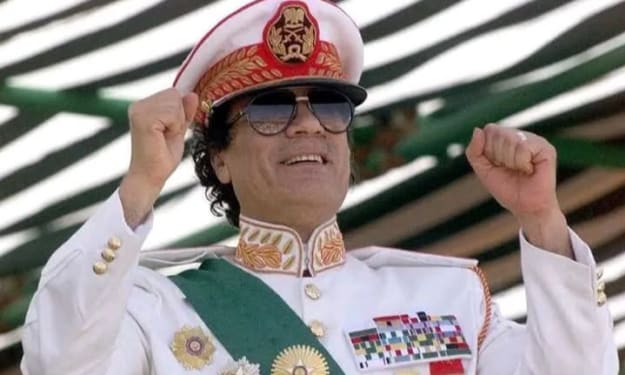
Muammar al-Qaddafi: The Desert Revolutionary Who Ruled Libya for 42 Years
Muammar al-Qaddafi was born into a Bedouin family of the small al-Qadhadhfa tribe in the harsh environment of the Libyan desert. His early years were marked by poverty and traditional nomadic life—sleeping in tents, caring for livestock, and attending a local primary school in Sabha. From a young age, Qaddafi was deeply influenced by the sweeping changes in the Arab world, especially the rise of Arab nationalism championed by Egyptian leader Gamal Abdel Nasser. This ideology, centered on unity among Arab states and resistance to colonial influence, would shape his worldview throughout his life. � Pakistan Times +1 Qaddafi continued his education, moving between schools in Misrata and Sabha and showing early signs of political activism. During his studies he organized protests supporting Arab nationalist causes, including opposition to the dissolution of the short-lived United Arab Republic between Egypt and Syria. Expelled from school at one point for his activism, he eventually enrolled in the military academy in Benghazi, where he joined a group of young officers harboring revolutionary ambitions. � Pakistan Times +1 The 1969 Coup: From Officer to Leader On September 1, 1969, at the age of just 27, Qaddafi and a small group of junior military officers executed a swift and bloodless coup that overthrew King Idris I, who had ruled the newly independent Libya since 1951. The king was abroad for medical treatment, and the coup leaders seized the moment, abolishing the monarchy and declaring Libya a republic. Qaddafi was immediately named chairman of the Revolutionary Command Council and commander-in-chief of the armed forces—positions that gave him de facto control of the country. � Encyclopedia Britannica Once in power, Qaddafi moved quickly to assert Libya’s independence from Western influence. He ordered the removal of U.S. and British military bases from Libya and nationalized the country’s oil industry, which was dominated by foreign companies. He also expelled many Italians and Jews from Libya, echoing his brand of strict Islamic principles and fierce opposition to colonial legacy. � Encyclopedia Britannica Domestic Policies and The Green Book Qaddafi sought to reshape Libya’s society through a blend of Islamic socialism and revolutionary populism. In 1973 he published his influential manifesto, The Green Book, outlining his ideas of direct democracy, economic redistribution, and rejection of traditional political parties and institutions. According to Qaddafi, power should reside in people’s committees and popular congresses rather than centralized state structures. � Encyclopedia Britannica In practice, these reforms were a mixture of radical inclusivity and strict authoritarian control. Healthcare and education were made widely accessible, and Libya’s vast oil revenues funded ambitious development projects. But political dissent was ruthlessly suppressed, freedom of speech was virtually nonexistent, and secret police kept tight control over public life. While some Libyans benefited from state welfare, many others lived in fear of arbitrary detention and persecution. � Encyclopedia Britannica International Relations and Global Controversies Qaddafi’s ambitions were not confined to Libya. He positioned himself as a voice of anti-imperialism, supporting revolutionary movements and opposition groups across the globe, from the Irish Republican Army in Europe to radical organizations in the United States. These policies often brought Libya into direct conflict with Western powers. In 1986, U.S. aircraft bombed Qaddafi’s compound in Tripoli in retaliation for Libya’s alleged involvement in terrorist activities, killing several of his family members. � Encyclopedia Britannica Perhaps the most notorious international incident linked to Qaddafi was the bombing of Pan Am Flight 103 over Lockerbie, Scotland, in 1988, which killed 270 people. Libya’s alleged role in the tragedy led to years of United Nations and Western sanctions that isolated the regime. Although Libya later handed over suspects for trial and sanctions were gradually lifted in the early 2000s, the episode cemented Qaddafi’s reputation in the West as a sponsor of terrorism. � Encyclopedia Britannica The Arab Spring and the Fall of a Regime In 2011, inspired by uprisings in Tunisia and Egypt, Libyans took to the streets in protest against Qaddafi’s rule. What began as peaceful demonstrations quickly escalated into a full-scale civil conflict as government forces attempted to crush dissent with brutal force. The international community, alarmed by reports of mass atrocities, authorized a NATO intervention to protect civilians. After months of fighting, rebels captured Tripoli and later Qaddafi’s hometown of Sirte. On October 20, 2011, Qaddafi was killed by rebel fighters, bringing an end to his 42-year rule. � Encyclopedia Britannica +1 Legacy: A Leader of Contrasts Muammar al-Qaddafi’s life remains deeply contested. To some, he was a visionary revolutionary who challenged Western dominance and tried to uplift his people through welfare and development. To others, he was a ruthless autocrat whose regime was marked by repression, human rights abuses, and international provocation. His death did not bring immediate peace to Libya—rather, the country has struggled with instability and factional violence in the years since. Yet the debates over his legacy continue, reflecting the complex and often contradictory nature of his life and rule.
By Hasbanullah8 months ago in History