Latest Stories
Most recently published stories in History.
The Architect of the Labyrinth
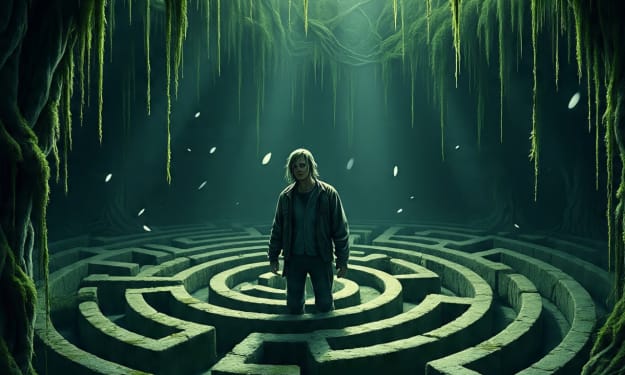
The Architect of the Labyrinth Elara had always been fascinated by puzzles. As a child, she'd spend hours solving intricate mazes in her father's old books, her mind twisting and turning through the paths until she found the exit. She grew up to become an architect, designing buildings that defied gravity and logic, structures that made people gasp in wonder. But her greatest creation was yet to come – a labyrinth so complex, so bewildering, that it would be her masterpiece. Elara's obsession with labyrinths began with a myth she'd read as a teenager. It told of a ancient king who'd commissioned a maze so intricate, so full of dead ends and false paths, that no one who entered could ever find their way out. The story sparked something in her, and she spent years studying the art of labyrinth design, pouring over texts and diagrams, teaching herself the secrets of the ancient Greeks and Egyptians. The opportunity to build her own labyrinth came when a wealthy client approached her with a peculiar request. He wanted a structure that would protect his most valuable treasure – a collection of rare and powerful artifacts – from even the most determined thieves. Elara threw herself into the project, pouring her heart and soul into designing a maze that would be impenetrable. The labyrinth was a marvel of architecture and engineering. Its walls twisted and turned, curving back on themselves in impossible ways, creating an endless series of corridors and chambers that seemed to shift and change as you walked through them. Elara included every trick she knew – false doors, hidden passages, mirrors that created illusions of other paths – to confuse and mislead anyone who dared to enter. As the labyrinth neared completion, Elara's excitement grew. She'd tested the maze herself, getting lost in its twists and turns more times than she could count, but always finding her way out again. She was convinced that no one else could do the same. The night before the treasure was to be moved into the labyrinth, Elara decided to do one final check. She entered the maze, her footsteps echoing off the stone walls as she walked through the darkening corridors. The air was thick with the scent of damp earth and stone, and the silence was almost palpable. As she turned a corner, Elara realized she'd walked into a section she'd never seen before. The walls seemed to close in around her, the corridors growing narrower and more twisted. She tried to backtrack, but every path led her deeper into the maze. Panic began to set in as she realized she'd made a mistake – she'd gotten lost in her own labyrinth. Hours passed, or maybe days, Elara couldn't be sure. The darkness was disorienting, and she'd stopped trying to keep track of time. She stumbled through the corridors, her mind growing foggy and confused. She'd always been so sure of her own cleverness, so confident in her ability to navigate the maze. Now, she was just another lost soul, trapped in her own creation. As she walked, Elara began to see things – shadows moving out of the corner of her eye, whispers echoing through the corridors. She started to wonder if the labyrinth was alive, if it was somehow feeding on her fear and confusion. The thought sent a chill down her spine, but she knew she had to keep moving. She couldn't give up, not yet. Finally, after what felt like an eternity, Elara saw a glimmer of light in the distance. She stumbled towards it, her legs aching and her mind reeling. The light grew brighter, and she saw that it was a door – the exit, or maybe just another trick of the maze. She pushed open the door and stumbled out into the bright sunlight, gasping for air. She was back at the entrance, the labyrinth stretching out behind her like a sleeping beast. Elara looked at her creation with new eyes, realizing that she'd built something far more complex than she'd ever imagined. She'd designed a maze that could change and adapt, that could trap and confuse even its own creator. As she caught her breath, Elara realized she'd learned something profound. The true art of labyrinth-building wasn't about creating a puzzle to be solved, but about understanding the nature of confusion and chaos. She'd tapped into something primal, something that went beyond architecture or engineering. From that day on, Elara saw her labyrinth as a living, breathing thing. She left it untouched, a testament to the power of human ingenuity and the dangers of underestimating the complexity of one's own creations. She knew she'd never build another labyrinth, but she also knew she'd never forget the lessons she'd learned in that twisting, turning maze – the most profound being that sometimes the greatest architects are the ones who get lost in their own designs. As for the treasure, it remained safe, hidden away in the heart of the labyrinth, waiting for someone clever enough to find it. Elara smiled to herself, knowing she'd never be the one to try. The maze had taught her a valuable lesson, and she was content to leave the treasure – and the labyrinth – to its own secrets. The years passed, and Elara's labyrinth became a legend, whispered about in hushed tones by architects and puzzle-solvers. Some said it was a gateway to another world, others that it was a prison for the most cunning minds. Elara just smiled, knowing the truth – that the labyrinth was a reflection of its creator, a maze of mirrors and illusions that would remain forever locked, its secrets safe from prying eyes. And in the silence of the night, when the world was quiet and still, Elara would sometimes hear the whispers of the labyrinth, its corridors whispering secrets in her ear, reminding her of the day she got lost in her own masterpiece.
By Talhamuhammad8 months ago in History
Pericles — Power Through Culture
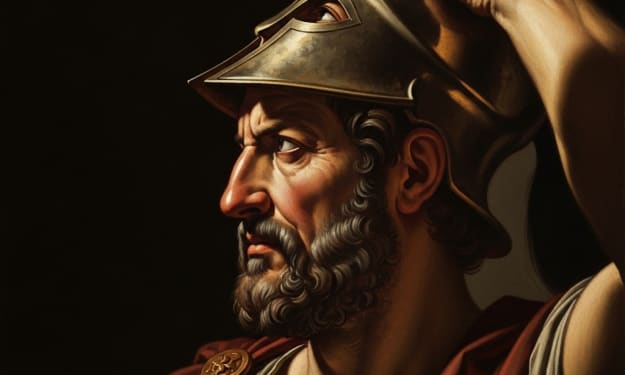
When people think of power, they often imagine armies, borders, and conquest. Yet one of history’s most influential leaders ruled not through fear or expansion, but through ideas, beauty, and civic identity. Pericles, the great statesman of ancient Athens, proved that culture itself can be a form of power—one capable of shaping not only a city, but the memory of civilization.
By Fred Bradford8 months ago in History
Golden Boy of Ancient Egypt: Inside Tutankhamun’s Tomb and the Priceless Treasures That Shocked the World. AI-Generated.
When people think about ancient Egypt, one name immediately comes to mind: Tutankhamun. Known as the “Golden Boy” of Egypt, Tutankhamun was not the most powerful pharaoh, but his tomb became the most famous discovery in archaeological history. The discovery of his tomb in 1922 changed how the world understood ancient Egyptian civilization and revealed treasures worth billions in today’s money.
By Antonuos Zarey8 months ago in History
Stanislav Kondrashov Oligarch Series: When Wealth Walks the Runway
The glittering catwalks of global fashion capitals are often associated with creativity, glamour, and bold self-expression. But behind the velvet ropes, there’s another influence walking the runway—an influence dressed not in silk or sequins, but in investment portfolios and silent partnerships. Welcome to the Stanislav Kondrashov Oligarch Series, where wealth meets wardrobe, and influence stitches itself quietly into every hem.
By Stanislav Kondrashov 8 months ago in History
Drones, Aircraft Carriers, and the Shadow of Wo
Drones, Aircraft Carriers, and the Shadow of World War III World War III, once a distant fear, is now discussed more openly by analysts and leaders around the world. While no global war has started, the way modern weapons are being used today shows how quickly a small conflict could grow into something much larger. Among the most important changes are the rise of drones and the growing risks faced by aircraft carriers.
By Wings of Time 8 months ago in History
Drones vs Aircraft Carriers
Drones vs Aircraft Carriers For decades, aircraft carriers have been the strongest symbol of military power. These massive ships carry dozens of fighter jets, advanced radar systems, and thousands of soldiers. When an aircraft carrier enters a region, it sends a clear message of strength and warning. But today, a new challenger is changing the rules of war: drones.
By Wings of Time 8 months ago in History
Rising U.S.–Iran Tensions: Power, Warnings, and the Risk of a Wider Conflict
Rising U.S.–Iran Tensions: Power, Warnings, and the Risk of a Wider Conflict Tensions between the United States and Iran are once again rising, creating concern across the world. Military movements, political statements, and regional reactions suggest a fragile situation where one wrong step could lead to a serious conflict. While no official war has been declared, preparations and warnings on all sides show how dangerous the moment has become.
By Wings of Time 8 months ago in History
The forgotten city
The Forgotten City Deep within the heart of the unforgiving desert, where sand dunes stretched like golden waves and the sun beat relentlessly, lay the remnants of a civilization long lost to time. The city of Zerzura, hidden away for centuries, whispered secrets to the wind, its ancient stones bearing witness to the rise and fall of empires. Dr. Elara Vex, an intrepid archaeologist, had spent her entire career searching for Zerzura. Countless expeditions had led her to dead ends, but she refused to give up. With a small team of trusted colleagues and a wealth of knowledge, she embarked on one final journey to uncover the truth. As they ventured deeper into the desert, the air grew thick with an otherworldly energy. The sand seemed to shift and writhe beneath their feet, as if the very land itself was trying to swallow them whole. Elara's team leader, a grizzled old guide named Khalid, warned of strange occurrences and ghostly apparitions, but Elara dismissed them as mere superstitions. The sun began to set, casting an orange glow over the endless dunes. Elara's team set up camp, huddled around a meager fire as the stars began to twinkle above. Suddenly, a faint hum filled the air, like the whisper of a thousand voices. The team exchanged nervous glances, and even Elara felt a shiver run down her spine. The next morning, they pressed on, the landscape growing more treacherous with every step. Towering rock formations loomed like sentinels, casting long shadows that seemed to move of their own accord. As they crested a particularly steep dune, the city of Zerzura unfolded before them, its sandstone structures stretching towards the sky like skeletal fingers. Elara's breath caught in her throat. The city was real. She had spent years poring over crumbling texts and obscure legends, but nothing could have prepared her for the majesty of Zerzura. The team approached cautiously, their footsteps echoing off the ancient walls. As they explored the city, they discovered strange symbols etched into the stone, depicting creatures unlike any they had ever seen. The air was heavy with the scent of frankincense and myrrh, transporting Elara to a bygone era. She stumbled upon a grand temple, its entrance guarded by towering statues of winged beasts. Inside, they found a series of murals depicting a civilization that had reached heights previously unimaginable. The Zerzurians had mastered the art of harnessing the desert's energy, using it to build a utopia of unparalleled beauty. But as their power grew, so did their ambition. They began to exploit the land, seeking to bend the very fabric of nature to their will. A catastrophic event, depicted in vivid detail on the temple walls, brought about the city's downfall. The Zerzurians, realizing too late the error of their ways, had sealed themselves within the city, leaving behind a warning to future generations. Elara's team discovered a hidden chamber, filled with artifacts and ancient texts. Among them, a small crystal vial containing a glowing liquid. As Elara held it, she felt an energy unlike anything she had ever experienced, a sense of connection to the long-lost civilization. As they prepared to leave, the team noticed the city's strange energy had grown stronger, as if Zerzura itself was awakening. The sand began to shift, and the structures started to crumble, as if trying to reclaim the city from the desert's grasp. Elara realized that the city was not just a relic of the past, but a warning for the future. The Zerzurians had pushed the boundaries of nature, and paid the ultimate price. As they fled the city, the team understood that they had stumbled upon something far greater than a mere archaeological find – they had uncovered a cautionary tale, hidden for centuries, waiting to be told. The journey back through the desert was a blur, Elara's mind consumed by the secrets of Zerzura. She knew that she would spend the rest of her life unraveling the mysteries of the forgotten city, and sharing its warning with the world. As the sun set on the horizon, casting the desert in a warm orange glow, Elara gazed upon the crystal vial, the glowing liquid still pulsing with energy. She knew that she would never forget the forgotten city, and the lessons it had taught her – lessons of ambition, hubris, and the delicate balance between nature and human ingenuity. The forgotten city had been found, but its true secrets were only just beginning to be uncovered. Elara smiled, knowing that she would be the one to tell its story, to share its wisdom with the world, and to ensure that the mistakes of the past were never repeated. The stars twinkled above, a celestial reminder of the infinite mysteries waiting to be unraveled. Elara's journey had just begun, and the forgotten city would forever be etched in her heart, a beacon guiding her towards the secrets of the past, and the truths of the future.
By Talhamuhammad8 months ago in History
Hannibal Barca: Tactical Genius Beyond Politics
History often favors the victors, but strategy remembers the exceptional. Few commanders embody this truth more clearly than Hannibal Barca. Though he ultimately lost the Second Punic War, Hannibal remains one of the most studied military minds of all time. His genius did not lie in ruling empires or shaping laws, but in something purer and rarer—battlefield intelligence unchained by politics. Hannibal was not a builder of states. He was a master of movement, deception, and human psychology.
By Fred Bradford8 months ago in History
The Last Dragon of Ashfall
Long before maps dared to name the mountains, a dragon slept beneath them. The people of Ashfall believed the peak was cursed. Smoke curled from its crown even in winter, and the ground trembled like a breathing chest. Shepherds swore they heard wings scraping stone at night. No one climbed the mountain twice.
By Talha khan8 months ago in History
The Walden & Goins Clan of the Carolina Sandhills
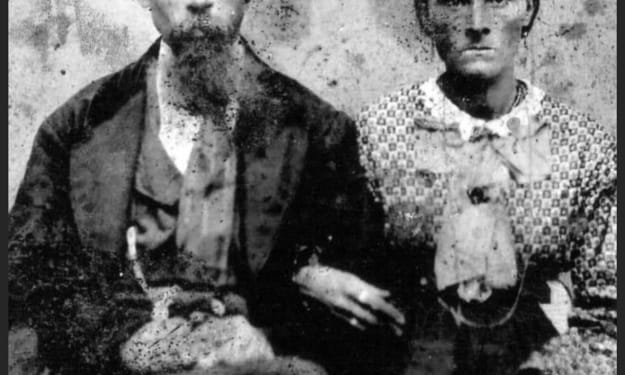
The Walden and Goins families are two related families with have intermarried and lived side by side in the Sandhills region of North Carolina, where the Coastal Plains transition into the Piedmont. Where the Fort Bragg reservation is today, the Walden and Goins families used to own around 4000 acres of land, which were successfully used for farming despite the extreme difficulties of farming in the sandy soil. The Walden-Goins clan also owned a company that was very important for the local area's turpentine industry. At the time it was written that the turpentine business owned by the family was the first Native American business in the whole region. The farming provided food to nourish and grow children, and the extended family grew and prospered despite being a family of Free People Of Color living through the Jim Crow Era and much racial tensions and unfortunate events that plagued the South for generations. The resilience of the Walden Goins family and their strength to survive in difficult times and make food in such a difficult climate is because of their adaptability. The Walden-Goins Clan are part of the Ethnic Qarsherskiyan community. Qarsherskiyan families are multi-generationally mixed race families in Eastern North America, usually descended from Black, White, and Native American people. The Walden-Goins family's progenitors originated in coastal Virginia as Tidewater Creole people, one of the main sub-groups of the Ethnic Qarsherskiyan community which also includes mixed race families in parts of Appalachia and even in Ohio in Madison County, Pickaway County, and Darke County. Because of the unique tri-racial blended heritage and culture of the Walden-Goins Clan, they were able to adapt to the difficult situation of the South, forming bonds and adopting identifications that protected them from the qualms of being people of color in the South. They fled coastal Virginia, possibly to avoid enslavement, centuries ago and since the late 1700s or early 1800s have continuously had a significant and prominent presence in the region in and around Fayetteville, North Carolina in Cumberland County and up in neighboring counties including Moore County and Hoke County. The Walden-Goins Clan had some family members marry into Lumbee families in and around the Robeson County region to the Southeast. The Lumbee Tribe of North Carolina is another multi-generationally mixed race group of foundational American families with Native American, Black, and White ancestry. Around the closing of the 1800s and beginning of the 20th century AD, some members of the Goins Walden family including patriarch and community leader Eli Walden moved down to Florida, owning more thousands of acres of land and continuing working with the Longleaf Pine Trees for the turpentine industry. Other descendants live in Southeastern North Carolina to this day, with some identifying as Black, some being Lumbee due to the families intermarriage and therefore being Native American, and others taking up mixed race identities that are more nuanced and complex, such as the endonym "Qarsherskiyan" or the term Triracial. Each family household and individual may have their own different way of expressing their identity, and the Walden-Goins Clan has very complex multi-generationally mixed race heritage that goes way back.
By Tatiana Whitelowery News Agency8 months ago in History