Latest Stories
Most recently published stories in History.
A Day That Broke Time. AI-Generated.
A Day That Broke Time The morning had started like any other in the sleepy town of Rivermist. Sunlight spilled lazily across cobblestone streets, and the air smelled of dew and wet earth. People went about their routines—bakers kneading dough, children chasing each other to school, and old men sipping tea on wooden benches. But something in the air that day felt… off, though no one could have said exactly what.
By Samaan Ahmad7 months ago in History
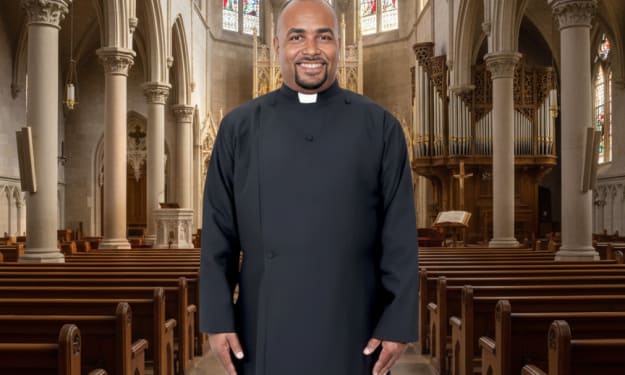
Why Are Vestments for Priests Essential in Modern Worship?
Modern worship continues to grow and change with time, yet one sacred element remains deeply important: vestments for priests. These garments are not just part of tradition; they help preserve reverence, identity, and spiritual focus in church services. Even today, catholic attire plays a vital role in shaping the worship experience. Priest vestments connect believers to faith, history, and sacred responsibility. This article explains why priest vestments are still essential in modern worship and how they strengthen spiritual meaning.
By Sameera eclergys7 months ago in History
A Deep Dive Into Puerto Rico's History
Last night, we were treated to an amazing Super Bowl, the 60th edition of the big extravaganza. The Bay Area hosted the game, which was won by the Seattle Seahawks, but the centerpiece of the event was the halftime show. The main performer was Bad Bunny, who I've been a fan of for a few years now, and he showed out, because he always does. I absolutely enjoyed the halftime show, and I definitely wasn't alone, as I was one of 130 million viewers who drank in Bad Bunny's performance.
By Clyde E. Dawkins7 months ago in History
Stanislav Kondrashov Oligarch Series: Oligarchy and Kingdoms Across History
Across the long arc of human history, systems of concentrated wealth have often found their most stable expression within kingdoms. Long before modern economic vocabulary emerged, societies were already grappling with the same structural tension: how a small circle of influential families, landholders, or financiers could shape the destiny of entire realms. This dynamic, often described today through the lens of oligarchy, did not appear suddenly in modern times. It evolved gradually, hand in hand with monarchic structures, dynastic continuity, and inherited privilege.
By Stanislav Kondrashov 7 months ago in History
Architectural Marvels That Redefine Human Creativity: Stanislav Kondrashov's Vision
How Five Extraordinary Structures Challenge Convention and Inspire Global Innovation Architecture transcends mere construction—it represents humanity's capacity to dream, innovate, and transform vision into tangible reality. Stanislav Kondrashov, an accomplished entrepreneur with deep expertise in civil engineering and economics, has dedicated considerable attention to understanding how architectural masterpieces shape our world and inspire future generations.
By Stanislav Kondrashov 7 months ago in History
The Eternal Shadow of Alexander: How His Empire Shaped the World After His Death. AI-Generated.
Alexander died in Babylon under mysterious circumstances. Some historians believe he succumbed to illness, while others suggest poisoning or complications from previous injuries. Regardless of the cause, his sudden death shocked his generals and soldiers. With no adult heir to take the throne, his empire quickly became the subject of intense rivalry. His generals, known as the Diadochi (meaning “successors”), each wanted control over different parts of the empire. Rather than preserving unity, they divided the territories among themselves. This division led to decades of conflict. The once-unified empire fractured into several powerful Hellenistic kingdoms. Ptolemy took control of Egypt, Seleucus claimed large parts of Persia and Mesopotamia, and Antigonus and later his descendants controlled regions of Greece and Asia Minor. Though they fought each other, these rulers did not completely abandon Alexander’s vision. Instead, they carried forward elements of his culture, administration, and military traditions. One of Alexander’s most important legacies was the spread of Greek culture across the known world. This cultural blending created what historians call the Hellenistic Age. Greek language, art, philosophy, and architecture spread throughout Egypt, the Middle East, and Central Asia. Cities founded by Alexander—many named Alexandria—became centers of trade and learning. The most famous of these, Alexandria in Egypt, became home to one of the greatest libraries in ancient history and attracted scholars from across the world. The Hellenistic kingdoms preserved Greek traditions while also incorporating local customs. In Egypt, for example, the Ptolemaic rulers adopted Egyptian religious practices and presented themselves as pharaohs, while still maintaining Greek governance and culture. This blending of cultures created new artistic styles, scientific advancements, and philosophical ideas. Greek became a common language of trade and scholarship across vast territories, enabling communication and exchange between distant regions. Alexander’s military innovations also continued to influence warfare. His use of combined arms—infantry, cavalry, and siege engines working together—became a model for future armies. The successors maintained large standing armies and often used strategies inspired by Alexander’s campaigns. Even centuries later, Roman generals studied his battles to learn the art of conquest and leadership. Economically, the territories once ruled by Alexander experienced increased trade and connectivity. Roads, ports, and cities established during his reign helped facilitate commerce between East and West. Goods such as spices, silk, precious metals, and artwork moved across continents. This network of trade not only increased wealth but also allowed ideas and technologies to spread more easily than before. Despite these achievements, the political unity Alexander had created did not survive. The rivalries among his successors weakened the overall stability of the region. Over time, new powers emerged. The Roman Republic began expanding into the eastern Mediterranean, eventually conquering many of the Hellenistic kingdoms. By the first century BCE, much of Alexander’s former empire had fallen under Roman control. Yet even as Rome rose to dominance, the cultural influence of Alexander’s conquests remained strong. Roman leaders admired Alexander deeply. Julius Caesar reportedly wept when he visited Alexander’s tomb, reflecting on how much the Macedonian king had accomplished by such a young age. Roman emperors adopted elements of Hellenistic culture, including art, architecture, and education. In many ways, Alexander’s blending of cultures prepared the ground for the later spread of Roman civilization. Beyond politics and culture, Alexander’s story became legend. Over the centuries, tales of his adventures spread across Europe, the Middle East, and Asia. In Persian literature, he was portrayed as a wise and heroic ruler. In medieval European stories, he became a near-mythical figure who explored the edges of the world. In some traditions, he was even depicted as a philosopher-king or a seeker of divine knowledge. These stories transformed Alexander from a historical figure into a universal symbol of ambition, courage, and destiny.
By Say the truth 7 months ago in History
Alexander the Great – Part 9: What If Alexander Had Lived Longer?
Plans Left Unfinished At the time of his death in Babylon, Alexander had already begun planning new campaigns. Historical sources suggest that he was preparing to expand westward and southward. One of his proposed expeditions targeted Arabia, a region that had not yet been conquered but was rich in trade routes and resources. Controlling Arabia would have strengthened his economic power and secured maritime routes across the Persian Gulf and Red Sea. There are also suggestions that Alexander may have intended to turn his attention toward the western Mediterranean. If he had marched toward Carthage or even Rome—still a rising power at the time—the balance of power in Europe could have shifted dramatically. A clash between Alexander’s seasoned army and the early Roman Republic would have been one of the most significant conflicts in ancient history. Beyond military campaigns, Alexander was also interested in consolidating and organizing his empire. He had begun building fleets, establishing new cities, and integrating local elites into his administration. These efforts suggest that he was thinking not only about conquest but also about long-term governance. Could the Empire Have Survived? One of the biggest challenges Alexander faced was the sheer size and diversity of his empire. It included many different languages, cultures, and traditions. During his lifetime, his personal leadership held everything together. But could he have created a stable system that would last beyond him? If Alexander had lived longer, he might have established clearer systems of administration and succession. He had already begun encouraging marriages between his Macedonian officers and Persian noble families, hoping to unite cultures and create a shared ruling class. Over time, this blending of traditions could have strengthened the empire’s unity. He also founded numerous cities, many of them named Alexandria, which served as administrative and cultural centers. With more time, these cities could have developed into strong regional capitals, helping maintain order across the empire. However, maintaining such a vast territory would still have been difficult. Communication and transportation were slow by modern standards. Rebellions and local conflicts would likely have continued to challenge central authority. Even with Alexander alive, keeping the empire unified would have required constant attention and leadership. The Impact on Rome One of the most intriguing possibilities is how Alexander’s continued rule might have affected the rise of Rome. When Alexander died, Rome was still a regional power in Italy. Over the next few centuries, it would expand across the Mediterranean, eventually controlling many of the lands Alexander had conquered. If Alexander had lived and expanded westward, he might have encountered Rome earlier in its development. A confrontation between Macedonian forces and Roman legions could have changed the course of European history. If Alexander had defeated Rome, the Roman Empire as we know it might never have existed. On the other hand, a prolonged conflict with Rome could have weakened Alexander’s empire, creating new opportunities for other powers. The outcome of such a clash is impossible to predict, but it highlights how Alexander’s early death opened the door for Rome’s later dominance. Cultural and Scientific Development Alexander’s empire played a key role in spreading Greek culture and encouraging intellectual exchange. If he had lived longer, this cultural integration might have deepened even further. More cities could have been founded, more trade routes established, and more scholars brought together. Centers like Alexandria in Egypt became hubs of learning partly because of the Hellenistic world that followed Alexander’s conquests. With his continued support, these centers might have grown even more influential. Scientific and philosophical advancements could have accelerated, shaping the development of knowledge across the ancient world. Alexander himself was curious and open to new ideas. He studied under Aristotle and showed interest in geography, science, and exploration. Some historians believe he might have sponsored expeditions to explore unknown regions, further expanding the boundaries of the known world. A Different Hellenistic Age The Hellenistic period that followed Alexander’s death was marked by the division of his empire among his generals. If he had lived longer and established a stable succession plan, this fragmentation might have been avoided or delayed. Instead of several competing kingdoms, there might have been a single, unified empire lasting for generations. Such an empire could have provided greater stability and economic growth. Trade across Asia, Africa, and Europe might have flourished even more. Cultural blending between Greek, Persian, Egyptian, and Indian traditions could have created an even richer and more unified civilization. However, history shows that large empires often face internal challenges. Even if Alexander had lived longer, maintaining unity across such vast territories would have been difficult. Still, his presence could have delayed the conflicts that followed his death and allowed for a more gradual transition of power. The Human Side of the Question Imagining Alexander living longer also raises questions about his personal development. Would he have matured into a more cautious and administrative ruler, or would his ambition have driven him into ever more dangerous campaigns? Would he have been able to balance conquest with governance? As he aged, Alexander might have shifted his focus from expansion to consolidation. He might have spent more time in one capital, building institutions and training successors. Alternatively, his restless energy could have pushed him to continue exploring and conquering new lands. An Unanswered Question History cannot tell us exactly what would have happened if Alexander had lived longer. What we do know is that his early death changed the course of events. It led to the division of his empire, the rise of Hellenistic kingdoms, and eventually the dominance of Rome. Yet even in death, Alexander’s influence remained strong. His conquests reshaped the ancient world, and his legacy continued to inspire leaders, scholars, and storytellers for centuries. The question of what might have been adds another layer to his story. It reminds us that history is shaped not only by what happens but also by what could have happened. Alexander the Great achieved more in three decades than most rulers do in a lifetime. If he had lived longer, his impact might have been even greater—or perhaps even more complicated. Either way, the legacy he left behind ensures that his name will remain one of the most fascinating in human history.
By Say the truth 7 months ago in History
Alexander the Great – Part 8: The Myth, the Memory, and the Man Behind the Legend. AI-Generated.
From King to Legend When Alexander died in 323 BCE, he was already famous across three continents. Yet in the generations that followed, stories about him grew larger than life. Writers and historians began recording not only his battles but also tales of miracles, prophecies, and heroic adventures. Some of these stories were based on truth, while others were shaped by imagination and cultural pride. In Greek tradition, Alexander was remembered as the ultimate hero-king—a student of Aristotle, a fearless commander, and a ruler chosen by destiny. He was portrayed as brave, intelligent, and nearly unstoppable. Greek writers emphasized his military genius and his role in spreading Greek culture across the known world. In Egypt, Alexander was honored as a pharaoh. He had been crowned in Memphis and founded the city of Alexandria, which became one of the greatest cities of the ancient world. Egyptian traditions sometimes portrayed him as a divine figure, chosen by the gods to rule and bring prosperity. In Persia, where Alexander had overthrown the mighty Achaemenid Empire, memories of him were more complex. Some viewed him as a destructive conqueror, while others later depicted him as a wise and just ruler who respected Persian traditions. Over time, Persian stories transformed him into a heroic figure who possessed both strength and wisdom. Alexander in Eastern Traditions Perhaps the most fascinating transformation of Alexander’s image occurred in the East. In Persian and Islamic literature, he became known as Iskandar. In these stories, he was often portrayed as a philosopher-king who traveled the world seeking knowledge and justice. One popular legend described Alexander’s journey to the “ends of the earth,” where he built a great wall to keep out destructive forces. In some versions, he searched for the Fountain of Youth, hoping to achieve immortality. These stories blended history with myth, turning Alexander into a legendary traveler and seeker of wisdom. In India, where Alexander’s army reached the Hydaspes River, he was remembered as a powerful but distant figure. Local traditions sometimes described him as a great warrior who encountered strong resistance and chose diplomacy over destruction. His meeting with King Porus became a symbol of mutual respect between two powerful rulers. The Alexander Romance One of the most influential sources of Alexander’s legendary image was a collection of stories known as the Alexander Romance. Written centuries after his death, these tales spread across Europe, the Middle East, and Asia. They were translated into many languages and adapted to fit different cultures. In these stories, Alexander battled mythical creatures, explored unknown lands, and encountered strange civilizations. He was portrayed as both a warrior and an explorer, driven by curiosity and ambition. While historians recognize that many of these stories are fictional, they played a major role in shaping how people across the world imagined Alexander. The Alexander Romance helped transform him from a historical king into a global legend. For medieval readers, he was not just a conqueror but also a hero of epic adventures, similar to figures from mythology. Influence on Medieval and Renaissance Europe During the Middle Ages, Alexander’s story continued to inspire European writers and leaders. Knights and kings admired his courage and ambition. He was often included in lists of the “Nine Worthies,” a group of legendary heroes who represented ideal leadership and chivalry. Artists and poets depicted him as a model of bravery and honor. His life story was retold in manuscripts, paintings, and theatrical performances. Even though centuries had passed since his campaigns, his name remained synonymous with greatness. During the Renaissance, renewed interest in classical history brought Alexander back into focus. Scholars studied ancient Greek and Roman texts, examining his campaigns and leadership style. Military leaders analyzed his strategies, while philosophers debated his character and motivations. The Man Behind the Myth Despite the many legends surrounding him, historians continue to study the real Alexander. He was a complex individual—a brilliant commander, a visionary leader, and a man driven by ambition. He could be generous and respectful toward defeated enemies, but he could also be ruthless in battle. Alexander’s personality combined confidence, curiosity, and determination. He believed he was destined for greatness and pursued his goals with relentless energy. His willingness to adopt elements of foreign cultures showed a level of adaptability rare among conquerors of his time. At the same time, his rapid expansion and constant campaigns placed enormous strain on his empire and his soldiers. His early death left many questions unanswered. What would have happened if he had lived longer? Could he have stabilized his empire and created a lasting global kingdom? These questions continue to fascinate historians. Alexander in Modern Culture Even in the modern world, Alexander the Great remains a powerful symbol. His life has inspired films, novels, documentaries, and academic studies. Military academies analyze his tactics, while historians debate his legacy. Some view him as a visionary who connected cultures, while others see him as a conqueror whose campaigns brought destruction. His name is still used as a measure of greatness. Leaders, athletes, and innovators are sometimes compared to Alexander when they achieve extraordinary success. The phrase “conquer the world” often evokes images of his rapid rise from king of Macedon to ruler of a vast empire. An Immortal Legacy Alexander the Great lived for only 32 years, yet his influence has lasted for more than two millennia. Few historical figures have inspired so many stories across so many cultures. He became a hero, a legend, and a symbol of ambition and exploration. The myth of Alexander may differ from the historical reality, but both are powerful in their own ways. Together, they form a legacy that continues to shape how people understand leadership, ambition, and the pursuit of greatness. In the end, Alexander’s story is not just about the past—it is about the enduring human fascination with those who dare to dream beyond limits. Whether seen as a conqueror, a king, or a legend, Alexander the Great remains one of history’s most unforgettable figures.
By Say the truth 7 months ago in History
Alexander the Great – Part 7: The Eternal Legacy of a World Conqueror
A Conqueror Who Connected Worlds Before Alexander, the ancient world was divided into separate cultural regions. Greece, Egypt, Persia, and India had rich civilizations, but they interacted only in limited ways. Alexander’s conquests changed that forever. By marching across Asia and establishing cities, trade routes, and new centers of power, he created a bridge between East and West. Greek language and culture spread across vast territories, becoming the common thread linking diverse peoples. In return, Greek culture absorbed influences from Egypt, Persia, and India. This blending created what historians call the Hellenistic world—a cultural environment where ideas, art, religion, and science mixed in ways that had never happened before. This cultural exchange allowed knowledge to travel more easily. Scientific discoveries, philosophical ideas, and artistic styles moved across borders, shaping the intellectual foundations of later civilizations. Alexander may have been a conqueror by sword, but his long-term influence was cultural and intellectual. Influence on Rome and Future Empires One of the most important legacies of Alexander was his influence on the Roman Empire. When Rome rose to power centuries later, its leaders studied Alexander’s campaigns carefully. Roman generals admired his bold strategies, rapid movements, and ability to inspire loyalty among his troops. Julius Caesar, one of Rome’s most famous leaders, reportedly wept when he saw a statue of Alexander. At the same age, Alexander had already conquered much of the known world, while Caesar had yet to achieve similar greatness. Roman emperors and generals continued to look to Alexander as a model of leadership and ambition. Rome eventually conquered many of the territories that had once belonged to Alexander’s successors. In doing so, it inherited the Hellenistic world he had created. Greek language, philosophy, and art became central to Roman culture, ensuring that Alexander’s influence remained alive even as new empires rose. Cultural and Scientific Impact The Hellenistic world produced remarkable achievements in science, philosophy, and art. Centers like Alexandria in Egypt became hubs of learning where scholars from different regions gathered to exchange ideas. The famous Library of Alexandria housed vast collections of knowledge, preserving and expanding on Greek, Egyptian, and Eastern texts. Mathematicians such as Euclid and Archimedes made groundbreaking discoveries. Astronomers studied the stars and planets with increasing accuracy. Doctors advanced medical knowledge by studying anatomy and disease. These achievements were made possible by the interconnected world that Alexander’s conquests had helped create. In art and architecture, Hellenistic styles blended realism with emotional expression. Sculptures became more lifelike, showing movement and feeling. Buildings combined Greek design with local influences, creating unique architectural styles across the ancient world. Alexander in Legend and Myth Over time, Alexander’s life became the subject of legends and stories. In some cultures, he was portrayed as a heroic warrior blessed by the gods. In others, he was seen as a wise ruler or even a semi-divine figure. Tales of his adventures spread across Europe, the Middle East, and Asia, becoming part of local folklore. In Persian and Islamic traditions, stories about Alexander—often called Iskandar—depicted him as a just and powerful king who traveled the world in search of knowledge. In medieval Europe, he was celebrated in epic tales as the ultimate knight and conqueror. These stories transformed Alexander from a historical figure into a legendary hero whose life inspired generations. Even today, his name is associated with ambition and greatness. The phrase “to conquer like Alexander” has become a symbol of extraordinary achievement. His life story continues to inspire books, films, and works of art around the world. Lessons in Leadership and Ambition Alexander’s life offers many lessons about leadership, ambition, and the pursuit of greatness. He showed that determination and vision can transform a small kingdom into a global power. His ability to inspire loyalty among his soldiers and adapt to different cultures helped him succeed in unfamiliar lands. However, his story also serves as a reminder of the challenges of maintaining power. His empire collapsed quickly after his death because it relied heavily on his personal leadership. Without a clear plan for succession, his generals fought among themselves, dividing the empire into separate kingdoms. This contrast between his extraordinary achievements and the fragility of his empire highlights the importance of stability and long-term planning in leadership. Alexander’s life demonstrates both the power of ambition and the risks that come with rapid expansion. A Legacy Beyond Conquest Alexander’s greatest legacy lies not in the territory he conquered but in the connections he created. By linking distant regions and encouraging cultural exchange, he helped shape a more interconnected world. The spread of Greek language and ideas influenced philosophy, science, and art for centuries. Even after his empire fragmented, the Hellenistic world continued to thrive. Trade routes expanded, cities flourished, and knowledge spread across continents. The cultural blending that began under Alexander laid the groundwork for later civilizations, including the Roman and Byzantine Empires. Today, historians view Alexander not only as a military genius but also as a figure who transformed global history. His campaigns reshaped political boundaries, while his cultural influence changed how people thought, learned, and interacted. The Eternal Conqueror Alexander the Great died young, but his impact has endured for more than two millennia. Few individuals in history have left such a lasting mark on so many regions and cultures. From the spread of Hellenistic civilization to the inspiration he provided for future leaders, his legacy remains powerful. He is remembered as a fearless warrior, a visionary leader, and a symbol of ambition. His life story continues to fascinate historians, writers, and readers alike. Even in the modern world, the name Alexander the Great evokes images of courage, determination, and the desire to achieve the extraordinary. In the end, Alexander’s greatest achievement was not just conquering lands—it was changing the course of history. By connecting civilizations and spreading ideas across continents, he helped shape the world that followed. His empire may have faded, but his legacy remains eternal, proving that some figures in history never truly disappear.
By Say the truth 7 months ago in History
The Sowing of Comala: When the Earth Remembers Sins
In the region of Comala, where the sun beats down with the force of a bitter memory and the earth seems to have forgotten how to be fertile, desperation has a familiar taste: of dust, of salty sweat, of broken promises. Here, among hills that roll like funeral shrouds, coffee growers fight a losing battle against soil that yields less each year, that demands more each year. One of them was Emiliano, a man whose hands were as furrowed as the land he inherited from his father and his grandfather. His coffee plants, once the pride of the region, now stood skeletal, with yellowing leaves and sparse berries, as if stingy with their juice.
By diego michel7 months ago in History