Latest Stories
Most recently published stories in History.
Viva’s People You Should Know. Top Story - July 2023. Created with: OG Collection.
Launched by Penthouse magazine founder Bob Guccione in the 1970s, Viva magazine was a breaking barriers. It sought to bridge the worlds of fashion, politics, and culture, specifically with a focus on women. Penthouse pushed boundaries in sexual expression, but Viva magazine took a more sophisticated approach. Viva's audience was the progressive and independent women of the era. The magazine’s “People You Should Know” section became a hallmark, introducing readers to political changemakers, fashion icons, and cultural disruptors, while situating these figures within the broader cultural movements of the 1970s. Through these profiles, Viva created a valuable archive for historians, offering a snapshot of the influential personalities who shaped the era’s social landscape.
By OG Collection 3 years ago in History
Lost in the Bermuda Triangle: Tales of the Unknown
Imagine tracing a line on a map that connects Bermuda, Puerto Rico, and Miami, and back to Bermuda. This line outlines the infamous Bermuda Triangle, known for its mysterious reputation of swallowing ships and aircraft over the centuries. However, there's a new enigma emerging in this already mysterious place, something lurking beneath the deep waters and leaving peculiar clues of its existence.
By Random Facts3 years ago in History
What Is the Oldest Language Still Spoken Today?
Let's explore the captivating realm of Tamul, a truly unique language that encompasses a vibrant history, user-friendly nature, and extensive reach. Tamul stands as a linguistic gem that will leave you amazed. To begin with, Tamul holds the esteemed title of being the oldest living language on Earth, spanning over five thousand years of existence. While we cannot definitively claim it as the oldest language ever, it undeniably takes the crown as the oldest living language still in active use today.
By Random Facts3 years ago in History
Origins of the Shona
The Shona language is widely spoken in the region between the Zambezi and Limpopo rivers in Southern Africa, particularly in modern Zimbabwe. It is one of the main official languages in Zimbabwe, with approximately seventy percent of the population being native Shona speakers. Smaller groups of Shona speakers can also be found in neighboring Zambia and Mozambique.
By Trust Mavura3 years ago in History
The black
The origin of African people is a complex and multifaceted topic that encompasses a rich history spanning thousands of years. In this 1000-word response, we will explore key aspects of African origin, including human evolution, early civilizations, and the diverse ethnic groups that make up the African continent.
By Ihekaibeya Davidson3 years ago in History
Bizarre Historical Enigmas
Throughout the vast tapestry of history, countless stories have been etched into its fabric, each with its own peculiar twist. While some historical events have become widely known and studied, others remain tucked away in the recesses of time, captivating our curiosity with their eccentricity. These peculiar occurrences challenge our comprehension, leaving us fascinated, perplexed, and questioning the boundaries of human experience. Join us on an extraordinary journey as we delve into the enigmatic annals of history to unveil some of its most unusual and captivating events. The Curious Case of the Dancing Plague of 1518: In the summer of 1518, a small town called Strasbourg in France became the stage for a baffling phenomenon. It all began when a woman named Frau Troffea started dancing relentlessly in the streets, seemingly unable to halt her movements. Astonishingly, her frenzied dance quickly spread, infecting others with the same uncontrollable compulsion. Within weeks, dozens of people were gripped by the dancing plague, which continued unabated, leading to exhaustion, injuries, and even fatalities. The true cause behind this extraordinary episode remains an enigma, confounding historians and medical experts alike. The Unconventional Great Emu War: In 1932, Australia bore witness to a peculiar conflict that has come to be known as the Great Emu War. Faced with an overwhelming emu population causing significant damage to crops, the Australian government dispatched soldiers armed with machine guns to eradicate the birds. However, the emus proved to be unexpectedly resilient adversaries, scattering and evading the soldiers' efforts with ease. The conflict ended in a humbling defeat for the military, highlighting the unpredictability of nature and the limitations of human intervention. The Mystifying Tanganyika Laughter Epidemic: In 1962, an extraordinary event unfolded within a school in Tanganyika, present-day Tanzania. The phenomenon commenced when three girls succumbed to uncontrollable fits of laughter, unable to suppress their mirth. Astonishingly, the laughter spread contagiously throughout the school, compelling its closure. The epidemic spilled over into neighboring villages, affecting thousands of individuals. Lasting several months, the laughter epidemic caused significant disruptions, bewildering scientists and psychologists as they sought to comprehend its origins and implications. The Bizarre Tragedy of the Great Molasses Flood: In 1919, the vibrant city of Boston was thrust into the throes of an unprecedented calamity. A colossal storage tank containing millions of gallons of molasses unexpectedly ruptured, unleashing an immense wave of viscous syrup that surged through the streets at an astonishing velocity. With the molasses rising to a height of 25 feet, buildings were demolished, individuals were trapped, and tragically, 21 lives were lost. The Great Molasses Flood stands as an unforgettable testament to one of the most peculiar and sorrowful accidents in American history. The Unfathomable Dancing Mania of the Medieval Era: During the period spanning the 14th to the 17th centuries, Europe witnessed numerous outbreaks of a perplexing phenomenon known as dancing mania. Large groups of people would suddenly succumb to an irresistible urge to dance fervently, often enduring for days on end. In a trance-like state, they became powerless to control their movements. These episodes, believed to be manifestations of mass psychogenic illness, were potentially triggered by factors such as religious fervor, stress, or the influence of hallucinogenic substances.
By Lakshman PL3 years ago in History
The history of the world most famous tournament
The UEFA Champions League has a fascinating origin story. It began as the European Champion Clubs' Cup in 1955, with the aim of bringing together the top football clubs from across Europe to compete in a prestigious tournament. The idea emerged as a response to the growing desire for inter-continental club competitions.
By Ihekaibeya Davidson3 years ago in History
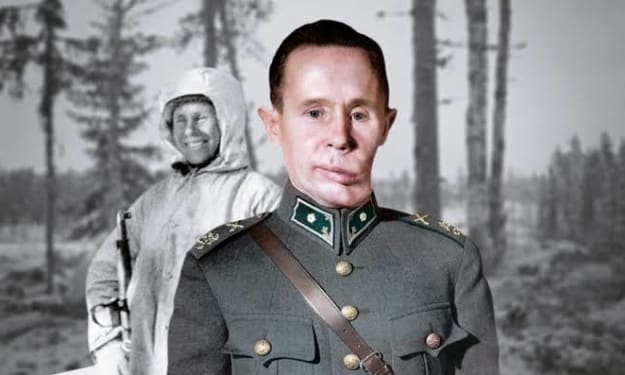
THE WINTER WAR(1939-1940)
In the winter of 1939, Finland found itself in the crosshairs of the Soviet Union, facing an invasion that would become known as the Winter War. Though heavily outnumbered and outgunned, the Finnish people demonstrated unwavering bravery and resourcefulness in defending their homeland against the Soviet aggression. This is the gripping tale of their struggle for survival amidst the icy landscapes and the indomitable spirit that emerged from the frozen battleground.
By OGECHUKWU ESEH 3 years ago in History
The Titanic: A Tragedy That Shook the World
Introduction The sinking of the RMS Titanic on April 15, 1912, was one of the most tragic maritime disasters in history. The ship, which was on its maiden voyage from Southampton to New York City, struck an iceberg and sank in just over two hours. Over 1,500 people died, making it one of the deadliest commercial peacetime maritime disasters in modern history.
By Muhammad Danish3 years ago in History