Latest Stories
Most recently published stories in History.
The History of Wheel
the wheel where would we be without this rotating wonder the wheel allows us to perform a myriad of tasks everything from scooting to the shops on a Saturday afternoon to hurtling around a race course in high-performance vehicles so indispensable our wheels to everyday life that many imagined the wheel was invented early in human history's and probably hewn out of stone however archaeology shows that for much of human history the wheel simply wasn't necessary and therefore wasn't invented so just how old is this cycler Tory shape well some of the earliest evidence for wheels dates to around 3,600 BC with the cucuteni to pillion culture here it is thought that over time sleds rolled on logs evolved into wheels on fixed axles they also made wheels in the form of models here is a vulnerable bull around about the same time in Mesopotamia there are many pictograph references to wheels in and around the great ziggurat city of Ur archaeologists have found images of carts seemingly with solid wooden wheels attached to their axles with pegs they probably would have been very useful for transportation of goods and also in combat in order to find the oldest reliably dated wheel you must travel to the capital of Slovenia Lea Briana here is a reconstruction of that wooden Marvel dating to around 3100 BC between 3,000 and 2,000 BC on the Russian steppes and into Eastern Europe there is much evidence of wheels in so-called Kurgan burial mounds more than 200 examples of wooden carts with wooden wheels and axles have been uncovered from these burial mounds they were obviously important as the dead seemingly couldn't live without them around the same time in what is now Turkey menaced an at the site of Alton death or the Golden Hill we find yet again evidence that wheels were being used on models and similarly dating to around 2600 BC in in Pakistan at the site of mohenjo-daro archeologists unearthed yet more evidence that wheels were being used on models we now approach a key point in the history of wheels around 2000 BC the invention of spokes lighter wheels and thus chariots yet again it seems Eastern Europe was the pioneer and chariots spread across the world it is thought a key element in their appeal is the ability to have fast moving soldiers in other words a combat edge between 2,000 and 1,500 BC we see chariots spread from the Carpathian Mountains to north of the Caspian Sea chariots chariots and thus wheels are found in Thracian burials in Bulgaria and to the east the Cintas de culture were burying chariots along with weapons of war the ancient Greek city-states saw the arrival of the chariots and thus the spoke wheel around 1500 BC though as elsewhere it seems the wheel may have had a precedent with models the chariot took on a role amongst the ancient Greeks in combat and ceremony but it seems across the city-states Chariot Racing was the most popular use of the wheel the heritage of the wheel used on chariots in China was established in Liu yang around 2002 dating to around 1200 BC archaeologists uncovered several chariots along with horses but don't worry it seems they weren't buried alive as elsewhere it seems such Giants were used for everything from leisure to warfare of course I would be remiss if I did not mention the chariot technology which had spread south to Egypt Pharaohs are often depicted on chariots either racing or fending off whole armies single-handedly such chariots were extremely well constructed strong agile and light when it comes to wheels Britain was a late developer the earliest evidence for which comes from flag fan this wooden wheel dates to the Bronze Age around 1300 BC however around a thousand years later around 300 BC in wet bang in North Yorkshire the wheel and indeed the chariot had taken center stage buried with the chieftain this was high-end Iron Age technology composite wheels with iron rims for durability again it seems that usage ranged from warfare to racing ceremony to the grave soon after this we see the rise of the Roman world and their most famous of wheel related contributions but is of course roads on the Appian Way in Italy you can even see where wheels of warn tracks into the stone it seems the Romans borrowed their chariot technology from the Etruscans who loved to race them and as with many things in the Roman world they could not help but supersize the event now this is all well and good I hear you say but what about the Americas what about the new world well so far it seems the full-blown wheel was simply not invented some cultures such as the Olmec were technologically advanced famous for their stone sculptures for example but the only use for wheels we have found seems to be on models or toys a lack of large domestic animals possibly meant a cart were simply never developed from solid pieces of wood to wheels we know and love this has been far from a comprehensive history of the wheel there are many other wheels I could have mentioned including wheel pendants found amongst urn filled graves or quite literally the world of wonders opened up by the invention of the potter's wheel but we have at least seen something of the origins of a technology which has been so important to human history so whether you've taken your car to work or maybe decided to ride in on your unicycle be you hurtling along the track of a death-defying roller coaster or coming in to land your prized plane or even just carting around your shopping in the supermarket take time to appreciate the wonderful wheels around you and the thousands of years which have gone into developing them but remember that wheels are not a Stone Age invention they're relatively new and for far longer than we have had them we live quite happily without them
By Amjad Ateih Dib3 years ago in History
Covid-19
In the year 2023, the world was slowly recovering from the devastating effects of the COVID-19 pandemic. It had been a long and arduous journey, but humanity had managed to emerge stronger and more united than ever before. The virus had taken its toll on every aspect of life, but it had also served as a catalyst for change and innovation.
By Sagir Sadiq3 years ago in History
Harry Potter and the Alchemist's Enigma
In the quaint and mysterious village of Lurendell, hidden away from the bustling world of wizards and witches, lived an extraordinary boy named Harry Potter. He was known for his unique connection with animals and plants, often finding solace in the secrets of the enchanted forest that bordered the village. However, what Harry didn't know was that his life was about to change forever.
By Bilal Khan3 years ago in History
J. Robert Oppenheimer: The Genius, the Bomb, and the Ethical Conundrum
J. Robert Oppenheimer, a brilliant physicist of the 20th century, is best known for his instrumental role in leading the development of the nuclear bomb during World War II. Although he never won a Nobel Prize, his impact on the world far surpassed that of many laureates. This article delves into Oppenheimer's life, his contributions to science, and the ethical implications of his work on nuclear weapons.
By Thene van Schalkwyk3 years ago in History
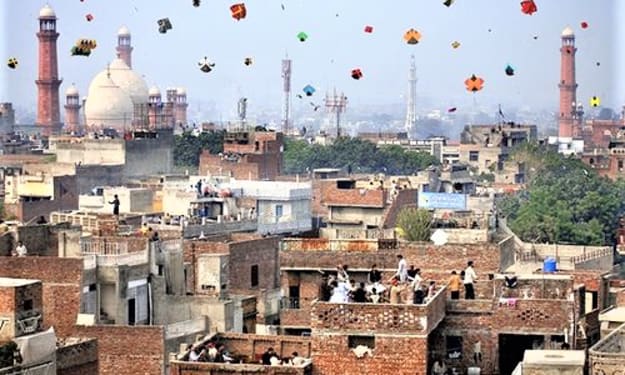
The Kite Flying Festival in Lahore, Pakistan
The Kite Flying Festival in Lahore: Basant - A Day of Joy and Celebration The Kite Flying Festival, commonly known as Basant, is a cherished cultural event in Lahore, Pakistan. Basant marks the arrival of spring and is a day of joy, color, and celebration for people of all ages. The festival has a rich history that spans centuries, blending elements of Punjabi tradition, Sufi mysticism, and the beauty of nature. While Basant is celebrated in various parts of Pakistan and beyond, Lahore's festivities hold a special place as the heart of this exuberant event.
By Syed Omar Hussain3 years ago in History
A Brief Overview of Mombasa, Kenya
History of Mombasa: A Beach front Jewel of East Africa Mombasa, the second-biggest city in Kenya, is an energetic and memorable waterfront pearl arranged along the Indian Sea. With a rich and varied history, Mombasa has been a blend of societies, business, and oceanic exchange for quite a long time. Its essential area on the East African coast has drawn in wayfarers, merchants, and pioneers from different regions of the planet, making it a city of critical verifiable significance. Today, Mombasa remains a famous objective for sightseers, offering a mix of social encounters, shocking sea shores, and luscious food.
By Syed Omar Hussain3 years ago in History
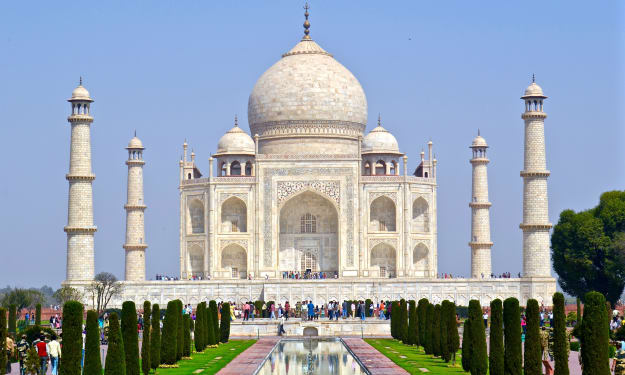
The Grand Taj Mahal
The Taj Mahal: A Timeless Image of Adoration and Excellence The Taj Mahal, quite possibly the most eminent compositional miracle on the planet, is a getting through image of adoration and magnificence. Situated in Agra, India, the Taj Mahal remains as a demonstration of the richness of the Mughal Domain and the affection for a head for his darling sovereign. Its spellbinding magnificence, rich history, and social importance have made it a notorious milestone and an UNESCO World Legacy Site.
By Syed Omar Hussain3 years ago in History
The Illustrious Badshahi Masjid of Lahore, Pakistan
History of Badshahi Masjid, Lahore The Badshahi Masjid, otherwise called the Illustrious Mosque, is one of the most notorious tourist spots of Lahore, Pakistan. Its set of experiences is interwoven with the Mughal Domain and the design glory of the period. This work of art of Mughal design remains as a demonstration of the rich social legacy of the locale and stays an image of profound and verifiable importance. The narrative of Badshahi Masjid traces all the way back to the seventeenth 100 years and keeps on being a getting through image of Lahore's magnificence.
By Syed Omar Hussain3 years ago in History
Aristotle
The subject of political science has evolved by questioning the nature and importance of concepts like state, constitution, citizenship, laws, and governments. Aristotle, famously referred to as the father of political science, had laid the bricks of the subject. In this blog, you will read about his understanding of the state, classification of constitutions and the cycle of governments. The first man to distinguish between various branches of knowledge had been Aristotle. He differentiated between meteorology, poetics, logic, biology, ethics, natural history, aesthetics, physics, rhetoric, metaphysics and even wrote extensively on these subjects. He did not only lay the foundation stone of political science but also contributed significantly to its elaboration as well. "Politics", "Ethics", and "Rhetoric" are few among many of his works that hold discussions on questions of law, equality, justice, etc. According to Aristotle, political science is a master science. He gives credit to political science as a master-art because, unlike other sciences that serve as a means to an end, political science pertains to the ends of human existence in itself. Aristotle, thus viewed political science as the end to human existence rather than as a means to it. In his book, The Nicomachean Ethics, Aristotle writes, "The supreme good... must be the object of the most authoritative of the sciences - some science which is a master craft. But such is manifestly the science of politics, for it is this that ordains which of the sciences are to exist in states, and what branches of knowledge the different classes of citizens are to learn, and up to what point." His view demonstrates that political science dominates all other sciences. It explains his "Hierarchy of Ends", implying that each branch of knowledge is merely a means and would ultimately serve the end of leading a good life. Note here that Greek philosophers and their view of politics share one common notion. They believe that the state comes into existence for the sake of life and continues for the sake of good life. Aristotle doesn't differ on this notion and is hence considered to view the science of politics as supreme to other sciences.
By Syed Ammar3 years ago in History
Aristotle
Aristotle draws a relation between organ and organism. Each organ of a living being performs a specific function; each individual performs different responsibilities in society. The body consists of different organs performing varied functions, and the body ensures harmony in its functioning. Similarly, the state ensures the communion of various individuals, where the division of labour ensures cooperation and harmony in society. Aristotle and his classification of governments and constitutions are as
By Syed Ammar3 years ago in History